Cynthia
Our verdict
On H Street NE, one of Washington D.C.'s most dynamic dining corridors, Cynthia brings a sustainability-forward approach to a neighborhood known for its culinary range. The restaurant sits within a city increasingly defined by ethical sourcing and waste-reduction practices, placing it alongside peers like Oyster Oyster and Albi in D.C.'s growing cohort of conscience-driven dining rooms.

Pearl is the En Primeur Club membership app, where members save venues, book tables and use the concierge.
H Street NE and the Ethics of a Modern Dining Room
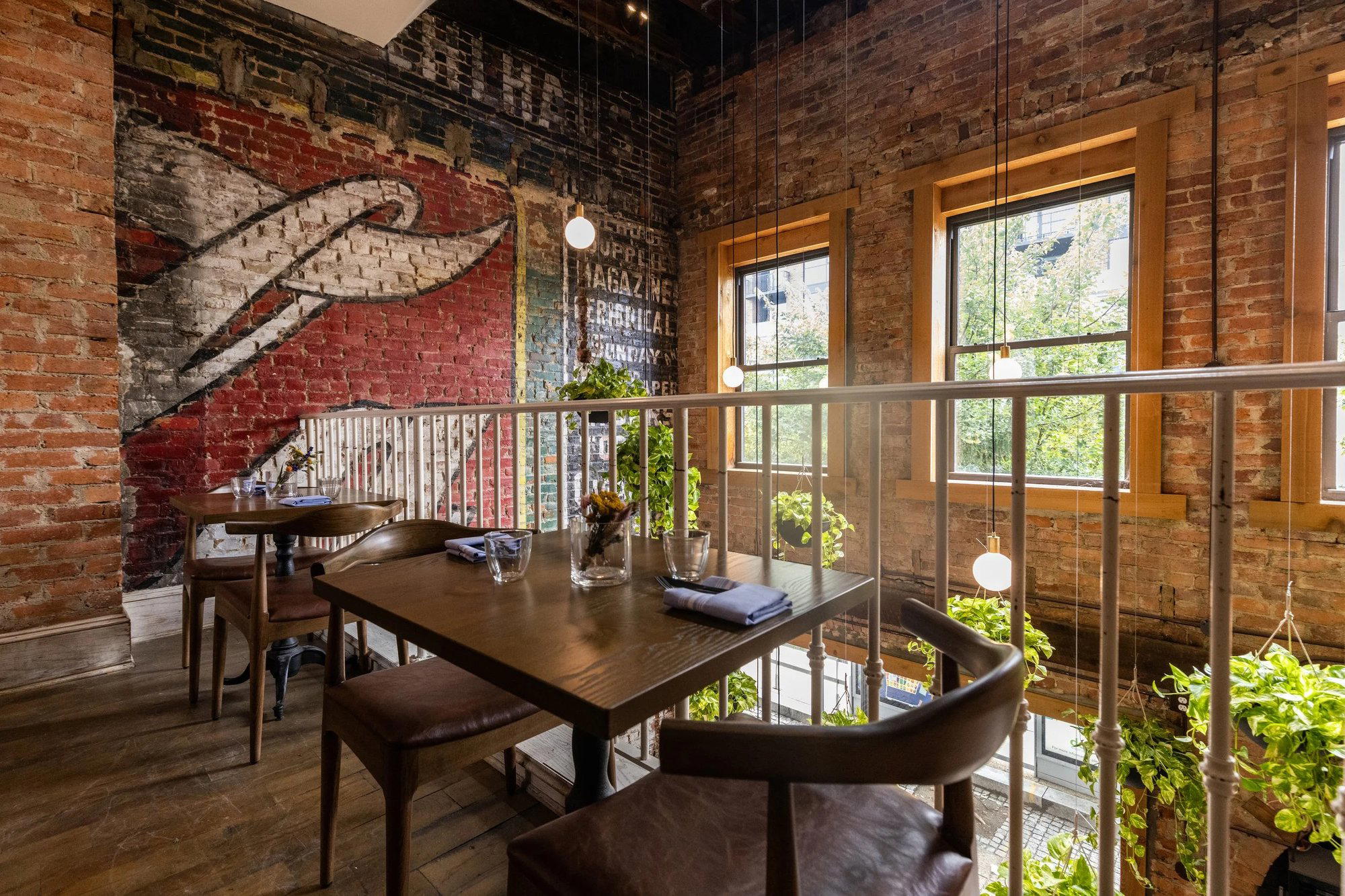
502 H St NE sits on a corridor that has spent the better part of a decade rewriting Washington D.C.'s dining reputation. H Street NE is not a neighborhood that coasts on legacy or pedigree. It earns its place through turnover, ambition, and a willingness to absorb risk. Against that backdrop, Cynthia occupies a position that feels deliberate: a dining room aligned with the broader national conversation around what restaurants owe their ecosystems, their suppliers, and the cities they operate inside.
American fine and near-fine dining has fractured into recognizable camps over the past decade. On one side sit temples of classical technique, where the Michelin star remains the organizing principle. On the other, a younger generation of restaurants has repositioned ethical sourcing and waste reduction as primary design criteria rather than secondary marketing language. Cynthia belongs to the latter conversation. That framing matters because it changes what you are paying for and what the kitchen is trying to prove.
Where Cynthia Sits in D.C.'s Sustainability Cohort
Washington D.C. has developed a credible group of restaurants where environmental consciousness shapes the menu from sourcing to plate. Oyster Oyster, priced at $$$, has become the most discussed entry in this tier, with a plant-forward and sustainably sourced format that draws consistent national attention. Albi and Causa operate at the $$$$ tier with distinct regional identities but share a sourcing seriousness that defines the cohort.
The distinction matters to anyone making a reservation decision. Restaurants that build sustainability into their procurement and waste infrastructure operate differently from those that add a foraged ingredient to an otherwise conventional supply chain. D.C.'s better sustainability-forward kitchens lean toward the former, and H Street NE, with its relatively lower rents and proximity to community-oriented retail, has proven hospitable to that kind of commitment.
The National Context: What Ethical Sourcing Actually Looks Like at the Table
Across the United States, the restaurants that have most convincingly threaded environmental ethics into their menus tend to share a few structural habits: direct relationships with a small number of farms, seasonal menus that shift with supply rather than trend, and waste-reduction systems that extend beyond composting into nose-to-tail or root-to-stem cooking discipline. Blue Hill at Stone Barns in Tarrytown remains the most cited American example of this model at scale. Single Thread Farm in Healdsburg integrates the farm directly into the restaurant's identity. Smyth in Chicago and Lazy Bear in San Francisco have each built reputations around sourcing specificity and seasonal discipline at the fine dining tier.
At the more technique-intensive end of the national spectrum, places like Jônt and minibar in D.C. itself operate inside a different priority structure, where sourcing ethics are subordinate to technical ambition. That is not a critique. It is a map. Knowing where a restaurant sits on that spectrum tells you something more useful than any individual dish description. Cynthia's address and orientation place it closer to the sourcing-first camp than the technique-first one, which has implications for how the menu is structured across seasons.
For diners who want to triangulate further, Atelier Moessmer Norbert Niederkofler in Brunico represents what happens when sustainability becomes the absolute organizing principle of a serious kitchen, with the Dolomites functioning as both pantry and philosophy. That level of regional specificity is rare in any city. What D.C.'s H Street corridor offers is a more accessible version of the same conversation, with lower barriers to entry and a neighborhood energy that keeps the experience grounded.
Other Points of Reference Along the Eastern Seaboard and Beyond
Sustainability framing in American restaurant culture occasionally functions as branding without infrastructure. The restaurants that have moved past that into genuine operational commitment tend to show it through menu brevity, seasonal volatility, and an absence of ingredients that cannot be sourced within their defined supply radius. The Inn at Little Washington, Virginia's most celebrated fine dining destination and a Michelin three-star, has incorporated kitchen garden sourcing into its identity over decades. Le Bernardin in New York City has addressed sourcing transparency through its seafood program with increasing specificity. Providence in Los Angeles and Addison in San Diego both carry Michelin recognition alongside sourcing commitments that influence their menus structurally rather than decoratively. Emeril's in New Orleans and Atomix in New York City each demonstrate different ways a serious kitchen can engage with supply relationships at the fine dining level.
Cynthia does not need to operate at the scale or price point of any of these to make a coherent argument. H Street NE is not Napa or the Virginia countryside. It is a dense urban corridor where sourcing choices are made against different logistical constraints, and where the commitment to those choices, when genuine, is more visible rather than less.
For the fuller picture of where Cynthia sits within Washington D.C.'s dining options across price tiers and cuisines, the EP Club Washington D.C. restaurants guide maps the city's most notable tables with context for each.
Know Before You Go
| Address | 502 H St NE, Washington, DC 20002 |
|---|---|
| Neighbourhood | H Street NE Corridor |
| Price Range | |
| Reservations | |
| Hours | Not confirmed, verify before visiting |
| Phone | Not listed, check venue directly |
Frequently asked questions
Where exactly is Cynthia?
Cynthia is located at 502 H St NE, Washington, DC 20002, Washington, D.C.
How does Cynthia fit into Washington D.C.'s H Street NE dining scene?
H Street NE has functioned as one of D.C.'s most consequential dining corridors since the early 2010s, drawing chefs and operators who wanted distance from the power-lunch conventions of Penn Quarter or Georgetown. Cynthia at 502 H St NE sits within this context as a restaurant where environmental sourcing provides the structural logic of the menu, placing it alongside a credible group of D.C. operators for whom sustainability is methodology rather than marketing. That positioning makes it representative of where the city's independent dining scene has moved.
What's the best thing to order at Cynthia?
The menu at Cynthia is structured around sourcing decisions, so the most rewarding choices tend to be whatever reflects current seasonal and regional availability. On H Street NE, the kitchen's ethical sourcing framework means the menu shifts with supply chains rather than staying fixed. Check the current menu directly before visiting to see what the kitchen is working with.
Do I need a reservation for Cynthia?
Given Cynthia's position on H Street NE, one of D.C.'s most active dining corridors, booking ahead is advisable, particularly for weekend evenings. The restaurant sits at 502 H St NE in Washington D.C. a stretch that draws consistent foot traffic from both neighborhood regulars and destination diners. check the venue's official channels to confirm current reservation availability.
What makes Cynthia worth seeking out?
Cynthia occupies a specific position in Washington D.C.'s sustainability cohort, where environmental ethics shape the menu structurally rather than as an afterthought. The H Street NE address places it within a corridor that has meaningfully broadened the city's dining identity over the past decade.
Do they accommodate allergies at Cynthia?
Kitchens operating under an ethical sourcing model tend to have strong ingredient traceability, which can work in favour of guests with dietary restrictions. That said, specific allergy accommodation policies at Cynthia are best confirmed directly with the restaurant at 502 H St NE, Washington D.C. before your visit.
Is Cynthia overpriced or worth every penny?
Pricing details for Cynthia are not publicly listed, so the value question is best answered in context: restaurants on H Street NE in Washington D.C. that anchor menus to verified sourcing practices typically price in the mid-to-upper range relative to the city's casual dining average. The relevant comparison isn't cost per dish but whether the sourcing infrastructure behind the plate justifies the positioning, which at Cynthia appears to be the actual point of difference.
Same-City Peers
Comparable venues nearby, for context on price, style, and recognition.
| Venue | Cuisine | Price | Notes |
|---|---|---|---|
| CynthiaThis venue (the venue you are viewing) | Modern American Bistro | $30–50 | Not listed |
| Birch & Barley | Modern American Gastropub | Not listed | Logan Circle |
| Robert's Restaurant | American Steakhouse & Seafood | Not listed | Woodley Park |
| The Tavern at The Henley Park | Classic American with Modern Influences | $30–50 | Shaw |
| Flavorture | Elevated American Soul Food | $30–50 | Woodley Park |
| Kitchen + Kocktails By Kevin Kelley - DC | Elevated Southern Soul Food | $50–100 | East End |