Birch & Barley
Birch & Barley occupies a two-floor space on 14th Street NW, one of Washington D.C.'s most active dining corridors, pairing a kitchen-driven food program with one of the city's more serious beer lists. The address places it squarely within D.C.'s mid-to-upper casual tier, drawing a crowd that takes what's in the glass as seriously as what's on the plate.
- Address
- 1337 14th St NW, Washington, DC 20005
- Phone
- +1 202 567 2576
- Website
- birchandbarley.com
- Directions
- Get directions
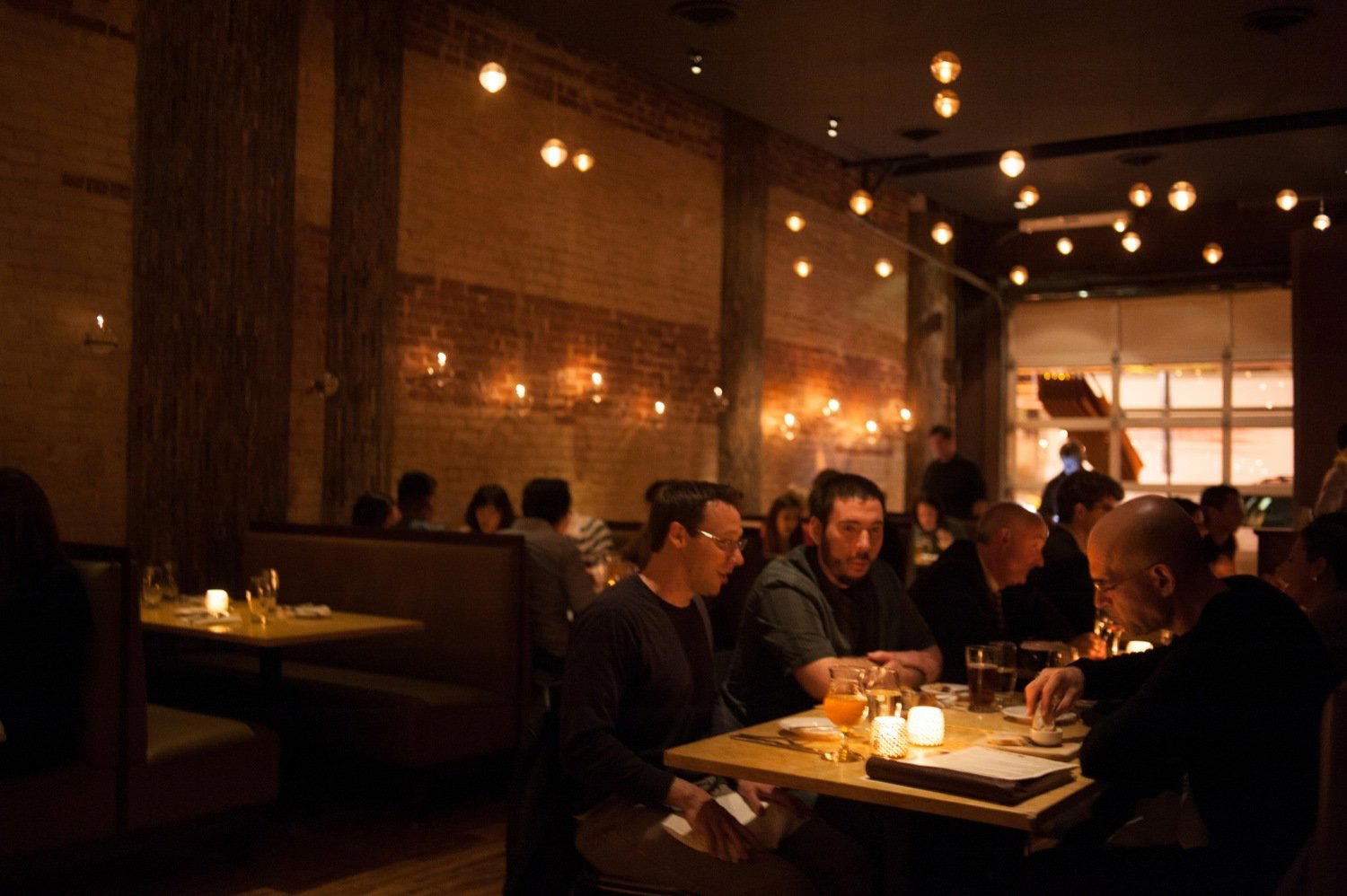
14th Street and the Logic of the Neighborhood
Washington D.C.'s 14th Street NW corridor has spent the better part of fifteen years evolving from a transit artery into one of the city's most reliable stretches for serious eating and drinking. The block between U Street and Logan Circle, in particular, attracted a generation of operators who understood that the city's dining public was outpacing its reputation. Birch & Barley sits at 1337 14th St NW, inside that corridor, and the address alone communicates something about its positioning: this is a neighborhood where the competition is consistent and the room has to earn its keep beyond novelty.
That neighborhood context matters because D.C.'s mid-to-upper casual tier has become genuinely competitive. Venues like Oyster Oyster, which built its reputation on sustainable sourcing and a vegetable-forward New American approach, and Causa, which placed Peruvian technique at the center of a higher-price-point conversation, show how D.C. restaurants have learned to anchor themselves to a single, clear culinary argument. Birch & Barley operates on a similar logic, where the beer program and the food menu are designed to be read together rather than independently.
Where Local Product Meets Imported Method
The broader trend shaping ambitious American kitchens over the past decade involves a specific tension: European technique, particularly from French and Northern European traditions, applied to ingredients that are distinctly regional. This is not fusion in the loose, 1990s sense. It is something more disciplined, classical training used as a framework for expressing what the Chesapeake watershed, the mid-Atlantic farms, and the Appalachian foothills actually produce.
That intersection of imported method and indigenous product is visible across D.C.'s more serious kitchens. Albi applies it through a Middle Eastern lens, grounding Levantine technique in mid-Atlantic sourcing. At the fine dining end, Jônt runs a counter-format tasting menu where French and Japanese precision converge on American product. Even minibar by José Andrés, operating at the experimental register, uses modernist European technique as the instrument for reimagining American ingredients.
Birch & Barley participates in this conversation from a different angle. The beer list functions not just as a beverage program but as an editorial statement about fermentation and flavor: Belgian and German brewing traditions, domestic craft interpretations, and the kind of barrel-aged and sour categories that require the kitchen to think about acidity, fat, and weight the way a wine-focused restaurant would. The pairing logic that results is closer to what happens at restaurants like Smyth in Chicago or Lazy Bear in San Francisco, where beverage and food are conceived as a single argument rather than parallel programs.
The Beer-Forward Kitchen as a Distinct Category
In American fine dining, beer has historically occupied a subordinate position to wine. The tier of restaurants that treats beer with the same structural seriousness as a wine list, developing food menus that account for carbonation, bitterness, and yeast-driven aromatics as pairing variables, remains small. Nationally, the comparison set for this approach includes venues like Blue Hill at Stone Barns in Tarrytown, where the beverage program extends into fermented and non-alcoholic categories with genuine depth, and, at the production level, Single Thread Farm in Healdsburg, where the Japanese-inflected approach to fermentation informs both the kitchen and the cellar.
What distinguishes the beer-forward model is that it places the kitchen under a specific discipline. Dishes cannot simply be rich or acidic in isolation; they need to function within a range of carbonation levels and hop profiles that wine-pairing logic doesn't fully address. The result, when executed well, is a menu that reads differently from a conventional fine dining list, one where braised and roasted preparations appear alongside dishes calibrated for the cutting acidity of a Gueuze or the toasty depth of a Märzen.
This is the tradition Birch & Barley works within, and it places the restaurant in a specific national comparable set that is smaller and more technically demanding than the general American gastropub category.
D.C. Fine Dining as a Wider System
Understanding Birch & Barley requires some familiarity with how Washington D.C. fine dining is structured. The city has a multi-tier system that runs from neighborhood-anchor restaurants through mid-level tasting menus to a small cluster of nationally significant venues. The Inn at Little Washington in the Virginia exurbs operates at the summit of the regional prestige hierarchy, holding three Michelin stars. In the city proper, the conversation about technical ambition typically focuses on a handful of counter-format or tasting-menu operations.
The middle tier, where Birch & Barley operates, is where most of the city's daily dining life actually happens, and where the quality gap between venues has narrowed most noticeably over the past decade. Restaurants in this tier compete on the coherence of their concept as much as on any single dish. A strong beer program of the depth Birch & Barley is known for functions as a differentiator in exactly this environment, offering a reason to return that a generic wine list does not.
For comparison across American cities, similar beer-and-kitchen programs appear at Providence in Los Angeles and Addison in San Diego at the wine-focused fine dining end, and at Emeril's in New Orleans at the legacy American end, but the beer-first structure remains a D.C. and mid-Atlantic specific expression. In Europe, the closest analogue is the Alpine sourcing philosophy visible at Atelier Moessmer Norbert Niederkofler in Brunico, where a single-region ingredient logic drives every decision on the plate and in the glass. At the New York end, Atomix demonstrates how a beverage program built on depth and pairing coherence can anchor a restaurant's entire critical identity.
Planning Your Visit
Birch & Barley is located at 1337 14th St NW, within walking distance of the U Street/Cardozo Metro station on the Green and Yellow lines, and within the Logan Circle neighborhood's walkable dining cluster.
Comparable Spots
Comparable venues nearby, for context on price, style, and recognition.
| Venue | Cuisine | Price | Notes |
|---|---|---|---|
| Birch & BarleyThis venue — the venue you are viewing | Modern American Gastropub | $$$ | Not listed |
| The Greenhouse | Contemporary American | $$$ | Dupont Circle |
| Westend Bistro | Modern American Bistro | $$$ | West End |
| Sixty Vines Foggy Bottom | Contemporary Italian Farm-to-Table New American | $$$ | West End |
| Sonoma | New American Wine Bar | $$$ | The Capitol Grounds |
| Dovetail | Modern Mid-Atlantic American | $$$ | Logan Circle |
Continue exploring
More in Washington DC
Restaurants in Washington DC
Browse all →
Bars in Washington DC
Browse all →
Hotels in Washington DC
Browse all →


At a Glance
- Intimate
- Cozy
- Sophisticated
- Date Night
- Special Occasion
- Brunch
- Open Kitchen
- Beer Program
Quiet and intimate setting with warm bread service and elegant plating.