
Curry Spice Gelateria KALPASI puts Shimokitazawa’s casual curry culture into a compact counter format, pairing curry with gelato and ice cream rather than treating dessert as an afterthought. Recognition on Tabelog Curry TOKYO “Tabelog 100” in 2024, plus prior selections in 2023 and 2022, places it inside Tokyo’s serious everyday-curry conversation without pushing it into formal dining territory.
Pearl is the En Primeur Club membership app — saves, bookings, and concierge access live there. Same editors, same standards.
- Address
- 東京都世田谷区北沢2-12-2 サウスウェーブ下北沢 1F
- Website
- tabelog.com
 Saves & bookings on Pearl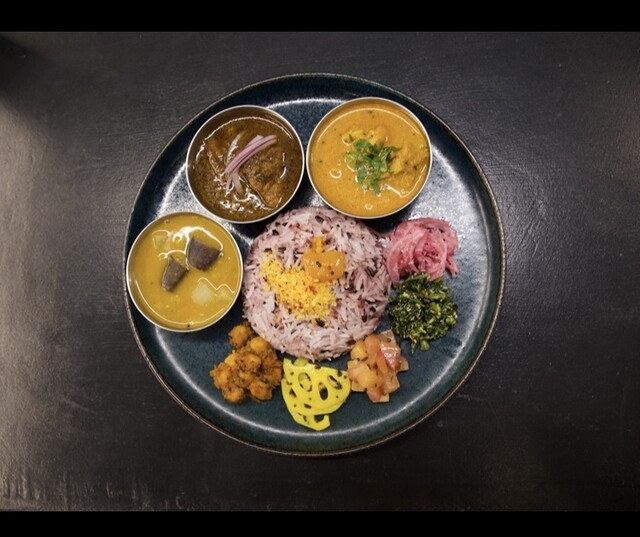
Shimokitazawa’s food streets work at close range: station exits, narrow shopfronts, quick decisions, and rooms where the counter is the room. Curry Spice Gelateria KALPASI fits that rhythm with 12 counter seats, a meal-ticket system at entry, and a format that reads immediately as urban Tokyo rather than destination dining theatre. The signal is not luxury; it is compression. Curry, gelato, ice cream, Asian and ethnic categories sit under one small roof, turning a low-ticket meal into a pointed argument about how far Tokyo’s casual curry culture has moved beyond the old binary of curry rice and café dessert.
Tokyo curry is not a single tradition. The city absorbs South Asian spice logic, Japanese curry-rice habits, café culture, and small-shop specialization, then lets neighbourhoods sort the mood. Shimokitazawa gives that mix a looser register than Ginza or Marunouchi. Around the station, music venues, secondhand shops, cafés, and compact restaurants reward formats that can be read quickly and used flexibly. In that setting, a counter-only curry-and-gelato shop makes sense: short dwell time, strong identity, and enough category tension to feel current without needing a tasting-menu frame.
Shimokitazawa curry, compressed into a 12-seat counter
The useful comparison is with nearby casual specialists rather than formal restaurants. spice kitchen moona sits in a similar curry conversation at JPY 2,000–2,999 for dinner and JPY 1,000–1,999 for lunch, while Nanban Tei Shimokitazawa ten operates at a higher casual bracket, JPY 3,000–3,999 for dinner and JPY 2,000–2,999 for lunch. Curry Spice Gelateria KALPASI’s stated lunch and dinner range of JPY 1,000–1,999 keeps it in the everyday-spend tier, but the Tabelog Curry TOKYO “Tabelog 100” 2024 selection shifts the expectation. This is not a place where the price alone explains the draw.
The award history matters because curry in Tokyo is crowded and deeply local. Selection for Tabelog Curry “Tabelog 100” in 2022, Tabelog Curry TOKYO “Tabelog 100” in 2023, and again in 2024 gives the shop a continuity signal across several cycles. For readers mapping the city by category, that is more useful than vague popularity. It places the address among curry specialists that serious local diners discuss, while the format keeps the experience closer to a station-adjacent counter than a special-occasion room.
Gelato component changes the tempo. Tokyo has plenty of curry shops where dessert is irrelevant and plenty of dessert shops where savoury food feels incidental. Here the category split is the point: heat, spice, dairy, and cold service share the same small frame. The result is a sharper sensory proposition than the price bracket suggests, even without leaning on named dishes or chef mythology. The room’s counter seating also makes the sequence visible. Ordering, ticket handling, seating, eating, and clearing all happen in a tight public choreography familiar to anyone who eats well in Tokyo’s smaller shops.
Why the format belongs in Tokyo's casual serious tier
Tokyo’s casual serious tier is easy to underestimate from outside Japan. It is where a meal can cost less than a hotel breakfast yet carry years of craft, local ranking pressure, and repeat-customer scrutiny. That applies across categories: curry counters, ramen shops, tonkatsu rooms, yakitori specialists, and small cafés. For a broader city map, Our full Tokyo restaurants guide gives the wider restaurant frame, while entries such as 3 Chome no Curry Ya San, 124. KAGURAZAKA (Yakitori), 12/10 Shinjuku ten, and . 鮪と炭火焼き うお炭 秋葉原店 show how sharply Tokyo’s small-format dining can specialize by product, grill, counter, or neighbourhood.
The sensory angle here is visual and procedural as much as flavour-led. A ticket-first system removes the lingering negotiation of a table-service restaurant. Counter seating removes privacy. The category board does the framing: curry on one side, gelato and ice cream on the other. That directness suits Shimokitazawa, where the strongest casual addresses tend to telegraph their use within seconds. Café Trois Chambres and Flippers occupy different local registers, but they share the same neighbourhood truth: rooms here work when they feel legible, compact, and repeatable.
For travellers, the editorial case is simple. This is a Tokyo curry stop for readers who care about category recognition and urban texture more than ceremony. It is also useful between heavier reservations, especially when a trip is otherwise built around sushi counters, hotel dining rooms, or cocktail bars. Tokyo’s wider planning stack can be split across Our full Tokyo hotels guide, Our full Tokyo bars guide, Our full Tokyo wineries guide, and Our full Tokyo experiences guide; this address belongs on the restaurant side of that map as a compact curry specialist rather than a long-form evening anchor.
How to read it against Japan's wider casual dining map
Japan’s regional casual dining culture rewards specialists with narrow premises and clear rules. That pattern stretches well beyond Tokyo, from [Curry Senmon Ten] Maruyama Kyoju. in Sapporo to [ki:] in Kyoto.cafe in Osaka.know in Kumamoto, (Shoku) Vietnam in Kawasaki, and -Grilled beef Sukiyaki- KAMAKURA TANUKIAN 鎌倉 たぬき庵 in Kamakura. The shared lesson is that casual does not mean generic. It often means the opposite: fewer seats, fewer distractions, and a sharper contract between diner and shop.
That contract is less common in Los Angeles or Pasadena, where Japanese casual formats often become softer, more spacious, or more concept-driven for a different market; compare the dining cues around Jōdo Saké Bar in Los Angeles and Onigiri Time in Pasadena. In Shimokitazawa, Curry Spice Gelateria KALPASI keeps the scale tight and the premise legible. The reward is not spectacle. It is the feeling of Tokyo doing what it does better than almost any dining city: turning a modest bill, a counter seat, and a narrow category into a serious meal choice.
For a lighter neighbourhood contrast within Tokyo, 2D Cafe shows the city’s visual café culture from a different angle. KALPASI sits on the savoury side of that same urban instinct, where look, format, and category clarity matter before a diner has taken the first bite.
Fast Comparison
Comparable venues by cuisine and category.
| Venue | Cuisine | Price | Notes |
|---|---|---|---|
| Curry Spice Gelateria KALPASIThis venue — the venue you are viewing | Indian-style curry and spice gelato | $$ | Not listed |
| Spicy Curry House Hangetsu | Indian Curry | $$ | Shinjuku |
| Andhra Dining GINZA Ginza | Traditional South Indian Andhra cuisine | $$ | Chūō |
| YOGORO | Japanese Curry | $$ | Shibuya |
| Zero One Curry A.o.D. | South Indian Curry & Natural Wine | $$ | Minato |
| KHAN KEBAB BIRYANI | Halal Indian & Pakistani Curries, Kebabs and Biryani | $$ | Chūō |
Recognition history
Dated appearances from independent guides and award organizations, with the underlying list record or original source where available.
Tabelog 100 #17 · No. 17
Tabelog · Tabelog 100 - Curry - TOKYO - 2024













At a Glance
- Cozy
- Lively
- Trendy
- Bohemian
- Solo
- Family
- Casual Hangout
- After Work
- Standalone
- Design Destination
- Street Scene
Compact, counter-only space with a casual, low-key feel and a lively, often crowded atmosphere typical of a popular neighborhood curry shop.