
Curry Shop Hatsukoi puts Shibuya’s spice-curry boom into a compact basement format, with curry and craft biryani priced in the JPY 1,000–1,999 band. Its Tabelog Curry TOKYO 100 selection in 2023 and 2024 signals serious local traction, while the 13-seat room keeps the experience closer to a quick specialist counter than a drawn-out restaurant meal.
Pearl is the En Primeur Club membership app — saves, bookings, and concierge access live there. Same editors, same standards.
- Address
- Japan, 〒150-0043 Tokyo, Shibuya, Dogenzaka, 1 Chome−17−11 B1F
- Phone
- +81 3-6416-9503
- Website
- spicebargroup.jp
 Saves & bookings on Pearl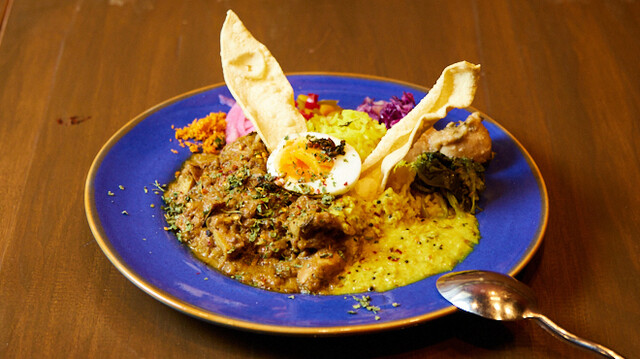
Dogenzaka is built for quick decisions: station crowds, slopes, signs stacked above basement stairs, and dining rooms that ask for commitment before they reveal much. Curry Shop Hatsukoi fits that Shibuya grammar. The address drops below street level, the room is small, and the premise is narrow by design: spice curry and craft biryani rather than the broader comfort-food sprawl that often carries the word curry in Tokyo.
That matters because Tokyo curry is not one scene. There is old-school yoshoku curry, ramen-shop curry as a side habit, South Asian cooking with regional depth, and the newer spice-curry strain that treats aroma, rice, heat and texture as the main event. Hatsukoi sits in that last conversation. Its selection for Tabelog Curry TOKYO 100 in both 2023 and 2024 places it among curry specialists judged against a crowded city field, not merely against casual Shibuya lunch options.
Shibuya spice curry with a price ceiling that changes the calculation
The value proposition is direct: JPY 1,000–1,999 for a meal in a city where serious dining can quickly move into reservation-only formats and multi-course pacing. In the same Shibuya orbit, Matsuki Ya runs in the JPY 8,000–9,999 band, while Uogashi Fukuchan 2 gou ten sits around JPY 5,000–7,999 depending on meal period. Those are different categories, but the comparison is useful for travelers building a day around cost and time. Hatsukoi gives a specialist meal without asking the budget or schedule to revolve around it.
Tokyo’s curry culture rewards focus. A small shop does not need a sprawling menu to feel complete; it needs a clear point of view and enough operational discipline to move diners through a compact room. The one-order-per-person policy, limited seating, and curry-or-biryani emphasis all reinforce that format. This is not the place for lingering across several shared plates. It is a precision lunch or early-evening stop, better judged by whether the shop delivers a defined spice-curry experience at a low spend than by the rituals of a full-service dinner.
NEPALICO Shibuya ten provides a useful nearby contrast because it also touches the South Asian and spice-driven end of the city’s casual dining spectrum, with lunch overlapping the same JPY 1,000–1,999 range and dinner moving higher. Hatsukoi’s tighter format makes it feel more like a curry specialist checkpoint: fewer variables, faster decision-making, less room for the meal to drift. That is a strength if the plan is to eat with intent before moving through Shibuya, Shinsen, or the wider west-side circuit.
A 13-seat room turns curry into a tactical meal
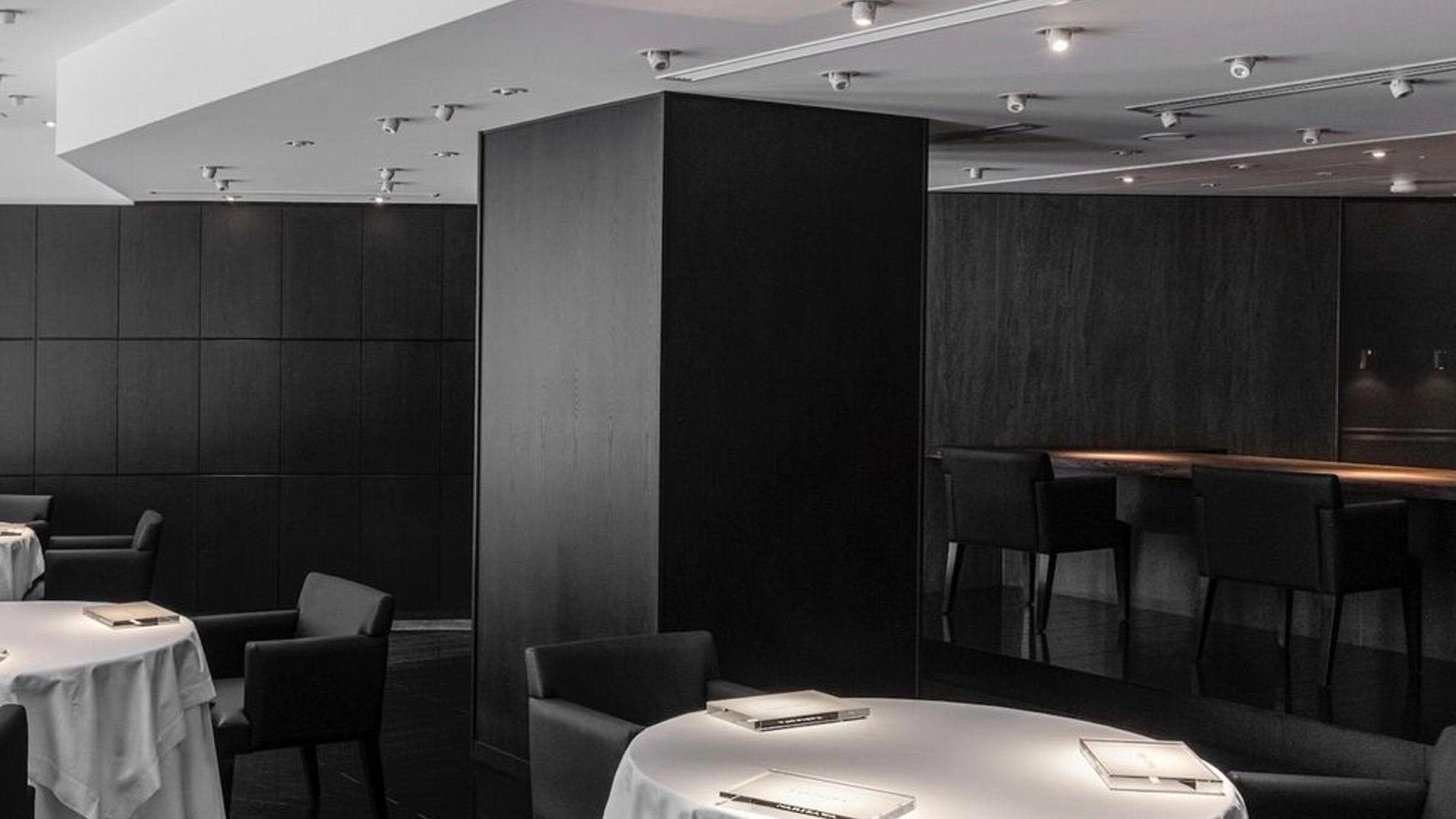
The room has 13 seats, split between counter seating and three small tables. That capacity shapes the experience as much as the cooking category. Tokyo has countless small restaurants, but curry shops with citywide recognition and no spacious buffer require a different approach from hotel dining or a destination tasting counter. Arrive as a small party, expect close quarters, and treat large bags or strollers as a real constraint rather than an afterthought.
The basement location also gives the meal a distinctly urban Tokyo rhythm. Shibuya’s most useful dining is often not on grand avenues but tucked into upper floors, lower floors, side streets, and station-adjacent pockets where rent pressure forces clarity. Curry works well in that ecology. It can be fast, deeply personal, technically serious, and affordable at the same time. Hatsukoi’s Tabelog score of 3.76 and repeat Curry TOKYO 100 selection suggest that local diners have treated it as more than a convenient stop.
Kitchen’s categories include curry, Spanish-style bar, Asian, and ethnic, but the public identity is built around spice curry and craft biryani. That hybrid placement is typical of Tokyo’s more contemporary casual dining: genre labels overlap, but the customer decision is simpler. Come for spice, rice, and a compact meal. Do not come expecting private rooms, ceremony, or the pacing of a long dinner.
How to place it in a Tokyo food itinerary
Hatsukoi works strongest as the low-cost anchor in a day that may include more expensive eating later. It suits the traveler who wants a serious Tokyo food stop without spending sushi-counter money or losing an evening to formal service. The shop is also useful before or after exploring Shibuya’s bar and cafe density, where the difference between a planned meal and a random queue can decide the entire afternoon.
For a wider Tokyo restaurant map, Our full Tokyo restaurants guide gives the broader field. Nearby and category-adjacent options can pull the day in different directions: 3 Chome no Curry Ya San for another curry reference point, 12/10 Shinjuku ten for Shinjuku planning, 124. KAGURAZAKA (Yakitori) for a yakitori-led evening, . 鮪と炭火焼き うお炭 秋葉原店 for Akihabara, 2D Cafe for a cafe detour, and -Grilled beef Sukiyaki- KAMAKURA TANUKIAN 鎌倉 たぬき庵 in Kamakura if the itinerary pushes beyond Tokyo. For non-restaurant planning, use Our full Tokyo hotels guide, Our full Tokyo bars guide, Our full Tokyo wineries guide, and Our full Tokyo experiences guide.
Across Japan and beyond, the comparison set shows how specific this format is. [Curry Senmon Ten] Maruyama Kyoju. in Sapporo belongs to another curry city conversation, while [ki:] in Kyoto.cafe in Osaka.know in Kumamoto, and (Shoku) Vietnam in Kawasaki underline how Japanese casual dining changes by city and genre. Further afield, Jōdo Saké Bar in Los Angeles and Onigiri Time in Pasadena show how Japanese formats translate outside Japan. Hatsukoi’s appeal is more compact: a small Shibuya room, a recognized curry category, and a price band that leaves room for the rest of the day.
Snapshot
Comparable venues for cuisine and category context.
| Venue | Cuisine | Price | Notes |
|---|---|---|---|
| Curry Shop HatsukoiThis venue — the venue you are viewing | Creative Spice Curry & Craft Biryani | $ | Not listed |
| Silk Road | Indian curry counter | $ | Arakawa |
| Anjuna | Traditional Indian curry house | $ | Hino |
| Tokyo Bombay Ebisu honten | Indian Curry House | $ | Shibuya |
| West India Spice Gayabaji | West Indian Curry & Marathi Cuisine | $ | Taitō |
| ASIA CURRY HOUSE | Bangladeshi Curry & Biryani Counter | $ | Sumida |
Recognition history
Dated appearances from independent guides and award organizations, with the underlying list record or original source where available.
Tabelog 100 #23 · No. 23
Tabelog · Tabelog 100 - Curry - TOKYO - 2024














At a Glance
- Cozy
- Modern
- Trendy
- Solo
- Casual Hangout
- Business Dinner
- Standalone
Current opening hours
- Monday
- 11 AM–7 PM
- Tuesday
- Closed
- Wednesday
- 11 AM–7 PM
- Thursday
- 11 AM–7 PM
- Friday
- 11 AM–7 PM
- Saturday
- 11 AM–7 PM
- Sunday
- 11 AM–7 PM
Hours can change for holidays and private events. Last verified .
A small, hidden basement venue with a casual, quiet-to-conversational atmosphere and a focused, neighborhood-café feel.