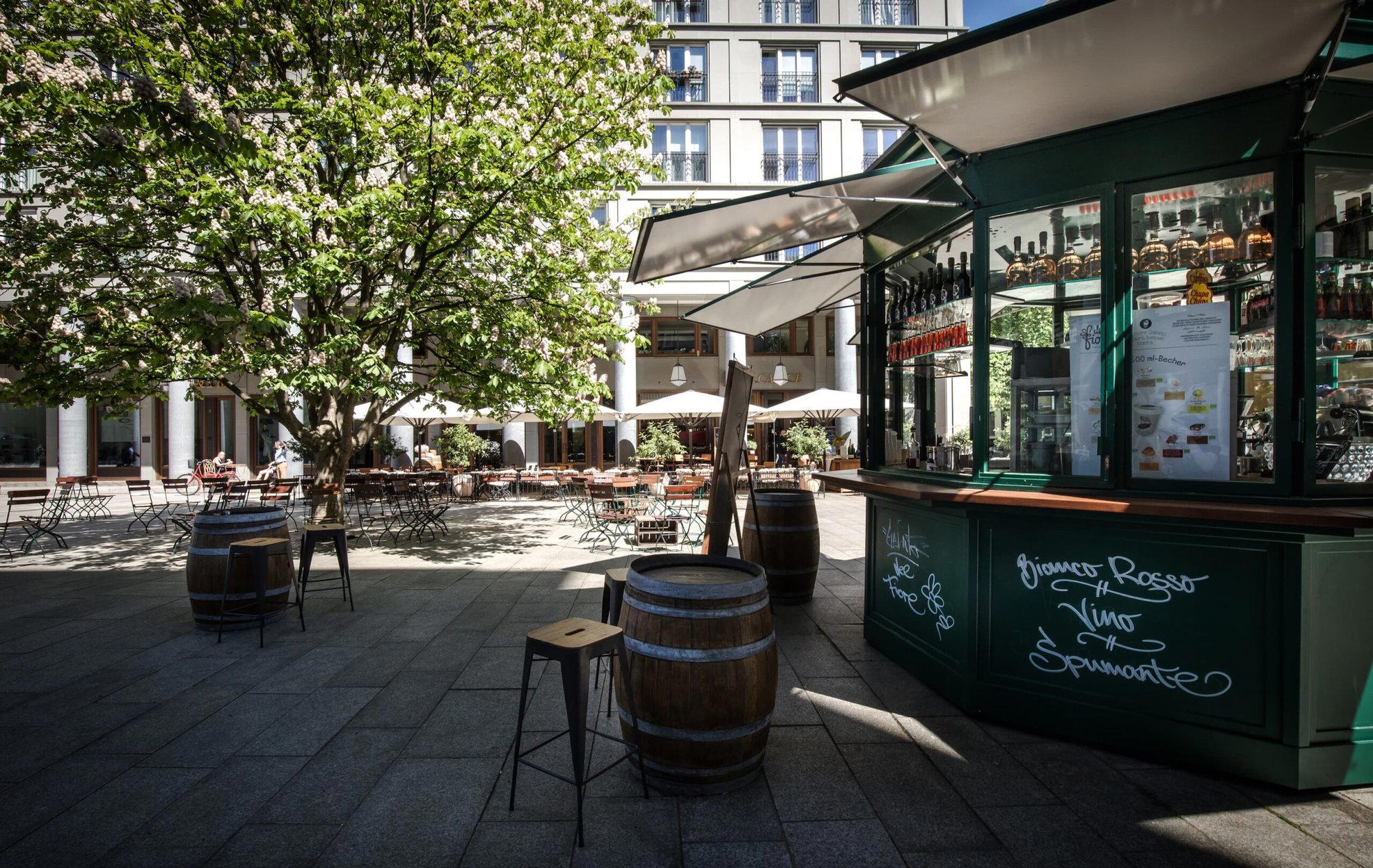
Curry Baude sits on Badstraße in Wedding, one of Berlin's most demographically layered neighbourhoods, where the German tradition of street-food pragmatism meets the global spice routes that have shaped the city's eating habits for decades. The address places it squarely in a part of Berlin where ingredient sourcing, cultural crossover, and everyday cooking intersect without ceremony or pretension.
Pearl is the En Primeur Club membership app — saves, bookings, and concierge access live there. Same editors, same standards.
- Address
- Badstraße 1-5, 13357 Berlin, Germany
- Phone
- +4949304941414
- Website
- curry-baude.de
- Directions
- Get directions
 Saves & bookings on Pearl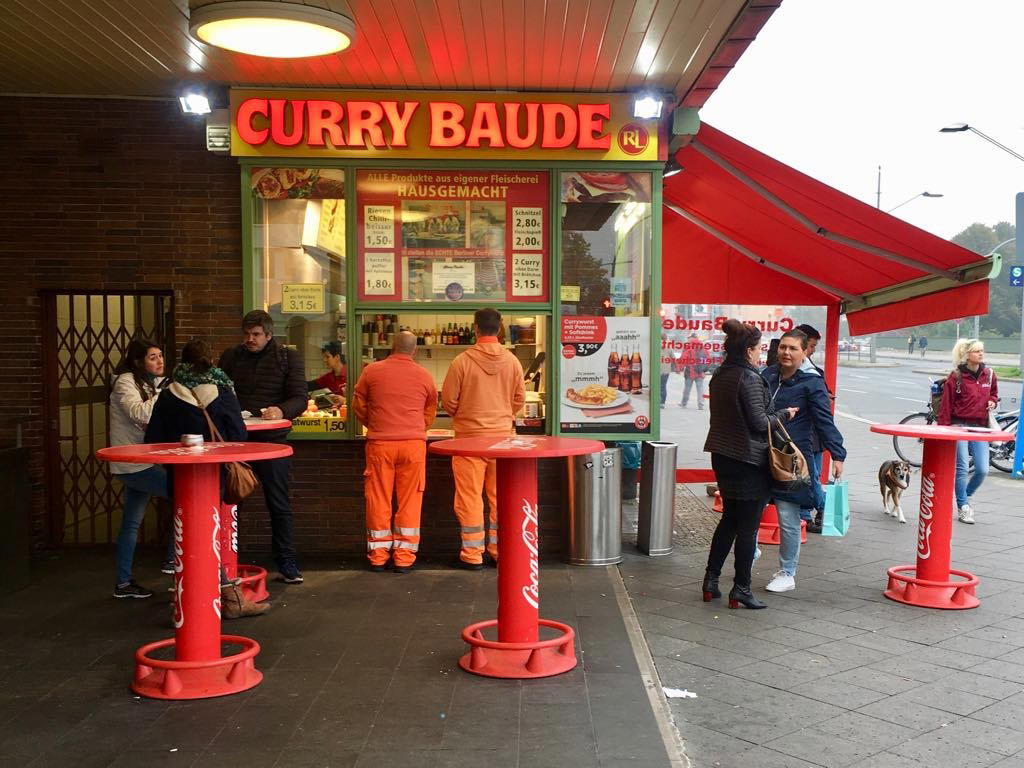
Wedding's Street-Food Axis and the Currywurst Question
Berlin's relationship with the currywurst is one of the more debated topics in German food culture. The dish, a sliced pork sausage dressed with ketchup and curry powder, served with or without casing depending on which side of the old city divide you grew up on, is simultaneously a central item on the city's culinary map. It costs under five euros at most counters, requires no reservation, and generates fierce neighbourhood loyalty. In Wedding, that loyalty is worn openly.
Curry Baude occupies a position on Badstraße 1-5 in the 13357 postcode, a stretch of Wedding that sits north of Mitte but operates at a different register entirely. Wedding has spent the better part of two decades being described as Berlin's next neighbourhood, a characterisation locals tend to greet with dry scepticism. What it actually is, and has been for some time, is a working district with a high proportion of Turkish, Arab, and West African residents, a density of small independent food businesses, and a street-food culture that does not perform for outside attention.
The Intersection of German Sausage Culture and Global Spice
The currywurst format is an early example of global technique applied to local product. Curry powder, itself a British colonial approximation of South Asian spice blends, arrived in postwar West Berlin through trade routes and migrant kitchens and was applied to the Bratwurst, a sausage with deep roots in regional German pork butchery. The result was neither Indian nor traditionally German. It was something specific to a city at a particular historical moment.
That tension between imported method and indigenous ingredient has not disappeared; it has deepened. Berlin's contemporary food scene includes high-end restaurants that treat this kind of cross-cultural negotiation with considerable seriousness. Nobelhart & Schmutzig runs an explicitly local-sourcing model, forcing its kitchen to work within Brandenburg's seasonal constraints and produce a Modern German menu without the safety net of imported luxury ingredients. Restaurant Tim Raue moves in the opposite direction, applying Chinese and Southeast Asian frameworks to European-sourced produce. Both are operating in the same conceptual space as the currywurst stand, just at a different price point.
At street level, the conversation is less self-conscious and no less interesting. The quality of a currywurst in Berlin depends on the fat content and seasoning of the sausage itself, the acidity and sweetness ratio of the sauce, and the curry powder blend applied on top. Some counters use a single commercial powder; others layer two or three. The difference is perceptible, though rarely documented.
Badstraße and the Wedding Food Context
The Badstraße address places Curry Baude within walking distance of the Gesundbrunnen transport hub, making the location accessible from much of central Berlin. Wedding's food strip along and around Badstraße includes a concentration of döner operations, West African grocers, Turkish bakeries, and a handful of sit-down restaurants that have survived long enough to develop a loyal local base rather than a tourist one.
CODA Dessert Dining's tasting menu architecture or Rutz's wine-forward Modern European progression. It is not competing with FACIL's garden courtyard dining or the sourcing rigour of Nobelhart & Schmutzig. The competitive set here is the other currywurst counters within a fifteen-minute radius, and the criteria are speed, consistency, and the confidence of the sauce.
For readers whose Berlin itinerary also includes Germany's broader fine-dining circuit, it is worth noting how different the register is. The country's most decorated kitchens, Schwarzwaldstube in Baiersbronn, Aqua in Wolfsburg, Vendôme in Bergisch Gladbach, Victor's Fine Dining by Christian Bau in Perl, and Waldhotel Sonnora in Dreis, operate in a world of extended tasting menus, cellar-depth wine lists, and advance reservations. JAN in Munich, ES:SENZ in Grassau, Schanz in Piesport, Bagatelle in Trier, and Restaurant Haerlin in Hamburg round out a cohort where the kitchen's relationship with product and technique is the explicit subject of every plate. Internationally, the same seriousness of purpose appears at counters like Le Bernardin in New York City and Lazy Bear in San Francisco.
Curry Baude follows the currywurst tradition on its own terms, and Wedding is one of the places where that logic plays out without the mediation of food tourism or media attention.
Know Before You Go
How It Stacks Up
Comparable venues nearby, for context on price, style, and recognition.
| Venue | Cuisine | Price | Notes |
|---|---|---|---|
| Curry BaudeThis venue — the venue you are viewing | Traditional Berlin Currywurst | $ | Not listed |
| Konnopke's Imbiß | Traditional German Currywurst | $ | Prenzlauer Berg |
| Puffer-Imbiss | Traditional German Potato Pancakes | $ | Kreuzberg |
| Luna D'Oro | Modern Traditional German | $$ | Mitte |
| Försters | Vegan German Home Cooking | $$ | Prenzlauer Berg |
| Hirsch & Eber | Wild Game Burgers | $$ | Prenzlauer Berg |
Continue exploring
More in Berlin
Restaurants in Berlin
Browse all →
Bars in Berlin
Browse all →
Hotels in Berlin
Browse all →

At a Glance
- Cozy
- Lively
- Casual Hangout
- After Work
- Street Scene
Current opening hours
- Monday
- 6 AM–9 PM
- Tuesday
- 6 AM–9 PM
- Wednesday
- 6 AM–9 PM
- Thursday
- 6 AM–9 PM
- Friday
- 6 AM–9 PM
- Saturday
- 9 AM–9 PM
- Sunday
- 9 AM–8 PM
Hours can change for holidays and private events. Last verified .
Simple, unpretentious counter-service spot with lively, crowded local atmosphere.