
Tabelog 100 #57
Our verdict
Kyoto’s Italian dining scene is strongest when it stops imitating either Italy or Kyoto too literally. Cucina Italiana Todo sits in that more disciplined lane: an Italian and pasta-focused house restaurant in Nakagyo-ku, selected for Tabelog Italian WEST 100 in 2021, 2023, and 2025, with wine as part of the format and a small-room rhythm suited to measured service rather than spectacle.

Pearl is the En Primeur Club membership app, where members save venues, book tables and use the concierge.
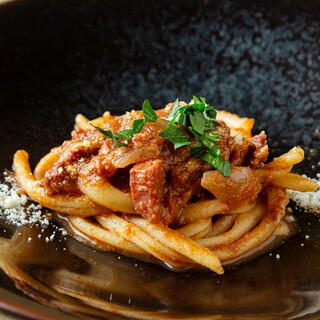
The menu
What to order
- House-made spaetzle-style egg noodles
- Seasonal pasta course
- Seafood-focused antipasti
Approach in Kyoto and the register often shifts from temple-city spectacle to the quieter grammar of destination dining: low-key façades, narrow frontages, restaurants that ask for attention before announcing themselves. Here, Italian cooking can take on a Kyoto logic. The appeal is not merely reproducing an overseas trattoria or osteria; the better version is calmer and more deliberate, with the meal shaped by pacing, welcome, and a sense of place.
Cucina Italiana Todo belongs to that conversation. Its public identity is Italian and pasta, but the story is how Kyoto absorbs foreign cuisines into exacting hospitality. In a city where volume and anonymity are rarely the point for serious dining, timing, pacing, and table management become part of the experience. Its 2025 Tabelog Hyakumeiten recognition places it in a regional conversation rather than a tourist checklist, especially in a city where Japanese cuisine usually dominates international attention.
A Kyoto townhouse format built for Italian pacing
Italian restaurants in Kyoto often succeed when they understand scale and rhythm. A more intimate-feeling format can push coordination: kitchen sequence, service pace, and the progression from welcome to the main part of the meal. The house-restaurant feeling turns dinner into a controlled progression without the rigidity of a formal tasting-menu temple.
The Kyoto setting gives this style of dining an architectural discipline suited to Italian cooking. The city’s older dining culture often creates natural thresholds between arrival, conversation, and the meal itself. That matters because Italian food is social by design but not casual by default. Pasta, regional references, and hospitality need room for conversation and enough structure to avoid becoming a long, loose meal with no center.
The restaurant’s Tabelog Hyakumeiten recognition is useful evidence. Tabelog’s Hyakumeiten lists tend to reward local consistency rather than international publicity, and the 2025 listing gives Cucina Italiana Todo a clear trust signal. For a Kyoto Italian and pasta restaurant to appear in that context, the signal is not novelty alone but recognition in a category where craft, repeatability, and local judgment matter.
That distinction matters. Kyoto Italian is not only competing with higher-spend contemporary formats such as Ludens. It is also competing for evenings when a diner wants Kyoto-service precision without another formal Japanese meal. The comparison set widens across the city: other Kyoto dining rooms answer different cravings, but the strongest ones share a clear reason to exist and a format that suits the city.
Where the team dynamic matters more than a chef myth
The public-facing facts do not turn on a celebrity chef biography, and that is not a weakness. In a serious Italian room, the better question is whether the restaurant can keep the meal moving so confidently that the diner stops noticing the mechanics. The point is not mythology around one name; it is the accumulated effect of pacing, restraint, and hospitality.
This is where the category, Italian and pasta, becomes more specific. Pasta in Japan is often split between everyday comfort and high-control restaurant cooking. Kyoto’s serious Italian rooms lean toward the latter, where portioning, sauce restraint, and sequencing carry the meal. The dining room must handle intimacy and pacing without making either feel forced or secondary.
There is a useful contrast with Kyoto meals built around one craft tradition. Soba specialists such as Saryo Tesshin, coffee rooms such as Torinoki Coffee, and Japanese restaurants such as Nakamitsu can be read through a primary discipline. Italian dining is more ensemble-based. A pasta course can only do so much if the overall tempo is off; a recommendation can feel heavy-handed if the room pushes too quickly; a polished meal can still miss the relaxed cadence Italian food needs.
Cucina Italiana Todo is therefore better understood as a coordination restaurant than a personality restaurant. The recognition supplies the trust signal, but the format explains the appeal. It does not need to be framed through scale or imported luxury cues. It works in the narrower Kyoto register: focused Italian dining, pasta as a core identity, measured pacing, and hospitality that suits friends and occasion dinners.
How to place it in a Kyoto itinerary
For travelers building a Kyoto food schedule, this dinner sits well between explicitly Japanese meals. An itinerary can become monotonous if every night is kaiseki, sushi, tempura, or counter formality. Italian provides relief without lowering the standard, especially when the room understands Kyoto’s preference for quiet service and controlled pacing.
The Kyoto location is strategically useful. The city works for diners staying in a range of areas without requiring the meal to feel like a sightseeing extension. It is not necessary to frame the restaurant through a landmark or district. The more useful point is that it belongs to Kyoto’s practical dining map as much as to its visitor-facing one.
Planning should reflect the focused category. The listed budget is Dinner: JPY 8,000 - JPY 9,999; Lunch: JPY 10,000 - JPY 14,999, and the restaurant is categorized as Italian and Pasta. As with many serious Kyoto restaurants, reservations and current operating details should be checked directly before fixing a broader dining plan.
Use it when the group wants Italian structure with Kyoto restraint rather than another ceremonial meal. For a broader city map, see Our full Kyoto restaurants guide, and pair dining plans with Our full Kyoto hotels guide, Our full Kyoto bars guide, Our full Kyoto wineries guide, and Our full Kyoto experiences guide. For contrast beyond Kyoto, the wider Japan and overseas index ranges from unnamed dining rooms across major cities to casual counters, coffee stops, and sake bars abroad.
Frequently asked questions
What does dinner at Cucina Italiana Todo typically cost?
Pricing at Cucina Italiana Todo is listed as Dinner: JPY 8,000 - JPY 9,999; Lunch: JPY 10,000 - JPY 14,999.
What time does Cucina Italiana Todo open and close?
Current hours for Cucina Italiana Todo should be checked directly before visiting.
Where is Cucina Italiana Todo located?
Kyoto.
What is Cucina Italiana Todo known for?
Cucina Italiana Todo is known as an Italian and pasta restaurant in Kyoto, with 2025 Tabelog Hyakumeiten recognition and a listed score of 3.66.
Compact Comparison
Comparable venues by cuisine and category.
| Venue | Cuisine | Price | Awards | Notes |
|---|---|---|---|---|
| Cucina Italiana TodoThis venue (the venue you are viewing) | Seasonal Italian Course Dining in Kyoto | $50–100 | Tabelog 100 #57 | Not listed |
| Nakamitsu | Modern Japanese Omakase | $150–200 | 1 Michelin Star | Japanese |
| Torinoki Coffee | Not listed | $1–10 | Tabelog 100 #20 | JPY 999 - JPY 999 View spending breakdown |
| HUNTER | Modern French Bistro with Charcoal-Grilled Meats | $100–150 | Michelin Bib Gourmand | French |
| Saryo Tesshin | Creative Japanese Soba Fusion | $20–30 | Michelin Bib Gourmand | Soba |
| Ludens | Medicinal Italian (Yakuzen) in a Kyoto Machiya | $100–150 | Tabelog 100 #99 | JPY 15,000 - JPY 19,999 JPY 8,000 - JPY 9,999 |
Recognition history
Dated appearances from independent guides and award organizations, with the underlying list record or original source where available.
Tabelog 100 #57 · No. 57
Tabelog · Tabelog 100 - Italian - WEST - 2025
Continue exploring
More in Kyoto
Restaurants in Kyoto
All restaurants in Kyoto →
Bars in Kyoto
All bars in Kyoto →
Hotels in Kyoto
All hotels in Kyoto →
Wineries in Kyoto
Browse all →
Cucina Italiana Todo
The wine
- Wine program
- Deep wine list
- Extensive wine list
- Sommelier-led
Details
- Cozy
- Quiet
- Romantic
- Elegant
- Date Night
- Special Occasion
- Business Dinner
- Solo
- Standalone
- Wine Cellar
- Design Destination
- Extensive Wine List
- Sommelier Led
- Local Sourcing
- Tasting Menu
- A La Carte
- Wine
- Sparkling Wine
- Aperitifs
- Vegetarian Friendly
Current opening hours
- Monday
- 11:30 AM–2 PM, 5:30–10 PM
- Tuesday
- 11:30 AM–2 PM, 5:30–10 PM
- Wednesday
- 11:30 AM–2 PM, 5:30–10 PM
- Thursday
- Closed
- Friday
- 11:30 AM–2 PM, 5:30–10 PM
- Saturday
- 11:30 AM–2 PM, 5:30–10 PM
- Sunday
- 11:30 AM–2 PM, 5:30–10 PM
Hours can change for holidays and private events. Hours as of .
Small and quietly elegant with warm, low-key lighting, closely spaced tables, and a calm, unhurried atmosphere that feels more like a chef’s home dining room than a conventional restaurant.