Among Hoi An's cơm gà specialists, Cơm Gà An Hiền at 186 Lý Thường Kiệt holds a quiet but firm place in the local rotation. The format is direct: chicken rice, prepared the way the town has always done it, served in a room that earns its following through repetition rather than renovation. For travellers who want to understand what the dish actually means in this city, this address is a practical starting point.
Pearl is the En Primeur Club membership app — saves, bookings, and concierge access live there. Same editors, same standards.
- Address
- 186 (Lý Thường Kiệt), Hội An, Tỉnh Quảng Nam
- Directions
- Get directions
 Saves & bookings on Pearl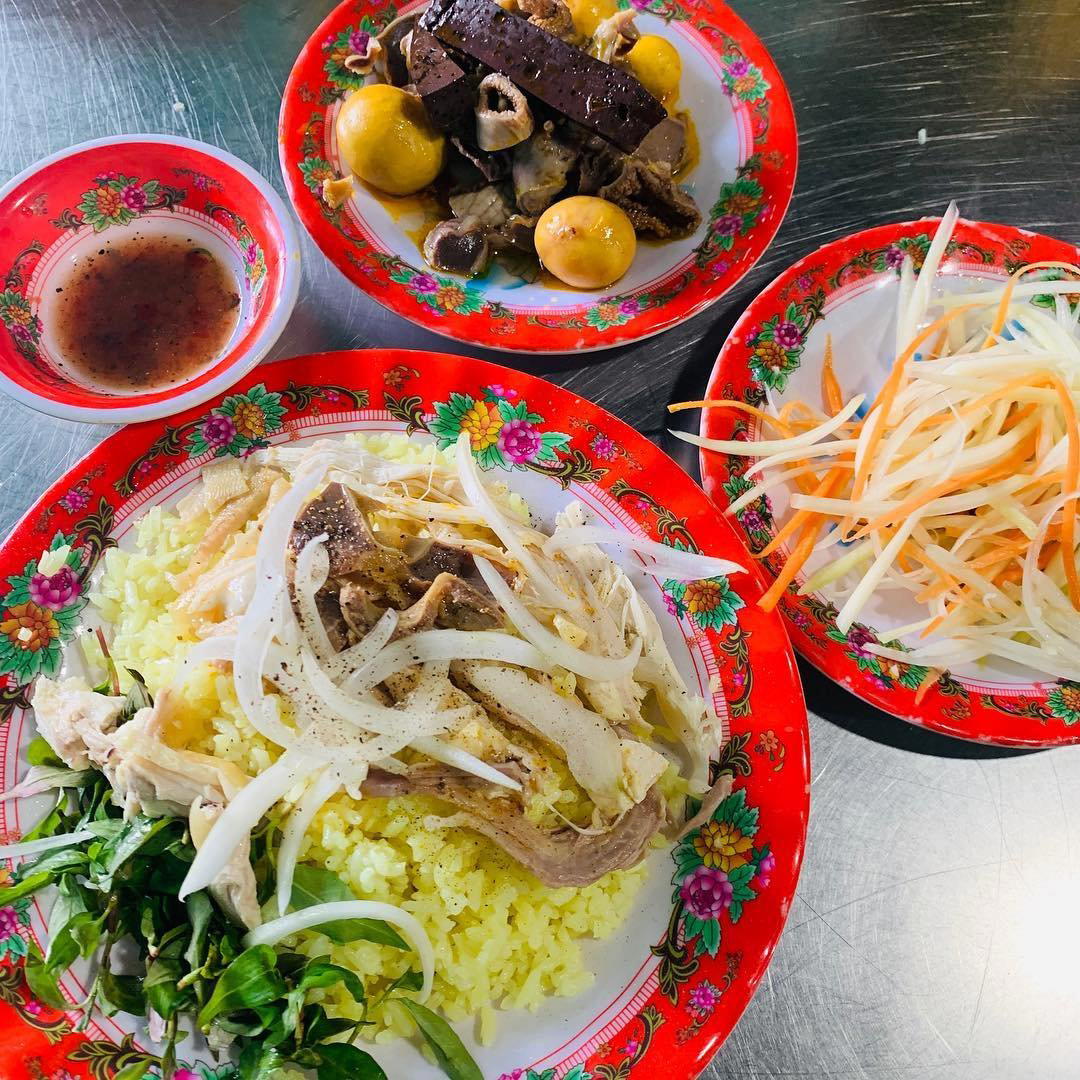
The Room Before the Rice
cơm gà an hiền is a restaurant in Hội An, Tỉnh Quảng Nam serving Hoi An Chicken Rice (Com Ga). Hoi An's eating culture is built on specificity. Each dish has its street, its neighbourhood, its canonical address, and cơm gà, the city's poached chicken rice, has several competing claims to authority. The room at 186 Lý Thường Kiệt is not trying to announce itself. The physical container is low-key by design: the kind of open-fronted shophouse format that has structured eating in central Vietnamese towns for generations, where the boundary between interior and street is functionally absent during service hours. Plastic stools, folding tables, natural light from the facade, these are not aesthetic choices made in a recent renovation, but the default architecture of a working lunch spot that has not needed to reconsider its setup.
That spatial logic matters more than it might seem. In cities like Hanoi or Ho Chi Minh City, formats like this are increasingly self-conscious, preserved or recreated as a signal of authenticity. In Hoi An, particularly away from the Ancient Town's souvenir perimeter, the shophouse lunch spot remains a functional category rather than a nostalgic one. The furniture arrangement at An Hiền serves a practical purpose: rapid turnover, communal seating that puts strangers at adjacent tables, and a sightline to the street that keeps the room feeling permeable even when full. You eat with the city rather than inside a sealed dining room.
Cơm Gà as a Local Discipline
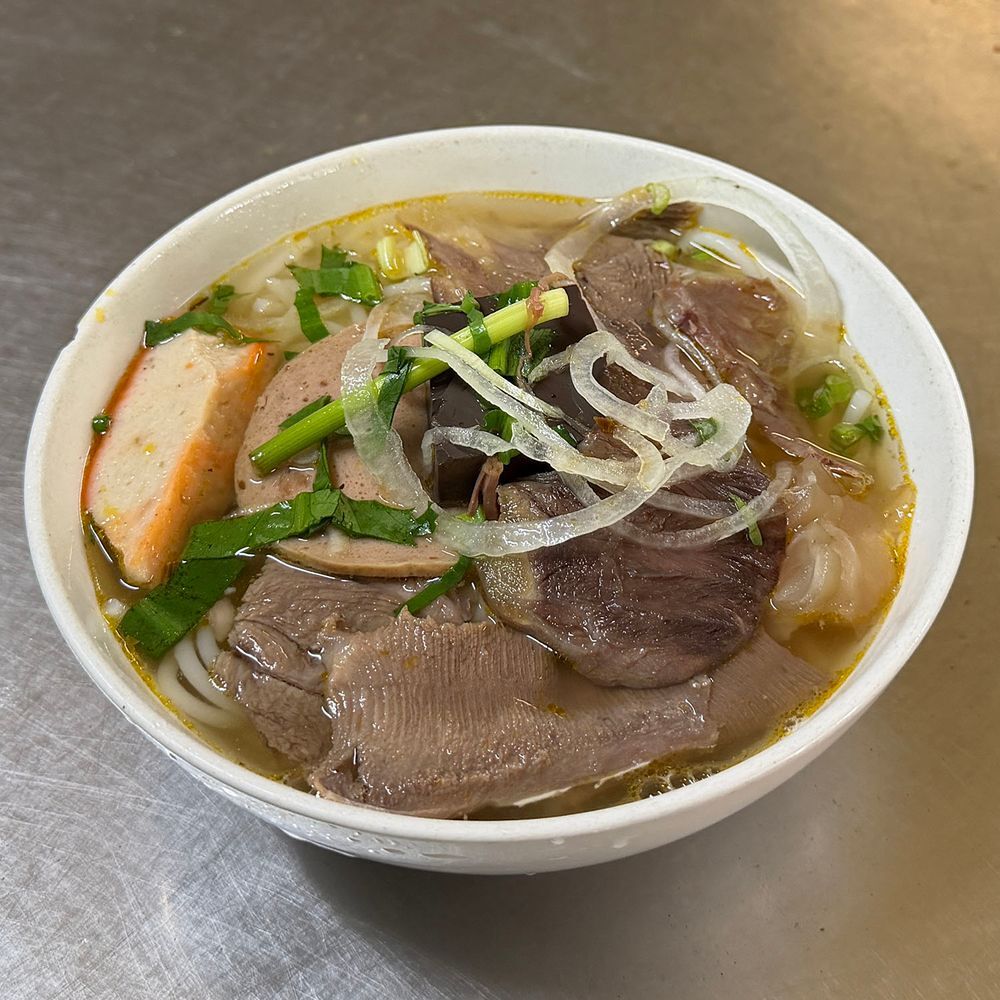
Understanding what cơm gà means in Hoi An requires some distance from the dish as it appears elsewhere in Vietnam. In the south, chicken rice tends toward the Hainanese model, with a poached whole bird, long-grain rice cooked in stock, and a dipping sauce on the side. Hoi An's version is structurally different: the rice is typically turmeric-yellow, cooked with chicken fat and stock until each grain carries colour and weight, then the chicken is shredded rather than sliced, torn into strands and dressed with aromatics, herbs, and chilli. The result is a dish built on texture contrast, soft, oily rice against dry-shredded meat, rather than the clean protein-and-starch separation of other regional versions.
This is the tradition An Hiền works within. Across Hoi An, cơm gà specialists are judged on relatively narrow criteria: the fat content and colour of the rice, the tenderness of the chicken, the herb-to-meat ratio in the shredded portion, and the quality of the accompanying broth, which typically serves as a palate-clearing side rather than a main event. The dish is cheap by any measure of comparison, not as a promotional claim, but as a structural fact of how street-level lunch operates in a Vietnamese provincial city. At this tier, value is assumed; the differentiation is purely technical.
For travellers moving between the more produced dining experiences Hoi An now offers, from hotel restaurants through to spots like Before and Now and 115 Đ. Trần Cao Vân, An Hiền represents the other register entirely. It is not competing with those addresses; it operates in a different economy of expectation. The same logic applies when comparing it to the banh mi circuit: places like Banh Mi Phuong (Hoi An) and Bánh Mì Phượng occupy a parallel lane of obsessive local craft, where the subject is a single item and the audience is both local and deeply informed visitors.
Where It Sits in the Hoi An Eating Map
The address on Lý Thường Kiệt puts An Hiền in a residential-commercial pocket that most visitors pass through rather than stop in. This is not a destination block, and there is no cluster of cafes, riverside view, or ancient architecture to anchor a walking itinerary. The location filters the crowd toward people who came specifically for the food rather than those who wandered in from a nearby attraction. That self-selecting audience shapes the room's atmosphere as much as the furniture does.
Hoi An's dining offer has stratified sharply over the past decade. At the upper end of the spectrum, you have resort-adjacent restaurants and internationally trained kitchens that place the city in conversation with spots like La Maison 1888 in Da Nang or, further afield, Gia in Hanoi. Those addresses are doing something categorically different, they are engaging with Vietnamese cuisine as a subject of formal culinary inquiry. An Hiền is not in that conversation, and does not need to be. It belongs to a different axis of seriousness: the specialist street-format restaurant where depth comes from years of repetition on a narrow menu rather than from sourcing philosophy or technique innovation.
The regional comparison worth making is to the hawker-stall model in other Southeast Asian cities, where single-dish focus and family operation over decades creates a kind of authority that no amount of design investment can replicate. The shophouse format at An Hiền is, in that sense, the correct container for what it is serving. A more finished room would send the wrong signal entirely.
Planning a Visit
Cơm gà lunch spots in Hoi An operate on compressed schedules tied to the midday meal. Arriving late, after 1pm at most, risks finding the kitchen sold out of the day's rice. The dish is prepared in fixed quantities each morning, and once it is gone, service ends. There is no dinner service in the classic cơm gà format. For anyone building a day around this, the practical approach is to arrive between 11am and noon, accept that seating is communal and turnover is fast, and treat the visit as a working lunch rather than a relaxed meal. Address the booking question simply: there is no booking system at a place like this. You show up, you find a seat, or you wait a few minutes for one to open. The same applies across the local comparable set, 42 Đường Phan Bội Châu operates on comparable terms.
The regional circuit extends further: Saffron in Hue City and Mi Quang Ba Vi in Thanh Khe both anchor single-dish traditions in the same central Vietnamese mode, each with their own local authority. Further north, Le Pont Club in Hai Phong and Phuong Nhung Restaurant in Cat Hai represent the coastal variant of this regional eating culture. For a different register altogether, Bau Troi Do in Son Tra, Nhà hàng Madame Lân in Hai Chau, and Duyên Anh Restaurant in Phu Vang each sit in their own local category. And for those tracking how Vietnamese cooking reads at the international end of the spectrum, the distance between An Hiền and something like Akuna in Ho Chi Minh City, or, for an extreme contrast, Le Bernardin in New York City or Lazy Bear in San Francisco, maps almost the entire range of what the word "restaurant" currently contains.
A Tight Comparison
Comparable venues nearby, for context on price, style, and recognition.
| Venue | Cuisine | Price | Notes |
|---|---|---|---|
| cơm gà an hiềnThis venue — the venue you are viewing | Not listed | $ | Not listed |
| Banh Mi Phuong (Hoi An) | Not listed | $ | Hoi An Old Town, Traditional Vietnamese Banh Mi |
| 42 Đường Phan Bội Châu | Not listed | $$ | Hoi An Ancient Town, Authentic Hoi An Vietnamese |
| Cargo Club Cafe & Restaurant | Not listed | $$ | Hoi An Old Town, Vietnamese-Western Fusion Cafe |
| MANGO MANGO | Old Town, Modern Vietnamese | $$ | Not listed |
| Seashell by Nu Eatery | Not listed | $$ | Hoi An Old Town, Modern Vietnamese Fusion Tapas |
At a Glance
- Rustic
- Casual Hangout
- Standalone
Casual roadside eatery with simple, authentic local atmosphere.