Our verdict
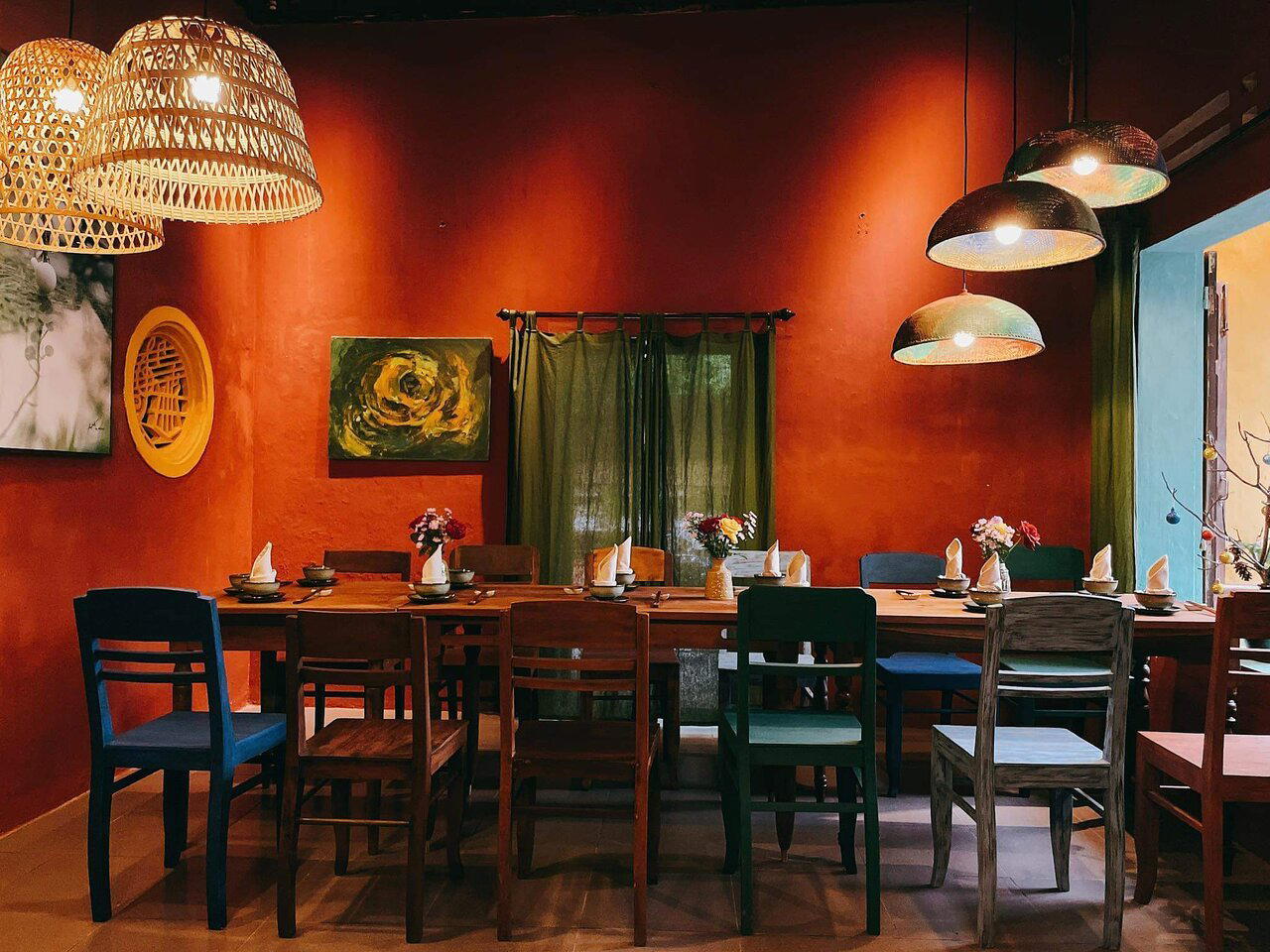
A residential-feeling address on Phan Bội Châu street, 42 sits within Hoi An's quieter Cẩm Châu ward, away from the lantern-lit tourist corridor. The setting places it among a growing tier of Hoi An spots where the draw is neighbourhood character rather than Old Town spectacle. Confirmed details on cuisine, hours, and booking remain limited, contact directly before visiting.

Pearl is the En Primeur Club membership app, where members save venues, book tables and use the concierge.
The menu
What to order
- Cao Lau noodles
- White Rose shrimp dumplings
- Fried wontons
Phan Bội Châu and the Hoi An Beyond the Old Town
Most visitors to Hoi An plot their meals within the UNESCO-protected Old Town, where lanterns string between shophouses and every second door opens onto a tourist-facing menu. The area delivers on atmosphere, but the city's more interesting dining pattern has been spreading outward for years. Cẩm Châu ward, where Phan Bội Châu street runs, sits at that outer edge, residential enough to feel unperformed, close enough to the historic core that it rewards the short detour on foot or by bicycle. The address at number 42 belongs to this quieter geography, and that positioning alone tells you something about what kind of experience to expect.
This spatial split, Old Town spectacle versus neighbourhood character, defines how informed visitors now read Hoi An's dining scene. For comparison, Cargo Club Cafe & Restaurant and Before and Now both occupy the riverfront zone where foot traffic is dense and menus skew broad. A street like Phan Bội Châu represents a different proposition: lower volume, less signage, and a clientele that found the place rather than walked past it.
Hoi An's Culinary Grammar, What the City Does at Its Core
Understanding any address in Hoi An requires some familiarity with what the city's food tradition actually contains. Hoi An has its own distinct culinary identity within central Vietnam, one shaped by its history as a trading port where Chinese, Japanese, and later French influences compressed into a compact but layered local cuisine. The results are dishes found nowhere else in the country in quite the same form: cao lầu, with its thick wheat noodles and char-pork, prepared using water historically drawn from specific local wells; white rose dumplings (bánh bao vạc), whose translucent wrappers and prawn filling require a precision that most kitchens don't attempt; and the local variant of bánh mì, which has attracted international attention through addresses like Bánh Mì Phượng and Banh Mi Phuong (Hoi An).
This is a city where culinary heritage is codified enough that quality markers exist even for casual visitors. Certain dishes are indexed to specific suppliers and methods. That context matters when assessing any Hoi An venue: the baseline of what local cooking looks like is high, and the leading eating often happens in spots that don't broadcast themselves through signage or social media volume. Nearby on the broader Hoi An circuit, 115 Đ. Trần Cao Vân represents the kind of lower-profile address that rewards attention.
Central Vietnam in a Wider Frame
Hoi An sits roughly midway between Hanoi and Ho Chi Minh City, and its food scene absorbs influences from both ends of the country while retaining something specifically its own. Visitors arriving from the south, where the cooking tends toward sweetness and abundance, find central Vietnamese food sharper and more fermented in character. Those arriving from Hanoi find it warmer and more herb-forward than the capital's restrained northern style.
Within Vietnam's premium dining tier, the reference points are elsewhere: Gia in Hanoi and Akuna in Ho Chi Minh City represent the contemporary fine-dining register that the country's two major cities have developed. Da Nang, forty minutes north of Hoi An by road, holds its own more formal tier, with addresses like La Maison 1888 in Da Nang anchoring the luxury end. Hoi An's strength lies elsewhere: in the density of heritage cooking within a walkable area, not in vertical ambition. An address on Phan Bội Châu participates in the former tradition.
For broader context on what the city offers across price points and neighbourhoods, our full Hoi An restaurants guide maps the scene in more detail.
What the Address Signals
Cẩm Châu addresses of this kind tend to attract visitors who have already spent time in the Old Town and are looking for something less rehearsed. The surrounding streets have a mix of family-run Vietnamese kitchens and the occasional café that has found a local following without heavy promotion. That pattern suggests a visit is more productive when you arrive with flexibility rather than fixed expectations about what the kitchen is doing on any given day.
Elsewhere in Vietnam's chain and volume dining tier, addresses like Big Bowl in Cam Ranh, GoGi House in Bac Lieu, and King BBQ in Rach Gia operate in a completely different register, standardised formats built for throughput. An address with no chain affiliation and no digital footprint of that kind sits outside that system, for better or worse. The trade-off is a more variable experience and less advance information; the upside is the possibility of something that hasn't been optimised for the tourist economy.
Planning a Visit
The practical advice that follows applies to this category of Hoi An address broadly: arrive earlier in the evening rather than later if the kitchen follows Vietnamese family-dining rhythms, which typically means peak service between 5:30pm and 8pm. Walk-in is the default mode for neighbourhood spots of this type. Given the residential character of Cẩm Châu ward, the address is most comfortably reached on foot from the Old Town in around fifteen minutes, or by the rental bicycles that remain the standard way to move through Hoi An's outer wards. Taxis and ride-hailing apps operate throughout the city and reach this area without difficulty.
Visitors building a broader Hoi An itinerary might pair a visit here with the more documented addresses nearby. The city rewards that kind of layered approach: a heritage dish at a recognised specialist, then an unscripted dinner somewhere the recommendation came from a guesthouse owner rather than a review aggregate. That combination is closer to how Hoi An actually works for people who spend more than two nights in the city.
Frequently asked questions
What's the address for 42 Đường Phan Bội Châu?
42 Đường Phan Bội Châu is located at 42 Đường Phan Bội Châu, Cẩm Châu, Hội An, Quảng Nam 564070, Vietnam, Hoi An.
Is 42 Đường Phan Bội Châu suitable for vegetarians visiting Hoi An?
No cuisine type or menu format is confirmed for this address in Hoi An's Cẩm Châu ward. That said, Hoi An has a documented tradition of vegetarian eating tied to the lunar calendar, on the 1st and 15th of each lunar month, many local kitchens shift to full vegetarian menus, a practice rooted in the city's Buddhist communities rather than tourist demand. Checking the kitchen's orientation directly before your visit is the reliable approach for any dietary requirement.
Do I need a reservation for 42 Đường Phan Bội Châu?
No booking contact or reservation policy is confirmed for this address. Venues on Phan Bội Châu, which runs through Cẩm Châu rather than the high-traffic Old Town core, tend to operate with more walk-in availability than their lantern-lit counterparts closer to the Thu Bồn river. Arriving early in the evening is the practical hedge until operating details are confirmed.
What's the standout thing about 42 Đường Phan Bội Châu?
The address itself is the starting point: Phan Bội Châu is outside the UNESCO Old Town boundary, which means it draws a local-to-visitor ratio that differs noticeably from Trần Phú or Nguyễn Thái Học. That positioning in Cẩm Châu places it within a neighbourhood used by Hoi An residents rather than optimised for heritage tourism foot traffic. Whether the kitchen or format takes advantage of that context is something the venue's confirmed details would need to establish.
What if I have allergies at 42 Đường Phan Bội Châu?
No menu or ingredient information is confirmed for this Hoi An address, which makes pre-visit communication the responsible approach. Central Vietnamese cooking frequently uses shrimp paste, peanuts, and fish sauce as structural ingredients rather than garnishes, so allergy conversations at any local venue in Quảng Nam province require specificity. Carry written Vietnamese translations of your restrictions as a baseline.
Should I splurge on 42 Đường Phan Bội Châu?
No pricing tier is confirmed for this address in Cẩm Châu, Hoi An. Phan Bội Châu sits outside the premium dining belt that clusters near the Old Town's listed shophouses, so the working assumption leans toward the mid-to-accessible range that characterises neighbourhood eating in Quảng Nam, though that should be verified before the visit. The splurge question matters more at confirmed fine-dining addresses in the city centre.
Price and Positioning
| Venue | Cuisine | Price |
|---|---|---|
| 42 Đường Phan Bội ChâuThis venue (the venue you are viewing) | Authentic Hoi An Vietnamese | $10–20 |
| White Rose (Bông Hồng Trắng) | Traditional Hội An Dumplings | $1–10 |
| Before and Now | Modern Vietnamese Fusion Urban Bistro | Not listed |
| Cargo Club Cafe & Restaurant | Vietnamese-Western Fusion Cafe | $10–20 |
| Mai Fish Restaurant | Traditional Vietnamese Family-Style | $10–20 |
| Cầu An Bàng | Vietnamese Seafood | $10–20 |
Continue exploring
More in Hoi An
Restaurants in Hoi An
All restaurants in Hoi An →
Bars in Hoi An
All bars in Hoi An →
Details
- Rustic
- Cozy
- Casual Hangout
- Family
- Historic Building
- Extensive Wine List
- Craft Cocktails
- Street Scene
- A La Carte
- Cocktails
- Wine
- Vegetarian Friendly
Warm and welcoming with a gentle, refined atmosphere evoking the slow rhythm of Hoi An's Ancient Town.