Our verdict
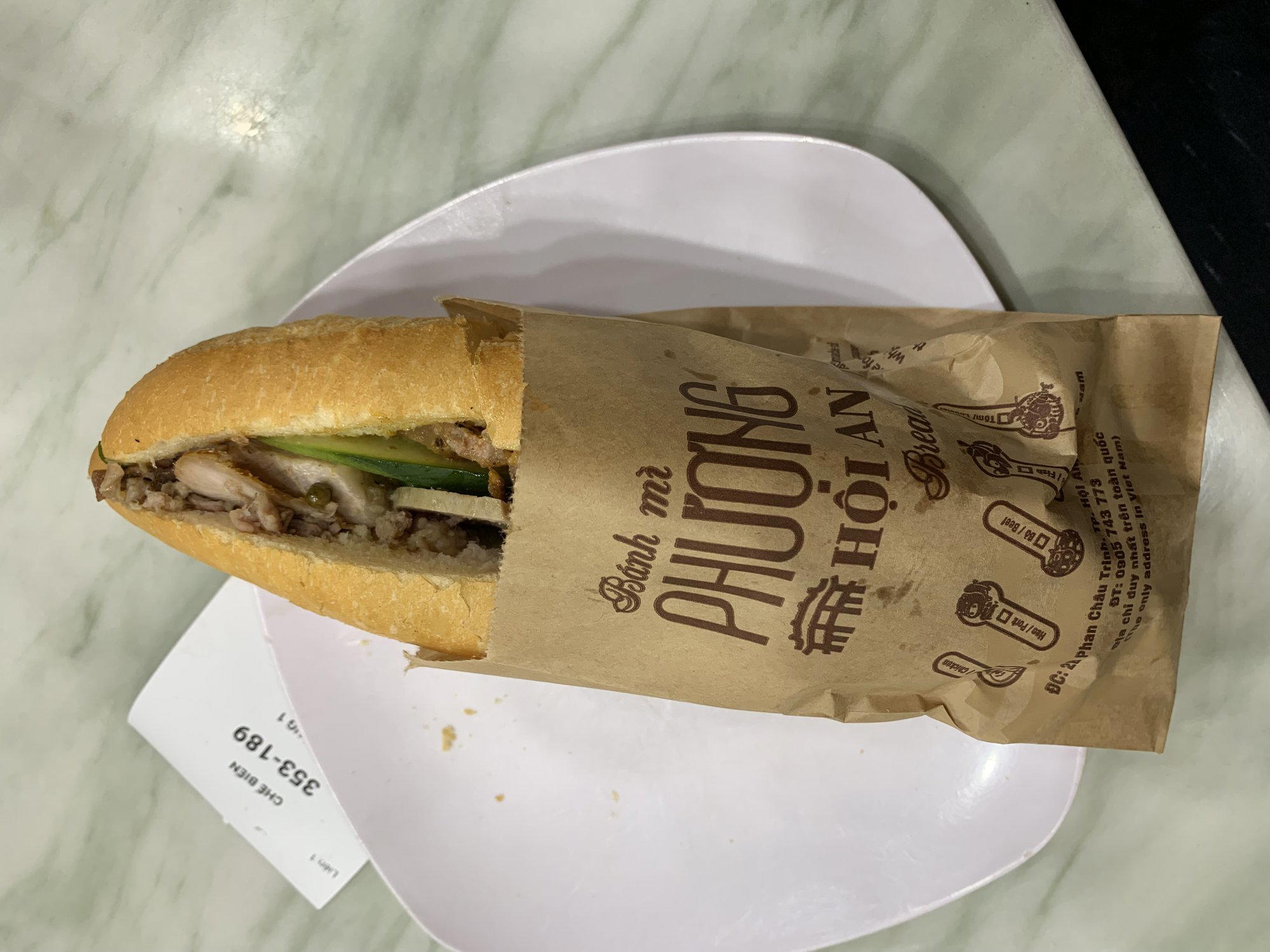
On a narrow lane off Hoi An's Ancient Town, Bánh Mì Phượng has become the reference point against which bánh mì across Vietnam is quietly measured. The queue forms early, the bread is baked in-house, and the price sits well below a dollar, making it one of the most visited street-food counters in central Vietnam. Come before the morning rush or prepare to wait.

Pearl is the En Primeur Club membership app, where members save venues, book tables and use the concierge.
The menu
What to order
- Bánh Mì Thập Cẩm
- Bánh Mì Thịt Nướng
The Queue Before the Sandwich
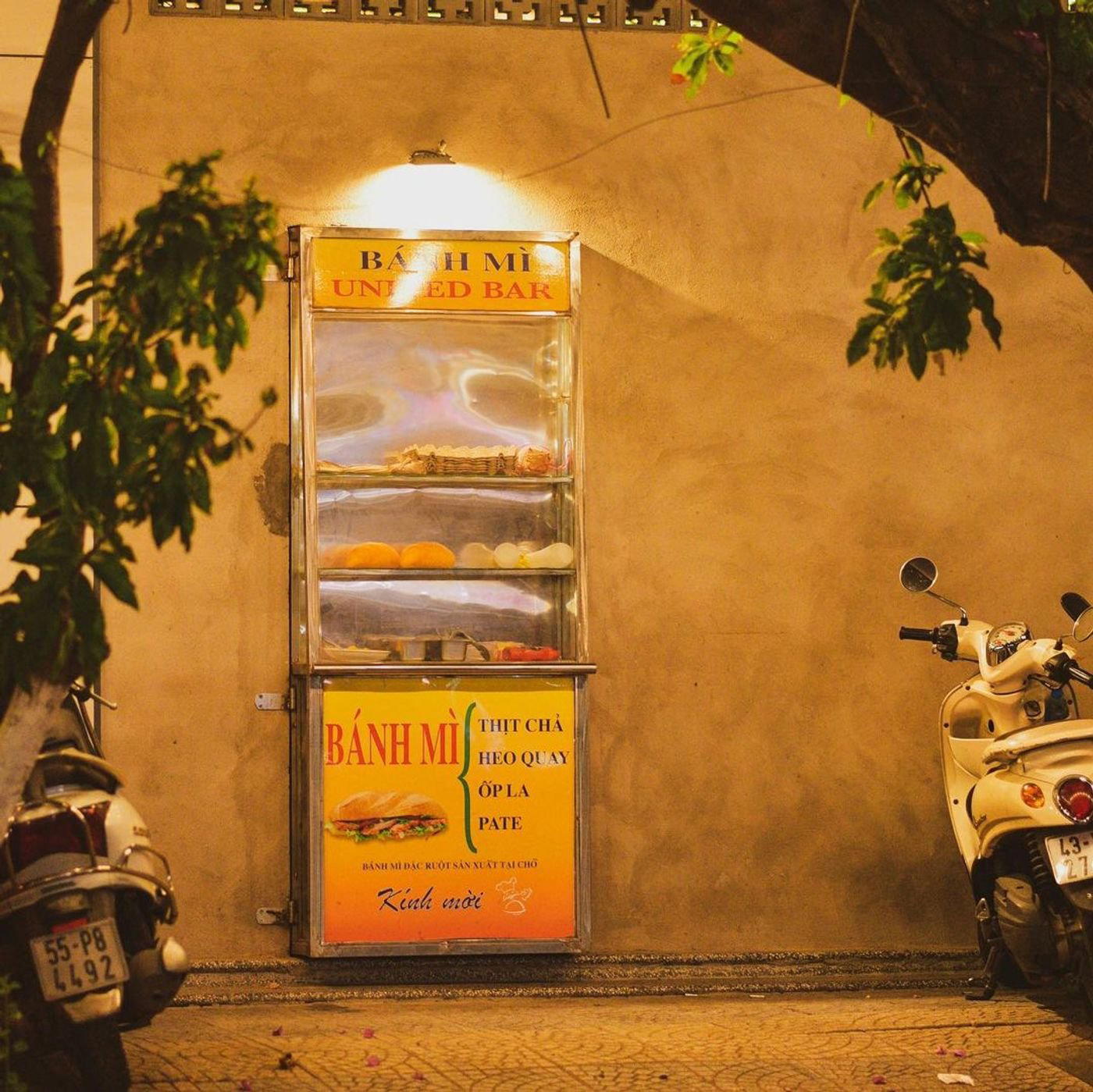
On Phan Chu Trinh street, a few minutes' walk from Hoi An's Ancient Town bridge, the sidewalk outside Bánh Mì Phượng fills before most restaurants in the neighbourhood have unlocked their doors. The crowd is the first signal. Locals on motorbikes idle alongside travellers consulting phone maps, and the scent of fresh-baked bread cuts through the morning humidity before the shopfront is even visible. This is not a scene manufactured for tourism, the queue existed before the international press arrived, and it persists on weekday mornings when the lantern-lit streets are quiet.
Bánh mì as a category occupies a specific place in Vietnamese food culture: it is the practical inheritance of French colonial baking fused with Southeast Asian filling traditions, and Hoi An's version of that sandwich has developed its own regional character. The bread here tends toward a thinner, crispier crust than you find in Saigon, and the fillings lean toward balance rather than heat. Bánh Mì Phượng sits at the centre of that local tradition and is frequently cited, including by Anthony Bourdain during a televised visit, as the standard against which other bánh mì are measured.
What Draws the Crowd
The appeal is not novelty. Street-food counters serving bánh mì are common across every Vietnamese city, from the vendor carts near Mi Quang Ba Vi in Thanh Khe to the lanes around Bau Troi Do in Son Tra, and the format is not exclusive to Hoi An. What distinguishes the counters that develop genuine reputations in this category is consistency at volume. Bánh Mì Phượng reportedly serves hundreds of sandwiches daily, each assembled to order from a counter displaying the day's fillings. The bread is baked on-site, which matters: a bánh mì is structurally dependent on the baguette achieving the right ratio of crust to crumb, and stale or soft bread collapses the entire proposition.
In Hoi An's broader dining context, the restaurant scene spans considerable range. Fine-dining references like La Maison 1888 in Da Nang and destination tasting menus at Gia in Hanoi represent one end of Vietnamese food culture. Bánh Mì Phượng occupies the opposite end: no reservation, no printed menu, no service charge. The counter operates on the logic of the market stall, speed, familiarity, and daily repetition. That logic, executed well, creates a more durable reputation than many restaurants achieve with far greater investment.
The Hoi An Street-Food Tier
Hoi An has a layered food scene. The Ancient Town's restaurant strip, which includes sit-down venues like Cargo Club Cafe and Restaurant and Before and Now, serves a predominantly tourist audience and prices accordingly. A short walk toward the residential streets around Phan Chu Trinh shifts the dynamic entirely. Here, the customer base is mixed, the prices are in Vietnamese dong at local rates, and the food is calibrated for daily consumption rather than occasion dining.
Within that street-food tier, Bánh Mì Phượng operates as the anchor reference. Visitors moving through central Vietnam who have eaten at Saffron in Hue City or restaurant-forward venues in Ho Chi Minh City like Akuna will find the contrast instructive. The bánh mì counter asks nothing of the diner beyond showing up and pointing at the fillings, yet it generates the kind of word-of-mouth that formal restaurants pursue through awards and press coverage. For a broader read on where this counter sits within Hoi An's food scene, the full Hoi An restaurants guide maps the neighbourhood's dining patterns in more detail.
Planning the Visit
The editorial angle on Bánh Mì Phượng is, unavoidably, logistical. There is no reservation system, no phone booking, and no website. The counter operates on a first-come basis, and peak times, mid-morning and around lunchtime, produce queues that move steadily but require patience. The practical strategy is to arrive early, before 9am, when the bread is freshest and the crowd thinner. Bánh Mì Phượng sits at 2b Phan Chu Trinh in the Cam Chau ward, walkable from the Ancient Town's eastern edge.
Visitors who plan Hoi An itineraries around formal bookings at venues like 42 Đường Phan Bội Châu or 115 Đ. Trần Cao Vân often underestimate how much of Hoi An's food identity lives outside the reservation system entirely. The bánh mì counter is a reminder that planning, in street-food contexts, means timing rather than booking. It also means cash: no card payment infrastructure is typical at counters of this type, and the price per sandwich runs well below the equivalent of one US dollar at current exchange rates.
The broader Vietnam dining circuit rewards flexibility. Travellers moving between Le Pont Club in Hai Phong and Phuong Nhung Restaurant in Cat Hai, or calibrating a central Vietnam itinerary around both riverside dining and market food, will find Bánh Mì Phượng sits naturally as a morning anchor before fuller itinerary days. It is categorically different from venues like Nhà hàng Madame Lân in Hai Chau or Duyên Anh Restaurant in Phu Vang, and that difference is the point. The comparison set is not other restaurants, it is every other bánh mì counter in Vietnam.
For context on what draws visitors to Hoi An's Ancient Town in the first place, the Banh Mi Phuong (Hoi An) listing provides a direct reference. The address on Phan Chu Trinh is easy to locate by foot from the central market area, and the counter is typically open through the morning and into early afternoon, though sell-out times vary with daily supply.
Frequently asked questions
How do I find Bánh Mì Phượng?
Bánh Mì Phượng is located at 2b Đ. Phan Chu Trinh, Cẩm Châu, Hội An, Quảng Nam 560000, Vietnam, Hoi An.
What do regulars order at Bánh Mì Phượng?
The counter on Phan Chu Trinh is known for its assembled bánh mì, the Vietnamese baguette sandwich built with fillings layered to order. Regulars tend to arrive with a specific combination in mind rather than consulting a menu, which speaks to how fixed the offering is. Because no menu details are published and there is no website, the safest approach is to observe what the person ahead of you is having and point if the language barrier applies.
What's the best way to book Bánh Mì Phượng?
Reservations are recommended for Bánh Mì Phượng in Hoi An. Confirm current policy via the venue's official channels.
What's the best way to book Bánh Mì Phượng?
There is no booking system. Bánh Mì Phượng operates as a walk-up street counter at 2b Phan Chu Trinh in Hoi An's Cam Chau ward, with no phone number listed and no website. The practical strategy is to arrive before the mid-morning rush, when the queue on the sidewalk is at its longest. Cash is the assumed payment method at counters of this type in Hoi An.
Comparable Spots, Quickly
| Venue | Cuisine | Price |
|---|---|---|
| Bánh Mì PhượngThis venue (the venue you are viewing) | Iconic Hoi An Bánh Mì | $1–10 |
| Cargo Club Cafe & Restaurant | Vietnamese-Western Fusion Cafe | $10–20 |
| Red Bridge Cooking School, Restaurant, and Villa - Hoi An Riverside | Modern Vietnamese | $20–30 |
| Mai Fish Restaurant | Traditional Vietnamese Family-Style | $10–20 |
| MANGO MANGO | Modern Vietnamese | $20–30 |
| Seashell by Nu Eatery | Modern Vietnamese Fusion Tapas | $10–20 |
Continue exploring
More in Hoi An
Restaurants in Hoi An
All restaurants in Hoi An →
Bars in Hoi An
All bars in Hoi An →
Details
- Well Known
- Rustic
- Casual Hangout
- Solo
- Standalone
- Historic Building
- Local Sourcing
- Street Scene
- A La Carte
- Vegetarian Friendly
Current opening hours
- Monday
- 6:30 AM–9 PM
- Tuesday
- 6:30 AM–9 PM
- Wednesday
- 6:30 AM–9 PM
- Thursday
- 6:30 AM–9 PM
- Friday
- 6:30 AM–9 PM
- Saturday
- 6:30 AM–9 PM
- Sunday
- 6:30 AM–9 PM
Hours can change for holidays and private events. Hours as of .