
Tabelog 100 #75
Our verdict
Kinokawa’s ramen culture rewards speed, clarity and sourcing discipline rather than ceremony. Urashima belongs to that practical regional tier: a house-style ramen shop selected for Tabelog Ramen WEST 100 in 2023, 2024 and 2025, with Miyamoto Seimen noodles, a ticket system and a compact room built for counter, table and tatami dining.

Pearl is the En Primeur Club membership app — saves, bookings, and concierge access live there. Same editors, same standards.
- Address
- 和歌山県紀の川市花野20-7
- Phone
- +81736775473
- Website
- tabelog.com
- Directions
- Get directions
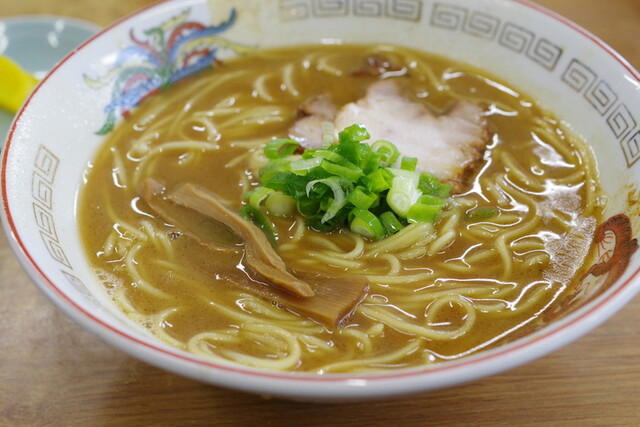
Approach in Kinokawa and the first cue is scale, not spectacle: ramen here is a local habit, folded into errands, station walks and short lunch windows rather than staged dining. Urashima fits that grammar. Its appeal is practical rather than theatrical: a bowl, a seat, and little need for ceremony.
That restraint is the point. Western Japan’s ramen conversation often turns to Kyoto, Osaka and Fukuoka, but Wakayama has its own logic, shaped by chuka soba culture, local regulars and fast-turning shops. Tabelog recognition in 2025 places Urashima in a broader regional conversation rather than a tourist-only circuit. A listed score of 3.69 signals a shop with visible attention in a dish type where small changes in noodle handling, broth concentration and service rhythm are obvious to regular diners.
Ramen puts execution at the centre of the bowl
Ingredient handling is often framed as fine-dining territory, but ramen is one of Japan’s clearest arguments for why it matters. Noodles, soup and timing shape texture, pacing and how the bowl reads from first lift to last sip. At Urashima, the conversation stays close to the mechanics of ramen rather than drifting into vague ceremony. In this category, the noodle is not a neutral carrier; it determines how much broth clings, how quickly the bowl should be eaten, and whether the kitchen can stay consistent through service.
That matters in Kinokawa because the city is not selling the density of a major urban ramen district. A shop here has to justify the journey through execution, not surrounding hype. Compared with a higher-spend regional table such as Shintaro, or a destination Italian address such as Villa Aida, this is another kind of precision: lower ceremony, tighter price band, faster decisions and less room to hide behind ambience. Against another regional ramen reference, Chuka Soba Senmon Ten Ide Shoten, the shared low-cost category shows how Wakayama ramen can stay accessible while attracting serious attention.
The recognition frames expectations. Tabelog’s listing is not the same thing as a luxury ranking, and that distinction is useful. It places Urashima in a ramen-specific field, where repeatability, bowl identity and local loyalty matter more than wine service or tasting-menu choreography. For travellers who equate recognition with long meals and high prices, this is the opposite lesson: a short-format shop can carry regional authority without fine-dining signals.
A ramen format built for quick decisions
The practical arrangement shows how to use the place. Urashima is best read as a ramen stop where the meal is led by the bowl rather than by a long room experience. Decide what you want, keep the pace of the food in mind, and let the format do what ramen does well: concentrate flavour, texture and timing into a compact visit.
There is a practical regional point, too. In dense city ramen districts, convenience can disguise average cooking; in smaller cities, access requires more intent. Kinokawa is part of Wakayama Prefecture’s everyday food map, and a ramen stop here fits wider local planning rather than replacing it. Readers building a fuller itinerary can use the broader Kinokawa restaurant landscape, then cross-check sleep, drinks and daytime planning through local hotel, bar and winery research and Our full Kinokawa experiences guide.
Across Japan’s casual and specialist dining spectrum, the lesson is not that every low-cost shop behaves alike. Some everyday dining rooms ask about ingredient focus, drinking rhythm or simple utility. Ramen compresses those questions into one bowl and one short service window.
That compression is why the category travels well editorially. The same country can hold many narrow, highly specific formats without forcing them into one national dining stereotype. Urashima’s value is specific: it shows how a Kinokawa ramen shop can earn regional attention through focus, accessibility and a room rhythm built around the bowl.
How to read the recognition without overcomplicating the meal
Treat the recognition as a filter, not a script. Tabelog’s 2025 data narrows the field for travellers who want a credible Wakayama ramen stop, but the meal remains direct. This is not a long tasting arc or chef-led narrative. The reason to go is simpler: ramen in Kinokawa, a low listed budget, and a service model that puts the bowl before ceremony.
That distinction helps when comparing it with other Japanese dining formats. Meat specialists, burger shops, city restaurants and mountain-area addresses all depend on setting and category expectations. Ramen has less patience for drift. If the noodles or soup are wrong, the room cannot rescue the bowl.
For readers outside Japan, useful parallels sit in specialist, narrow-format dining rather than luxury dining. Focused Japanese formats gain authority through constraint: a narrow menu logic, a clear rhythm and repeatable execution. In Kinokawa, the same principle applies locally: limit the frame, control the rhythm, and let the bowl carry the argument.
The verdict is practical rather than breathless. Urashima is for travellers who understand that a serious meal in Japan does not need long duration or a high bill to be worth structuring around. Its 2025 Tabelog recognition, 3.69 listed score and low budget band make it a sharp read on Wakayama ramen: accessible, disciplined and rooted in the mechanics of the bowl.
Frequently asked questions
Does Urashima work for a family meal?
Yes, for diners looking for an efficient ramen stop in Kinokawa rather than a long, formal meal.
What kind of setting is Urashima?
Urashima is a ramen venue in Kinokawa. It is listed with Tabelog recognition in 2025 and a score of 3.69.
What does dinner at Urashima typically cost?
Pricing at Urashima is listed as - JPY 999 - JPY 999 View spending breakdown.
Where is Urashima located?
Kinokawa.
How It Stacks Up
Comparable venues by cuisine and price in the same metro.
| Venue | Cuisine | Price | Awards | Notes |
|---|---|---|---|---|
| UrashimaThis venue — the venue you are viewing | Traditional Wakayama Ramen Shop | $1–10 | Tabelog 100 #75 | Not listed |
| うらしま | Traditional Wakayama Ramen Shop | $1–10 | Tabelog 100 #75 | 花野 |
| Buta Daigaku (豚大学) | Grilled Pork Bowl (Butadon) | $1–10 | Not listed | Shimbashi |
| Kitchen Nankai (キッチン南海) | Japanese Yoshoku | $1–10 | Tabelog 100 #88 | Jimbocho |
| Arry 8Bites | Japanese Small Bites | Not listed | Not listed | Tokyo |
| Koja Sobaya | Authentic Miyako Soba | $1–10 | Not listed | Hirara |
Recognition history
Dated appearances from independent guides and award organizations, with the underlying list record or original source where available.
Tabelog 100 #75 · No. 75
Tabelog · Tabelog 100 - Ramen - WEST - 2025
Continue exploring
More in Kinokawa
Restaurants in Kinokawa
Browse all →



Bars in Kinokawa
Browse all →
Hotels in Kinokawa
Browse all →

Wineries in Kinokawa
Browse all →
Details
- Lively
- Rustic
- Solo
- Casual Hangout
- Group Dining
- After Work
- Standalone
- A La Carte
- Counter Dining
Simple, no-frills house-style ramen shop with counter, tables, and tatami seating, focused on efficient service and the rich aroma of Wakayama tonkotsu-shoyu ramen rather than design or décor.