
Nagoya’s ramen culture rewards precision as much as comfort, and Chuka Soba Ueda Seimen Ten belongs to the compact, counter-led end of that scene. Its 2025 Tabelog Ramen AICHI 100 selection, 16-seat format, and sub-¥1,000 listed budget make it a sharp stop for travelers reading the city through everyday noodles rather than formal dining rooms.
Pearl is the En Primeur Club membership app — saves, bookings, and concierge access live there. Same editors, same standards.
- Address
- 愛知県名古屋市中区錦2-4-8 宮崎錦ビル 1F
- Website
- tabelog.com
 Saves & bookings on Pearl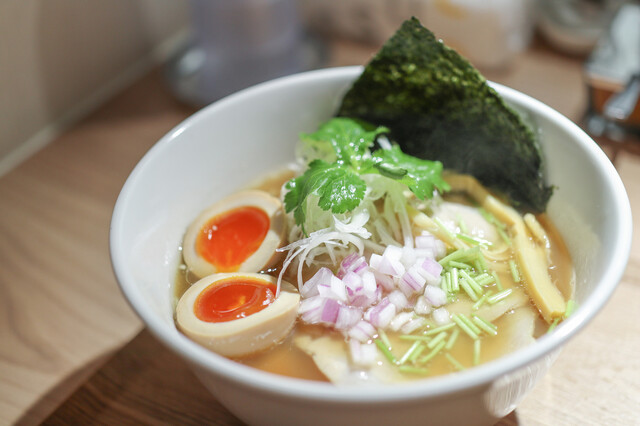
Approaching a ramen counter in central Nagoya, the first impression is rarely ceremony. It is compression: a narrow room, the rhythm of solo diners, the quick turnover of bowls, and the quiet choreography of a kitchen built for repetition rather than performance. Chuka Soba Ueda Seimen Ten sits in that register, in Nishiki near Marunouchi, where office blocks, station exits, and compact dining rooms make ramen feel less like a detour than part of the city’s working pulse.
Nagoya is often framed through miso katsu, hitsumabushi, and kishimen, but its ramen scene has become a useful measure of the city’s appetite for detail at modest price points. A Tabelog Ramen AICHI 100 selection in 2025 places this shop inside a local bracket where small differences matter: broth style, noodle handling, counter speed, and consistency across lunch and evening service. That recognition is not decoration; in Japan’s ramen culture, it signals that a small room can compete on repeatability as much as personality.
A short-format ramen meal with a clear beginning, middle, and finish
The tasting progression at a ramen shop is compressed into a single bowl, which is why the format punishes excess. There is no long menu arc to hide behind. The first spoonful establishes the broth’s direction, the noodles carry the pace, and the final third reveals whether the bowl has balance or fatigue. In this category, the meal’s narrative is measured in minutes, not courses, and the craft lies in holding attention without theatrical pacing.
That is the useful lens for Chuka Soba Ueda Seimen Ten. The name points toward chuka soba, a style rooted in ramen’s older, Chinese-influenced vocabulary rather than the heavier contemporary language associated with maximal tonkotsu or elaborate limited bowls. Without needing a chef mythology, the format tells the reader what to look for: clarity, seasoning control, noodle texture, and the way toppings support the bowl rather than turn it into a catalogue.
At this level, a 16-seat counter is not a quaint detail. It shapes the meal. Small capacity keeps the experience direct, limits the distance between kitchen and diner, and makes service rhythm part of the food. Solo dining is not a compromise in this setting; it is close to the default grammar of Japanese ramen. Families are also accommodated, which matters in a city where serious everyday food is not automatically coded as adult-only.
Where it fits in Nagoya's dining scale
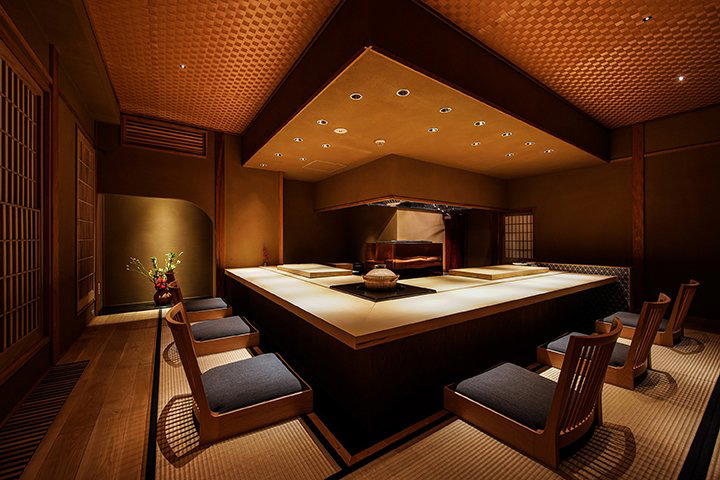
Nagoya’s premium dining range stretches from high-spend kappo rooms to sushi counters and tightly focused casual specialists. Kappo Yabushita, listed in the ¥15,000 to ¥19,999 band, represents a different kind of meal entirely: reservation-led, extended, and priced for occasion dining. Nepal STATION, in the ¥1,000 to ¥1,999 range, sits closer to daily city eating but in another culinary lane. Ramen in the sub-¥1,000 bracket occupies its own competitive space, where value is not shorthand for simplicity and recognition depends on execution under pressure.
That is why the Tabelog 100 listing matters here. It separates a low-ticket bowl from anonymous convenience dining and places it in Aichi’s curated ramen conversation. The award’s scope is regional rather than national, which is appropriate: ramen is intensely local, and Nagoya’s stronger shops are judged against the preferences, commuting patterns, and repeat habits of Aichi diners before they become travel targets.
For visitors building a food day around central Nagoya, this kind of stop also prevents the itinerary from becoming too formal. A city reads differently when lunch is a counter bowl rather than another reservation. For broader planning, Our full Nagoya restaurants guide gives the dining map, while Our full Nagoya hotels guide, Our full Nagoya bars guide, Our full Nagoya wineries guide, and Our full Nagoya experiences guide place the meal inside a fuller trip.
How to read the room, not just the bowl
The better way to approach a counter like this is to treat it as a quick, disciplined progression rather than a leisurely tasting menu. Ramen rewards attention, but it does not ask for prolonged analysis at the table. The room’s counter seating, non-smoking policy, and compact capacity all point toward a meal built around focus and pace. The absence of private rooms also tells its own story: this is public, direct, and urban, closer to a daily ritual than an occasion restaurant.
Payment norms matter in small Japanese restaurants, and cash-only operation keeps the experience aligned with many independent ramen shops. Parking is not part of the proposition; central Nagoya’s station-adjacent dining culture assumes foot traffic, train access, and nearby coin parking when needed. The restaurant is close to Marunouchi Station and also reachable from Fushimi, which makes it more useful for travelers moving between hotel districts, office areas, and evening drinking streets than for those planning a destination meal on the city’s edge.
The editorial case is simple: Chuka Soba Ueda Seimen Ten is not trying to behave like a luxury restaurant, and judging it by that vocabulary would miss the point. Its value lies in the Japanese ability to make a short meal carry standards normally associated with more expensive formats. For travelers who usually reserve their Nagoya meals around hitsumabushi or sushi, a recognized ramen counter adds a different register: fast, concentrated, local, and tied to the everyday life of the city.
Readers comparing broader Japan dining formats can use this as a counterpoint to other EP Club restaurant coverage, from 1022, 451, Aaron, Alan., and All Day Dining Montmartre to regional specialists such as -Grilled beef Sukiyaki- KAMAKURA TANUKIAN 鎌倉 たぬき庵 in Kamakura. 鮪と炭火焼き うお炭 秋葉原店 in Tokyo.cafe in Osaka.know in Kumamoto, (Shoku) Vietnam in Kawasaki, [Curry Senmon Ten] Maruyama Kyoju. in Sapporo, Jōdo Saké Bar in Los Angeles, and Onigiri Time in Pasadena.
Quick Comparison
Comparable venues at a glance for context.
| Venue | Cuisine | Price | Notes |
|---|---|---|---|
| Chuka Soba Ueda Seimen TenThis venue — the venue you are viewing | Japanese Ramen | $ | Not listed |
| Sapporo Ramen Ezo Men Rock Shinsakae ten | Sapporo-style Ramen | $ | Naka |
| Kanmidokoro Shibafuku | Japanese Sweets | $ | Naka |
| Ramen Daruma Shokudo | Ramen and Japanese curry diner | $ | Nakagawa |
| Kakuozan Kichi Imo Honten | Japanese sweet potato confectionery shop | $ | Chikusa |
| Kounan JR sentoraru tawazu ten | Ramen & Gyoza Shop | $ | Nakamura |
Recognition history
Dated appearances from independent guides and award organizations, with the underlying list record or original source where available.
Tabelog 100 #85 · No. 85
Tabelog · Tabelog 100 - Ramen - AICHI - 2025
Continue exploring
More in Nagoya
Restaurants in Nagoya
Browse all →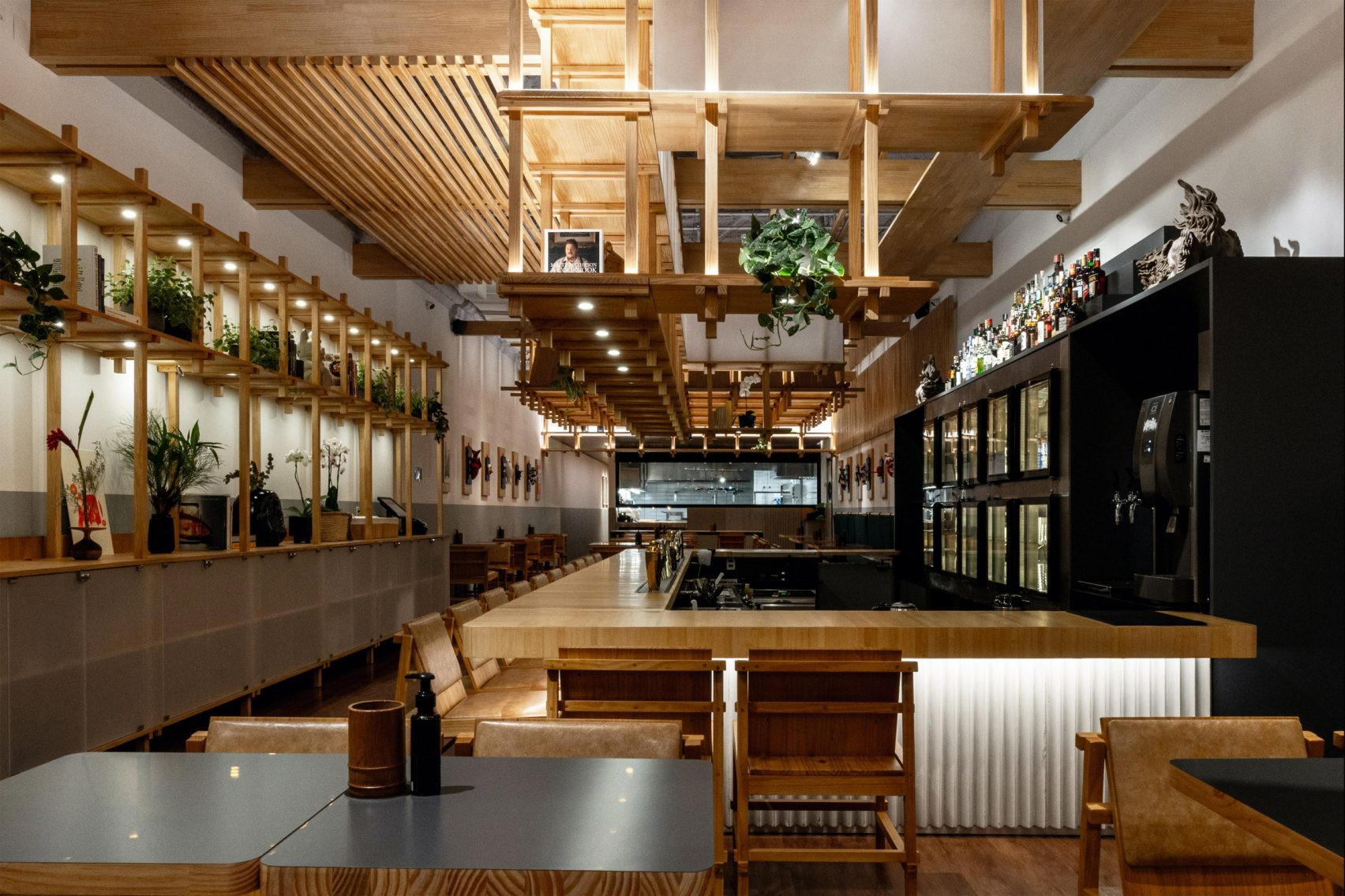
At a Glance
- Modern
- Trendy
- Minimalist
- Cozy
- Solo
- Family
- Casual Hangout
- Standalone
- Design Destination
A stylish, modern ramen shop with a relaxed counter-seating atmosphere that feels designed for quick, casual ramen visits.