
Chuka Soba Naru is a 10-seat ramen and tsukemen counter in Chikusa Ward, recognised in Tabelog’s Ramen AICHI 100 selection for 2025 and previously in the Ramen EAST 100 selection for 2024. The appeal is precise rather than theatrical: a compact ticket-machine format, counter seating, and a reputation that places it inside Aichi’s serious ramen conversation.
Pearl is the En Primeur Club membership app — saves, bookings, and concierge access live there. Same editors, same standards.
- Address
- 3-18 Honencho, Chikusa Ward, Nagoya, Aichi 464-0076, Japan
- Phone
- +81 52-717-6028
- Website
- ameblo.jp
 Saves & bookings on Pearl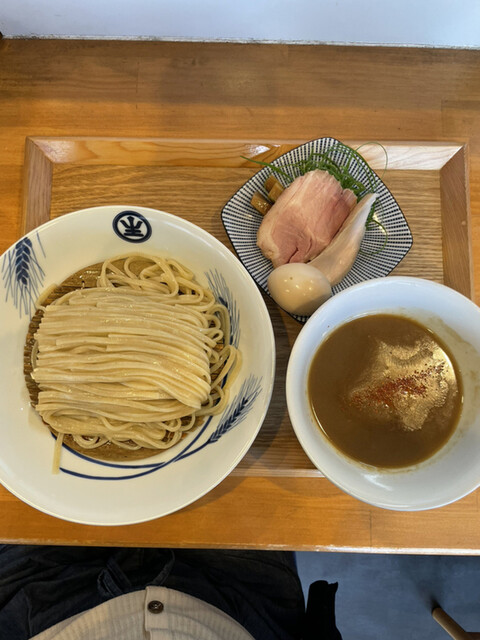
Approaching a serious ramen counter in Nagoya is rarely about grand arrival. The signal is usually smaller: a short frontage, a ticket machine, a few seats, and the knowledge that the room can turn from calm to full in minutes. Chuka Soba Naru belongs to that school of Japanese dining, where the format is stripped down and the scrutiny falls on broth, noodles, pacing, and consistency rather than décor or ceremony.
Nagoya’s noodle culture has a practical streak. The city is better known abroad for miso katsu, hitsumabushi, kishimen, and tebasaki, yet its ramen scene has developed a sharper internal hierarchy through specialist counters that operate with limited seats and narrow menus. Recognition from Tabelog’s Hyakumeiten lists matters in that environment because it separates everyday neighbourhood popularity from sustained critical attention across a prefecture-level field. Chuka Soba Naru’s selection for Tabelog Ramen AICHI 100 in 2025, after appearing in the Ramen EAST 100 selection in 2024, puts it in that more closely watched category.
Aichi ramen measured by recognition, not ceremony
The strongest way to read this address is as part of a regional ramen ranking culture rather than as a destination restaurant in the fine-dining sense. Japan’s ramen counters are often assessed on a narrow band of details: how the soup carries depth without heaviness, how the noodles hold shape, how dipping noodles manage concentration without fatigue, and how cleanly the kitchen repeats the same bowl across services. Tabelog’s Ramen AICHI 100 list gives that kind of discipline a public frame.
Chuka Soba Naru is categorised around ramen and tsukemen, the latter being a useful marker of seriousness. Tsukemen asks a shop to hold two temperatures and textures in balance: noodles served separately, a concentrated dipping soup, and a rhythm that can collapse if either side is poorly calibrated. That category has become one of Japan’s clearer tests of noodle-shop craft because it exposes shortcuts quickly. The listing here suggests a counter aimed at diners who care about structure as much as comfort.
The comparison inside Nagoya is instructive. Some recognised city restaurants operate in higher spending brackets, with oler listed around JPY 6,000 to JPY 7,999 and curicoro reaching JPY 10,000 to JPY 14,999 in one service band. Others, such as TSUMUGI Kitchen, occupy a more moderate tier. Ramen sits differently: the spend is modest, the time at the seat is short, and the critical expectation is compressed into a single bowl. That compression is precisely why a 10-seat counter can carry weight in a city with broader dining options.
The counter format keeps the focus narrow
Small ramen rooms in Japan create a different kind of luxury from tasting-menu restaurants. There is no long arc of courses, no wine pairing, no extended table theatre. The value lies in concentration: a quick decision at the ticket machine, a counter seat, and a kitchen that has little room to hide. With 10 seats, no private rooms, and a non-smoking setup, the experience is built for turnover and attention rather than lingering.
That matters for how visitors should judge the place. A ramen counter at this scale does not need the visual polish of a hotel dining room or the service choreography of a kappo counter. It needs repeatability. The 2025 Aichi recognition is the trust signal here, supported by a Tabelog score of 3.72, and it points to a shop with enough consistency to be evaluated beyond casual local enthusiasm. In Japan, that level of public scoring can be meaningful because ramen diners compare shops with unusual precision, often across style, noodle type, soup density, and value.
The opening date, 21 October 2016, adds another useful lens. A shop that has been operating across the late-2010s ramen boom and into the 2020s has faced a market that rewards novelty but retains loyalty only when the bowl holds up. Nagoya’s dining public is not short on choices, and ramen is an especially unforgiving category because switching costs are low. Recognition in 2024 and 2025 suggests durability rather than a brief spike of attention.
How it fits into a Nagoya dining day
For travellers, the appeal is partly logistical without being merely convenient. The counter is in Chikusa Ward, within the Imaike orbit, an area that rewards diners who move beyond the station-core restaurant clusters. The Nagoya City Bus stop Miyadori 1-chome is directly in front, while Imaike Station is listed at 969 metres away. That places the meal in a practical urban pocket rather than a scenic detour, which suits ramen: arrive focused, eat with purpose, move on.
The payment setup is old-school by 2026 standards, with cash required and card, electronic money, and QR payments not accepted. Reservations are unavailable, so the experience follows the democratic logic of many Japanese noodle counters: turn up, queue if needed, buy a ticket, and take the seat when it opens. Six shared parking spaces add a useful local detail, but public transport remains the cleaner option for visitors building a food itinerary across Nagoya.
Seen against the city’s wider dining map, this is not the place to use for a long celebratory dinner. It is better understood as a high-signal ramen stop: recognised, compact, inexpensive, and disciplined. Pair it with broader planning through Our full Nagoya restaurants guide, then widen the trip with Our full Nagoya hotels guide, Our full Nagoya bars guide, Our full Nagoya wineries guide, and Our full Nagoya experiences guide.
For a wider read on Japan’s casual and specialist dining spectrum, compare it with Nagoya entries such as 1022, 451, Aaron, Alan., and All Day Dining Montmartre. Elsewhere in Japan, useful contrasts include -Grilled beef Sukiyaki- KAMAKURA TANUKIAN 鎌倉 たぬき庵 in Kamakura. 鮪と炭火焼き うお炭 秋葉原店 in Tokyo.cafe in Osaka.know in Kumamoto, (Shoku) Vietnam in Kawasaki, and [Curry Senmon Ten] Maruyama Kyoju. in Sapporo. For Japanese drinking and casual-food context beyond Japan, see Jōdo Saké Bar in Los Angeles and Onigiri Time in Pasadena.
Budget and Context
Comparable venues to anchor price and recognition.
| Venue | Cuisine | Price | Notes |
|---|---|---|---|
| Chuka Soba NaruThis venue — the venue you are viewing | Chikusa, Ramen & Tsukemen | $ | Not listed |
| Chuka Soba Paikaro | Not listed | $ | Chikusa, Traditional Fukuyama-style ramen shop |
| Ramen Senmon Ten Tokugawa Cho Josui | Higashi, Ramen & tsukemen shop | $ | Not listed |
| Tsukesoba Jinguji | Kita, Tsukemen & Ramen Specialist | $ | Not listed |
| Ramen Aoba | Atsuta, Japanese Ramen | $ | Not listed |
| Ramen Dai Nagoya ten | Naka, Jiro-style Ramen Shop | $ | Not listed |
Recognition history
Dated appearances from independent guides and award organizations, with the underlying list record or original source where available.
Tabelog 100 #76 · No. 76
Tabelog · Tabelog 100 - Ramen - AICHI - 2025
Continue exploring
More in Nagoya
Restaurants in Nagoya
Browse all →
At a Glance
- Cozy
- Solo
- Casual Hangout
- After Work
- Family
- Standalone
Current opening hours
- Monday
- Closed
- Tuesday
- Closed
- Wednesday
- 11:30 AM–2 PM, 6–9 PM
- Thursday
- 11:30 AM–2 PM, 6–9 PM
- Friday
- 11:30 AM–2 PM, 6–9 PM
- Saturday
- 11:30 AM–2 PM, 6–9 PM
- Sunday
- 11:30 AM–2 PM, 6–9 PM
Hours can change for holidays and private events. Last verified .
A simple, compact ramen-ya with counter seating, bright but unfussy lighting, and a relaxed, neighborhood feel where guests quickly slurp their noodles and go.