
Chuka Soba Paikaro is a compact ramen counter in Nagoya’s Chikusa area, selected for Tabelog 100 Ramen AICHI 2025. The appeal is not ceremony but compression: a small counter format, solo-dining suitability, and a place in Aichi’s ramen conversation that rewards planning rather than long-form dining.
Pearl is the En Primeur Club membership app — saves, bookings, and concierge access live there. Same editors, same standards.
- Address
- 愛知県名古屋市千種区今池1-1-4
- Website
- paikaro.thebase.in
 Saves & bookings on Pearl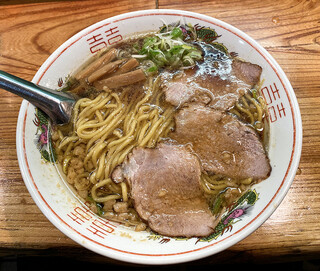
Near Chikusa, Nagoya’s ramen culture becomes a matter of speed, proximity and counter discipline rather than destination dining theatre. The room at Chuka Soba Paikaro is built around counter seating, the format that suits ramen better than almost any other restaurant category in Japan: quick turnover, direct sightlines, and a meal structured around one bowl rather than a long sequence of courses. In a city where serious dining can mean sushi counters priced many multiples higher, ramen remains the democratic category with the fiercest everyday scrutiny.
That scrutiny matters in Aichi. Tabelog’s Ramen AICHI 2025 selection places this shop inside a local field judged less by luxury cues than by consistency, value and repeatability. For travellers, that changes the way to read the place. This is not the Nagoya meal to plan around a full evening; it is the one to fit tightly into a day, with enough recognition behind it to justify the detour for ramen-focused eating.
A small counter in Nagoya's ramen economy
Nagoya’s dining hierarchy can be misleading from the outside. Sushi Daisaku and Sushi Tesaku occupy a different register, where counter dining carries reservation strategy, higher spend and a slower meal structure. Ramen counters work by another logic: limited seats, compressed service and a sharper relationship between queue, timing and appetite. Chuka Soba Paikaro belongs to that second category, closer in practical rhythm to Menya Tamagusuku than to the city’s formal sushi rooms.
The distinction is useful because ramen recognition does not operate like fine-dining recognition. A Tabelog 100 Ramen AICHI listing signals local relevance within a crowded, price-sensitive field. The category’s audience is not rewarding linen, cellar depth or elaborate pacing. It rewards a bowl that can survive repetition, comparison and the blunt arithmetic of a short meal. That makes the award meaningful in a different way from Michelin-style dining: less spectacle, more local proof.
There is also a neighbourhood point here. Chikusa and Imaike sit outside the polished station-hotel circuit that shapes many first Nagoya itineraries. The area is practical, transit-connected and more useful to eaters than to sightseers chasing postcard streets. A small ramen shop here fits the district’s tempo: arrive, queue if necessary, eat with focus, leave room in the day for another stop. For a broader map of the city’s dining patterns, Our full Nagoya restaurants guide is the better starting point; for sleep logistics around those meals, use Our full Nagoya hotels guide.
Why the format matters more than the biography
Ramen writing often gets lazy when it turns every shop into a personality study. The more useful lens is format. Counter-only ramen compresses the entire experience into operational clarity: limited seats, a focused menu category, and a service rhythm that leaves little room for hesitation. Chuka Soba Paikaro’s inclusion in Tabelog’s 2025 Aichi ramen selection gives the shop a credential, but the reason to understand it is as part of Nagoya’s everyday specialist dining rather than as a chef-led tasting-menu story.
That is why comparisons across cuisine types need care. Imaike Hanten sits in a lower-priced Chinese-dining lane, WARUNG PHUAN operates with a different Southeast Asian frame, and the sushi counters build an evening around precision and pacing. Ramen compresses value into a shorter encounter. The reader decision is not whether this replaces a formal dinner; it is whether the itinerary has space for a recognised, compact meal that shows how Nagoya eats between headline reservations.
For travellers building a wider Japan route, the contrast is useful beyond Nagoya. The country’s casual-specialist ecosystem includes curry shops, cafés, Vietnamese counters, onigiri specialists and sake bars, each judged by its own format rather than by a single luxury scale. Compare that logic with [Curry Senmon Ten] Maruyama Kyoju. in Sapporo, .cafe in Osaka, (Shoku) Vietnam in Kawasaki, Onigiri Time in Pasadena and Jōdo Saké Bar in Los Angeles. The shared lesson is that a narrow format can be more revealing than a longer menu when the operator has a clear lane.
Planning the meal without overbuilding the day
The smart approach is to treat the restaurant as a precision stop, not a lingering anchor. Small ramen counters reward flexible timing and solo or small-party dining. They punish overcomplicated group planning. The shop’s recognition raises the chance that demand will be concentrated at obvious meal periods, so the practical move is to keep the surrounding schedule loose and avoid stacking it against another fixed booking.
Cash discipline also matters in this tier of Japanese dining, where small shops may not follow the payment habits of hotels or larger restaurants. That is not a drawback; it is part of how neighbourhood ramen maintains speed and low friction. The visitor who approaches it like a tasting-menu reservation will misunderstand the point. The visitor who treats it as a compact, recognised Nagoya ramen stop will read it correctly.
Use the rest of the city around it. Drinks planning belongs in Our full Nagoya bars guide, while broader cultural scheduling can sit beside Our full Nagoya experiences guide. Wine-focused travellers can check Our full Nagoya wineries guide, though ramen itself is rarely improved by forcing it into a wine-pairing frame.
For wider restaurant browsing, the internal map also includes 1022, 451, Aaron, Alan. and All Day Dining Montmartre. Travellers extending the route beyond Aichi may also find useful contrasts in -Grilled beef Sukiyaki- KAMAKURA TANUKIAN 鎌倉 たぬき庵 in Kamakura. 鮪と炭火焼き うお炭 秋葉原店 in Tokyo and.know in Kumamoto. Against those broader options, this Nagoya ramen counter makes its case through scale: short meal, serious local category, and enough recognition to put it on a focused itinerary.
Cuisine and Credentials
Comparable options at the same price tier.
| Venue | Cuisine | Price | Notes |
|---|---|---|---|
| Chuka Soba PaikaroThis venue — the venue you are viewing | Traditional Fukuyama-style ramen shop | $ | Not listed |
| Chuka Soba Naru | Ramen & Tsukemen | $ | Chikusa |
| Shin Suzume Honten | Traditional Japanese sweets (mitarashi dango) | $ | Naka |
| Noko Chuka Soba Sato | Rich tamari shoyu ramen | $ | Naka |
| MEI | japanese | $ | Nishi |
| Chuka Soba Taiga | Traditional Japanese Ramen (Chuka Soba) | $ | Nakamura |
Recognition history
Dated appearances from independent guides and award organizations, with the underlying list record or original source where available.
Tabelog 100 #83 · No. 83
Tabelog · Tabelog 100 - Ramen - AICHI - 2025
At a Glance
- Cozy
- Classic
- Solo
- Casual Hangout
- After Work
- Late Night
- Standalone
Simple, classic ramen-shop atmosphere with a small, cozy interior focused on quick, casual meals rather than lingering, more like a neighborhood low-profile address by the station than a destination for long stays.