
Ramen Senmon Ten Tokugawa Cho Josui represents Nagoya ramen at its disciplined counter-service end: compact, quick, and built around repeatable craft rather than spectacle. Its Tabelog Ramen AICHI 100 selection in 2025, following earlier EAST selections, places it among Aichi’s more closely watched ramen shops without pushing the experience into fine-dining territory.
Pearl is the En Primeur Club membership app — saves, bookings, and concierge access live there. Same editors, same standards.
- Address
- Japan, 〒461-0023 Aichi, Nagoya, Higashi Ward, Tokugawacho, 201 日幸ビル 1階
- Phone
- +81 52-937-9228
- Website
- josuiramen.jp
 Saves & bookings on Pearl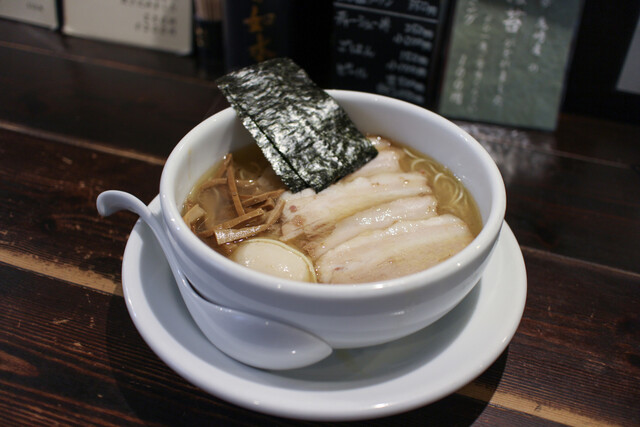
The room reads as ramen before the first bowl appears: counter seating, a short wait built into the rhythm, and the practical compression that defines serious noodle shops across Japan. In Nagoya, where higher-budget dining can move from kaiseki formality to polished hotel restaurants, ramen occupies a different register. It is faster, narrower in scope, and judged with less tolerance for distraction. Ramen Senmon Ten Tokugawa Cho Josui belongs to that category: a small-format shop where the counter is not decoration but the operating system.
That matters because Nagoya’s dining identity is often discussed through local specialities, miso-heavy comfort food, eel, tebasaki, and the city’s deep kissaten culture. Ramen sits slightly apart from those shorthand references. The stronger ramen addresses in Aichi compete less on tourist symbolism than on consistency, broth clarity or density, noodle handling, and queue discipline. A Tabelog Ramen AICHI 100 selection in 2025 signals that this shop is being judged within a specialist field, not as a casual neighbourhood stop that happens to draw attention.
A counter built for ramen discipline, not theatre
The counter format keeps the meal focused. Fourteen seats is a small room by restaurant standards but typical for ramen shops that prioritise speed, turnover, and direct kitchen-to-bowl service. The absence of private rooms reinforces the point: this is not a place for lingering over courses or outsourcing the experience to ambience. It is a ramen and tsukemen address, and the format tells diners to think in those terms.
The more useful comparison is not with tasting-menu dining but with Nagoya’s spread of specialist restaurants across price bands. Yoshimitsu operates in a similarly accessible bracket, while Garden Restaurant Tokugawaen, LE PIGNON, SOLAMENT'UNO, and Myoan occupy far higher-budget territory. That gap explains why ramen can be one of the sharpest ways to read a city’s food culture. It compresses technique, local demand, and repeat dining into a short meal rather than a long evening.
For travellers building a Nagoya itinerary, the distinction is practical as much as culinary. A ramen counter can anchor a day between museums, gardens, or train transfers without turning lunch into an event. The better shops, however, are not interchangeable. Recognition such as Tabelog’s Hyakumeiten-style lists rewards a restaurant’s standing inside a crowded category, and repeated appearances across recent ramen lists point to durability rather than a single burst of attention.
Where Nagoya ramen fits beside the city's higher-budget tables
Ramen’s economy changes the critical lens. At a fine-dining restaurant, the cellar, pacing, service choreography, and table comfort carry part of the evaluation. At a ramen counter, the equivalent of cellar depth is curation by subtraction: a tighter menu, a narrow production window, and a format that leaves little room for ornamental hospitality. The drink program is not the story here; the editorial interest sits in how much confidence a shop shows by keeping the experience compact.
That compactness also separates ramen from the city’s destination dining rooms. Garden Restaurant Tokugawaen and Myoan invite longer meals and a more ceremonial reading of Nagoya hospitality. A ramen shop like this belongs to a parallel tradition, one where craft is measured in repeat visits, counter flow, and whether a bowl can hold attention without the scaffolding of wine pairings or multi-course sequencing. It is a less expensive meal, but not a less serious one.
Tsukemen also matters in the positioning. Dipping noodles are not merely a side category; they ask diners to evaluate texture and concentration differently from soup ramen. A shop listing both ramen and tsukemen is operating across two related but distinct noodle grammars. That breadth, kept within a small counter format, is part of why specialist ramen addresses can develop followings without expanding into broader izakaya-style menus.
How to place it in a Nagoya dining plan
The strongest use case is a focused meal rather than a grand night out. The no-reservations model suits diners who can tolerate a wait and want a precise ramen stop without turning the evening over to a long-form restaurant. Counter seating also makes it suitable for solo diners and pairs; larger groups will find the format less forgiving simply because small ramen rooms are not designed around table management.
Families are not excluded from the equation. Children are welcome, and the presence of a kids menu changes the usual ramen-shop assumption that compact counters are adults-only territory. That makes it more flexible than many specialist counters, though the experience still depends on the basic tempo of a small noodle shop.
Payment and access details should be treated with the same realism as the food. This is a ramen address with local operating habits, not an international hotel restaurant. The smarter approach is to arrive with enough flexibility for the counter rhythm and to treat the meal as a sharp, low-ceremony insertion into a broader Nagoya schedule.
For broader planning, use Our full Nagoya restaurants guide alongside the city’s hotel, bar, winery, and experience pages: Our full Nagoya hotels guide, Our full Nagoya bars guide, Our full Nagoya wineries guide, and Our full Nagoya experiences guide. Nearby and Japan-wide restaurant reading can also include 1022, 451, Aaron, Alan., All Day Dining Montmartre, -Grilled beef Sukiyaki- KAMAKURA TANUKIAN 鎌倉 たぬき庵 in Kamakura. 鮪と炭火焼き うお炭 秋葉原店 in Tokyo.cafe in Osaka.know in Kumamoto, (Shoku) Vietnam in Kawasaki, [Curry Senmon Ten] Maruyama Kyoju. in Sapporo, Jōdo Saké Bar in Los Angeles, and Onigiri Time in Pasadena.
- Shio ramen
- Shoyu ramen
- Josui-style Taiwan ramen
- Josui-style tantanmen
- Tsukemen
- Taiwan tsukemen
Category Peers
Side-by-side context: comparable cuisine and price.
| Venue | Cuisine | Price | Notes |
|---|---|---|---|
| Ramen Senmon Ten Tokugawa Cho JosuiThis venue — the venue you are viewing | Ramen & tsukemen shop | $ | Not listed |
| Naruto Ya | Ramen & Tsukemen Shop | $ | Naka |
| Heritage | Traditional Nagoya Eel (Hitsumabushi) | $ | Tenpaku |
| Taiyo Shokudo | Ramen & fried rice counter | $ | Nakamura |
| Chuka Soba Naru | Ramen & Tsukemen | $ | Chikusa |
| Ramen Suiren | Cozy Bali-inspired ramen counter | $ | Shōwa |
Recognition history
Dated appearances from independent guides and award organizations, with the underlying list record or original source where available.
Tabelog 100 #87 · No. 87
Tabelog · Tabelog 100 - Ramen - AICHI - 2025
Continue exploring
More in Nagoya
Restaurants in Nagoya
Browse all →
At a Glance
- Lively
- Casual
- Classic
- Solo
- Casual Hangout
- Family
- After Work
- Late Night
- Standalone
- Beer Program
Current opening hours
- Monday
- 11 AM–2:30 PM, 5:30–11 PM
- Tuesday
- Closed
- Wednesday
- 11 AM–2:30 PM, 5:30–11 PM
- Thursday
- 11 AM–2:30 PM, 5:30–11 PM
- Friday
- 11 AM–2:30 PM, 5:30–11 PM
- Saturday
- 11 AM–2:30 PM, 5:30–11 PM
- Sunday
- 11 AM–2:30 PM, 5:30–11 PM
Hours can change for holidays and private events. Last verified .
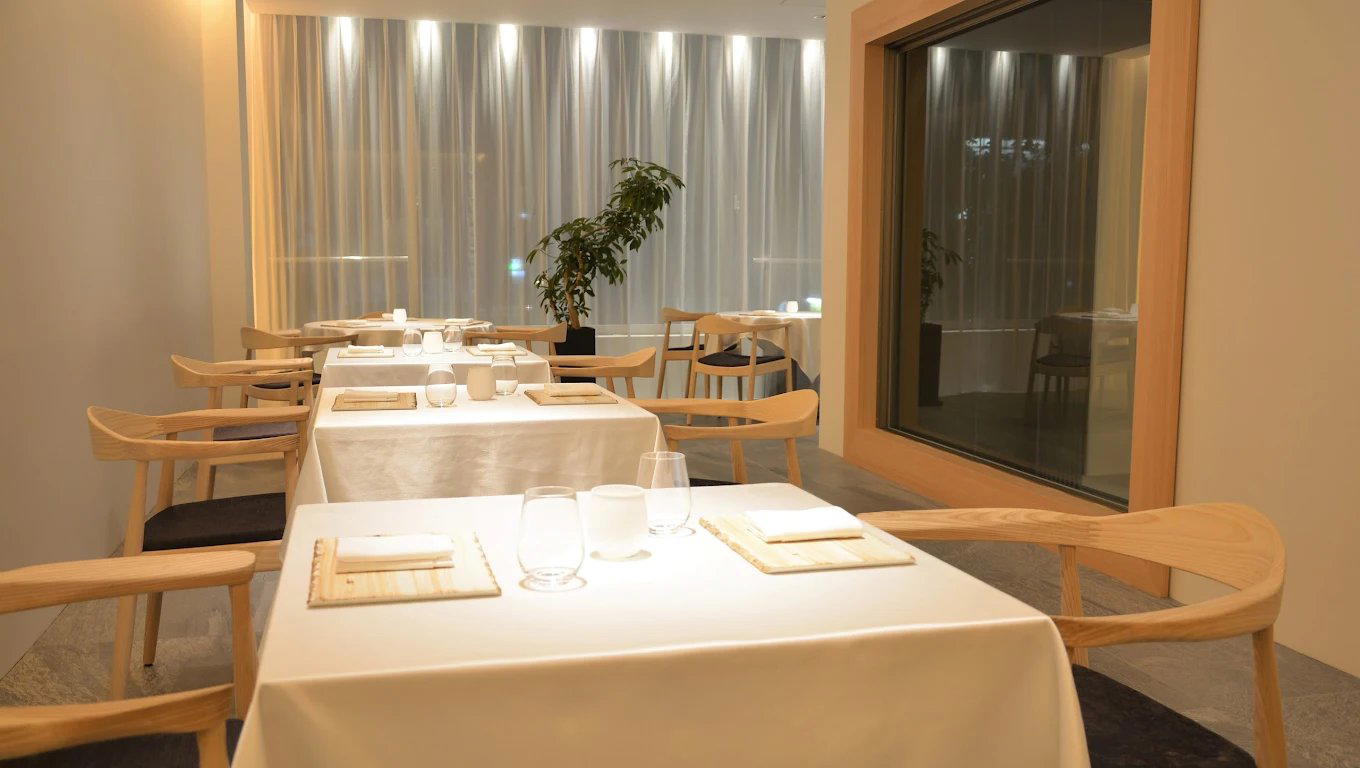
Casual, bustling ramen-ya with a direct design focused on counter and table seating; bright and functional rather than decorative, with steady traffic of solo diners, families, and small groups.