Chipperfield Kantine occupies a quietly considered address at Joachimstraße 11 in Berlin's Mitte district, operating within the architectural framework of David Chipperfield Architects' Berlin studio. The space reflects the broader Berlin tradition of embedded workplace dining that prioritises material honesty over ceremony. It sits at an instructive remove from the city's Michelin-tracked fine dining circuit while drawing from the same culture of thoughtful, place-rooted hospitality.
Pearl is the En Primeur Club membership app — saves, bookings, and concierge access live there. Same editors, same standards.
- Address
- Joachimstraße 11, 10119 Berlin, Germany
- Phone
- +49 30 280170781
- Website
- chipperfield-kantine.de
- Directions
- Get directions
 Saves & bookings on Pearl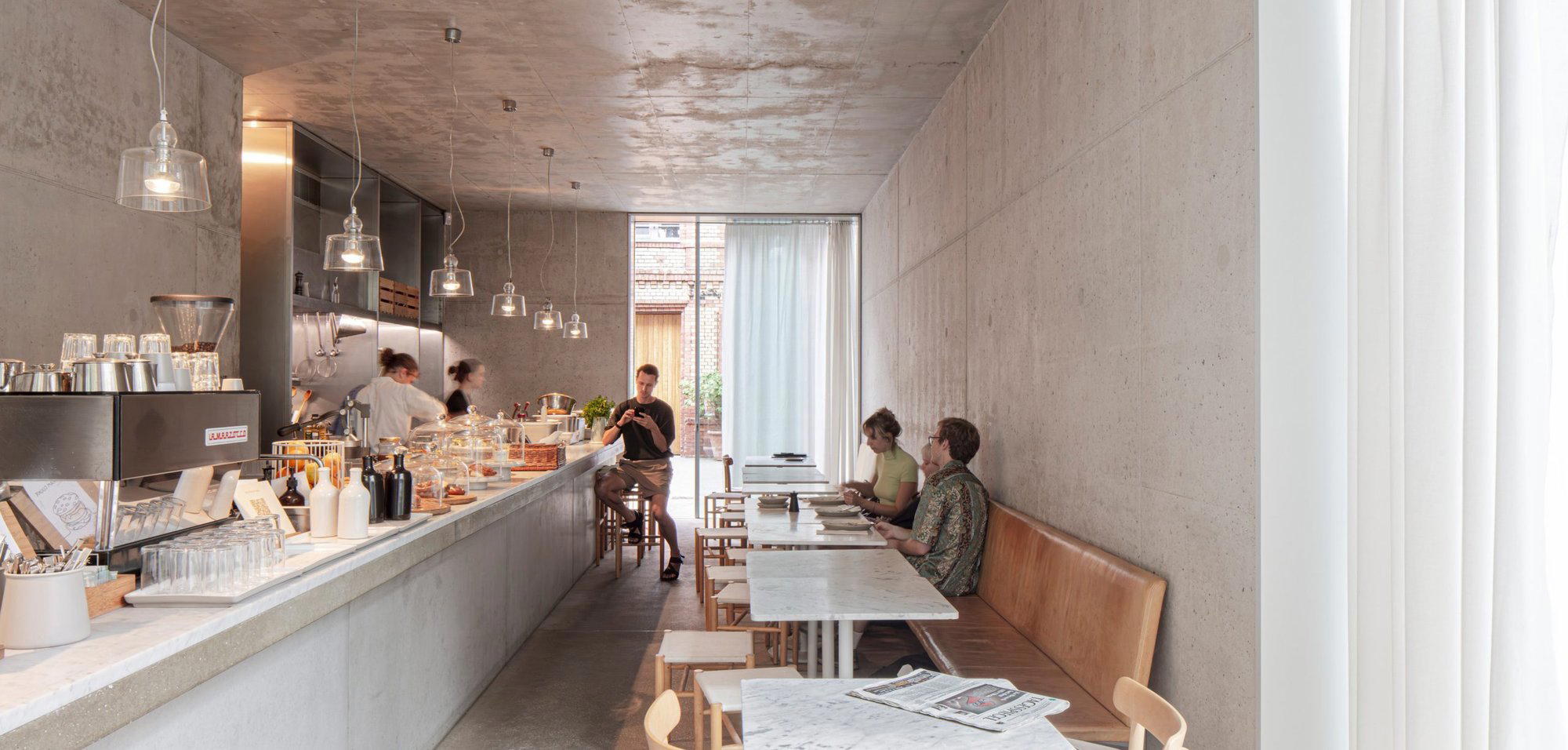
An Architecture Studio's Dining Room, Open to the Street
Berlin has a long tradition of embedded dining spaces that resist easy categorisation. The city's most compelling rooms are rarely the ones chasing tasting-menu prestige; they are the ones that emerge from a specific institutional or creative context and carry that context into how food, space, and service are arranged. Chipperfield Kantine, situated at Joachimstraße 11 in the Mitte district, belongs to that tradition. It operates within the premises of David Chipperfield Architects' Berlin office, a studio whose material rigour and preference for restraint over ornament have shaped significant public and cultural buildings across Europe and Asia. That architectural sensibility is legible in the room before a single plate arrives.
The Kantine format, as a category, occupies an interesting position in German food culture. The word itself carries institutional weight: canteens in Germany have historically served workers, academics, and civil servants, prioritising function and regularity over occasion. In the postwar decades, the Kantine became a civic institution, part of the social architecture of the German working day. What has shifted in Berlin's recent decades is the gradual re-examination of that format by design-conscious organisations and cultural institutions. The result is a cluster of spaces across the city where the logic of the workplace canteen, directness, affordability relative to the surrounding restaurant market, a fixed rhythm of service, is retained but the physical and culinary ambition rises considerably.
Where This Sits in Berlin's Dining Map
Berlin's dining circuit has consolidated around a core of notable addresses. Rutz and Nobelhart & Schmutzig define the rigorous end of Modern German and Modern European cooking; FACIL and CODA Dessert Dining represent the creative tier where format and concept do significant work. Restaurant Tim Raue operates in its own register, applying Asian culinary frameworks to a European fine dining structure. Chipperfield Kantine does not compete with any of these addresses, nor does it attempt to. It operates in a different tier and with a different purpose, serving a function that the starred restaurants, by design, cannot: the casual, regular, mid-week lunch or dinner in a room that has been thought about seriously.
That distinction matters in Berlin more than in some other European capitals. The city's dining culture has always maintained a strong counter-tradition to formal restaurant dining, one that values directness, material quality, and the absence of performance. The Kantine format, particularly when set inside an architecturally significant environment, is a natural expression of that counter-tradition. It offers a legible alternative for the reader who has already made their reservation at one of Berlin's starred rooms and is looking for the day-to-day counterpart.
The Cultural Logic of the Space
The Chipperfield office's approach to architecture, documented extensively through completed projects including the Neues Museum restoration in Berlin and the Museum of Modern Literature in Marbach, foregrounds material authenticity and a disciplined relationship between old fabric and new intervention. A dining space that emerges from that working environment carries an implicit brief: it should not contradict the values of the studio that contains it. The Kantine format, stripped of hospitality-industry theatrics, is the natural answer to that brief.
This is a different kind of cultural context than the one that frames, say, Schwarzwaldstube in Baiersbronn or Waldhotel Sonnora in Dreis, where the frame is regional German fine dining with long histories and formal recognition. It is also distinct from the urban fine dining culture of Restaurant Haerlin in Hamburg or the internationally-oriented ambition of Vendôme in Bergisch Gladbach. The Kantine sits outside those registers entirely, which is precisely what gives it its particular coherence.
Internationally, the closest analogies for this kind of institution-embedded dining are found in museum restaurants and gallery cafés that have developed genuine culinary credibility without adopting the signifiers of the restaurant proper. In the United States, venues like Lazy Bear in San Francisco have shown how a strong institutional identity can reframe dining expectations; in New York, Le Bernardin demonstrates what happens when an institutional culinary culture reaches the highest tier of formal recognition. Chipperfield Kantine occupies a different position on that spectrum, but it participates in the same broader question: what does an organisation's values look like when expressed through food and a room?
Visiting Chipperfield Kantine
Joachimstraße 11 places the Kantine in the northern part of Mitte, within walking distance of the Rosenthaler Platz area and the dense creative and commercial fabric of Berlin's central district. The address is accessible by U-Bahn, with Rosenthaler Platz on the U8 line serving as one direct connection. As with other institution-adjacent dining spaces in Berlin, service hours and booking practice are structured around the working rhythms of the office environment rather than conventional restaurant patterns. Visitors should note the canteen is open Monday through Friday from 9:00 AM to 4:30 PM, with weekend closure. Reservations are recommended.
For those building a broader Berlin itinerary around serious dining, the city's Michelin-recognised addresses merit separate planning. JAN in Munich, Aqua in Wolfsburg, Victor's Fine Dining by Christian Bau in Perl, ES:SENZ in Grassau, Schanz in Piesport, and Bagatelle in Trier represent the wider German fine dining geography for readers planning multi-city itineraries.
Booking and Cost Snapshot
Comparable venues nearby, for context on price, style, and recognition.
| Venue | Cuisine | Price | Notes |
|---|---|---|---|
| Chipperfield KantineThis venue — the venue you are viewing | Mitte, Sustainable Vegetarian Canteen | $$ | Not listed |
| Fischer & Lustig | Mitte, Traditional German Fish & Meat | $$ | Not listed |
| Schnitzelei Mitte | Mitte, Modern German Schnitzel | $$ | Not listed |
| qnorke | Hakenfelde, Modern German Steakhouse | $$ | Not listed |
| Lokal | Mitte, Modern German | $$ | Not listed |
| Lebenswelten im Humboldt Forum | Not listed | $$ | Mitte, Sustainable German Bistro with Vegetarian Focus |
Continue exploring
More in Berlin
Restaurants in Berlin
Browse all →
Bars in Berlin
Browse all →
Hotels in Berlin
Browse all →
Wineries in Berlin
Browse all →
At a Glance
- Modern
- Minimalist
- Cozy
- Casual Hangout
- Courtyard
- Open Kitchen
- Local Sourcing
Current opening hours
- Monday
- 9 AM–4:30 PM
- Tuesday
- 9 AM–4:30 PM
- Wednesday
- 9 AM–4:30 PM
- Thursday
- 9 AM–4:30 PM
- Friday
- 9 AM–4:30 PM
- Saturday
- Closed
- Sunday
- Closed
Hours can change for holidays and private events. Last verified .
Beautiful, clean, minimalist interior with attention to design details, offering a relaxed atmosphere among architects and designers.