
A small house restaurant in Sakyo Ward gives Kyoto’s Chinese dining map a sharper northern edge, with Sichuan, tantan-men and Chinese cooking in a counter-led room. China Sichuan Rakuda’s Tabelog Chinese WEST 100 selection in 2026 places it in a peer group defined less by hotel polish than by repeatable local demand and focused cooking.
Pearl is the En Primeur Club membership app — saves, bookings, and concierge access live there. Same editors, same standards.
- Address
- Japan, 〒606-8253 Kyoto, Sakyo Ward, Kitashirakawa Senouchicho, 27-4 中国四川料理駱駝
- Phone
- +81 75-781-0306
- Website
- kyoto-rakuda.com
 Saves & bookings on Pearl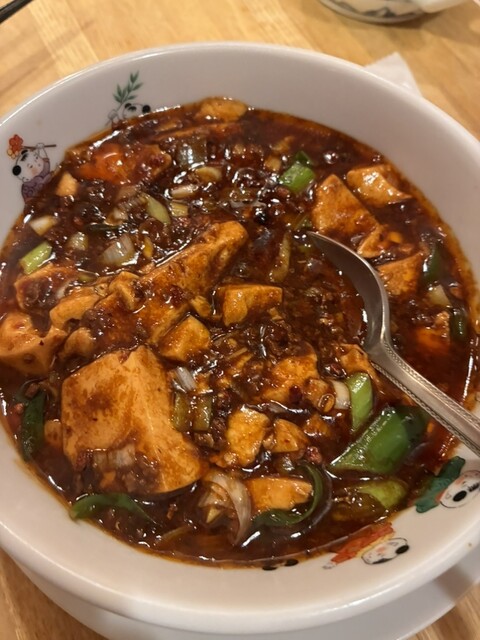
Kitashirakawa changes the terms of the meal before the first order lands. This is not central Kyoto’s polished hotel-dining circuit or the station-area quick-feed economy; it is a residential, university-adjacent pocket in Sakyo Ward, where small restaurants work harder for regulars than for spectacle. China Sichuan Rakuda fits that geography: a house-restaurant setting, counter seating, a single large table, and a reputation built around Sichuan and tantan-men rather than Kyoto’s better-exported kaiseki language.
That matters because Kyoto’s Chinese restaurants rarely receive the same international attention as its temples of seasonal Japanese cooking. The city has long absorbed outside food cultures into compact, localised formats: ramen near student districts, bakeries in northern neighbourhoods, patisserie around Ichijoji, and small Chinese rooms that serve the daily city rather than the souvenir city. In that context, a Tabelog Chinese WEST 100 selection in 2026 is a useful signal. It places the restaurant inside a western Japan Chinese-cuisine cohort, not merely a Kyoto neighbourhood shortlist.
Kitashirakawa gives Sichuan cooking a local, lived-in frame
Sakyo Ward is one of Kyoto’s better areas for understanding how the city eats away from visitor choreography. Nearby university life and residential streets create demand for restaurants that are affordable, repeatable and specific. The comparison set around northern Kyoto is broad: [ki:] reads as a more contemporary Kyoto table, Aburi Mochi Honke Nemoto Kazariya anchors an older snack tradition, and Ichijoji’s casual food culture pulls ramen, sweets and everyday Japanese dining into the same orbit. Sichuan cooking here is not an imported luxury signifier; it is part of the city’s practical eating life.
The useful distinction is scale. A 13-seat room with nine counter seats changes the rhythm from banquet Chinese to small-restaurant Chinese. Counter dining in Japan tends to reward focus: fewer moving parts, closer kitchen proximity, and a menu identity that can be understood in repeated visits rather than one long tasting sequence. Rakuda’s categories, Sichuan, tantan-men and Chinese, point toward that narrower brief. No chef biography is needed to explain the appeal; the format itself tells the reader how to read the room.
Kyoto’s broader restaurant map can make visitors overcorrect toward formality. A meal like this argues for another version of the city, one where a compact Chinese restaurant in the north carries as much practical relevance as a famous Japanese counter downtown. For a wider read on that spread, our full Kyoto restaurants guide is the better companion than a temple-by-temple itinerary.
The award signal is useful because the price tier stays grounded
Tabelog’s Hyakumeiten lists reward sustained user attention within tightly defined categories. A Chinese WEST 100 selection in 2026, alongside a listed Tabelog score of 3.69, does not make the restaurant a trophy-table in the international fine-dining sense. It does something more relevant for Kyoto: it identifies a small, specialised Chinese restaurant that performs strongly inside a regional category where consistency and local repeat custom matter.
That is a different proposition from Kyoto’s higher-ceremony dining. The city has Japanese restaurants that ask diners to surrender the evening to season, service and formal progression. It also has casual institutions where the value is speed, familiarity or a single product line, from 551蓬莱 to ramen counters and sweets shops. China Sichuan Rakuda sits between those poles: more focused than general casual Chinese, less performative than a destination tasting-menu room.
Among nearby comparison points, Akihana offers another Kyoto Chinese reference, while Ichijoji Nakatani and Patisserie Tandresu show how the northern side of the city supports specialist shops outside the obvious tourist lanes. Ichijoji Norihide and Ramen Jiro Kyoto ten pull different crowds, but the pattern is similar: this part of Kyoto rewards clarity. A restaurant does not need a grand room when the category is legible and the neighbourhood understands the use case.
The internal Kyoto circuit also benefits from contrast. A visitor might pair this sort of northern meal with a different central address such as 3TOKU6MI Shijo karasuma ten or a French-leaning table like Abbesses, not because they are direct substitutes, but because Kyoto’s appeal lies in switching registers cleanly. The same city can support counter-led Sichuan, polished bistro cooking, old confectionery, ramen queues and hotel dining without asking them to compete on the same terms.
How to place it inside a Kyoto trip
The practical reading is simple: this is a northern Kyoto meal for travellers who are already willing to move beyond the central grid. Chayama Kyoto Geijutsudaigaku is the nearest station, and the restaurant’s setting makes more sense when folded into a Sakyo or Ichijoji day than treated as a quick detour from the station area. The room is non-smoking, children are welcome, reservations are available, and card, electronic-money and QR payments are accepted, which makes it easier to plan than many small neighbourhood restaurants.
That flexibility should not be confused with anonymity. Small seating capacity means the experience depends on timing and restraint; a compact counter room changes quickly when several parties arrive at once. The better move is to treat the meal as a deliberate northern Kyoto stop rather than a fallback between temples. For travellers mapping the rest of the city, our full Kyoto hotels guide, our full Kyoto bars guide, our full Kyoto wineries guide and our full Kyoto experiences guide help separate neighbourhood logic from checklist planning.
Readers building a Japan-wide food itinerary can also compare how regional casual dining shifts outside Kyoto: -Grilled beef Sukiyaki- KAMAKURA TANUKIAN 鎌倉 たぬき庵 in Kamakura. 鮪と炭火焼き うお炭 秋葉原店 in Tokyo.cafe in Osaka.know in Kumamoto, (Shoku) Vietnam in Kawasaki and [Curry Senmon Ten] Maruyama Kyoju. in Sapporo each show a different local grammar. For overseas contrast, Jōdo Saké Bar in Los Angeles and Onigiri Time in Pasadena show how Japanese formats change when translated abroad.
Standing Among Peers
Side-by-side context: comparable cuisine and price.
| Venue | Cuisine | Price | Notes |
|---|---|---|---|
| China Sichuan RakudaThis venue — the venue you are viewing | Authentic Sichuan Chinese | $$ | Not listed |
| 551蓬莱 | Chinese Pork Buns & Dim Sum | $$ | Kyoto Station Area |
| Meirin | Kyoto Chinese | $$ | Kamigyō |
| Gion Morikou | Kyoto‑style Cantonese (Chinese) | $$ | Higashiyama |
| Mr. Gyoza | Gyoza & Chinese comfort food | $ | Minami |
| SUKEMASA (高辻 亮昌) | Kyoto-Style Gyoza | $$ | Shimogyo-ku |
Recognition history
Dated appearances from independent guides and award organizations, with the underlying list record or original source where available.
Tabelog 100 #55 · No. 55
Tabelog · Tabelog 100 - Chinese cuisine - WEST - 2026
Continue exploring
More in Kyoto
Restaurants in Kyoto
Browse all →
Bars in Kyoto
Browse all →

Hotels in Kyoto
Browse all →

Wineries in Kyoto
Browse all →
At a Glance
- Cozy
- Lively
- Classic
- Casual Hangout
- Solo
- Family
- Group Dining
- After Work
- Standalone
Current opening hours
- Monday
- Closed
- Tuesday
- 11:30 AM–2 PM, 5:30–9 PM
- Wednesday
- 11:30 AM–2 PM, 5:30–9 PM
- Thursday
- 11:30 AM–2 PM, 5:30–9 PM
- Friday
- 11:30 AM–2 PM, 5:30–9 PM
- Saturday
- 11:30 AM–2 PM, 5:30–9 PM
- Sunday
- 11:30 AM–2 PM, 5:30–9 PM
Hours can change for holidays and private events. Last verified .
A small house-restaurant with about a dozen seats, counter-focused and non-smoking, giving a cozy neighborhood feel where guests sit close to the open cooking area and enjoy casual, relaxed meals of robustly seasoned Sichuan food.