
Nagon Shiruko Ten belongs to Kamakura’s old-line sweets-cafe tradition rather than its newer coffee-and-bakery circuit. The draw is precise and narrow: Japanese sweets and kakigori in a low-cost, no-reservations format, backed by selection for Tabelog’s Japanese traditional sweets and sweets lists across multiple years.
Pearl is the En Primeur Club membership app — saves, bookings, and concierge access live there. Same editors, same standards.
- Address
- 1 Chome-5-10 Komachi, Kamakura, Kanagawa 248-0006, Japan
- Phone
- +81 467-22-3105
- Website
- instagram.com
 Saves & bookings on Pearl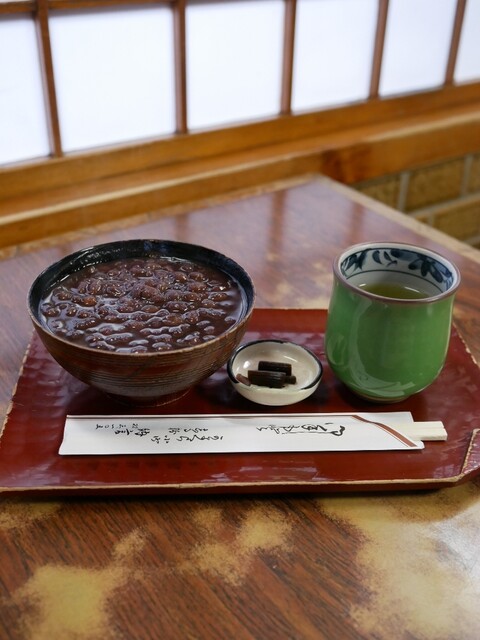
Komachi’s food culture changes quickly near the station, where day-trippers move from temple routes to snack counters, coffee shops, bakeries, and lunch rooms within a few blocks. The older sweets cafes work at a different rhythm. They are not built around long menus or dinner theatre; they give Kamakura a slower afternoon grammar, one bowl, one shaved-ice order, one pause between the train and the shrine streets. Nagon Shiruko Ten sits inside that tradition, with Japanese sweets and kakigori as the relevant frame rather than restaurant dining in the full-course sense.
That distinction matters in Kamakura. The city’s serious eating is split between compact daytime specialists and pricier reservation-led rooms. A place such as Oryori Tomiyama belongs to the latter category, while sweets counters and cafes occupy the lower-spend, high-turnover end of the map. Within that daytime tier, Nagon Shiruko Ten’s repeated Tabelog selections carry weight: it appeared in the Tabelog 100 sweets selections in 2019, 2020, and 2022, then in the Japanese traditional sweets and cafe category for East Japan in 2023. For a small-format sweets cafe, that is the relevant kind of recognition.
Sweet beans, shaved ice, and Kamakura's afternoon economy
Japanese sweets cafes are ingredient-led by design. The core pleasures are not garnish or menu sprawl but the handling of beans, sugar, rice-based textures, tea, and ice. Shiruko, the warm sweet-bean soup that gives this kind of shop its emotional center, sits in a lineage closer to confectionery than patisserie. Kakigori, by contrast, depends on texture and temperature: the value is in the shave, the syrup, the pace at which it holds together, and how it reads in humid weather. Nagon Shiruko Ten’s listed categories, cafe featuring Japanese sweets and kakigori, place it directly in that compact discipline.
Kamakura is well suited to this format because its visitor pattern creates appetite at odd hours. Lunch may be planned, but sweets are often the second stop: after the train, after Tsurugaoka Hachimangu, after Komachi-dori’s crowd flow has become too much. The stronger shops in this category function almost like civic punctuation marks. They are not trying to compete with tasting menus; they compete on restraint, repetition, and whether a small order feels anchored in local habit rather than tourist novelty.
That is also why price and recognition should be read together here. In Tokyo, award attention often tracks scarcity and luxury. In Kamakura’s sweets scene, a low-spend specialist can still matter because the category rewards consistency over spectacle. Selection for Tabelog’s Japanese traditional sweets and sweets lists signals that the shop is being judged within a peer group where bean cookery, shaved ice, and cafe pacing count more than chef biography or dining-room choreography.
Komachi's cafe circuit is broader than coffee
The area around Kamakura Station can look coffee-led at first glance, especially for visitors using cafes as a break between temples and shopping streets. That reading is incomplete. Kamakura’s daytime circuit includes German-style baking at Bergfeld Kamakura honten, coffee culture at Cafe Vivement Dimanche, bread and pastry at CALVA, and casual local rooms such as Cabbage Batake. Japanese sweets cafes add another register: quieter, more traditional, and less dependent on Western cafe cues.
Compared with Iwata Coffee Ten or Kamakura Naniwaya, the point is not a hierarchy but a decision about mood. Coffee rooms suit a longer sit-down pause; taiyaki and street sweets suit eating while moving; a shiruko and kakigori specialist asks for a more deliberate break. The 30-seat format reinforces that middle ground: not a counter-only snack stop, not a drawn-out restaurant, but a small room sized for friends, families, and solo visitors who want a defined sweet course.
For a wider read on the city’s dining pattern, Our full Kamakura restaurants guide is the better starting point; hotel planning belongs with Our full Kamakura hotels guide. The city’s drinking and leisure categories are thinner but still useful for itinerary shape: see Our full Kamakura bars guide, Our full Kamakura wineries guide, and Our full Kamakura experiences guide for the broader map.
How to place it in a Japan sweets itinerary
Japanese sweets specialists are often more revealing than they appear because they expose regional habits without asking for a long meal. The restaurant is useful for travelers who are already comparing category-specific stops across Japan, from compact urban cafes such as.cafe in Osaka to more idiosyncratic dining addresses such as.know in Kumamoto or [ki:] in Kyoto. The comparison is not about cuisine type; it is about how tightly a venue defines its purpose.
That focus is what separates a useful sweets stop from a generic cafe break. In Kamakura, the better plan is to treat Japanese sweets as part of the day’s architecture rather than dessert after lunch. Pair a savory meal elsewhere with a dedicated sweet pause, or build the afternoon around Komachi’s smaller specialists. Nearby options such as arbre noir YAKUMI help show how varied the station-area circuit can be within a short radius.
Travelers assembling broader Japan lists may also be weighing categories that have little to do with Kamakura sweets: charcoal-led casual dining at. 鮪と炭火焼き うお炭 秋葉原店 in Tokyo, Vietnamese cooking at (Shoku) Vietnam in Kawasaki, curry specialization at [Curry Senmon Ten] Maruyama Kyoju. in Sapporo, or Japanese drinking culture abroad at Jōdo Saké Bar in Los Angeles and Onigiri Time in Pasadena. Against that wider field, the restaurant’s value is its narrowness: it gives Kamakura’s sweet tradition a clear, modestly scaled address rather than turning it into a souvenir performance.
Side-by-Side Snapshot
Comparable venues by cuisine and price in the same metro.
| Venue | Cuisine | Price | Notes |
|---|---|---|---|
| Nagon Shiruko TenThis venue — the venue you are viewing | Japanese Sweets Cafe | $ | Not listed |
| Cuillere | Japanese Curry | $ | Kamakura |
| mbs 46.7 | Artisanal Bread & Sandwich Bakery | $ | Kamakura |
| Minowa | Traditional Japanese sweets & tea cafe | $ | Kamakura |
| OXYMORON komachi Komachi | Japanese-style spice curry & café | $$ | Kamakura |
| KIBIYA Bakery Honten | Japanese Bakery | $ | Kamakura |
Recognition history
Dated appearances from independent guides and award organizations, with the underlying list record or original source where available.
Tabelog 100 #88 · No. 88
Tabelog · Tabelog 100 - Japanese traditional sweets / Japanese sweets cafe - EAST - 2023









At a Glance
- Quiet
- Cozy
- Classic
- Solo
- Family
- Casual Hangout
- Standalone
Current opening hours
- Monday
- 11 AM–5 PM
- Tuesday
- 11 AM–5 PM
- Wednesday
- Closed
- Thursday
- 11 AM–5 PM
- Friday
- 11 AM–5 PM
- Saturday
- 11 AM–5 PM
- Sunday
- 11 AM–5 PM
Hours can change for holidays and private events. Last verified .
A soothing, relaxing sweets-shop atmosphere with a traditional Japanese dessert-house feel.