
Tabelog 100 #48
Our verdict
Kyoto’s café culture is not only matcha counters and temple-side wagashi. Castella do Paulo brings a Portuguese-Japanese cake tradition into a tiny Kamigyo room, with Tabelog 100 Cafe WEST 2025 recognition and a format that suits a focused sweets stop rather than a long restaurant meal.

Pearl is the En Primeur Club membership app, where members save venues, book tables and use the concierge.
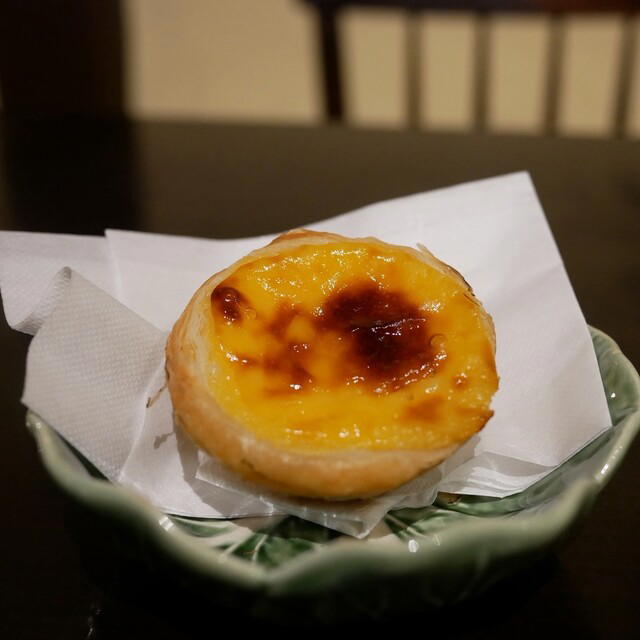
The menu
What to order
- Castella (sponge cake)
- Pão de Ló
- Pastel de Nata
- Pastéis de Bacalhau
- Pastéis de Feijão
Northwest Kyoto changes tempo around Kitano Tenmangu: streets thin, the tourist current breaks, and food becomes less about spectacle than repetition, craft, and small rooms with narrow purposes. Castella do Paulo belongs to that Kyoto category: a café and Western-style sweets address built not around a sprawling menu, but a specific cake tradition filtered through the city’s precision.
Castella has a long Japanese history. The cake arrived through Portuguese contact in Nagasaki and was absorbed into local confectionery culture, shifting from imported curiosity to familiar gift-box sweet. In Kyoto, where tea rooms, wagashi shops, and café counters can sit within one afternoon itinerary, that history reads differently. The question is not novelty, but whether a shop can make an old format exact enough for modern café culture. Castella do Paulo has earned that place through selection for Tabelog 100 Cafe WEST 2025, a useful signal in a city where small sweets specialists compete with serious tea houses and dessert cafés.
Portuguese castella in a Kyoto café culture built on restraint
The defining idea is castella as a cross-cultural sweet, not generic cake. Kyoto has deep sweets infrastructure: shrine-side grilled mochi, seasonal wagashi, fruit cafés, kissaten, and modern pastry rooms each serve different rituals. Castella sits between them. It has the gift-culture familiarity of Japanese confectionery, while its origin story points outward, toward Portugal and the early modern trade routes that shaped Nagasaki foodways.
That makes the venue more interesting than a standard café stop. Kyoto sweet shops often trade on seasonality or ceremony; this format trades on transmission. The cake’s Japanese presence reminds diners that Kyoto’s food identity, despite its association with preservation, has long made room for absorbed foreign forms when technique and repetition give them local credibility. Castella do Paulo works in that lane, where a narrow sweets focus carries more authority than a broad menu built for every café use case.
The Tabelog 100 Cafe WEST 2025 selection matters because café awards in western Japan capture a different tier from Michelin-style dining: less formal luxury than local repeatability, category leadership, and everyday appeal. For a sweets café in Kamigyo, that recognition places the shop closer to Kyoto’s specialist confectionery circuit than casual coffee-stop territory.
Kyoto’s comparable sweets map sharpens the point. Kono Hana and Cricket sit in the lower casual range, Ito Sen occupies a more expensive bracket, and Awamochidokoro Sawaya belongs to the older wagashi rhythm near shrine culture. Castella do Paulo sits in the middle: focused enough for dessert-focused travelers, accessible enough to pair with a neighborhood walk, and specific enough to justify leaving the central shopping grid.
The small-room format rewards a focused stop, not a lingering circuit
Kyoto dining rewards readers who understand scale. Many memorable specialist rooms are small by design, and cafés are no exception. Castella do Paulo is listed with 8 seats, arranged as two-person seating, making it closer to a compact tasting pause than a flexible group café. This is a precise break around Kitano Hakubaicho and Kamigyo, not a default stop for a large party after temple visits.
The evolution angle is subtle but important. Castella in Japan is an old adoption; Kyoto’s current café culture has turned inherited sweets into curated formats. A decade of high-information travel has pushed visitors beyond broad terms like “Kyoto dessert” toward named subgenres: aburi mochi near Imamiya Shrine, monaka and seasonal wagashi around older confectioners, matcha-led tea rooms in eastern Kyoto, and Western-style sweets specialists in residential pockets. Castella do Paulo fits that shift, giving travelers a specific reason to move northwest instead of treating café time as an afterthought between temples.
Its Kamigyo location also matters. Central Kyoto around Shijo and Kawaramachi offers density and convenience; Kamigyo gives a slower, more residential read of the city. Food stops here work best when tied to a neighborhood route rather than nightlife. Readers building a Kyoto day could place this beside shrine visits and old confectionery addresses rather than late dining or bar hopping.
That is the editorial distinction. Kyoto has plenty of places to drink coffee; fewer cafés make sense as food-history stops. Castella do Paulo’s strongest use is as a short, intentional sweets visit for travelers interested in how foreign forms became Japanese staples, and how Kyoto edits those forms into small, controlled experiences.
How to place it inside a Kyoto food itinerary
For a broader Kyoto dining day, use this as a specialist stop, not the anchor meal. The area suits a morning or afternoon route, while dinner can move back toward central Kyoto or another neighborhood with more restaurant density. For citywide planning, Our full Kyoto restaurants guide is the natural starting point, with nearby and cross-city contrasts including Aburi Mochi Honke Nemoto Kazariya, 3TOKU6MI Shijo karasuma ten, [ki:], Abbesses, and 551蓬莱.
Travelers treating Kyoto as more than a restaurant checklist should map the rest of the trip with Our full Kyoto hotels guide, Our full Kyoto bars guide, Our full Kyoto wineries guide, and Our full Kyoto experiences guide. For broader Japan and overseas comparison points, the same editorial lens can stretch from -Grilled beef Sukiyaki- KAMAKURA TANUKIAN 鎌倉 たぬき庵 in Kamakura and. 鮪と炭火焼き うお炭 秋葉原店 in Tokyo to.cafe in Osaka.know in Kumamoto, (Shoku) Vietnam in Kawasaki, [Curry Senmon Ten] Maruyama Kyoju. in Sapporo, Jōdo Saké Bar in Los Angeles, and Onigiri Time in Pasadena.
The verdict is practical: this is a concise, category-specific Kyoto stop with enough recognition to justify planning around it, but not a venue that needs to dominate a day. Its value lies in showing how Kyoto’s café scene has matured from general refreshment into tightly edited specialist formats, where a single imported cake tradition can carry a whole visit.
Frequently asked questions
What time does Castella do Paulo open and close?
Hours at Castella do Paulo: Mon: 9:30 AM–6 PM; Tue: 9:30 AM–5 PM; Wed: Closed; Thu: Closed; Fri: Closed; Sat: 9:30 AM–6 PM; Sun: 9:30 AM–6 PM.
Where is Castella do Paulo in Kyoto?
Castella do Paulo is located in Kyoto.
What price level is Castella do Paulo?
Pricing at Castella do Paulo is listed as JPY 2,000 - JPY 2,999 View spending breakdown.
What's the defining dish or idea at Castella do Paulo?
The place is built around castella, listed here as a Portuguese-style sweet rather than a broad dessert menu. It sits in Kyoto’s café-and-sweets lane and was selected for Tabelog Cafe WEST 100 in 2025.
Do they accommodate allergies at Castella do Paulo?
The venue lists reservations available, so advance contact is the practical way to raise allergy concerns before ordering. Castella do Paulo can be reached in Kyoto at 075-748-0505, and the café format is compact, with 8 seats.
Is Castella do Paulo child-friendly?
The room is small, with 8 seats and all seats set for two people, so it suits a short stop more than a long family meal. For older children who are comfortable in a quiet café setting, the take-out option and central Kyoto address make it manageable.
Quick Comparison
Comparable venues by cuisine and category.
| Venue | Cuisine | Price | Awards | Notes |
|---|---|---|---|---|
| Castella do PauloThis venue (the venue you are viewing) | Traditional Portuguese sweets & café | $10–20 | Tabelog 100 #48 | Not listed |
| ELEPHANT FACTORY COFFEE | Specialty Coffee & Cafe | $10–20 | Tabelog 100 #50 | Nakagyō |
| koe donuts Kyoto ten | Organic donut café & dessert shop | $10–20 | Tabelog 100 #74 | Nakagyō |
| OGAWA COFFEE Kyoto eki ten | Specialty coffee & light meals cafe | $10–20 | Tabelog 100 #59 | Shimogyō |
| Shirohato Bakery | Kyoto artisan bakery & bagel shop (takeout only) | $1–10 | Tabelog 100 #29 | Nakagyō |
| Yakitate Pan Manhattan | Japanese neighborhood bakery and sandwich shop | $1–10 | Tabelog 100 #94 | Nakagyō |
Recognition history
Dated appearances from independent guides and award organizations, with the underlying list record or original source where available.
Tabelog 100 #48 · No. 48
Tabelog · Tabelog 100 - Cafe - WEST - 2025
Continue exploring
More in Kyoto
Restaurants in Kyoto
All restaurants in Kyoto →
Bars in Kyoto
All bars in Kyoto →
Hotels in Kyoto
All hotels in Kyoto →
Wineries in Kyoto
Browse all →
Details
- Cozy
- Classic
- Solo
- Casual Hangout
- Family
- Historic Building
- Standalone
- Street Scene
- A La Carte
- Counter Dining
- Coffee
- Tea
- Wine
Current opening hours
- Monday
- 9:30 AM–6 PM
- Tuesday
- 9:30 AM–5 PM
- Wednesday
- Closed
- Thursday
- Closed
- Friday
- Closed
- Saturday
- 9:30 AM–6 PM
- Sunday
- 9:30 AM–6 PM
Hours can change for holidays and private events. Hours as of .
Tiny, relaxed café in a renovated sake brewery kura with a calm, classic atmosphere where guests quietly enjoy Portuguese cakes and coffee near the shrine’s torii gate.