A working dairy operation in the Apennine hills outside Modena, Caseificio Rosola is where Parmigiano-Reggiano tradition meets the agricultural rhythms of the Zocca highlands. Visiting means engaging directly with the cheese-making process and the raw-milk supply chain that defines this corner of Emilia-Romagna, at a remove from the polished agriturismo circuit closer to the city.
Pearl is the En Primeur Club membership app — saves, bookings, and concierge access live there. Same editors, same standards.
- Address
- Via Rosola, 1083, 41059 Verucchia MO, Italy
- Phone
- +39 059 987115
- Website
- caseificiorosola.it
- Directions
- Get directions
 Saves & bookings on Pearl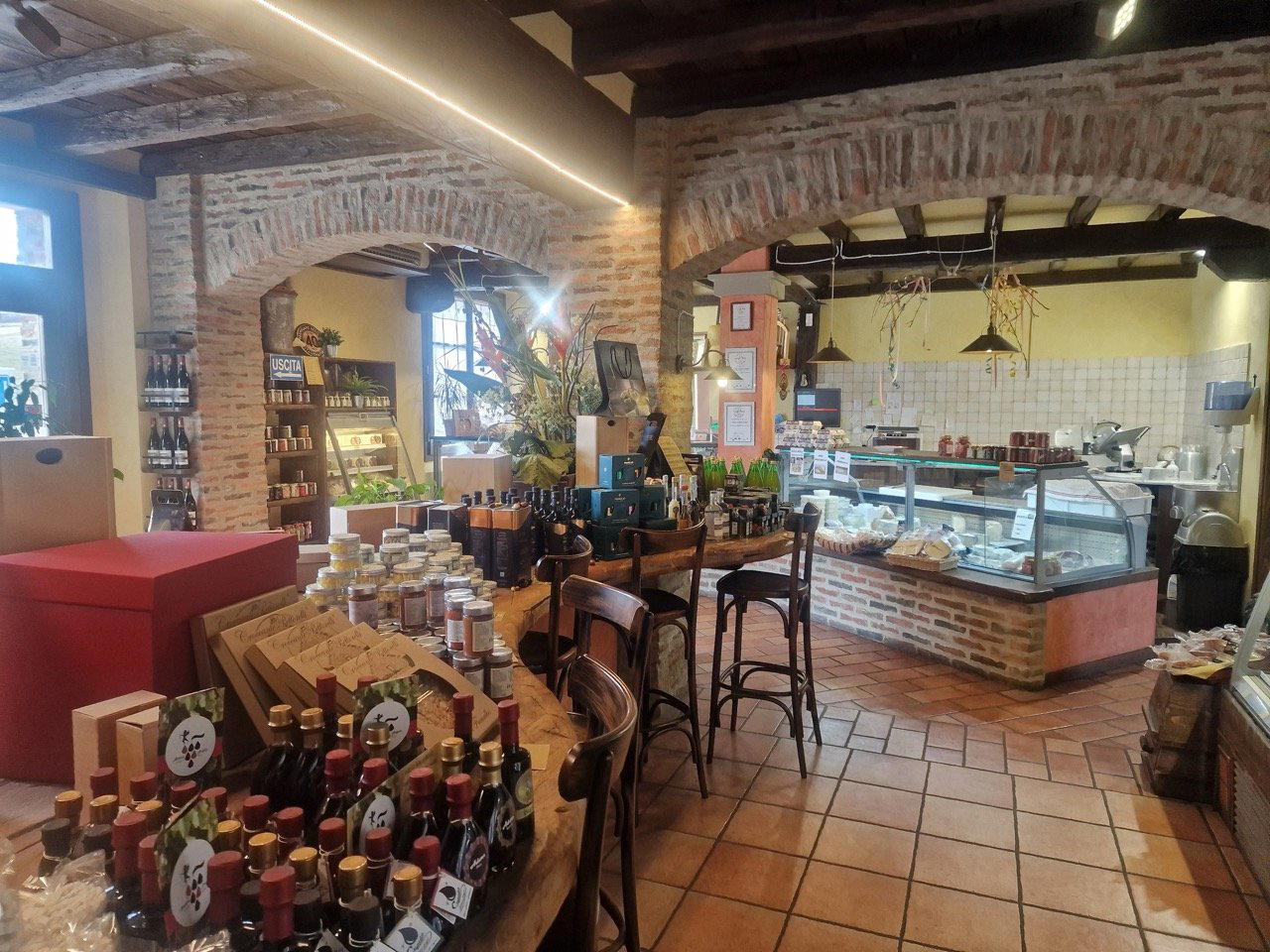
Where Emilia-Romagna's Dairy Tradition Operates at Source
Caseificio Rosola is a casual artisanal Parmigiano Reggiano DOP producer in Verucchia, near Zocca, in the Modena Apennines. The road into the Apennine foothills south of Modena climbs steadily through chestnut forest and terraced pasture before the buildings of Verucchia come into view. This is not a destination you arrive at by accident. Caseificio Rosola sits along Via Rosola in the rural commune of Zocca, a municipality that sits at roughly 700 metres above sea level and belongs to the province of Modena, the same province that anchors one of Italy's most consequential food geographies. The air carries the particular clean cold of highland Emilia, and the sounds, if you arrive early enough, are agricultural: the movement of cattle, the mechanical hum of dairy equipment. Before you encounter any product, the context makes the production legible in a way that no urban cheese counter can replicate.
Emilia-Romagna's identity as a food-producing region is not incidental. The Po Valley and its surrounding hills generate Parmigiano-Reggiano, Prosciutto di Parma, Mortadella di Bologna, and aceto balsamico tradizionale within a tightly defined geographic band. The Protected Designation of Origin framework that governs Parmigiano-Reggiano production specifies not only method but geography: milk must come from cows fed on local forage, and production must occur within a designated zone that includes Modena province. A caseificio operating at altitude in the Zocca hills sits within that zone, subject to those constraints, and the elevation and pasture character of the location feed directly into the milk's fat and protein profile. These are not romantic abstractions, they are the technical inputs that produce measurable differences in the finished wheel.
The Source Question in Emilian Cheese
Italy's premium restaurant circuit has spent the last decade placing greater editorial weight on provenance. At Osteria Francescana in Modena, sourcing relationships with small-scale producers form part of the public record of the kitchen's approach. Farther afield, the same logic applies: Dal Pescatore in Runate has maintained multi-generational supplier relationships, and Piazza Duomo in Alba anchors its menu to the specific agricultural character of the Langhe. What connects these approaches is the premise that geography and production method are not interchangeable, and that the identity of a finished dish or product is traceable to decisions made long before it reaches the table.
A working caseificio at the Zocca altitude operates as the upstream end of that chain. The cheese-making calendar in this tradition is not arbitrary: Parmigiano-Reggiano requires a minimum of twelve months of aging, and the preferred commercial grades run to twenty-four, thirty-six, or forty-eight months. A wheel that begins its life with mountain-pasture milk in a highland facility carries a provenance that differs in character, not in prestige category, but in actual compositional terms, from valley-floor production. For visitors interested in understanding the product rather than simply consuming it, the distinction matters.
Visiting the Zocca Hills: What to Expect
Caseificio Rosola is a production facility first. The experience it offers visitors is less structured than an agriturismo designed for tourism and more contingent on the operational rhythm of an active dairy. That distinction shapes how you should approach a visit. The productive heartland of Italian premium dining, the circuit that runs from Enrico Bartolini in Milan to La Pergola in Rome, is built, in part, on the existence of suppliers who take this kind of operational seriousness for granted. Seeing it directly recalibrates what those restaurant menus are describing when they cite provenance.
Getting to Via Rosola requires a car. Zocca is accessible from Modena by regional road in roughly forty-five minutes, and the final approach climbs through curves that give the pastoral landscape its defining quality: altitude, isolation, and the visible evidence of smallholder agriculture. Public transport does not serve this address. Given the facility's operational character, contacting the restaurant directly before any visit is the only reliable way to confirm availability and access. Arriving without prior contact carries the risk of encountering a facility in full production with no capacity for visitors. The address, Via Rosola 1083, Verucchia, is confirmed, and local inquiry in Zocca can supplement this.
Situating Rosola Within the Emilian Production Landscape
The Modena province hosts some of Italy's most scrutinised food production, and the restaurant operates within that geography at a scale and altitude that distinguishes it from the larger valley-floor cooperatives that account for the majority of Parmigiano-Reggiano volume. The premium end of Italian restaurant dining has become increasingly attentive to exactly this kind of producer: small, geographically specific, operating within a traditional framework rather than against it. Venues like Le Calandre in Rubano and Villa Crespi in Orta San Giulio represent the demand side of a supply chain that requires producers at Rosola's end to exist and function.
For those whose interest in Italian cheese and dairy extends further, the northeast offers comparable scale contrasts. Atelier Moessmer Norbert Niederkofler in Brunico approaches Alpine sourcing with similar rigour, and Quattro Passi in Marina del Cantone represents the southern Italian equivalent of hyper-local ingredient identity. The underlying logic, that geography and production method generate product character that cannot be approximated elsewhere, is consistent across these different regional expressions. Visiting a source facility like Caseificio Rosola provides a ground-level reference point for that argument.
Planning Your Visit
Zocca sits within comfortable day-trip range of Modena, and a visit to the restaurant pairs logically with exploration of the wider Apennine foothills. The route from Modena through the SP623 is the standard approach. Given its appointment-only policy, the practical advice is to treat this as a facility visit requiring advance arrangement rather than a retail destination with standard opening hours. Early contact through local tourism offices in Zocca or Modena province is one reliable path to a confirmed visit. The surrounding area rewards an unhurried approach: the chestnut forests above Zocca are at their most atmospheric in October and November, which also corresponds to a seasonally active period in the regional food calendar.
Comparison Snapshot
Comparable venues nearby, for context on price, style, and recognition.
| Venue | Cuisine | Price | Notes |
|---|---|---|---|
| Caseificio RosolaThis venue — the venue you are viewing | Artisanal Parmigiano Reggiano DOP | $$$ | Not listed |
| Buca dell'Orafo | Traditional Tuscan Trattoria | $$$ | Santo Spirito |
| Cibrèo Ristorante | Classic Tuscan Trattoria | $$$ | San Niccolo |
| Sull’Albero Trattoria | Tuscan Trattoria | $$$ | Chiusdino |
| Ristorante da Cherubino | Traditional Venetian Trattoria | $$ | San Marco |
| Trattoria La Scogliera | Ligurian Trattoria | $$$ | Manarola |
Continue exploring
More in Zocca
Restaurants in Zocca
Browse all →
Bars in Zocca
Browse all →
Hotels in Zocca
Browse all →

At a Glance
- Rustic
- Classic
- Scenic
- Special Occasion
- Group Dining
- Open Kitchen
- Private Dining
- Farm To Table
- Organic
- Local Sourcing
- Mountain
Current opening hours
- Monday
- 9 AM–12:30 PM
- Tuesday
- 9 AM–12:30 PM, 3:30–7 PM
- Wednesday
- 9 AM–12:30 PM, 3:30–7 PM
- Thursday
- 9 AM–12:30 PM
- Friday
- 9 AM–12:30 PM, 3:30–7 PM
- Saturday
- 9 AM–12:30 PM, 3:30–7 PM
- Sunday
- 9 AM–12:30 PM, 3:30–7 PM
Hours can change for holidays and private events. Last verified .
Traditional dairy cooperative set in tranquil Apennine countryside with rustic charm; visitors don appropriate protective gear to tour the production facility and witness centuries-old cheesemaking methods.