On Via Ugo Bassi, one of Bologna's main pedestrian arteries, Gamberini has operated as a coffee house and pasticceria long enough to become part of the city's daily rhythm rather than a destination in its own right. The counter format, the pastry cabinet, and the unhurried pace of service place it squarely in the tradition of the Emilian bar that doubles as neighbourhood institution.
Pearl is the En Primeur Club membership app — saves, bookings, and concierge access live there. Same editors, same standards.
- Address
- Via Ugo Bassi, 12, 40123 Bologna BO, Italy
- Phone
- +39 051 296 0467
- Website
- gamberini.eu
- Directions
- Get directions
 Saves & bookings on Pearl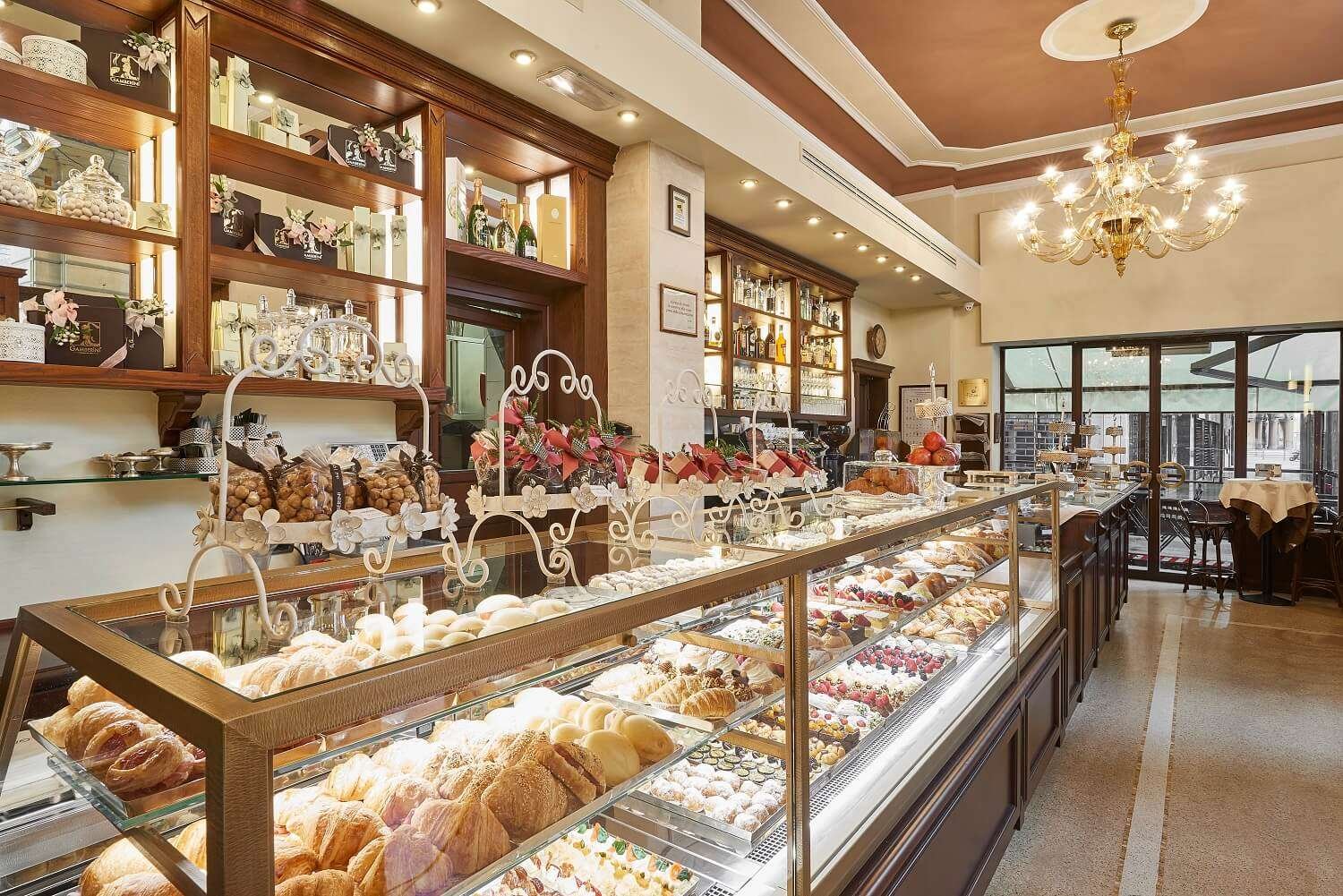
The Street, the Counter, and the Coffee Ritual
Via Ugo Bassi cuts through central Bologna with the kind of purposeful foot traffic that separates working streets from tourist corridors. The porticoes overhead, Bologna has more covered walkways per capita than any other Italian city, shape how people move through this part of the centro storico, pulling them in and out of bars and pasticcerie with a regularity that is less about destination dining and more about embedded daily habit. Coffee Patiserie Gamberini sits on this street as part of that rhythm, a coffee house and pastry counter that reads as much as civic infrastructure as it does a hospitality venue.
That distinction matters in Bologna. The city's bar culture operates differently from the more performative coffee scenes developing in Milan or Rome. Here, the focus tends to stay on the transaction itself: espresso pulled and consumed at the counter, a cornetto lifted from a cabinet that was restocked before the first commuters arrived, the whole interaction completed in under three minutes. Gamberini belongs to this tradition, its address on Via Ugo Bassi placing it in a competitive corridor where Bolognesi have strong opinions about their regular bar and rarely switch without cause.
Pasticceria as a Bologna Craft Tradition
The pasticceria format, a hybrid between patisserie and bar that the Emilian cities have refined over generations, demands a specific kind of counter discipline. The cabinet work, the pastry rotation, and the relationship between espresso quality and the sweetness of whatever accompanies it require coordination that looks simple from the customer side and is anything but. In Bologna, this tradition sits alongside serious food credentials at every price point: a city that produces Parmigiano-Reggiano, mortadella, and some of Italy's most decorated restaurant cooking also takes its morning pastry seriously.
For visitors arriving from cities where specialty coffee has absorbed most of the critical attention, the Bolognese pasticceria can read as a different category entirely. The point is not single-origin traceability or extraction methodology, though those elements have started to appear in newer venues. The point is consistency, fluency, and the sense that the person behind the counter has done this long enough to know what you want before you finish the sentence. That institutional knowledge is what the format trades on, and Gamberini's position on Via Ugo Bassi, central enough to draw both regular locals and passing visitors, means the counter sees a cross-section of exactly the people who understand that exchange.
For those who want to explore Bologna's specialty coffee direction specifically, Aroma Specialty Coffees and Forno Brisa Galliera represent the more recent wave, with explicit focus on provenance and brewing precision. Gamberini operates in an older, less annotated register, which in Bologna is not a criticism.
The Counter as Hospitality Format
The craft here is the bartender's craft, and in the context of a pasticceria, that means something specific. The craft here is not cocktail technique or spirits curation. It is the craft of the Italian barista-pasticcere: the ability to manage a busy counter at peak hours, to calibrate espresso for the season, and to maintain pastry quality through morning service when demand compresses into a two-hour window. That skill set is less visible in the international hospitality conversation than the bartender working at 1930 in Milan or Drink Kong in Rome, but it is no less trained, and in a city like Bologna, it is the skill that the majority of daily hospitality interactions depend on.
Compare this to the kind of hospitality philosophy you find at Bar Leather Apron in Honolulu or Gucci Giardino in Florence, where the concept, the room design, and the credentials of the person behind the bar are all legible and intentional signals. Gamberini operates in a register where none of those signals are foregrounded, because the format does not require them. The authority here comes from duration and repetition, not from announced credentials.
Bologna's Broader Drinking and Eating Scene
Bologna rewards visitors who treat the city as a food system rather than a list of destination restaurants. The bars and enoteca that define daily life here tend not to advertise themselves. Enoteca Historical Faccioli represents the natural wine end of that spectrum, pulling a different crowd at different hours. Allegra operates further up the register in terms of concept and deliberate curation. Gamberini sits closer to the base of the stack, doing the daily work that keeps a street like Via Ugo Bassi functioning as a lived place rather than a museum of itself.
That positioning has parallels elsewhere in Italy. Al Covino in Venice and L'Antiquario in Naples each anchor their respective neighbourhoods in ways that exceed their physical footprint, and Lost & Found in Nicosia shows how the format of the neighbourhood institution translates across Mediterranean cities. In each case, the venue's value is partially structural: it holds a space that the neighbourhood uses, and it is harder to replace than a more visible, more concept-driven property.
Planning Your Visit
Via Ugo Bassi 12 places Gamberini within walking distance of the Due Torri and the main pedestrian circuit of the centro storico, making it a natural stop during a morning in that part of the city. The pasticceria format means the practical window for a visit is weighted toward morning and mid-morning, when the pastry cabinet is at full depth and the espresso counter is operating at its designed pace. No booking is required, and the format is counter service. Open daily from 7 AM to 9 PM, with Friday and Saturday service until 10 PM.
Just the Basics
Comparable venues nearby, for context on price, style, and recognition.
| Venue | Cuisine | Price | Notes |
|---|---|---|---|
| Coffee Patiserie GamberiniThis venue — the venue you are viewing | Porto, lounge | $$ | Not listed |
| Forno Brisa Galliera - Bakery & Specialty Coffee | Porto, Bar | $$ | Not listed |
| Gino Fabbri Pastry la caramella | Cadriano, lounge | $$ | Not listed |
| Allegra | city center, Bar | $$ | Not listed |
| Volare | Not listed | $$ | Marconi, cocktail_bar |
| Sentaku Izakaya | Not listed | $$ | city center, sake_bar |
Continue exploring
More in Bologna
Bars in Bologna
Browse all →
Restaurants in Bologna
Browse all →
Hotels in Bologna
Browse all →

At a Glance
- Classic
- Elegant
- Rustic
- Casual Hangout
- After Work
- Historic Building
- Seated Bar
- Counter Only
- Classic Cocktails
Current opening hours
- Monday
- 7 AM–9 PM
- Tuesday
- 7 AM–9 PM
- Wednesday
- 7 AM–9 PM
- Thursday
- 7 AM–9 PM
- Friday
- 7 AM–10 PM
- Saturday
- 7 AM–10 PM
- Sunday
- 7 AM–9 PM
Hours can change for holidays and private events. Last verified .
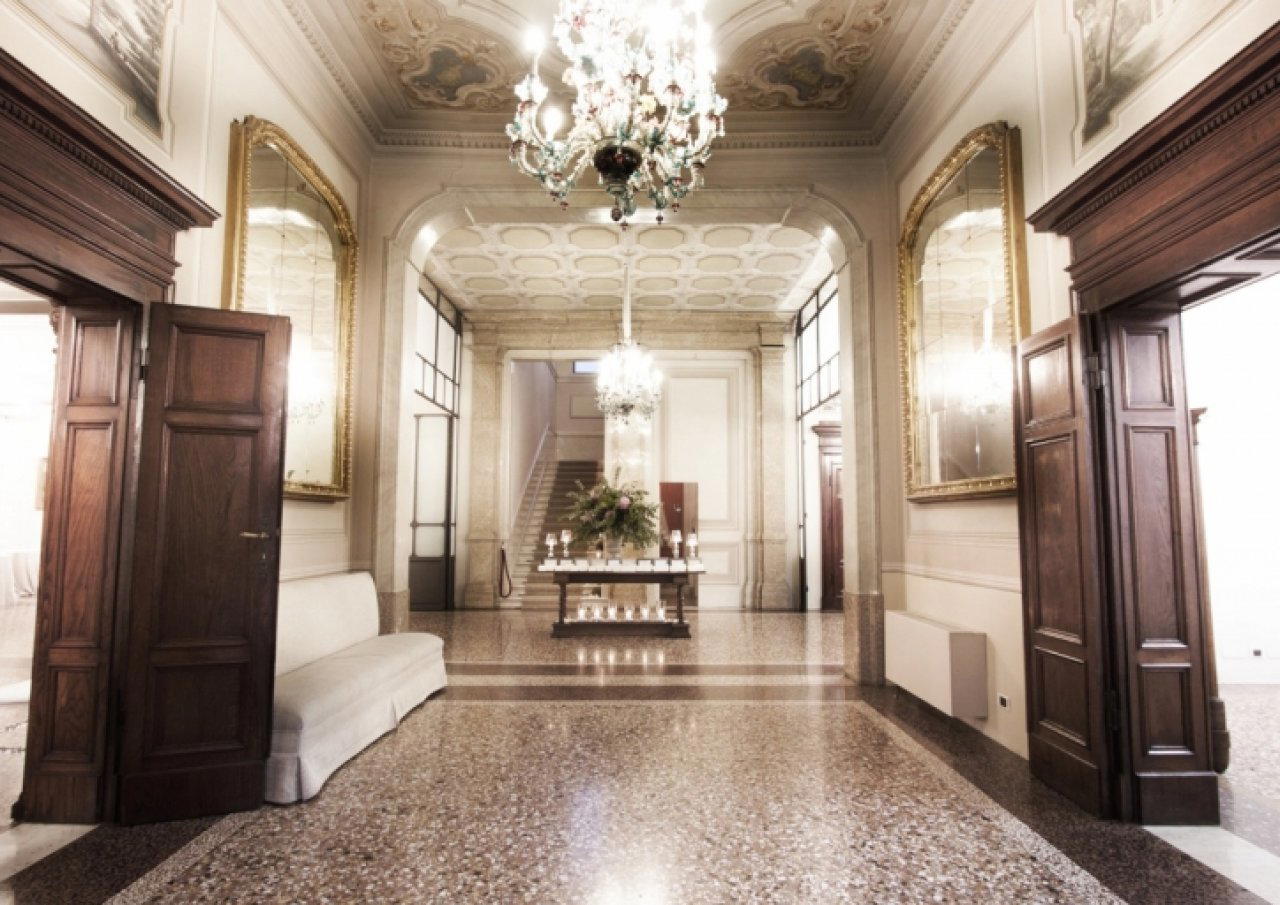
Elegant with sparkling chandeliers and ornate ceilings over glass pastry cases, creating a classy and rustic historic feel.