Our verdict
Cachopo & Go brings Asturian tradition to Chamberí, Madrid, anchoring its menu around the cachopo, a substantial breaded and fried veal cutlet stuffed with ham and cheese that defines northern Spanish comfort cooking. The format is direct and the address is residential, placing it well outside the tasting-menu circuit that dominates Madrid's fine-dining conversation. For visitors tracking regional Spanish cooking across the capital, it represents a different, less-decorated strand of the city's food culture.

Pearl is the En Primeur Club membership app, where members save venues, book tables and use the concierge.
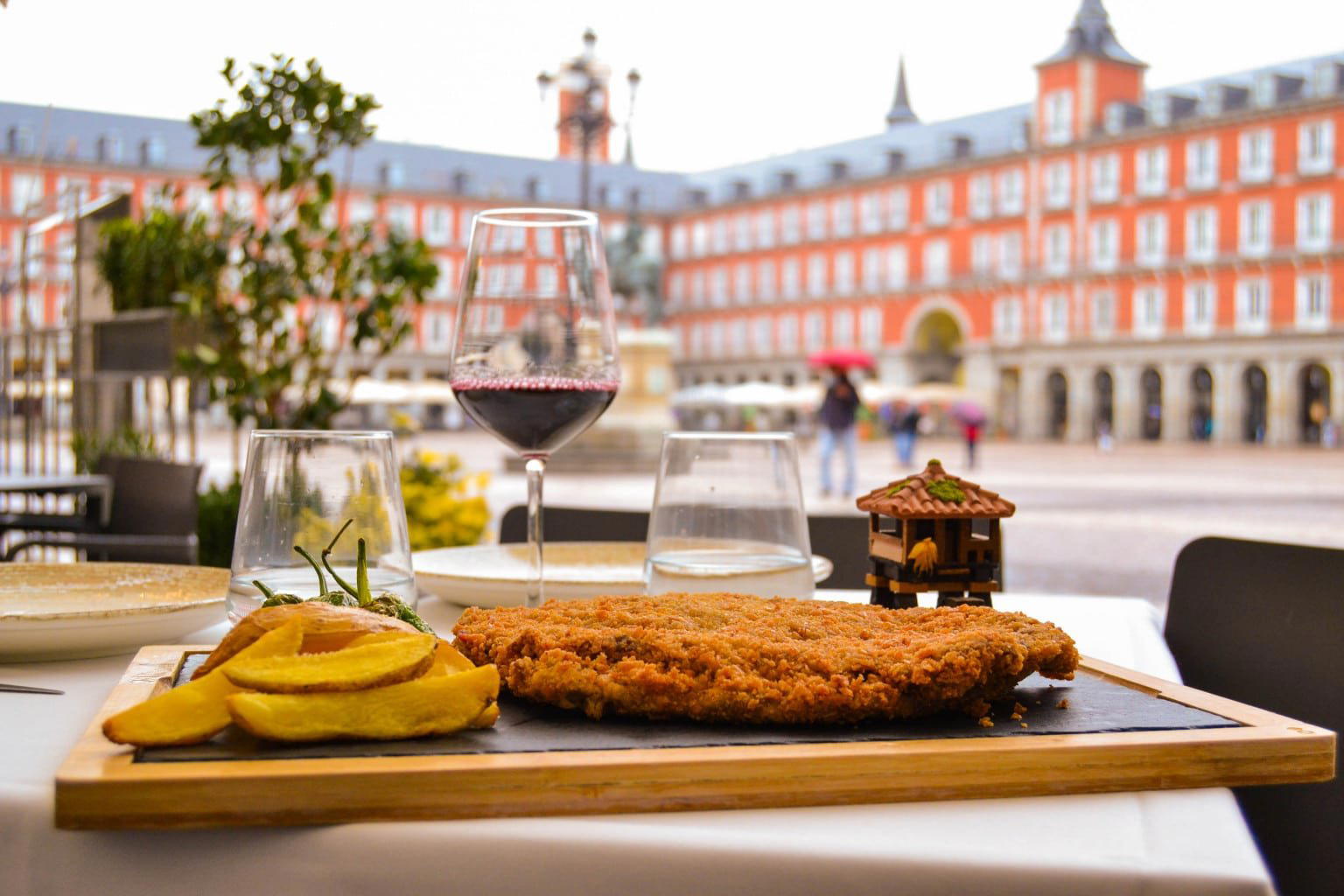
The Cachopo on Its Own Terms
Madrid's most-discussed restaurants in the last decade have clustered around tasting menus, avant-garde technique, and multi-Michelin ambition. DiverXO, Coque, Deessa, and DSTAgE represent the city's creative apex, a tier that prices against global peers and demands advance planning. Cachopo & Go operates in a different register entirely. Located on Paseo de San Francisco de Sales in Chamberí, a neighbourhood of wide avenues, neighbourhood bakeries, and unremarkable apartment blocks that tourists rarely penetrate, this address signals intent before you open the door: this is not a destination restaurant in the tasting-menu sense. It is somewhere a Madrid resident might go on a Tuesday.
That distinction matters more than it sounds. The cachopo itself, a dish from Asturias, the green, rain-soaked region along Spain's northern coast, is not a fine-dining construct. It is a thick veal escalope, hammered flat, filled with cured ham and melting cheese, then breadcrumbed and fried until the exterior is crisp and the interior runs. The dish has roots in mid-twentieth-century Asturian cooking, built for miners and farmers who needed caloric density, and it has since become the emblematic export of a region that also gave Spain its cider culture and its leading fabada. Bringing it to Madrid, and naming an entire operation after it, is a positioning statement about what kind of cooking this place chooses to champion.
How the Menu Is Built, and What That Tells You
A menu organised around a single, named centrepiece dish is a rarer structure than it might appear. In cities like Madrid, where menus tend to sprawl across multiple proteins, seasonal variations, and chef-led flourishes, a focused format signals confidence in the core product. The cachopo format naturally dictates everything downstream: the portion scale, the expected hunger of the guest, the wine or cider pairing logic, the appropriate starters, and the dessert weight.
Asturian cachopo in its traditional form does not leave room for delicacy at the margins. Starters at restaurants built around the dish tend toward conservas, tortillas, and croquetas, things that read as preamble rather than competition. The main event arrives large, often sharing-scale, and the decision about filling variations (the interplay of different ham cuts, cheese types, and occasional vegetable additions) is where the kitchen expresses its range without abandoning the format's logic. This is menu architecture by subtraction: clarity achieved by committing to what the restaurant is, rather than covering every base.
This approach has parallels in regional Spanish cooking far outside the Asturian tradition. The bocadillo-focused bars of Madrid's Mercado de San Miguel, the single-protein asadors of Castile, the rice-led menus of Valencia's countryside, all operate on the principle that depth within a narrow category outperforms breadth across many. Spain's most decorated kitchens, from Quique Dacosta in Dénia to El Celler de Can Roca in Girona, arrived at complexity through years of narrowing focus, not expanding it. Cachopo & Go works at the other end of the prestige spectrum but applies the same underlying logic.
Chamberí as Context
The Chamberí neighbourhood has developed a food identity that runs parallel to the more tourist-facing dining scenes of Malasaña, Chueca, and the Gran Vía corridor. It attracts mid-range neighbourhood restaurants, specialist wine bars, and the kind of places where the clientele arrives without a reservation and the menu changes weekly. Paseo de San Francisco de Sales sits toward the western edge of the barrio, close to the Parque del Oeste, in a stretch that is quieter than the neighbourhood's commercial centre around Alonso Martínez. This means Cachopo & Go is drawing primarily from a local residential catchment rather than from passing tourist traffic, a dynamic that typically rewards consistency over novelty.
For visitors, this location is reachable but requires intention. The nearest metro options are Islas Filipinas (line 7) or Moncloa (lines 3 and 6), both within walking distance. The journey from central Madrid takes roughly fifteen to twenty minutes on public transport, depending on your starting point. The area has no comparable concentration of destination restaurants nearby, so this is a standalone visit rather than part of a broader dining crawl.
Where It Sits in the Madrid Dining Picture
Madrid's restaurant scene divides usefully into three tiers when you look at it from the outside. The creative fine-dining tier, Paco Roncero, DiverXO, DSTAgE, operates at multi-course, high-investment formats and benchmarks against international peers like Le Bernardin in New York or Lazy Bear in San Francisco. Spain's broader decorated circuit extends to Arzak in San Sebastián, Azurmendi in Larrabetzu, Martin Berasategui in Lasarte-Oria, Aponiente in El Puerto de Santa María, Cocina Hermanos Torres in Barcelona, Ricard Camarena in València, Mugaritz in Errenteria, and Atrio in Cáceres. A middle tier covers the city's well-regarded neighbourhood trattorias, tabernas, and market restaurants. Below that sits a large category of casual, regional-specialist spots, of which cachopo restaurants are a recognisable subset in Madrid, given the volume of Asturian migration to the capital over the twentieth century.
Cachopo & Go fits that third category. Competition in this bracket comes from other cachopo specialists in the city, of which there are several, and the differentiator tends to be sourcing quality, filling combinations, and the frying precision that determines whether the crust holds or goes limp before it reaches the table.
For a broader map of where Madrid's dining sits across all these tiers, the EP Club Madrid restaurants guide covers the full spectrum with comparative context.
Know Before You Go
- Address: Paseo de S. Fco. de Sales, 25, Chamberí, 28003 Madrid
- Neighbourhood: Chamberí, western edge, near Parque del Oeste
- Nearest Metro: Islas Filipinas (Line 7) or Moncloa (Lines 3 and 6)
- Phone: Not publicly listed
- Website: Not available
- Booking: Walk-in advised; confirm availability directly with the venue
- Price range: Not confirmed; consistent with casual regional dining in Madrid
- Hours: Not confirmed; verify before visiting
Frequently asked questions
Where do I go for Cachopo & Go?
Cachopo & Go is located at Paseo de S. Fco. de Sales, 25, Chamberí, 28003 Madrid, Spain, Madrid.
How does Cachopo & Go fit into the broader tradition of Asturian cachopo in Madrid?
Cachopo is originally from Asturias in northern Spain, where it appears in family restaurants and sidrerías as a sharing centrepiece. Madrid has adopted the dish widely, but venues that organise their entire identity around it, rather than listing it as one option among many, are fewer in number. Cachopo & Go's Chamberí address on Paseo de San Francisco de Sales places it in a residential dining neighbourhood rather than the tourist-facing corridors where the dish more commonly appears.
What dish is Cachopo & Go famous for?
The cachopo is the centrepiece, a large Asturian breaded veal escalope filled with ham and cheese, fried until the crust is set and the interior molten. Building a restaurant's identity around a single named dish is a deliberate structural choice, and Cachopo & Go commits to it fully. It is the dish that defines the Chamberí address on Paseo de San Francisco de Sales.
Can I walk in to Cachopo & Go?
No booking information is publicly confirmed for Cachopo & Go at this time. For a focused-menu spot in a residential Chamberí street, walk-in availability tends to vary by day and hour. Arriving early or outside peak lunch and dinner service is the practical approach until direct confirmation is available.
What do critics highlight about Cachopo & Go?
The venue has not accumulated documented award recognition or named critical citations in the public record at this point. What the editorial conversation around it tends to centre on is the discipline of the single-dish format, a structure that few Madrid restaurants sustain without expanding into broader menus over time.
Can Cachopo & Go handle vegetarian requests?
The menu is built around cachopo, which is a meat-based dish by definition. The venue data does not document vegetarian alternatives. Anyone with dietary restrictions should confirm directly with the restaurant before visiting, as the core format leaves limited structural room for substitutions.
Is Cachopo & Go worth it?
That depends on what you are after. If you want a tasting menu or avant-garde technique, this is not the address. If the goal is a well-executed version of one of northern Spain's most substantial fried dishes, in a Chamberí neighbourhood context rather than a tourist-facing dining room, the focused format is the point.
Fast Comparison
Comparable venues nearby, for context on price, style, and recognition.
| Venue | Cuisine | Price | Awards | Notes |
|---|---|---|---|---|
| Cachopo & GoThis venue (the venue you are viewing) | Traditional Spanish Cachopo | $20–30 | Not listed | Not listed |
| Café de la Galería | Traditional Spanish with Creative Touches | $30–50 | Not listed | Palacio |
| La Bobia | Traditional Asturian Tapas & Cider | $30–50 | Not listed | Embajadores |
| Portomarín | Galician Spanish | $20–30 | Not listed | Lavapies |
| Cachivache Taberna | Modern Spanish Tapas | $30–50 | Macarfi 6.7 Food Rating | Hispanoamerica |
| Zoko Retiro | Spanish Fusion with Almadraba Tuna | $30–50 | Not listed | Ibiza |