Casa Delfin sits on Passeig del Born in Barcelona's Ciutat Vella, operating within one of the city's most food-literate neighbourhoods. The kitchen draws on the produce traditions of the surrounding Mercat de Santa Caterina and the broader Catalan pantry, placing it in the mid-market casual dining tier that defines Born's most frequented tables. Arrive early or expect to wait.
Pearl is the En Primeur Club membership app — saves, bookings, and concierge access live there. Same editors, same standards.
- Address
- Pg. del Born, 36, Ciutat Vella, 08003 Barcelona, Spain
- Phone
- +34933195088
- Website
- casadelfinrestaurant.com
- Directions
- Get directions
 Saves & bookings on Pearl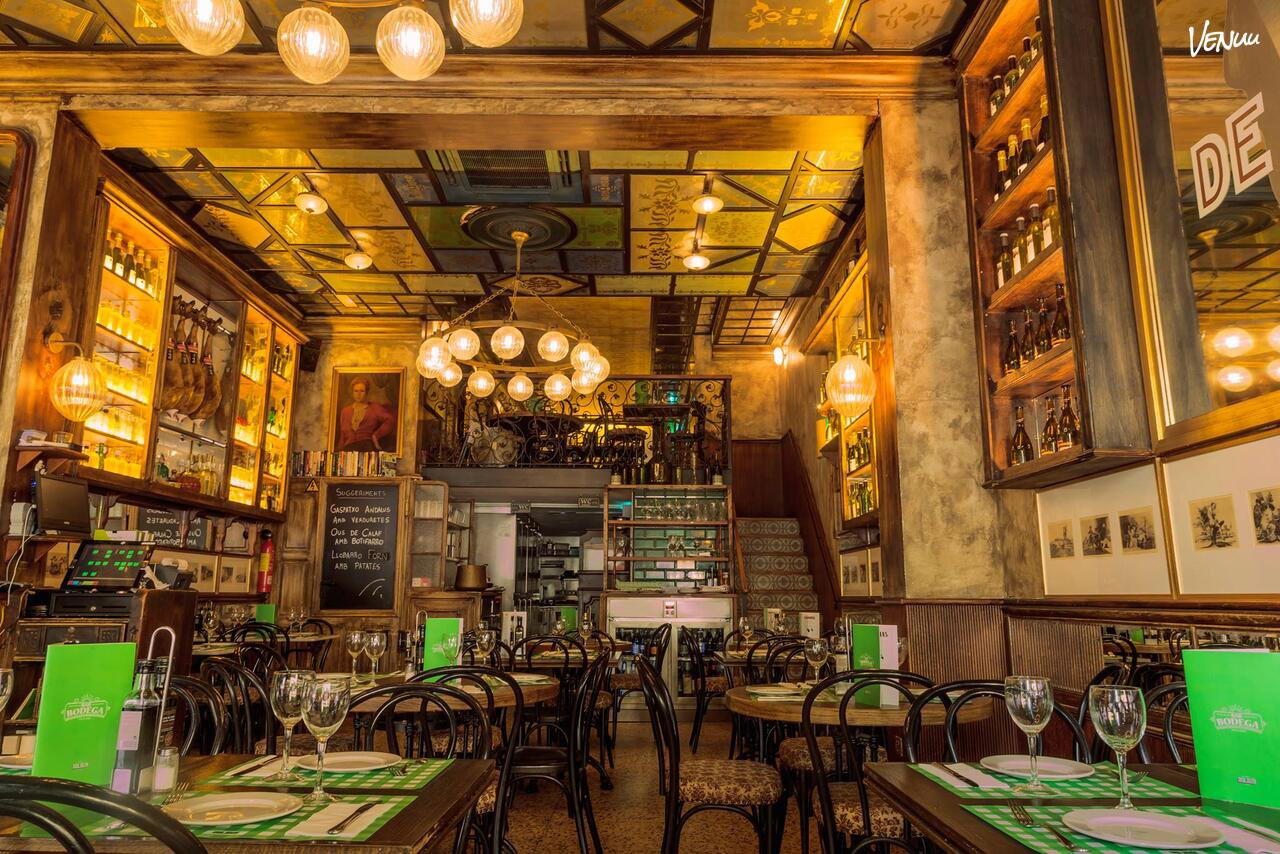
Born's Market Logic, Plated
The Passeig del Born has a particular rhythm that separates it from Barcelona's more tourist-saturated dining corridors. The street runs between the Basílica de Santa Maria del Mar and the Mercat de Santa Caterina, and that geography is not incidental to how its restaurants operate. Proximity to a working market shapes what kitchens can source on short notice, what they choose to feature by the week, and how they price against ingredients that arrive at full freshness rather than via extended distribution chains. Casa Delfin is a traditional Catalan tapas restaurant at Pg. del Born, 36, Ciutat Vella, 08003 Barcelona, Spain. It sits at number 36 on this stretch, within walking distance of both landmarks, and functions within that market-anchored logic that defines the neighbourhood's better casual tables.
Born is not Barcelona's most experimental dining district. That designation belongs more convincingly to the creative tasting-menu tier operating across the city, anchored by venues like Disfrutar (Progressive, Creative) and Enigma (Creative). What Born does well, and what Casa Delfin represents, is the dependable middle register: Catalan technique applied to accessible formats, where the cooking reflects the season because the sourcing demands it.
The Catalan Pantry and Why Provenance Matters Here
Catalan cuisine has one of the more coherent ingredient narratives in European cooking. The region sits between the Pyrenees and the Mediterranean, with access to mountain produce, coastal seafood, and the intensely cultivated plains of the interior. That combination produces a kitchen tradition that is neither purely coastal nor purely agrarian, and which has historically prized the quality of the raw material over the complexity of the technique applied to it. Sofregit, the slow-cooked base of onion and tomato that anchors dozens of Catalan preparations, is a useful illustration: it is neither quick nor technically demanding, but it rewards good produce and patience in roughly equal measure.
The market culture that supports this tradition remains active in Barcelona in ways that have thinned out in many European cities. The Mercat de la Boqueria operates at higher tourist volume than it once did, but the Mercat de Santa Caterina, which serves the Born and Sant Pere neighbourhoods directly, continues to function as a genuine supply node for local kitchens. Restaurants sourcing from it can respond to what arrived that morning rather than committing to fixed menus weeks in advance. For a venue operating in the casual-to-mid register, that kind of sourcing flexibility is often the difference between food that tastes placed and food that tastes purchased.
Spain's broader dining geography rewards some context here. The country's most awarded kitchens, from El Celler de Can Roca in Girona to Quique Dacosta in Dénia and Mugaritz in Errenteria, have spent decades building sourcing relationships that operate at the level of individual farms and fishing boats. The logic filtering down to neighbourhood restaurants in the same regions is the same, scaled differently: ingredient provenance is a serious concern, not a marketing footnote.
What the Location Tells You About the Room
Passeig del Born is a tree-lined pedestrian promenade that concentrates foot traffic throughout the day and into the late evening, especially from Thursday through Sunday. The street's restaurant strip fills early by Spanish standards, with tables visible from the promenade and the particular ambient pressure of a neighbourhood where walking past a full terrace is itself part of the experience. Casa Delfin's position at number 36 places it in the denser section of this strip, where proximity to the Basílica creates a reliable draw of visitors who have just come from the church or the Parc de la Ciutadella a few minutes east.
The Ciutat Vella postal code (08003) covers a neighbourhood that has gentrified considerably since the 1990s urban renewal tied to the 1992 Olympics, but Born retains a denser, more residential character than the Barri Gòtic immediately to the west. The distinction matters for dining: Born's regulars include local residents and the city's design and creative community, which creates a slightly different calibration in the room than a venue operating purely on tourist traffic.
Placing Casa Delfin in Barcelona's Dining Spectrum
Barcelona's full-service restaurant market has stratified sharply. At the upper end, the city's creative kitchens, including Cocina Hermanos Torres (Creative), ABaC (Creative), and Lasarte (Progressive Spanish, Creative), operate tasting-menu formats with advance booking windows of several weeks, price points in the €€€€ tier, and kitchen teams whose training traces back through the major Spanish creative houses. That tier connects outward to the national network anchored by venues like Arzak in San Sebastián, Azurmendi in Larrabetzu, Aponiente in El Puerto de Santa María, Martin Berasategui in Lasarte - Oria, DiverXO in Madrid, Ricard Camarena in València, and Atrio in Cáceres.
The restaurant operates in a different register entirely. Born's mid-market casual tier is where the city's day-to-day food culture is most legible: shorter menus, market-led dishes, formats built around sharing, and price points that allow for repeat visits rather than once-a-year occasions. The comparison set here is not the tasting-menu houses but the cluster of neighbourhood-facing restaurants that have earned local loyalty through consistency and sourcing integrity rather than through chef celebrity or award positioning. For international visitors whose dining at this level might otherwise be anchored by venues like Le Bernardin in New York City or Lazy Bear in San Francisco, Born's casual tier offers a different proposition: immediate, ingredient-led cooking in a neighbourhood that still functions as a place people actually live.
Planning a Visit
For the restaurant specifically, the practical considerations are direct: reservations are recommended, and the restaurant is open daily from 12 PM to 12 AM, with later hours on Friday and Saturday.
Know Before You Go
- Address: Pg. del Born, 36, Ciutat Vella, 08003 Barcelona, Spain
- Neighbourhood: El Born, Ciutat Vella
- Booking: Reservations recommended
- Price tier: $$
- Hours: Mon to Thu and Sun 12 PM to 12 AM; Fri and Sat 12 PM to 12:30 AM
- Nearest landmark: Basílica de Santa Maria del Mar (under 5-minute walk), Mercat de Santa Caterina (adjacent neighbourhood)
Price Lens
Comparable venues nearby, for context on price, style, and recognition.
| Venue | Cuisine | Price | Notes |
|---|---|---|---|
| Casa DelfinThis venue — the venue you are viewing | Not listed | $$ | Not listed |
| Restaurant Amaya | Not listed | $$ | Barri Gotic, Traditional Basque and Mediterranean |
| Barceloneta | Port Vell, Traditional Catalan Seafood | $$ | Not listed |
| Restaurant L'Aliança del Poble Nou | Not listed | $$ | el Poblenou, Traditional Spanish Mediterranean |
| Nova Galiza | Not listed | $$ | la Nova Esquerra de l'Eixample, Spanish Fusion with Galician Specialties |
| SAGARDI BCN Gòtic | Not listed | $$ | Sant Pere, Santa Caterina i la Ribera, Traditional Basque Pintxos & Tapas |
Continue exploring
More in Barcelona
Restaurants in Barcelona
Browse all →
Bars in Barcelona
Browse all →
Hotels in Barcelona
Browse all →

At a Glance
- Cozy
- Classic
- Intimate
- Casual Hangout
- Date Night
- Terrace
- Historic Building
- Extensive Wine List
- Local Sourcing
- Street Scene
Current opening hours
- Monday
- 12 PM–12 AM
- Tuesday
- 12 PM–12 AM
- Wednesday
- 12 PM–12 AM
- Thursday
- 12 PM–12 AM
- Friday
- 12 PM–12:30 AM
- Saturday
- 12 PM–12:30 AM
- Sunday
- 12 PM–12 AM
Hours can change for holidays and private events. Last verified .
Cozy and warm atmosphere with inviting interior featuring patina-equipped decor recalling old Barcelona restaurant culture and beautiful etchings on walls.