Among Barcelona's Basque-format restaurants, SAGARDI BCN Gòtic occupies a specific position in the Born-adjacent Gothic Quarter: a txoko-style operation where the sourcing logic traces directly to the Basque Country rather than local Catalan suppliers. It sits in a different tier from the city's creative tasting-menu circuit, built instead around the grill tradition and pintxo counter format that defines serious Basque dining in Catalonia.
Pearl is the En Primeur Club membership app — saves, bookings, and concierge access live there. Same editors, same standards.
- Address
- Carrer de l'Argenteria, 62, Ciutat Vella, 08003 Barcelona, Spain
- Phone
- +34933199993
- Website
- sagardi.com
- Directions
- Get directions
 Saves & bookings on Pearl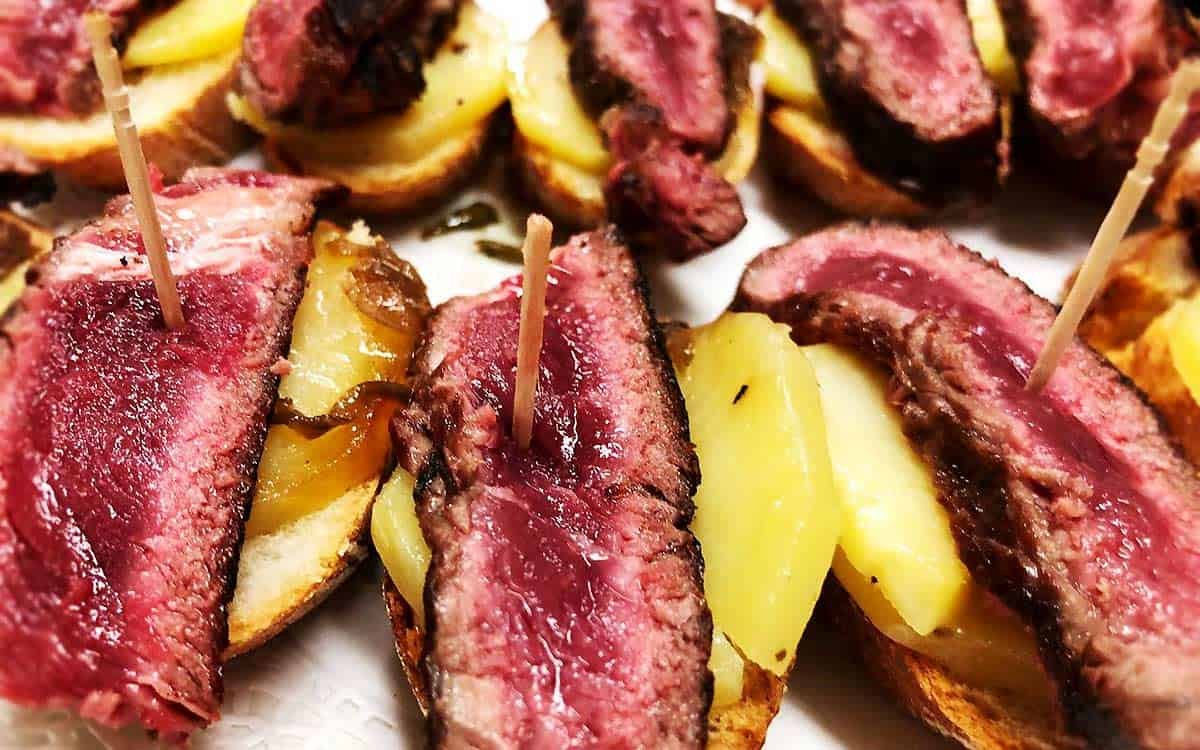
The Basque Grill in the Gothic Quarter
SAGARDI BCN Gòtic is a restaurant in Barcelona’s Ciutat Vella serving Traditional Basque Pintxos & Tapas. On one side sit the tasting-menu houses: Disfrutar, ABaC, Enigma, Lasarte, Cocina Hermanos Torres. On the other sit the tradition-led formats that require no tasting menu, no amuse-bouche sequence, and no theatrical preamble. Basque-format restaurants occupy this second category with particular authority, and SAGARDI BCN Gòtic, positioned on Carrer de l'Argenteria in the Ciutat Vella, is among the clearest expressions of that format in the city.
The address matters. Carrer de l'Argenteria sits at the edge of El Born, one street back from the Basilica de Santa Maria del Mar, in a corridor where the Gothic Quarter and Born districts blur together. It is dense tourist territory, which makes serious Basque sourcing and format discipline here more of a deliberate statement than it would be in, say, Eixample. The building's ground-floor pintxo counter and the dining room behind it follow the spatial logic that defines Basque bar culture: you eat standing at the bar first, then you sit down if you want a longer meal.
What the Sourcing Argument Actually Means
Basque cuisine's authority in Spain is partly a product of geography and partly a product of institutional commitment to provenance. The txuleton, the Basque bone-in ribeye that has become a reference cut across the country, is a useful illustration. The cut's status depends almost entirely on the breed, age, and finishing conditions of the animal, most commonly Galician or Basque-reared cattle aged to a deep amber fat. When a Basque-format restaurant in Barcelona makes that sourcing argument legible, it is doing something that separates it from the generic parrilla (grill) operations that populate the tourist corridors nearby.
SAGARDI as a group has built its identity around that sourcing logic, operating across multiple Spanish cities and beyond. The Gòtic location carries that sourcing framework into one of Barcelona's highest-footfall districts. The charcoal grill format the group favours is not incidental: it reflects the Basque parrilla tradition where fire management and resting time are the primary technical variables, and where the quality of the raw material is expected to carry the plate. This is structurally different from the technique-led creativity of restaurants like Mugaritz in Errenteria or Azurmendi in Larrabetzu, which represent the Basque Country's other, more conceptually ambitious tradition. SAGARDI sits firmly in the product-first camp, alongside the lineage that runs through Arzak in San Sebastián and the grill houses of the Basque coast.
The Pintxo Counter as Entry Point
In the Basque Country, the pintxo bar is not a simplified version of the restaurant. It is its own format with its own competitive logic: the quality of the offerings on the bar, the frequency with which they are refreshed, and the alignment between what is displayed and what is being produced in the kitchen at that moment. Barcelona has absorbed this format at varying levels of fidelity. The better operations understand that cold pintxos on a bar need to turn over quickly to maintain quality, and that the hot pintxos prepared to order represent the real test of kitchen execution.
At Carrer de l'Argenteria, the counter format serves both as a practical entry point for visitors who want a standing snack and a glass of txakoli, and as a signal of the restaurant's Basque credentials. Txakoli, the low-alcohol, high-acid white wine from the Basque coast, is the canonical accompaniment here, poured from height in the traditional style that aerates the wine and sharpens its effervescence. The wine's role is functional rather than ceremonial: its acidity cuts through the fat of cured meats and aged cheese, and its slight fizz works against oily anchovy preparations. This is the kind of pairing logic that develops over generations in a specific geography, not something engineered for a restaurant concept.
Where SAGARDI Sits in the Barcelona Context
Barcelona's Basque restaurant population has grown alongside the city's broader premium dining expansion. The competition at the accessible end of that market is real: pintxo bars and Basque-format operations have proliferated in Born and Eixample, ranging from genuine transplants with northern supply chains to surface-level imitations using generic Spanish produce and Basque nomenclature. SAGARDI's group infrastructure gives it supply chain depth that most independent competitors cannot match, particularly for the aged beef cuts and the Basque-sourced seafood that represent stronger examples from its menu.
It is not competing with El Celler de Can Roca in Girona or with Martin Berasategui in Lasarte-Oria. Its comparable set is the mid-tier Basque and Spanish grill format, where the decisive factors are ingredient provenance, grill technique, and format integrity. Within that comparable set, the group's sourcing framework and the Gòtic location's execution history give it a credible position.
The product-first, fire-driven approach that SAGARDI represents is different in kind from the seafood creativity of Aponiente in El Puerto de Santa María, the Valencian vegetable precision of Ricard Camarena in València, or the architectural complexity of Quique Dacosta in Dénia. These are not competing formats; they represent different nodes in a wide Spanish culinary conversation. For international visitors mapping that conversation, SAGARDI offers the Basque grill tradition in a form that does not require travel to the north, though the original context is irreplaceable.
The contrast between SAGARDI's approach and venues like Atomix in New York City or Le Bernardin in New York City illustrates how different the underlying craft philosophies can be even within what gets broadly labelled premium dining. DiverXO in Madrid and Atrio in Cáceres round out the Spain-wide picture for readers planning multi-city itineraries.
The Short List
Comparable venues nearby, for context on price, style, and recognition.
| Venue | Cuisine | Price | Notes |
|---|---|---|---|
| SAGARDI BCN GòticThis venue — the venue you are viewing | Not listed | $$ | Not listed |
| Cafeteria Fernando | Not listed | $$ | Barri Gotic, Traditional Spanish Tapas & Paella |
| Can Culleretes | Barri Gotic, Traditional Catalan | $$ | Not listed |
| Lateral Consell | Not listed | $$ | la Dreta de l'Eixample, Spanish & Catalan Tapas |
| Restaurant L'Aliança del Poble Nou | Not listed | $$ | el Poblenou, Traditional Spanish Mediterranean |
| MALPARIT | Not listed | $$ | l'Antiga Esquerra de l'Eixample, Modern Catalan Tapas |
Continue exploring
More in Barcelona
Restaurants in Barcelona
Browse all →
Bars in Barcelona
Browse all →
Hotels in Barcelona
Browse all →
At a Glance
- Lively
- Rustic
- Classic
- Cozy
- Casual Hangout
- Group Dining
- After Work
- Open Kitchen
- Terrace
- Historic Building
- Beer Program
- Local Sourcing
Current opening hours
- Monday
- 12 PM–12:30 AM
- Tuesday
- 12 PM–12:30 AM
- Wednesday
- 12 PM–12:30 AM
- Thursday
- 12 PM–12:30 AM
- Friday
- 12 PM–12:30 AM
- Saturday
- 12 PM–12:30 AM
- Sunday
- 12 PM–12:30 AM
Hours can change for holidays and private events. Last verified .
Rustic stone walls, brick archways, and wood beams create an authentic tavern atmosphere; lively pintxos bar contrasts with cosy dining room featuring open kitchen and intimate nooks.