On the Rambla del Poblenou, L'Aliança occupies a neighbourhood that has been rewriting its own identity for two decades, and the restaurant has long served as one of its anchoring institutions. The setting reads as old Barcelona rather than new: the kind of address that earns its place through continuity rather than concept launches. A reference point for the district's more grounded, tradition-led dining register.
Pearl is the En Primeur Club membership app — saves, bookings, and concierge access live there. Same editors, same standards.
- Address
- Rambla del Poblenou, 42, Sant Martí, 08005 Barcelona, Spain
- Phone
- +34935394329
- Website
- restaurantalianca.es
- Directions
- Get directions
 Saves & bookings on Pearl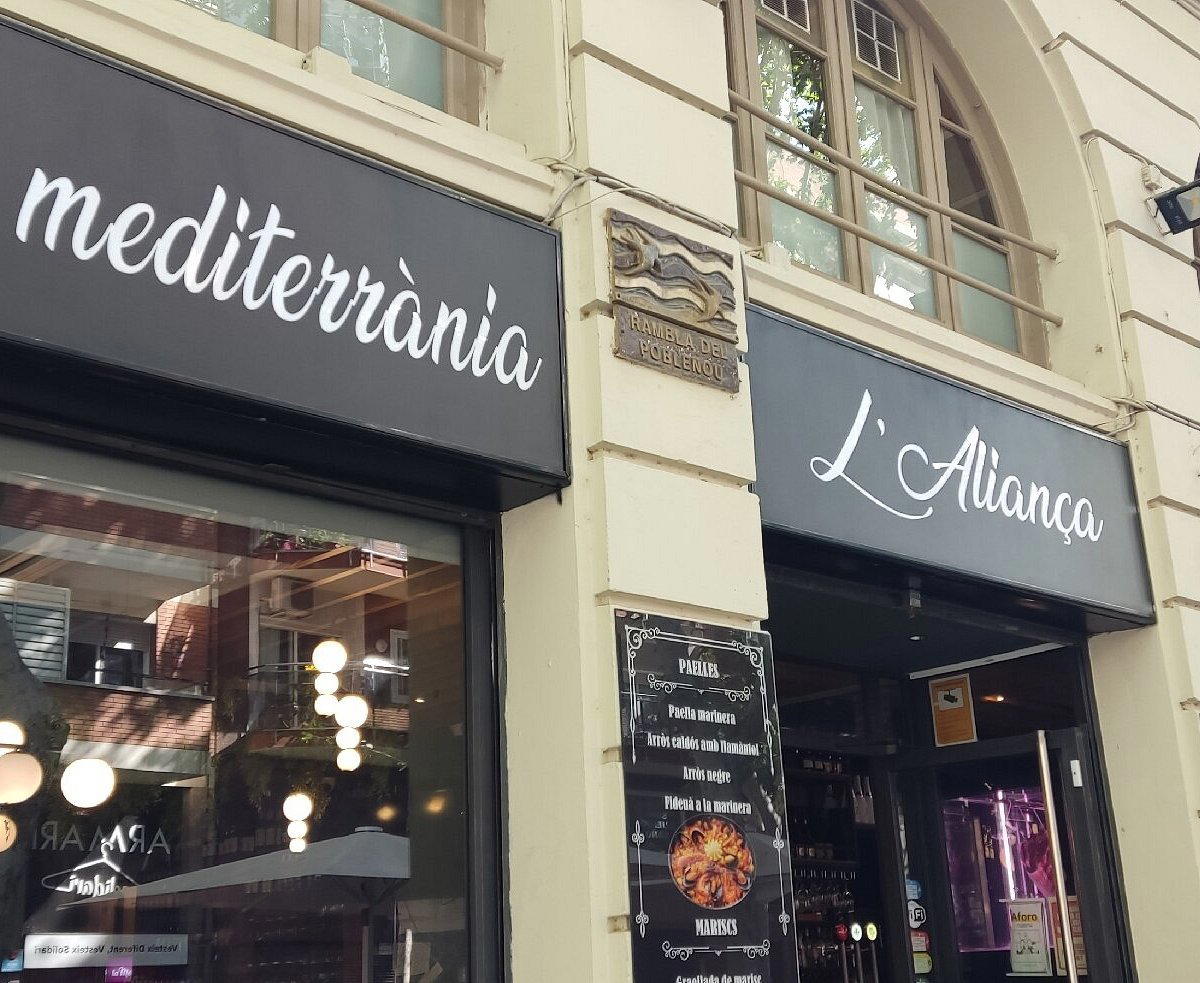
The Rambla del Poblenou and What It Tells You About Barcelona Dining
Restaurant L'Aliança del Poble Nou is a traditional Spanish Mediterranean restaurant in Barcelona, at Rambla del Poblenou, 42, Sant Martí. Barcelona's dining conversation tends to concentrate around Eixample tasting menus and the Michelin addresses that draw international attention: Disfrutar (Progressive, Creative), ABaC (Creative), Lasarte (Progressive Spanish, Creative), Enigma (Creative), and Cocina Hermanos Torres (Creative). But that conversation represents a narrow slice of how the city actually eats. It is a casual, recommended restaurant in a local dining district. Away from the innovation circuit, certain neighbourhoods carry a different kind of dining authority, the authority of continuity, of a room that has been feeding the same streets through multiple cycles of urban change. Poblenou is the clearest example of that dynamic in contemporary Barcelona, and the Rambla del Poblenou is its central artery.
The Rambla runs from Diagonal down toward the sea, lined with low residential buildings and local businesses that predate the neighbourhood's 22@ tech-district transformation. It is not a tourist corridor. The foot traffic is overwhelmingly local: residents, office workers from the surrounding blocks, people who live close enough to walk. Restaurant L'Aliança del Poble Nou sits at number 42 on that Rambla, which tells you something before you even open the door. An address on this specific stretch is a neighbourhood address, not a destination address in the way that, say, a hotel-adjacent Eixample tasting room is a destination address.
Reading the Room: Atmosphere and Physical Register
Poblenou has an atmospheric texture that distinguishes it sharply from Barcelona's more performed dining districts. The light along the Rambla is different from the shade of the Gothic Quarter or the wide exposure of the waterfront: it is filtered through plane trees and bounced off pale facades that have the slightly worn quality of buildings that have housed actual lives rather than renovations. Approaching L'Aliança from the street, that ambient quality carries through. This is a dining environment shaped by its neighbourhood rather than insulated from it.
In Spanish urban dining, the category of restaurant that earns this kind of address-embedded credibility tends to operate on a set of principles distinct from the tasting-menu circuit. The sensory register is quieter, more sustained. Sound levels track conversation rather than performance. The visual environment reads as accumulated rather than designed, in the sense that objects, furniture, and arrangement have arrived over time rather than through a single interior concept. For a dining category that increasingly signals its premium positioning through architectural drama and mise-en-scène, the alternative tradition, of a room that earns authority through depth of service and kitchen consistency, is worth understanding as a separate and legitimate tier.
Poblenou in the Context of Barcelona's Neighbourhood Dining Evolution
The 22@ programme began reshaping Poblenou's industrial fabric in the early 2000s, drawing creative and technology businesses into what had been a dense manufacturing district. That shift accelerated the neighbourhood's restaurant ecology, layering newer openings over establishments that had been serving the working-class residential community since well before the transformation. L'Aliança del Poble Nou sits at Rambla del Poblenou, 42, in the Sant Martí district, which positions it within the older residential grain rather than the regenerated industrial-conversion blocks further north.
The distinction matters because it shapes the dining audience and the kitchen's frame of reference. Restaurants that predate neighbourhood gentrification cycles often carry a menu logic that reflects the community they originally served: seasonal, product-led, without the conceptual overlay that newer openings use to signal their positioning. That is the tradition L'Aliança belongs to, and it is a tradition with serious culinary weight across Spain. Institutions of this type in other Spanish cities, the kind of long-running address that earns its standing through accumulated trust rather than award accumulation, share a recognisable set of values with what the Rambla del Poblenou address represents.
Where This Sits in the Broader Spanish Dining Map
Spain's premium dining geography is complex. The internationally tracked tier runs through addresses like El Celler de Can Roca in Girona, Mugaritz in Errenteria, Arzak in San Sebastián, Azurmendi in Larrabetzu, Martin Berasategui in Lasarte-Oria, DiverXO in Madrid, Aponiente in El Puerto de Santa María, Quique Dacosta in Dénia, and Ricard Camarena in València. These are innovation-led, internationally cited, and priced accordingly. Below that tier, and not in a pejorative sense, sits a category of Spanish restaurant that operates on different terms: rooted in regional product, oriented toward a local clientele, and measured by longevity rather than critical disruption. Atrio in Cáceres occupies a different version of this local-institution role in Extremadura.
L'Aliança del Poble Nou belongs to the neighbourhood-institution category in Barcelona, which in a city of this culinary density carries its own form of credential. Surviving and maintaining standing on the Rambla del Poblenou across the neighbourhood's transformation from industrial district to mixed creative-residential zone is not a passive achievement. The competitive pressure from newer openings targeting the same postcodes is real, and the restaurants that persist through those cycles do so through kitchen consistency and a relationship with their community that cannot be manufactured quickly.
Planning Your Visit
The address is Rambla del Poblenou, 42, Sant Martí, 08005 Barcelona. The Rambla del Poblenou is accessible on foot from the Poblenou metro station (L4, yellow line).
Le Bernardin in New York City and Atomix in New York City, both of which illustrate how sustained kitchen discipline translates into long-term institutional standing in competitive urban markets.
Accolades, Compared
Comparable venues nearby, for context on price, style, and recognition.
| Venue | Cuisine | Price | Notes |
|---|---|---|---|
| Restaurant L'Aliança del Poble NouThis venue — the venue you are viewing | Traditional Spanish Mediterranean | $$ | Not listed |
| La Roda | Spanish/Catalan Grill & Paella | $$ | el Poblenou |
| Ca l'Agut | Traditional Catalan | $$ | Barri Gotic |
| La Bendita | Spanish Tapas and Paella | $$ | la Sagrada Familia |
| La Cuina del Ninot | Traditional Catalan Tapas & Market Cuisine | $$ | l'Antiga Esquerra de l'Eixample |
| Bodegó del Pop | Traditional Spanish Tapas | $$ | el Putxet i el Farro |
Continue exploring
More in Barcelona
Restaurants in Barcelona
Browse all →
Bars in Barcelona
Browse all →
Hotels in Barcelona
Browse all →
At a Glance
- Cozy
- Lively
- Casual Hangout
- Group Dining
- Family
- Terrace
- Open Kitchen
- Street Scene
Current opening hours
- Monday
- 12 PM–12 AM
- Tuesday
- 12 PM–12 AM
- Wednesday
- 12 PM–12 AM
- Thursday
- 12 PM–12 AM
- Friday
- 12 PM–12:30 AM
- Saturday
- 12 PM–12:30 AM
- Sunday
- 12 PM–12 AM
Hours can change for holidays and private events. Last verified .