Among Bucharest's historic dining rooms, Caru' cu Bere occupies a position few can match: a late-nineteenth-century beer hall on Strada Stavropoleos whose Neo-Gothic interior remains among the more architecturally intact in Central Europe. Where newer restaurants on the same street trade in contemporary Romanian cuisine, this address anchors the neighbourhood's historical identity and draws both tourists and locals navigating the gap between monument and meal.
Pearl is the En Primeur Club membership app — saves, bookings, and concierge access live there. Same editors, same standards.
- Address
- Strada Stavropoleos 5, București 030081, Romania
- Phone
- +40726282373
- Website
- carucubere.ro
- Directions
- Get directions
 Saves & bookings on Pearl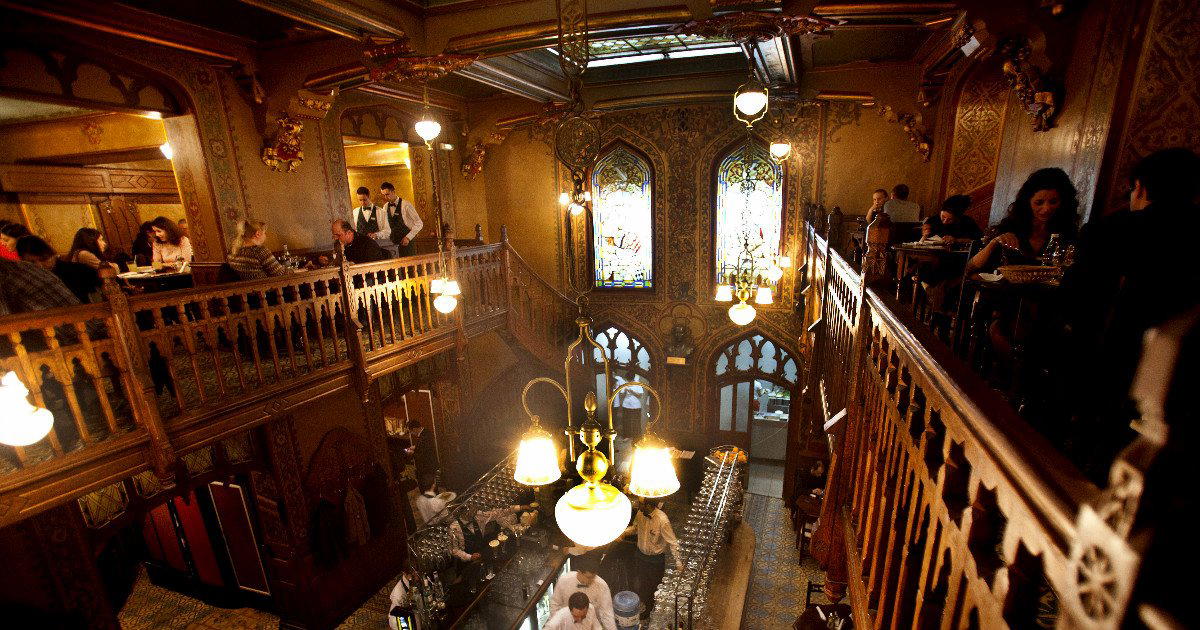
Strada Stavropoleos and the Weight of the Old City
The street that runs alongside the Stavropoleos Church is one of the shortest in central Bucharest and among the more concentrated for atmosphere. Cobblestones, a Byzantine monastery courtyard, and a row of facades that survived both Communist-era demolition and post-1989 redevelopment all compress into a few hundred metres. Caru' cu Bere sits at number 5, and its presence here is not incidental: the building was designed as a civic statement, not simply a place to drink beer. Rebuilt in its current form in 1897 to designs by the architect Zigfrid Kohncert, the structure announced itself with stained-glass windows, Neo-Gothic vaulting, and carved-wood galleries.
That architectural ambition is the first thing the street communicates to anyone approaching from the Lipscani end of the old city. The facade reads as church before it reads as restaurant. Inside, the main hall extends upward through two gallery levels, the vaulted ceiling catching light from windows that have been restored but not sanitised. The room functions as its own argument: this is what a Central European beer hall looked like when beer halls were considered cultural institutions rather than casual venues.
The Bucharest Context: Where This Sits in the City's Dining Map
Bucharest's restaurant scene has developed unevenly since the early 2000s. The old city, concentrated around Lipscani and the surrounding streets, became the primary zone for hospitality investment, with a succession of bars, clubs, and restaurants filling the ground floors of restored buildings. That first wave prioritised volume and accessibility. A second, more considered wave followed: restaurants like Alouette and Aubergine pushed toward ingredient-focused, technique-driven cooking that positioned Bucharest against a wider European comparable set. Bogdania Bistro and Casa di David carved out more specific identities within particular cuisine categories.
Caru' cu Bere operates in a different register from all of them. It is not competing on the same axes as the contemporary Romanian cooking that L'Atelier or NOUA represent, nor is it a French bistro like Le Bistrot Français. Its competitive set is defined more by monument status and dining volume than by culinary positioning. The closest local parallel for the combination of historic interior, traditional menu, and high tourist footfall might be Casa Doina in Herăstrău, which similarly deploys traditional Romanian identity through a well-preserved physical setting, though in a northern park rather than the old city.
For readers tracking the full breadth of what the Romanian dining scene offers beyond Bucharest, the picture extends to addresses like Artegianale in Brasov, Kupaj Fine Wines and Gourmet Tapas in Cluj-Napoca, and Andalu Gastrobar in Iasi. Further afield, Epoca Steak House in Craiova and STUP in Simon represent the range of approaches being taken across the country.
What the Menu Represents
Romanian beer hall cuisine has a reasonably consistent grammar: slow-cooked meats, pork-forward preparations, sour soups built on ciorbă logic, and dishes that were designed to accompany large quantities of beer in a pre-refrigeration era. Caru' cu Bere's menu operates within that tradition, which means its culinary ambition is horizontal rather than vertical. The point is not refinement but completeness: a table here should move through the categories that define the genre, from the bread-and-lard starters common in Wallachian cooking to mains built around braised or roasted proteins.
That traditional framing puts it at a deliberate distance from what contemporary Romanian restaurants are attempting. The cooking at addresses like Bogdania Bistro or the more ingredient-focused places reviewed in our Bucharest guide tends to interrogate the tradition rather than reproduce it. Caru' cu Bere makes no such claim. The room is the argument; the food is the supporting text.
Caru' cu Bere is not in that conversation. It belongs to a European category of dining monument that includes Munich's Hofbräuhaus and Prague's U Fleků: places where the architecture and the occasion are the primary product and the food is a competent, traditional accompaniment.
Planning a Visit: Practical Orientation
Strada Stavropoleos 5 is walkable from Piața Unirii metro station and sits at the heart of the Lipscani pedestrian zone, which means it is reachable on foot from most old-city hotels without requiring transport. The neighbourhood is dense with other hospitality options, so a meal here fits naturally into a broader evening in the area. Addresses like Cafeneaua Nației in Ploiesti or Cartofisserie in Timisoara illustrate how Romania's provincial cities are developing their own hospitality identities, but for a first visit to Bucharest, the old city concentration makes it efficient to start here.
The venue draws significant tourist volume, which affects pacing and noise levels in the main hall during peak evening service. Visiting midweek or at lunch can make it easier to read the room's architectural detail without competing with the crowd. The stained-glass light is leading observed in afternoon natural light before dinner service reaches full capacity.
Other Romania-based dining options across smaller cities and towns, including Bistro Caffe Moțu in Baia Sprie, Cartofisserie in Suceava, and Butterfly Events in Chiscani, show how the country's restaurant culture extends well beyond its capital, though none occupy quite the same architectural category as this address.
A Tight Comparison
Comparable venues nearby, for context on price, style, and recognition.
| Venue | Cuisine | Price | Notes |
|---|---|---|---|
| Caru'Cu BereThis venue — the venue you are viewing | Lipscani, Traditional Romanian | $$ | Not listed |
| Energiea | Not listed | $$ | Sector 5, Gastropub with International Flavors |
| Jeonjuu Korean BBQ | Old Town, Authentic Korean BBQ | $$ | Not listed |
| Kunnai | Crângaşi, Contemporary Thai Cuisine | $$ | Not listed |
| trickSHOT | Not listed | $$ | Floreasca, International with Italian & Mediterranean influences |
| NOUA | Iancului, Neo-Romanian Fine Dining | $$$$ | Not listed |
Continue exploring
More in Bucharest
Restaurants in Bucharest
Browse all →
Bars in Bucharest
Browse all →
At a Glance
- Well Known
- Historic
- Lively
- Rustic
- Group Dining
- Celebration
- Casual Hangout
- Historic Building
- Live Music
- Beer Program
Current opening hours
- Monday
- 10 AM–12 AM
- Tuesday
- 10 AM–12 AM
- Wednesday
- 10 AM–12 AM
- Thursday
- 10 AM–12 AM
- Friday
- 10 AM–12 AM
- Saturday
- 10 AM–12 AM
- Sunday
- 10 AM–12 AM
Hours can change for holidays and private events. Last verified .
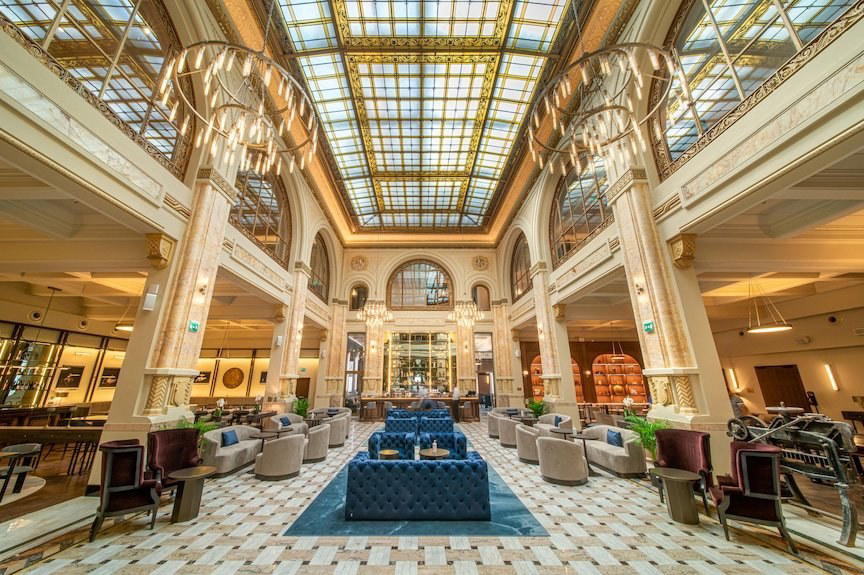
Dramatic Gothic Revival and Art Nouveau interior with stained glass windows, oak pillars, detailed woodwork, and lively energetic atmosphere.