Cartofisserie on Calea Unirii brings a focused, ingredient-led approach to Suceava's dining scene, channelling the kind of casual precision that has made potato-centred concepts a fixture in Romanian cities from Timișoara to the capital. In a city where serious cooking has historically taken a back seat to regional home traditions, this address represents a particular shift in how locals eat out.
Pearl is the En Primeur Club membership app — saves, bookings, and concierge access live there. Same editors, same standards.
- Address
- Calea Unirii 22, Suceava 720018, Romania
- Phone
- +40771705727
- Website
- cartofisserie.ro
- Directions
- Get directions
 Saves & bookings on Pearl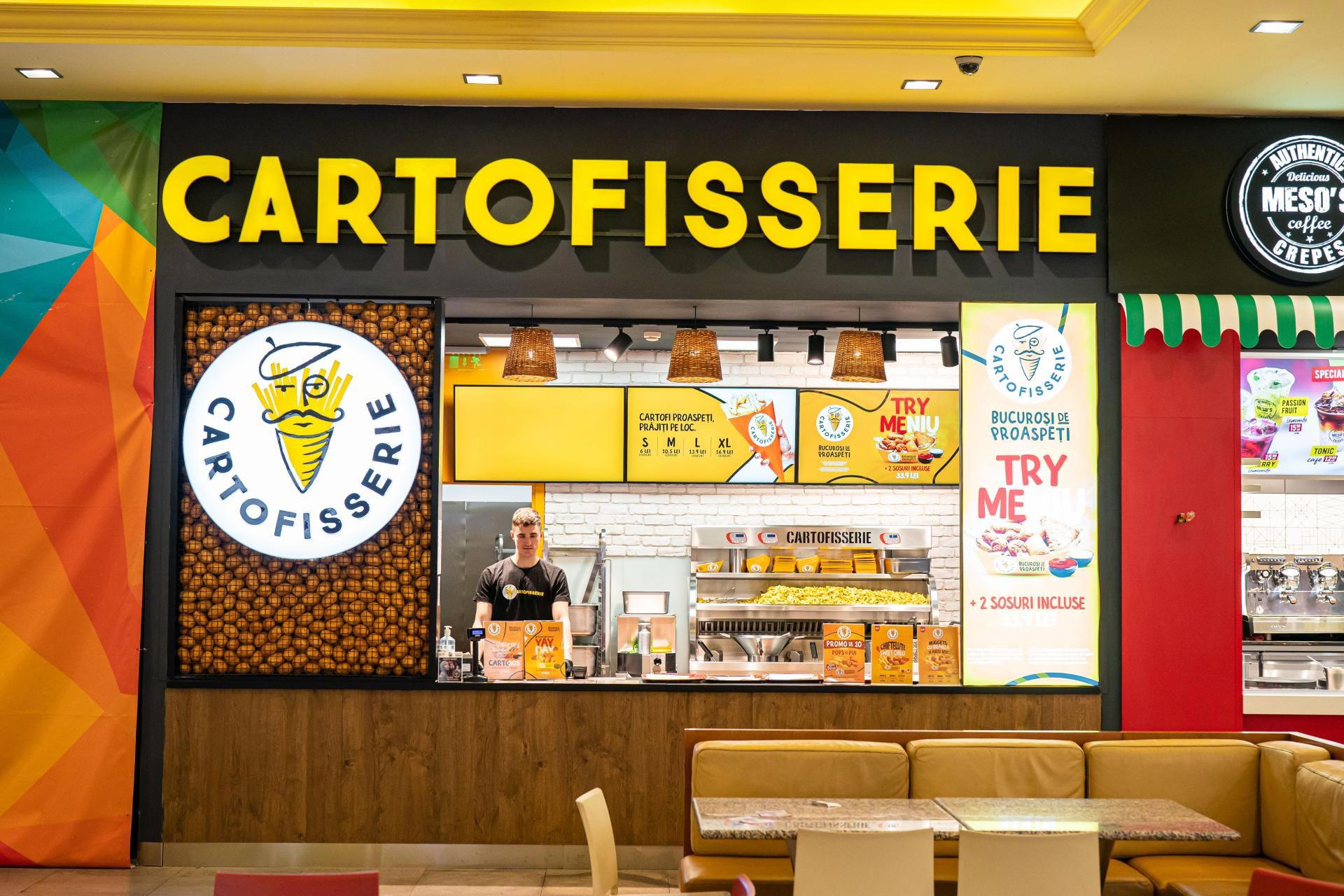
Where Suceava Eats Differently
Suceava sits at the northern edge of Moldova, a city more often associated with the painted monasteries of Bucovina than with any particular restaurant culture. Dining out here has long meant either regional home cooking, thick soups, slow-braised meats, maize, or the kind of generic central-European café format that fills the pedestrian zones of mid-sized Romanian cities. The arrival of concepts that take a single ingredient seriously, and build an entire operation around it, represents a different register altogether. Cartofisserie is a restaurant at Calea Unirii 22 in Suceava, Romania, with. Cartofisserie, at Calea Unirii 22, belongs to that register.
The address itself matters. Calea Unirii is one of Suceava's main commercial arteries, the kind of street where foot traffic is real and visible, and where a concept needs to read clearly to a passing audience. A cartofisserie, the word adapts the French rôtisserie model to the Romanian word for potato, cartof, communicates its premise immediately: this is a place where the potato is not a side dish but the point. That framing, unusual in a regional Romanian city, places the venue in the same strand of thinking that has produced ingredient-focused formats across the country, including Cartofisserie in Timișoara, which operates under the same concept in one of Romania's most food-forward cities.
The Ingredient at the Centre
Across Romanian culinary history, the potato arrived late, introduced in the eighteenth century and adopted slowly, moving from mountain subsistence food to a standard accompaniment rather than a headline. The cartofisserie format inverts that hierarchy. In contemporary Romanian casual dining, the shift toward single-product specialisation mirrors patterns seen in Western European cities a decade earlier: the burger specialist, the rotisserie chicken house, the focacceria. Each depends on sourcing quality above all else, because when you strip away menu complexity, the ingredient has nowhere to hide.
That logic makes the sourcing question central to what a cartofisserie offers. Romanian agriculture, particularly in the northeast, has a genuine base of small-scale potato cultivation, varieties grown at altitude across Bucovina and the Carpathian foothills produce starchier, denser tubers than industrial lowland equivalents, with flavour profiles that reward high-temperature roasting or frying at depth. Whether a given venue sources at that level of specificity is the operative question, and it is the question that separates a concept with editorial interest from a marketing premise. For context on how ingredient sourcing shapes identity across Romanian dining formats, the STUP in Simon and L'ATELIER in Bucharest both demonstrate how local provenance, when treated as a structural commitment rather than a menu footnote, changes what a restaurant is able to claim.
Suceava's Evolving Food Scene
For most of the past two decades, serious Romanian dining concentrated in Cluj-Napoca, Bucharest, and, to a lesser extent, Timișoara. Secondary cities, Iași, Brașov, Sibiu, and the Moldavian capitals further north, have been catching up at different speeds. Suceava, boosted by tourism linked to the UNESCO-listed monasteries and by a growing professional class, has seen new openings that reflect a younger, more travelled consumer. The kind of diner who has eaten at Kupaj Fine Wines and Gourmet Tapas in Cluj-Napoca or Andalu Gastrobar in Iași on a weekend trip returns to Suceava with recalibrated expectations. Cartofisserie sits in that gap: a format that reads as casual and accessible but implies a level of product focus that the older local dining scene did not require.
That dynamic is playing out across Romania's secondary cities simultaneously. In Brașov, Artegianale has built a following on a similar premise of craft-first thinking in a tourist-heavy city. In Sibiu, Kombinat Gastro-Brewery has integrated local production into the dining format itself. The pattern is consistent: in cities where the visitor economy is active, ingredient-led casual formats tend to gain ground faster than fine dining, because they serve both tourists and locals at a price point that sustains volume.
Format, Setting, and What to Expect
The cartofisserie format, wherever it appears in Romania, tends toward informal interiors: counter service or semi-casual table service, focused menus with limited categories, and a price point accessible to the everyday lunch crowd as much as to the evening diner. The physical environment on Calea Unirii reflects the street's commercial character, a location chosen for visibility and footfall rather than destination-dining theatrics. In cities like Suceava, where evening dining culture is still developing, a format that works as effectively at midday as after dark holds a structural advantage over concepts that depend on a dedicated dinner audience.
For visitors arriving from outside the region, Suceava is reachable by train from Bucharest in roughly six hours, or by a short domestic flight via Suceava Stefan cel Mare Airport. The monastery circuit typically occupies a full day or two, and the city itself provides a sensible base. Calea Unirii is centrally positioned and walkable from most accommodation in the city centre, making Cartofisserie a practical stop before or after the kind of afternoon that ends at Voroneț or Sucevița.
Comparable ingredient-led casual formats in other Romanian cities, from Eat IT casual gourmet kitchen in Oradea to Cafeneaua Nației in Ploiești, suggest that walk-in dining is the norm at this category level. Reservations at potato-focused casual venues in Romanian cities are rarely required outside peak tourist weekends, though confirming availability directly is advisable during summer, when Bucovina's monastery tourists push Suceava's hospitality capacity toward its limits. For reference on how formats at a similar register operate elsewhere, the contrast with a destination like Le Bernardin in New York City or Lazy Bear in San Francisco illustrates just how wide the spectrum of ingredient-led commitment can run, from the rigorously formal to the deliberately everyday.
Planning Your Visit
Cartofisserie is located at Calea Unirii 22, Suceava 720018, Romania. The venue sits on one of the city's main commercial streets and is accessible on foot from the central area. Walk-ins are welcome, and the format suits an easy, unhurried meal.
At-a-Glance Comparison
Comparable venues nearby, for context on price, style, and recognition.
| Venue | Cuisine | Price | Notes |
|---|---|---|---|
| CartofisserieThis venue — the venue you are viewing | Potato-Focused Fast Food | $ | Not listed |
| Caru' cu bere | Traditional Romanian | $$ | Old Town |
| CARTUF | Belgian Fries | $$ | Iasi |
| Blank | Traditional Romanian | $$ | Old Town |
| Casa Baimareana | Authentic Romanian | $$ | central |
| Kaiamo | Modern Romanian Fine Dining | $$$$ | District 1, Dorobanți |
At a Glance
- Lively
- Casual
- Casual Hangout
- Standalone
Current opening hours
- Monday
- 10 AM–10 PM
- Tuesday
- 10 AM–10 PM
- Wednesday
- 10 AM–10 PM
- Thursday
- 10 AM–10 PM
- Friday
- 10 AM–10 PM
- Saturday
- 10 AM–10 PM
- Sunday
- 10 AM–10 PM
Hours can change for holidays and private events. Last verified .
Casual fast-food atmosphere in a mall food court with quick service and focus on fresh fried potatoes.