
Relais Chateaux Award
Our verdict
In the village of Bran, at the foot of the Carpathian mountains, STUP occupies a distinct position in Transylvania's emerging dining scene: a French fusion kitchen earning recognition for creative cooking in a region better known for hearty peasant fare. It draws visitors making the trip from Brasov and beyond for something genuinely unexpected in this corner of Romania.

Pearl is the En Primeur Club membership app, where members save venues, book tables and use the concierge.
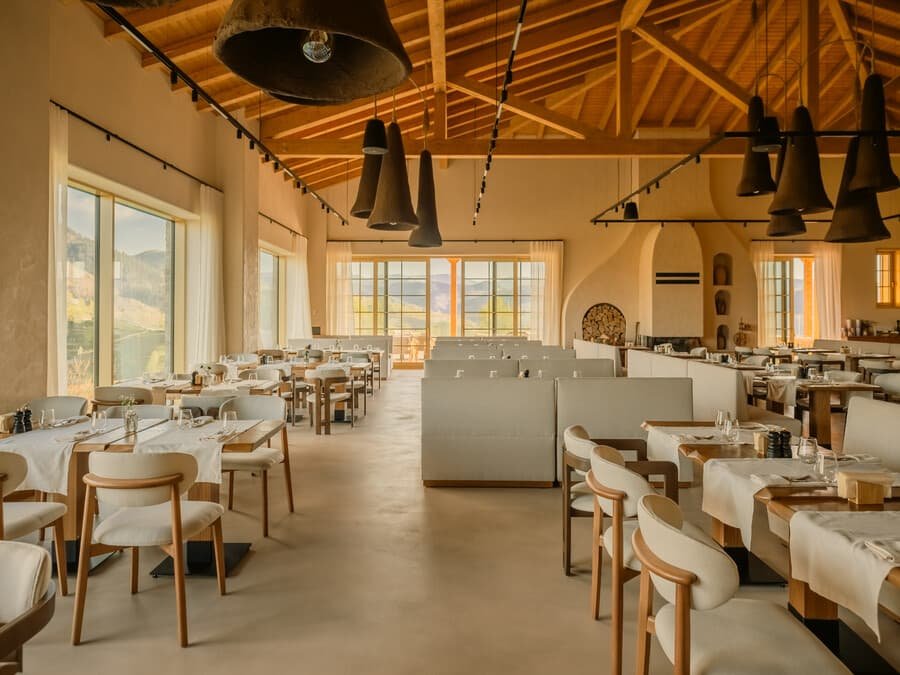
Where the Carpathians Meet the French Kitchen
The road into Bran arrives through beech forest and mountain meadow before the village opens out around its famous castle promontory. This is Transylvania at its most immediately legible: old Saxon architecture, working farms, and a tourism economy built almost entirely around a medieval fortress. Against that backdrop, the emergence of a French fusion kitchen on Strada Festung represents something worth paying attention to. STUP sits in a part of Romania where the dominant culinary grammar is ciorba, sarmale, and slow-roasted pork, not classical French technique crossed with local produce.
For context on how unusual this positioning is, consider that the serious French-inflected fine dining conversation in Romania has historically been concentrated in Bucharest, where venues like L'ATELIER have anchored the modern Romanian dining conversation alongside contemporaries working in the Romanian Modern register. A French fusion kitchen earning a creative cooking highlight in Bran is not a Bucharest story. It is something that belongs to a different and still-forming pattern: destination dining that pulls visitors into Romania's rural interior for reasons beyond heritage tourism.
French Fusion in the Transylvanian Context
French fusion as a category has a complicated history globally. At its worst, it became shorthand for menus that grafted French technique onto local ingredients without meaningful dialogue between the two. At its strongest, as seen in very different registers at Vong in New York or LAtelier de Ben in Saint-Denis, the fusion premise becomes a genuine structural argument about what each culinary tradition brings to the other. In Transylvania, the case for French fusion is grounded in specific local materials: wild herbs from the Carpathian foothills, mountain cheeses with real regional character, game from managed forests, and a fruit-growing tradition that produces plums, sour cherries, and apples with more complexity than their lowland equivalents. A kitchen that draws on these materials through a French lens has access to provenance that kitchens in larger cities have to work harder to source.
This is the editorial angle that makes STUP worth understanding beyond its location curiosity. The creative cooking recognition it carries points toward a kitchen using technique to articulate terroir, not simply applying French method to whatever ingredients arrive on the loading dock. Whether that means classical reductions built from local game stocks, or lighter preparations that preserve the character of mountain forage, the logic of the place depends on the specificity of its sourcing geography. Bran sits at roughly 700 metres elevation in a valley that transitions quickly into high alpine terrain, which means the ingredient palette changes meaningfully across seasons and the distance between field, forest, and kitchen is short in a way that most urban French fusion settings cannot replicate.
For readers who follow the provenance-driven end of French cooking internationally, the reference points are instructive. The conversation about territory and technique at three-Michelin-star level, whether at Alain Ducasse's Louis XV in Monte Carlo or Alléno Paris at Pavillon Ledoyen, is ultimately about using classical French vocabulary to speak precisely about a specific place. The ambition at STUP operates at a different scale and price tier, but the underlying argument is the same: that technique serves provenance, and provenance gives technique a reason to exist beyond demonstration.
Bran as a Dining Destination
The village of Bran is not typically framed as a dining destination. Its visitor infrastructure is built around the castle and the souvenir economy that surrounds it, with accommodation ranging from guesthouses to a handful of mid-tier hotels. Most visitors arrive from Brasov, roughly 30 kilometres to the north, on day trips that end before dinner. The dining scene has historically reflected that pattern: quick-service tourist restaurants and traditional Romanian fare geared toward turnover rather than extended meals. STUP represents a different proposition for visitors prepared to stay the evening or build an itinerary around a meal rather than a monument. For anyone combining a Bran visit with the broader Brasov area, checking our full Simon restaurants guide is the practical starting point for building a complete picture of the local dining options, alongside our Simon hotels guide, our bars guide, our wineries guide, and our experiences guide for fuller trip planning.
The creative cooking recognition STUP carries places it in a specific peer conversation at the European level: restaurants in smaller markets or rural settings that earn attention for technical seriousness rather than address. Atelier Moessmer Norbert Niederkofler in Brunico is a useful reference point for how a technically serious kitchen in an alpine setting builds a case around mountain terroir. Arzak in San Sebastián demonstrates how long-term commitment to regional identity can define a kitchen's reputation across decades. STUP is not operating at those price or recognition tiers, but the underlying question it poses to the dining traveller is structurally similar: is the cooking specific to this place, and does it justify the journey?
Planning a Visit
STUP sits at Strada Festung 8B in Bran, placing it within walking distance of the castle and the main village. Given the absence of published booking details in the public record, contacting the restaurant directly on arrival or through local accommodation is the most reliable approach, particularly during summer and autumn high season when Bran's visitor numbers are at their highest. Visitors arriving from Brasov should plan the return journey for the evening rather than treating Bran as a day trip if a sit-down meal at STUP is part of the plan.
For readers who track creative cooking recognition across European markets, STUP represents something worth monitoring: a kitchen in a part of Romania where serious dining ambition has historically been thin on the ground, earning notice for work that connects French technique to one of the more distinct ingredient geographies in Central Europe. That combination does not appear often at this address level, which is precisely what makes it worth the detour.
Frequently asked questions
Can I bring kids to STUP?
STUP's published profile centres on creative cooking at the French fusion level, which suggests a sit-down, considered dining format rather than a casual family drop-in. Bran itself is a village geared toward castle tourism, so the surrounding area is family-friendly. For specifics on children's menus or seating, check the venue's official channels at Strada Festung 8B.
What's the overall feel of STUP?
STUP occupies a French fusion position in Bran, a Transylvanian village better known for its medieval castle than its restaurant scene. The kitchen's recognition for creative cooking points to a considered, technique-led approach rather than a bistro-casual one. Arriving via the beech forest roads into the village, the context alone sets STUP apart from the souvenir-economy dining that dominates the area.
What kind of recognition has STUP received?
STUP has received recognition including:
What's the must-try dish at STUP?
Specific menu items are not published in STUP's available profile, so no single dish can be confirmed. What is documented is the kitchen's recognition for creative cooking within a French fusion framework, which typically foregrounds technique-driven seasonal composition.
A Quick Peer Check
Comparable venues nearby, for context on price, style, and recognition.
| Venue | Cuisine | Price | Awards | Notes |
|---|---|---|---|---|
| STUPThis venue (the venue you are viewing) | Modern Transylvanian Fine Dining | Not listed | Relais Chateaux Award | Not listed |
| Bistro de l'Arte | Romanian Bistro with French Influences | $10–20 | Not listed | Old Town |
| Epoque Restaurant | Modern Romanian | $50–100 | Not listed | Sector 1 |
| Kupaj Fine Wines and Gourmet Tapas | Fusion Gourmet Tapas & Fine Wines | Not listed | Wine Spectator Best of Award of Excellence | Centru |
| Restaurant Seoul | Authentic Korean Barbecue | $20–30 | Not listed | Sector 1 |
| Studio 80 | Asian-Mediterranean Fusion | $30–50 | Not listed | Pipera |
Recognition history
Dated appearances from independent guides and award organizations, with the underlying list record or original source where available.
Relais Chateaux Award
Relais Chateaux
Full recognition history (2 entries)
Relais Chateaux Award
Relais Chateaux
Continue exploring
More in Simon
Details
- Elegant
- Scenic
- Cozy
- Sophisticated
- Date Night
- Special Occasion
- Panoramic View
- Hotel Restaurant
- Extensive Wine List
- Local Sourcing
- Mountain
- Tasting Menu
- A La Carte
- Vegetarian Friendly
- Vegan Options
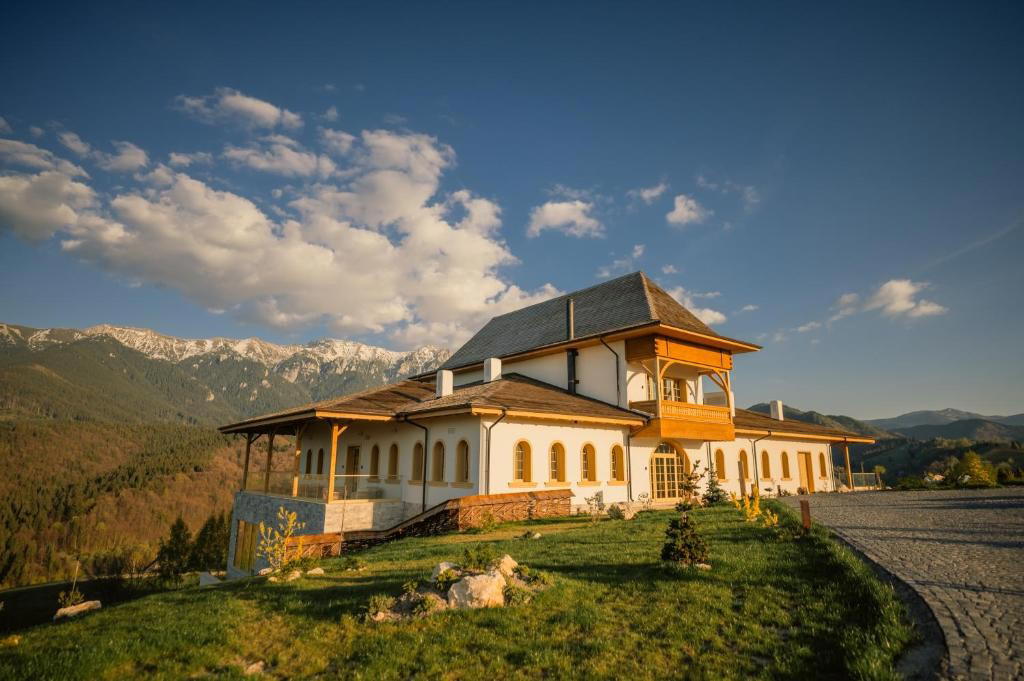
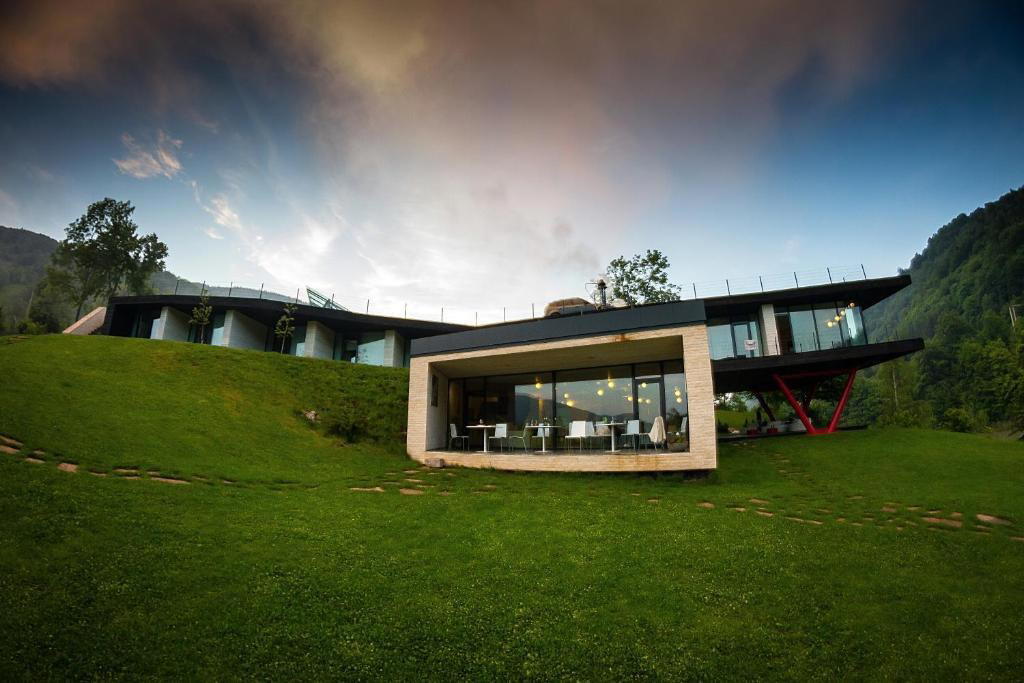
Light-filled dining room with large bay windows offering magnificent mountain views, creating a voluble and welcoming atmosphere well-suited for relaxation.