
Delfin Amazon Cruises operates three- and four-night all-inclusive expeditions from Iquitos deep into the Peruvian Amazon, combining floor-to-ceiling river views with Peruvian cuisine prepared aboard.
Pearl is the En Primeur Club membership app — saves, bookings, and concierge access live there. Same editors, same standards.
- Address
- Av. José Abelardo Quiñones Km. 5, Iquitos 16000, Peru
- Phone
- +51 1 7190999
- Website
- delfinamazoncruises.com
- Directions
- Get directions
 Saves & bookings on Pearl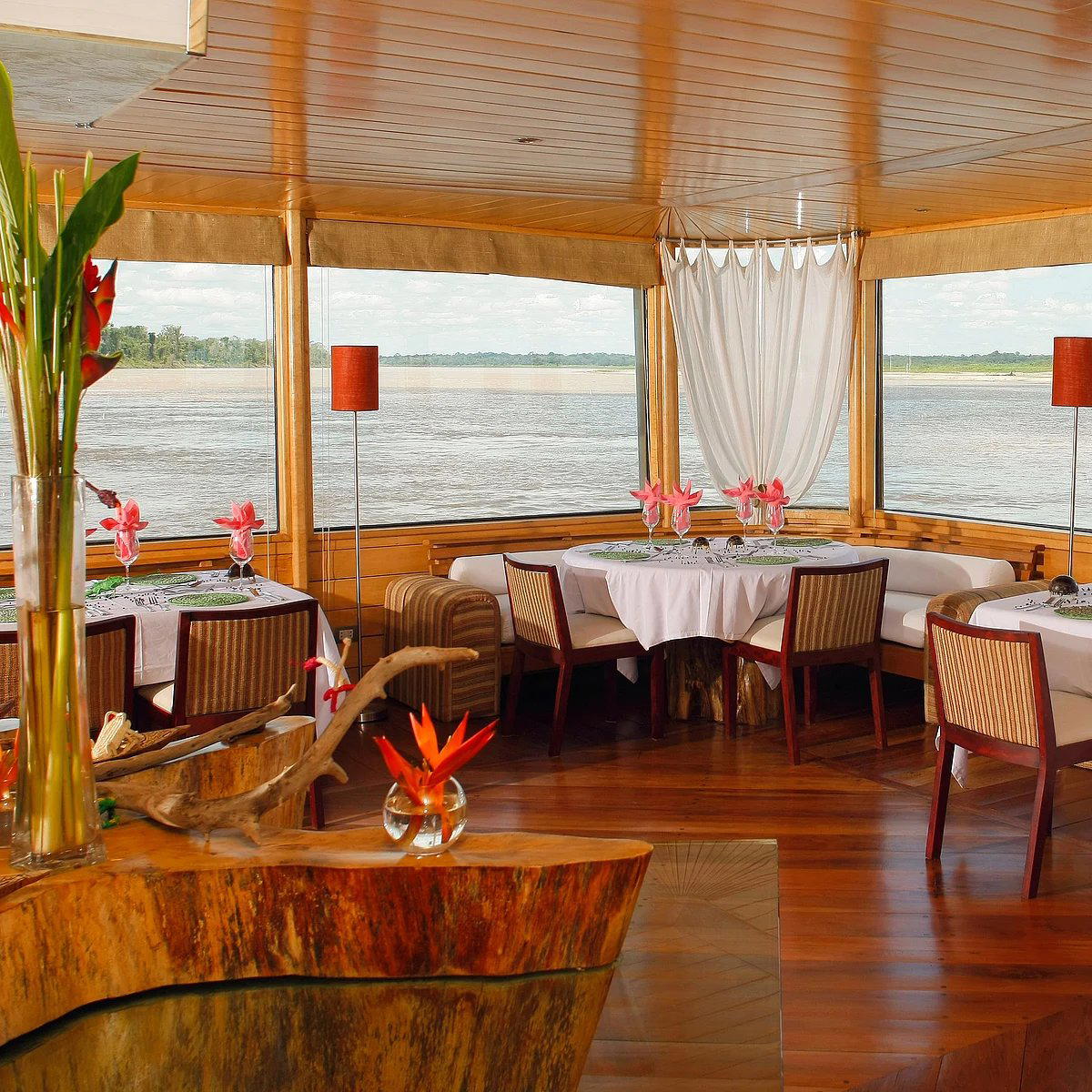
Where the River Becomes the Address
The Peruvian Amazon presents a specific logistical reality that shapes every travel format that operates within it. Iquitos, the largest city on earth with no road connection to the rest of its country, is accessible only by air or river. That isolation is not a footnote, it defines what kind of experience is even possible here. Land-based lodges anchor visitors to a fixed patch of forest. Live-aboard vessels, by contrast, move with the river, repositioning guests each night and covering a range of habitats that no single lodge can replicate. Delfin Amazon Cruises operates within that live-aboard format, running three- and four-night all-inclusive expeditions out of Iquitos into the Pacaya-Samiria National Reserve, one of the largest protected wetland systems in South America.
The departure point sits on the Speedway from Iquitos International Airport, roughly 93 kilometres from the GPS coordinates where the vessels operate. Iquitos itself warrants time before or after the cruise, the iron-house district along the Malecón, the waterfront market at Belén, and the broader context of a city that has operated as a gateway to the upper Amazon for over a century. For guidance on where to eat and drink while in the city proper, cover the ground.
The Live-Aboard Format and What It Demands
Premium Amazon cruising has developed its own internal hierarchy over the past two decades. At the lower end sit converted cargo vessels with limited naturalist programming. At the upper end, a small group of purpose-built expedition vessels offers small passenger counts, specialist guides, and wildlife access calibrated to the river's seasonal flooding cycle. Delfin occupies the specialist tier of that second group, with the floor-to-ceiling windows that characterise the better vessels in this category functioning as a design choice with practical consequences: when the boat anchors in a flooded forest at dusk, those windows turn each cabin into an observation point without the guest leaving their bed.
Negative reviews in the live-aboard category tend to cluster around weather disruptions, wildlife sighting variance, and crew communication, factors that lie partly outside any operator's control. A sustained 4.3 across that volume of feedback signals consistent execution of the format, not just a handful of notable trips. For comparison within Peru's broader experiential dining and lodging scene, venues like Mil in Cusco and Mil Centro in Moray have built reputations around placing cuisine explicitly inside its ecological and agricultural context, a sensibility that the Amazonian live-aboard format parallels, albeit through a different medium.
Peruvian Cuisine in the Context of the Amazon Basin
Peru's national cuisine draws on three distinct geographic registers: the coast, the highlands, and the jungle. The jungle register, known as cocina amazónica, is the least-exported and least-documented of the three. Ingredients like paiche (a freshwater fish that can exceed 200 kilograms), charichuelo, camu camu, and aguaje appear in the regional cooking of Loreto, the department in which Iquitos sits, but rarely travel far from the basin. Aboard vessels operating in this territory, the kitchen occupies an unusual position: it can source from local markets in Iquitos before departure and, depending on the itinerary, directly from riverside communities during the expedition.
Chef Isaac Saaverda leads the kitchen aboard Delfin Amazon Cruises. The all-inclusive format means that food is not an add-on, it is structurally woven into every day of the itinerary, with meals timed around early-morning wildlife excursions and late-afternoon skiff departures. In Peru's broader dining hierarchy, the conversation around Amazonian ingredients has accelerated since chefs at destinations like Astrid & Gastón in Lima began foregrounding jungle sourcing as a counterweight to the coastal-centric narrative. The live-aboard format takes that a step further: the sourcing territory and the dining room are the same place.
The editorial angle on corn and masa, nixtamalization, tortilla craft, heirloom varieties, connects obliquely but meaningfully to this setting. The Amazon basin is not corn country in the way that highland Peru or Mesoamerica is, but traditional Amazonian starch culture is equally place-specific: yuca-based preparations, fermented cassava drinks like masato, and the use of plantain in forms that parallel the tortilla's structural role in other cuisines. A kitchen operating in this environment that takes its ingredient sourcing seriously is working within a tradition of starch culture that is just as technically demanding, and far less documented internationally, than the Andean grain traditions that receive more attention. For context on how Peruvian cuisine handles altitude-specific ingredients elsewhere in the country, Cirqa in Arequipa and Killa Wasi in Urubamba represent different geographic registers of the same national conversation.
Planning the Trip
The cruise departs from Iquitos, reached via the city's international airport. Three- and four-night formats are offered on an all-inclusive basis, meaning that accommodation, meals, guided excursions, and transfers from the port are typically bundled. The Amazon's water levels fluctuate substantially between the high-water season (roughly November through May) and low-water season (June through October), and the two periods offer materially different wildlife encounters: high water allows skiffs to enter flooded forest canopy; low water concentrates wildlife around shrinking lakes and beaches. Neither is categorically superior, they are different trips, and the right choice depends on what the traveller prioritises.
Families with older children who have genuine interest in wildlife observation tend to find the format workable; younger children whose attention span for early-morning boat excursions is limited may find the structure repetitive. The itinerary is built around dawn and dusk activity windows, which are non-negotiable for serious wildlife access. Beyond Iquitos, Land-based options in the city include El Mercado in Miraflores, Cosme in San Isidro, and El Restaurant in Lima anchor the Lima dining circuit for arrivals or departures through the capital. The Delfin I dining room in Nauta offers a related point of comparison within the same operator's fleet. Further afield, Costanera 700 in Miraflores, La Table de House of Jasmines in La Merced Chica, Olluco in Moscow round out the broader Peruvian cuisine conversation across formats and geographies. Mil Centro in Maras adds another geographic dimension to the highland sourcing story.
How It Stacks Up
Comparable venues nearby, for context on price, style, and recognition.
| Venue | Cuisine | Price | Notes |
|---|---|---|---|
| Delfin Amazon CruisesThis venue — the venue you are viewing | Contemporary Peruvian Creole | $$$$ | Not listed |
| Delfin I dining room | Modern Peruvian Amazonian | $$$$ | Nauta |
| Demo | Modern cafe-bakery with Venezuelan & Peruvian influences | $$ | Barranco |
| La Nacional | Modern Peruvian | $$ | Independencia |
| Pacha Mamma | Authentic Andean Peruvian | $$ | San Blas |
| Malabar | Modern Amazonian | $$$$ | San Isidro |
Recognition history
Dated appearances from independent guides and award organizations, with the underlying list record or original source where available.
Relais Chateaux Award
Relais Chateaux
Continue exploring
More in Iquitos
Hotels in Iquitos
Browse all →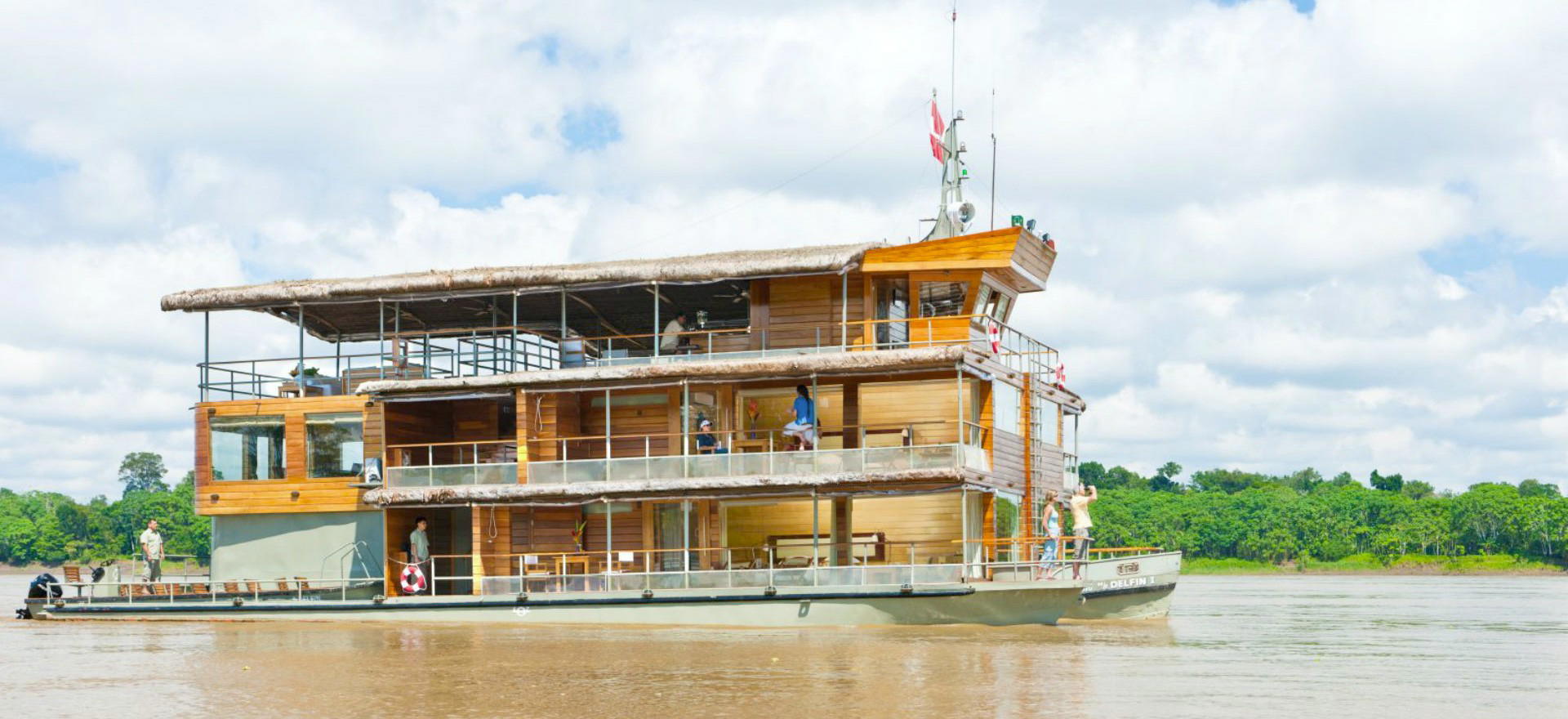
At a Glance
- Scenic
- Intimate
- Elegant
- Special Occasion
- Waterfront
- Panoramic View
- Craft Cocktails
- Local Sourcing
- Waterfront
Current opening hours
- Monday
- 9 AM–6 PM
- Tuesday
- 9 AM–6 PM
- Wednesday
- 9 AM–6 PM
- Thursday
- 9 AM–6 PM
- Friday
- 9 AM–6 PM
- Saturday
- Closed
- Sunday
- Closed
Hours can change for holidays and private events. Last verified .
Sophisticated dining in the wild with candlelight, crystal ware, and panoramic rainforest views from floor-to-ceiling windows, blending luxury comfort with natural immersion.