Café Francés
Café Francés sits on Colo Colo 696 in Los Angeles, Bío Bío, a Chilean interior city that rarely appears on international dining itineraries yet holds a distinct café-culture tradition inherited from European immigration waves of the nineteenth and twentieth centuries. Against that regional backdrop, Café Francés represents the kind of established neighbourhood address that serious travellers in southern Chile note when moving between Santiago and the Lake District.
Pearl is the En Primeur Club membership app — saves, bookings, and concierge access live there. Same editors, same standards.
- Address
- Colo Colo 696, Los Angeles, Los Ángeles, Bío Bío, Chile
- Phone
- +56973544698
- Website
- instagram.com
- Directions
- Get directions
 Saves & bookings on Pearl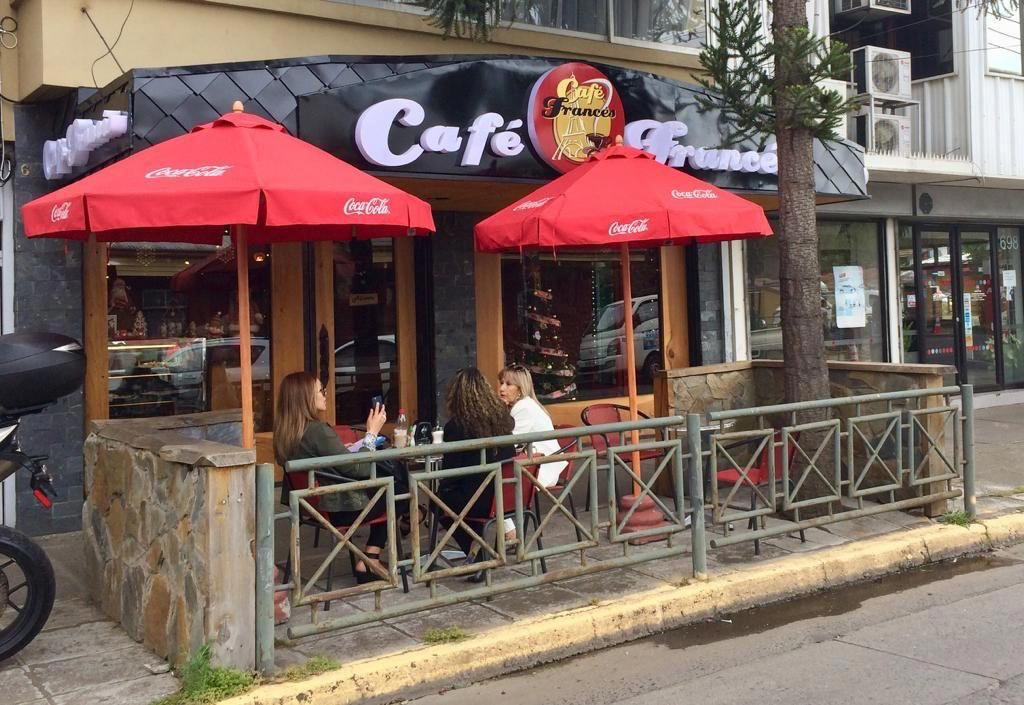
A Café Tradition the Bío Bío Region Keeps Quietly to Itself
The city of Los Angeles in Chile's Bío Bío region sits roughly midway between Santiago and Temuco, and most travellers pass through without stopping. That pattern has preserved something useful: a local dining culture that operates on its own rhythm, shaped by the agricultural interior rather than the pressures of capital-city trend cycles. Café Francés is a French café with crepes and galettes at Colo Colo 696 in Los Ángeles, Bío Bío, Chile. It belongs to that quieter register. The address puts it on one of Los Angeles's principal thoroughfares, which in a mid-sized Chilean inland city means proximity to the plaza de armas — the gravitational centre of civic life, commerce, and, historically, of café society.
The café tradition in Chile's interior cities draws on a particular European inheritance. German, French, and Spanish immigrant communities settled the Bío Bío and Araucanía regions from the mid-1800s onward, and the café as a social institution arrived with them. What took root was not the quick espresso bar of the Mediterranean but something slower: a space for lingering conversation, a midday meal taken in courses, pastry ordered alongside coffee as a matter of course. That pacing is the defining characteristic of the format, and it separates interior-city cafés from the faster-service models that dominate Santiago's commercial districts.
The Ritual of the Midday Meal in Southern Chile
Across Chile's provincial cities, the midday meal (la hora de almuerzo) carries a social weight that metropolitan dining has largely shed. Businesses close or reduce hours. Families and colleagues converge on established addresses rather than searching for novelty. The selection criteria are reliability and familiarity: a restaurant that has been there, serves what you expect, and does not require you to make decisions about a concept. Café Francés operates within this context, occupying the role that similar long-standing café-restaurants play in Chillán, Angol, or Curicó: a fixed point in local routine.
For a visitor, understanding that ritual matters more than a menu rundown. The correct approach at this kind of address is to arrive at the local lunch hour (roughly 1 to 3 p.m. in Chilean convention), order from whatever the day's set lunch (menú del día) offers, and accept the pacing that the kitchen sets rather than the one international travel habits might impose. Dessert is not optional at a Chilean café lunch in the way it might be in a northern European context; it is the structural close of the meal. Coffee follows the dessert, not the main course. Getting that sequence right signals to the room that you understand where you are.
This format contrasts with the tasting-menu and chef-driven progressive formats that define Chile's high-end restaurant scene in Santiago. Boragó in Santiago and Peumayen in Providencia operate in a register where the sequence is designed, the pacing is controlled, and the ritual is constructed. Provincial café-restaurants like Café Francés operate from the opposite premise: the ritual already exists in the culture, and the restaurant's job is to execute within it reliably.
Where Café Francés Sits in the Chilean Dining Map
Chile's serious dining conversation is concentrated in Santiago and, to a lesser degree, in wine-country restaurants like Lapostolle Residence in Santa Cruz and D.O. Restoran in Lo Barnechea. Further south, destination properties like andBeyond Vira Vira in Araucanía and Awasi Atacama in San Pedro de Atacama anchor a different kind of food experience, one tied to landscape and lodge hospitality. Café Francés belongs to neither of those categories. It is a city-centre café-restaurant in a regional capital, serving a local population that does not need to be impressed by provenance or concept.
That is not a diminishment. The Chilean interior has its own food culture, rooted in the products of the central valley and the south: wheat, potatoes, game, river fish, dairy, and the slow stews (cazuelas) that the climate and agricultural history produced. At café-restaurants in this tier, the kitchen's relationship with those ingredients tends to be unselfconscious. Dishes are cooked the way they have been cooked regionally for generations, without the mediation of a tasting-menu narrative or a sourcing statement. For travellers accustomed to the more elaborated formats at Kato in Los Angeles, California or Hayato in the same city, this directness can itself be the point.
Coastal Chile is covered by addresses like Aquí Jaime in Concon and Pasta e Vino Ristorante in Valparaiso. Interior Bío Bío has a different supply chain and a different table culture. The restaurant is one of the addresses on the Colo Colo corridor that visitors passing through this stretch of the Pan-American route are directed toward by locals.
The Regional Context for a Passing Traveller
Los Angeles, Bío Bío, is not a destination in the way that San Pedro de Atacama or the wine valleys are. It is a service city for an agricultural region, with a plaza de armas that functions as the social anchor for local commerce. For travellers moving south from Santiago toward the Lake District or Araucanía, a midday stop here is practical rather than aspirational. The café-restaurant format is the appropriate format for that kind of stop: a meal that is satisfying, correctly paced, and does not demand more time than the journey allows.
The broader Chilean interior has not developed the wine-tourism infrastructure that the Maipo, Colchagua, and Casablanca valleys have. Viña Concha y Toro in Pirque and similar destinations serve a specific visitor economy. Bío Bío's visitor economy is smaller and less organised around hospitality as a product. That context shapes what a place like Café Francés is and what it can reasonably be expected to deliver. Comparing it against Providence in Los Angeles, California or Somni would set the wrong frame. The correct comparison set is other established café-restaurants in Chilean regional capitals, judged on the consistency of the set lunch, the quality of the coffee, and the reliability of the service rhythm.
Planning Your Visit
Address: Colo Colo 696, Los Ángeles, Bío Bío, Chile. Reservations: Walk-in is the convention for this format, and arriving at the standard Chilean lunch hour (1 to 3 p.m.) is the practical approach. Budget: The café sits in a moderate price tier. Website/Phone: Getting there: Los Angeles, Bío Bío is served by the Ruta 5 (Pan-American Highway) and by regular bus connections from Santiago's Alameda terminal and from Concepción. For wider Chilean dining reference: see our coverage of Rosario in Rengo and the broader patterns tracked in EP Club's Chile network.
A Tight Comparison
Comparable venues nearby, for context on price, style, and recognition.
| Venue | Cuisine | Price | Notes |
|---|---|---|---|
| Café FrancésThis venue — the venue you are viewing | Not listed | $$ | Not listed |
| Aqui Esta Coco | Vitacura, Chilean Seafood | $$$ | Not listed |
| Casa del Barrio | Not listed | $$ | Camino a Cato, Modern Fusion with Author Pizzas |
| Restaurant Comida China | Centro, Chinese | $$ | Not listed |
| Restaurant Dona Inés | Centro, Barbecue Specialties | $$ | Not listed |
| Patrón Burger's | Padre las Casas, Caribbean Fast Food | $ | Not listed |
At a Glance
- Cozy
- Intimate
- Casual Hangout
- Family
- Brunch
- Historic Building
- Local Sourcing
Current opening hours
- Monday
- 10 AM–9 PM
- Tuesday
- 10 AM–9 PM
- Wednesday
- 10 AM–9 PM
- Thursday
- 10 AM–9 PM
- Friday
- 10 AM–9 PM
- Saturday
- 12–10 PM
- Sunday
- Closed
Hours can change for holidays and private events. Last verified .
Acogedor y tranquilo with French-inspired decor, soft music, and warm lighting evoking a Parisian café.