Somni








3 Michelin Stars · World's 50 Best #46 · La Liste Top Restaurants
Our verdict
Somni, a 14-seat tasting counter in West Hollywood, holds three Michelin stars under Chef Aitor Zabala, whose training at El Bulli informs a menu that bridges Basque and Catalan technique with Californian produce. Wine Director Caroline Costarella oversees a 1,050-bottle list with particular depth in Spain, California, and France. La Liste placed Somni at 96 points in its 2026 ranking.

Pearl is the En Primeur Club membership app, where members save venues, book tables and use the concierge.
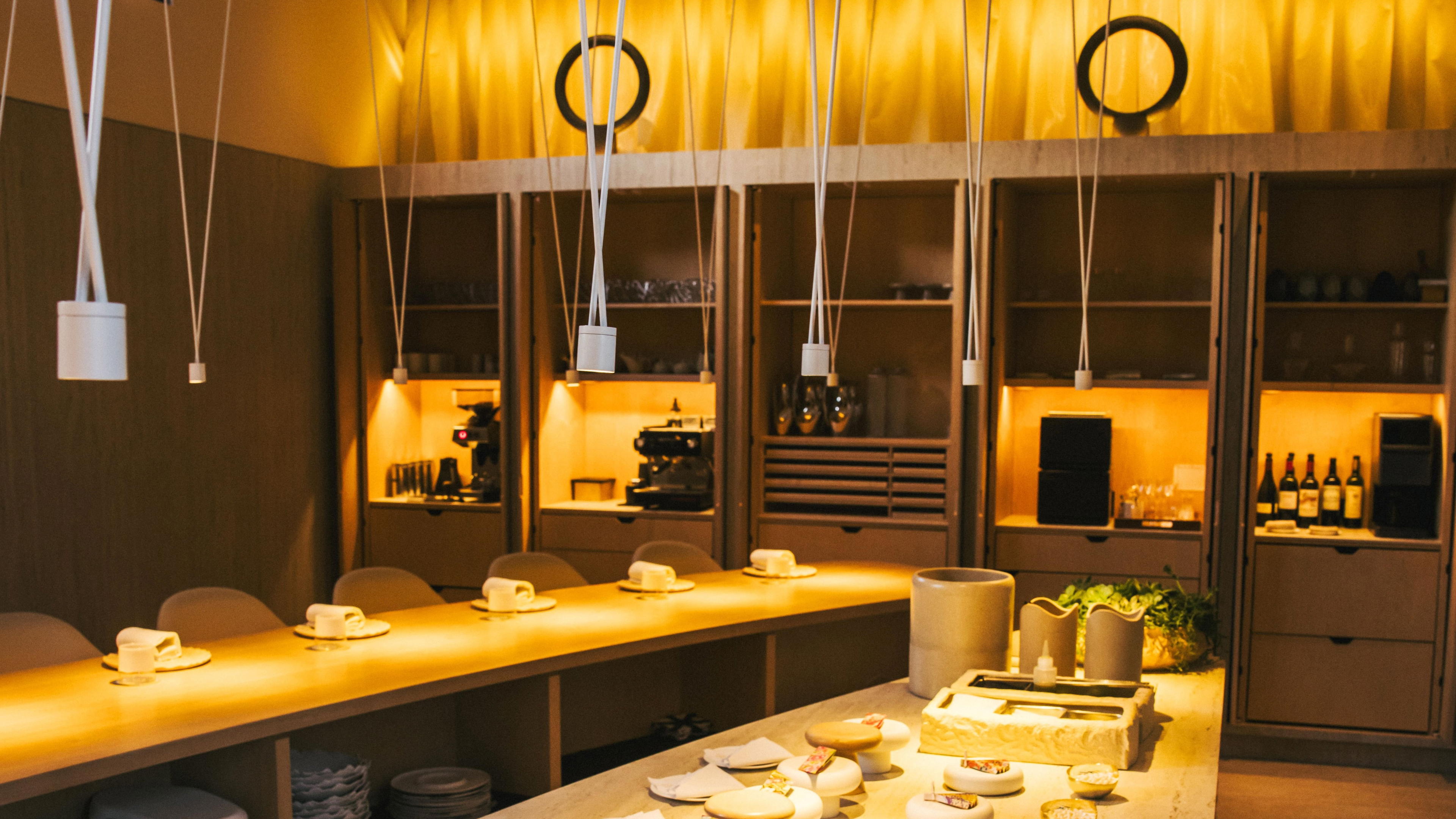
A Counter Where Three Disciplines Converge
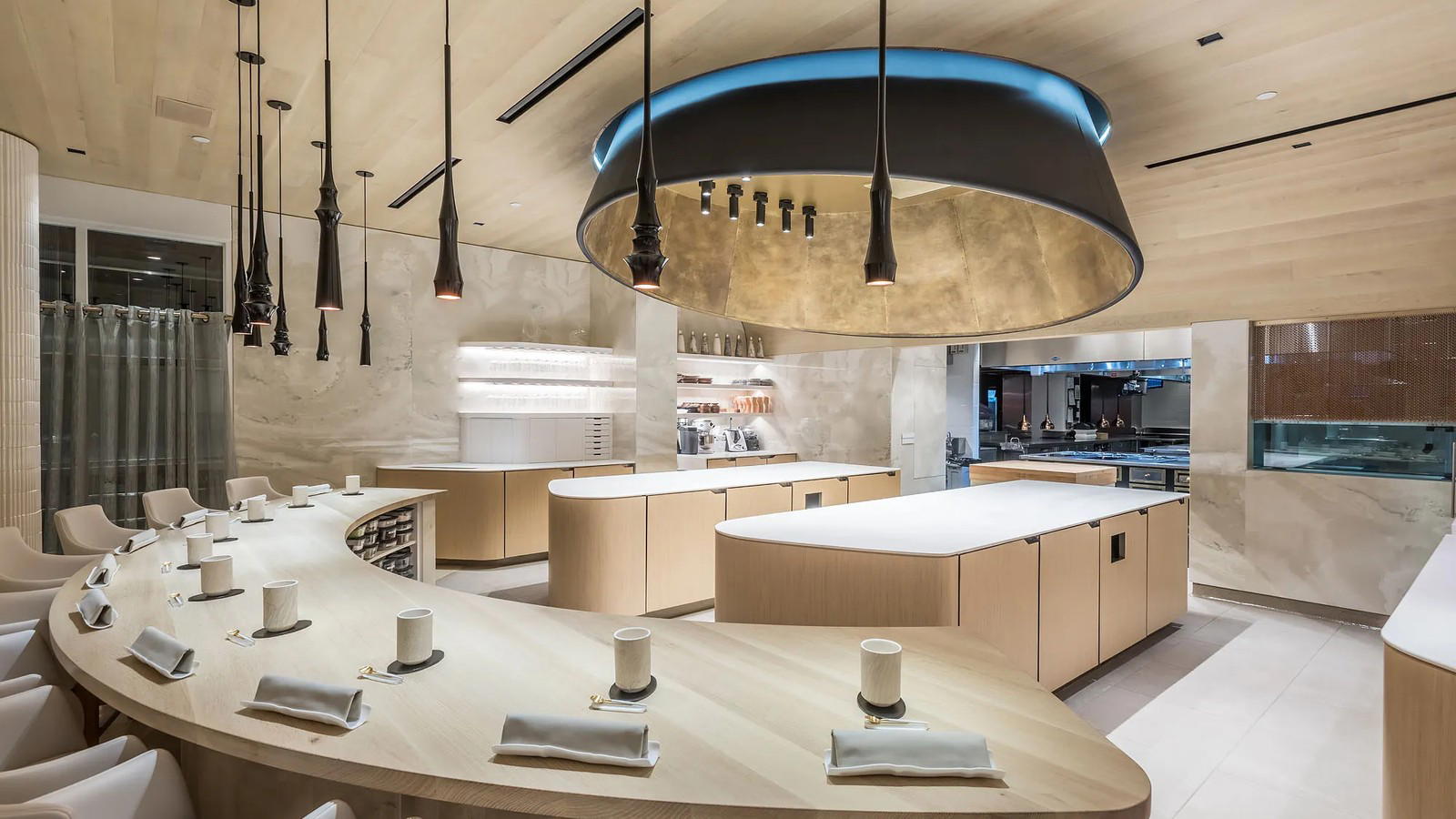
Los Angeles has spent the better part of a decade building a credible case for tasting-menu dining at the highest level. The city's three-Michelin-star tier now includes a small cohort of counters, each occupying a distinct position in terms of technique, lineage, and service philosophy. Somni, at 9045 Nemo St in West Hollywood, represents one of the most deliberate constructions in that group: a 14-seat chef's counter where kitchen, floor, and cellar operate as a single choreographed unit rather than three departments that happen to share an address.
The name means "dream" in Catalan, which signals the geographic and cultural axis around which the menu turns. Chef and owner Aitor Zabala draws on Basque and Catalan roots, and the kitchen's technical fluency traces directly to El Bulli, where modernist cuisine reached its most codified expression in the 2000s. But the register here is meaningfully different from that era's maximalist experimentation. The technique is in service of flavor and coherence rather than spectacle for its own sake, a distinction that separates Somni from the molecular gastronomy of that earlier period and aligns it more closely with the restrained precision found at places like Le Bernardin in New York City or The French Laundry in Napa.
What the Kitchen Produces
The menu at Somni is a tasting format, prix-fixe, dinner only. Californian produce and Spanish culinary grammar coexist across the courses, and the theatrical presentations that reviewers consistently note are grounded in classical discipline rather than novelty. One frequently cited preparation involves caviar set on a dashi meringue shaped like a fish, an exercise in textural contrast that demonstrates the kitchen's control over temperature and density. Another dish layers shiso tempura, beef tartare, and borage flowers, a combination that reads as visually precise but delivers primarily on flavor. The final savory course has drawn particular attention: an homage to txuleton, the Basque tradition of grilling aged beef from older cattle, here using steak from a seven-year-old cow paired with Zabala's interpretations of piquillo peppers. It is a moment in the meal where the kitchen steps back from technique and lets the source material carry the weight.
That calibration, knowing when to demonstrate skill and when to subordinate it to the ingredient, is what La Liste recognized when it awarded Somni 96 points in its 2026 ranking. The Michelin Guide awarded three stars in 2025. Within Los Angeles, the venue sits in a peer group that includes Providence, Kato, and Hayato, each of which pursues a different culinary lineage at comparable price points. Nationally, the comparison set expands to counters like Alinea in Chicago and minibar in Washington, D.C., both of which share the El Bulli-adjacent technical heritage while pursuing distinct culinary identities. Atomix in New York City offers another point of reference for how a small-counter format can synthesize cultural heritage with contemporary fine dining.
The Floor and the Cellar
At a 14-seat counter, the service-to-guest ratio is high by design. The format removes the anonymity of a large dining room and places guests in direct proximity to both the kitchen and the team. That intimacy raises the stakes for every front-of-house interaction, and it is where the collaboration between General Manager Daniel Gorlas and Wine Director Caroline Costarella becomes structurally important to the experience.
Costarella oversees a list of 345 selections drawn from an inventory of 1,050 bottles, with particular depth in Spain, California, and France. The Spanish component is directly relevant to the kitchen's Basque and Catalan roots, and the California selections create a local counterpoint that reflects the produce and regional character informing the savory courses. Wine pricing is positioned at the higher end, consistent with the overall experience tier, and the corkage fee is $150 for guests who bring their own bottles.
The alignment between what the kitchen sends out and what Costarella selects to accompany it is the kind of coherence that distinguishes a tasting counter operating as a single organism from one where food and wine programs run on parallel tracks. In the broader American fine dining context, this kind of integration is less common than the press around it suggests. It requires a shared sensory vocabulary between kitchen and cellar, and the Spanish wine depth at Somni is a concrete expression of that coordination. For comparison, Single Thread Farm in Healdsburg and Lazy Bear in San Francisco both pursue similar total-experience integration in the Northern California context, and Mélisse represents the older model of French-trained rigor applied to the same Los Angeles fine dining tier.
Where Somni Sits in the West Hollywood Context
West Hollywood carries a specific gravitational pull in the Los Angeles dining geography. The neighborhood hosts several high-investment restaurant programs, and the address on Nemo St places Somni within walking distance of the concentrated hospitality strip along Santa Monica Boulevard and its side streets. The format, however, is deliberately set apart from the neighborhood's louder, more social dining culture. Fourteen seats, a single nightly seating, and a tasting menu with no à la carte option signal a different contract with the guest from the outset.
That positioning within the neighborhood echoes a broader pattern across American cities, where avant-garde tasting counters tend to occupy quiet locations rather than flagship intersections, partly for operational reasons and partly because the format benefits from environments that do not compete with the room's own atmosphere. Osteria Mozza, located nearby, represents the opposite end of the West Hollywood dining spectrum: high-energy, large-format Italian with open reservations. The two venues share a neighborhood but almost nothing else in terms of format or intent.
Planning Your Visit
Somni operates as a dinner-only tasting menu. Reservations: Given the 14-seat capacity and the three-Michelin-star status, advance booking is essential; the venue books through its reservations channel and demand consistently outpaces availability at this price tier. Budget: Cuisine pricing is listed at $$$, reflecting a $66+ per-person threshold for a typical tasting course, with the full experience considerably higher when wine pairings or individual bottle selections are included. Wine is priced at $$$ with many bottles above $100, and corkage is $150 for guests bringing their own. Address: 9045 Nemo St, West Hollywood, CA 90069. Meals served: Dinner only.
For broader planning across the city, see our full Los Angeles restaurants guide, our full Los Angeles hotels guide, our full Los Angeles bars guide, our full Los Angeles wineries guide, and our full Los Angeles experiences guide.
Frequently asked questions
What do regulars order at Somni?
Somni runs a single tasting menu format with no à la carte option, so every guest at the 14-seat counter follows the same progression of courses. The kitchen's approach draws on Basque and Catalan culinary grammar applied to Californian produce, with theatrical presentations cited among the hallmarks of the experience. Somni holds three Michelin stars as of 2025 and scored 96 points on La Liste's 2026 ranking.
What should I budget for a meal at Somni?
Pricing at Somni is listed as $$$$.
Where is Somni located?
Somni is located at 9045 Nemo St, West Hollywood, CA 90069, Los Angeles.
What's Somni known for in terms of accolades?
Somni has received recognition including: La Liste Top Restaurants (2026): 96pts; WINE: Wine Strengths: Spain, California, France Pricing: $$$ i Wine pricing: Based on the list\'s general markup and high and low price points:$ has many bottles < $50;$$ has a range of pricing;$$$ ha….
Is Somni reservation-only?
Yes. With only 14 seats and a dinner-only tasting menu format, walk-in access is not a workable option at Somni. Three-Michelin-star counters at this capacity in Los Angeles consistently require advance planning, and Somni is no exception. Booking well ahead is the standard approach for securing a seat.
Credentials Lens
| Venue | Cuisine | Price | Awards | Notes |
|---|---|---|---|---|
| SomniThis venue (the venue you are viewing) | Modern Spanish Fine Dining | $500+ | 3 Michelin Stars · World's 50 Best #46 | Not listed |
| Kato | Modern Taiwanese Fine Dining | $300–500 | 2 Michelin Stars · World's 50 Best #49 | New Taiwanese, Asian |
| Hayato | Traditional Japanese Kaiseki | $300–500 | 2 Michelin Stars · La Liste Top Restaurants | Japanese |
| Vespertine | Avant-Garde Tasting Menu | $200–300 | 2 Michelin Stars · La Liste Top Restaurants | Progressive, Contemporary |
| Camphor | Modern French with Southeast Asian influences | $150–200 | Michelin Plate · World Best Burgers World's 101 Best Burgers #15 | French-Asian, French |
| Gwen | Contemporary American Steakhouse | $50–100 | Michelin Plate · Wine Spectator Best of Award of Excellence | New American, Steakhouse |
Recognition history
Dated appearances from independent guides and award organizations, with the underlying list record or original source where available.
Michelin 3 Stars
Michelin
World's 50 Best North America's Best Restaurants #46
World's 50 Best
La Liste Top Restaurants
La Liste
Opinionated About Dining Top Restaurants in North America Ranked #23
Opinionated About Dining
Wine Spectator Best of Award of Excellence
Wine Spectator
Full recognition history (11 entries)
LA Times 101 Best Restaurants #50
LA Times
Michelin 3 Stars
Michelin
Robb Report The 10 Best New Restaurants in America #2
Robb Report
The Best Chef Three Knives
The Best Chef
Wine Spectator Best of Award of Excellence
Wine Spectator
Robb Report 100 Greatest American Restaurants of the 21st Century #28
Robb Report
Somni
Featured Guides
Continue exploring
More in Los Angeles
Restaurants in Los Angeles
All restaurants in Los Angeles →
Bars in Los Angeles
All bars in Los Angeles →
Hotels in Los Angeles
All hotels in Los Angeles →

Wineries in Los Angeles
All wineries in Los Angeles →
Somni
The wine
Somni holds the Wine Spectator Best of Award of Excellence, which Wine Spectator gives to lists of usually 350 or more selections.
- Wine program
- Deep wine list
- Wine Spectator
- Wine Spectator Best of Award of Excellence
- Selections
- 345
- Bottles in cellar
- 1,050
- List strengths
- Spain, California, France
- Wine director
- Caroline Costarella
- Extensive wine list
- Sommelier-led
Details
- Intimate
- Elegant
- Sophisticated
- Modern
- Whimsical
- Special Occasion
- Date Night
- Chefs Counter
- Private Dining
- Open Kitchen
- Extensive Wine List
- Sommelier Led
- Local Sourcing
- Garden
Current opening hours
- Monday
- Closed
- Tuesday
- Closed
- Wednesday
- 7:30–11 PM
- Thursday
- 7:30–11 PM
- Friday
- 7:30–11 PM
- Saturday
- 7:30–11 PM
- Sunday
- 7:30–11 PM
Hours can change for holidays and private events. Hours as of .
Serene, museum-like atmosphere with light wood counter, lush courtyard, polished service, and artful, transportive plating.