Café Berlin
Café Berlin occupies a Capitol Hill address on Massachusetts Avenue NE, placing it within Washington's most politically charged dining corridor. The restaurant draws on Central European culinary tradition in a city more accustomed to power-lunch steakhouses and modern American tasting menus. It represents a quieter, more particular strand of D.C. dining that rewards those who look past the obvious.
Pearl is the En Primeur Club membership app — saves, bookings, and concierge access live there. Same editors, same standards.
- Address
- 322 Massachusetts Ave NE, Washington, DC 20002
- Phone
- +12025437656
- Website
- cafeberlin-dc.com
- Directions
- Get directions
 Saves & bookings on Pearl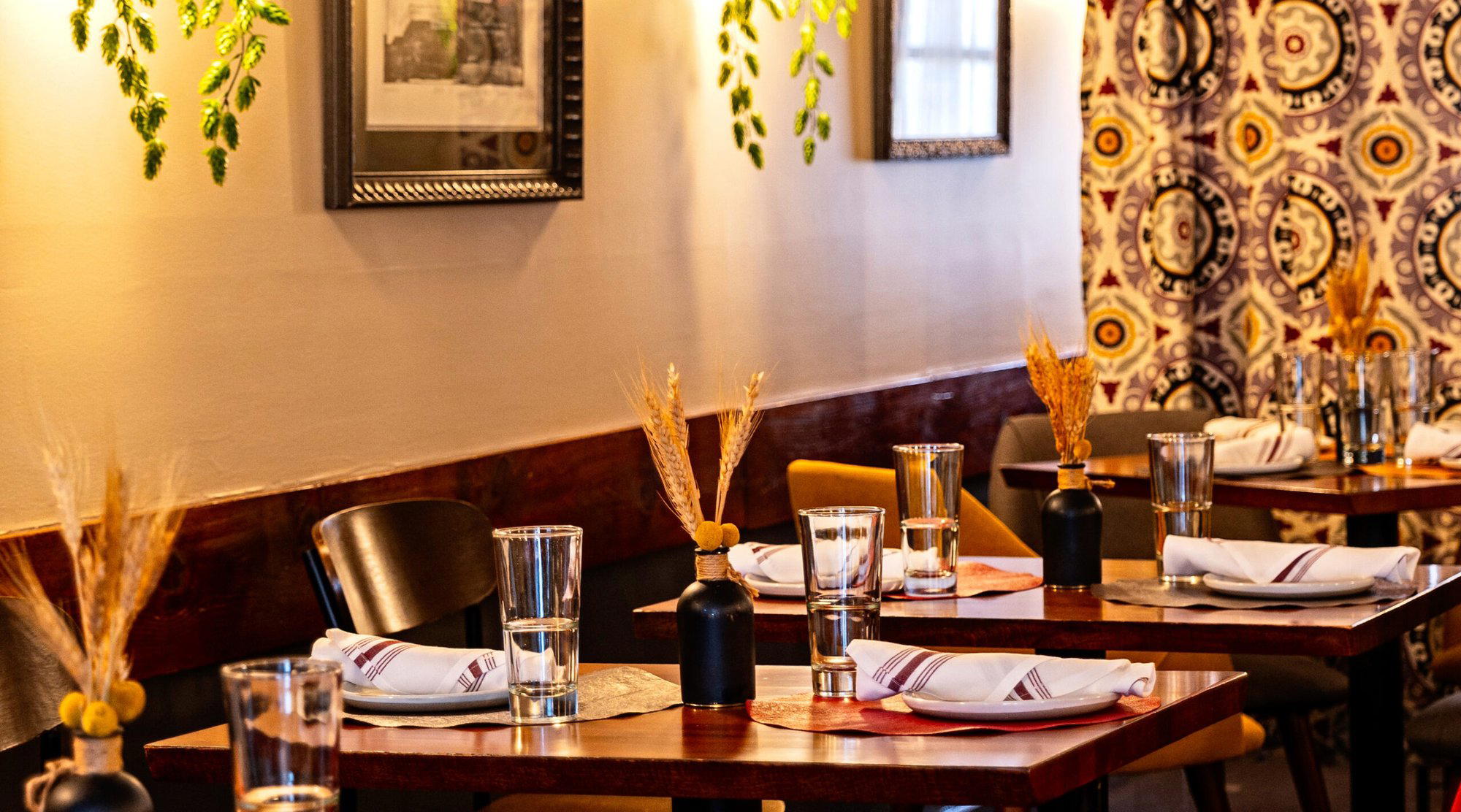
Massachusetts Avenue and the Architecture of a Meal
Capitol Hill's restaurant row on Massachusetts Avenue NE operates at a different register than the Penn Quarter scene or the chef-driven corridors of Shaw and 14th Street. The addresses here tend toward the purposeful rather than the fashionable: embassies, row houses converted to dining rooms, and the kind of establishment where regulars arrive with a specific dish in mind rather than a curiosity about what the kitchen is doing this season. Café Berlin fits that pattern. Located at 322 Massachusetts Ave NE, it sits in Washington, D.C.'s Capitol Hill neighborhood.
Central European cooking occupies a narrow niche in American dining. While German and Austrian culinary traditions formed a significant part of 19th-century American food culture, they were largely absorbed into mainstream cooking rather than preserved as a distinct dining category. Cities like New York and Chicago retain traces of that heritage, but dedicated restaurants in this tradition are genuinely sparse compared to the French, Italian, and Japanese categories that dominate the premium end of American dining. In Washington specifically, where the dining conversation tends to orbit around ambitious tasting menus at venues like Jônt and minibar, or the ingredient-driven New American work at Oyster Oyster, a restaurant rooted in the Central European tradition occupies a genuinely different position.
How a Meal Takes Shape Here
The logic of Central European dining differs structurally from the multi-course tasting format that has come to define prestige dining in American cities. Where venues like The French Laundry in Napa, Le Bernardin in New York City, or Smyth in Chicago build meals around sequenced progression with each course calibrated as a discrete statement, the Central European dining tradition tends to favor a more direct architecture: a clear opening, a substantial center, and accompaniments that support rather than compete. Broth-based soups or cold preparations come first, establishing the flavor register. The main course, typically a braise or schnitzel-adjacent preparation, carries the meal's weight. Dessert, often a pastry or cream-based composition, closes the arc.
This structural honesty is part of what distinguishes the tradition. There is less ambiguity about intention. A properly executed Wiener Schnitzel or sauerbraten carries its own argument without needing a narrative framework built around it. The question at any restaurant working in this tradition is whether the execution is disciplined enough to let the cooking speak without editorial assistance.
In Washington's wider context, that restraint reads as counterintuitive. The city's dining conversation in recent years has moved toward spectacle and concept: Causa brings Peruvian technique with striking presentation, Albi applies wood-fire intensity to Middle Eastern cooking. Against that backdrop, a dining room organized around the logic of Central European hospitality rather than contemporary ambition is a deliberate choice, and one with a distinct audience.
Capitol Hill's Dining Position
The immediate neighborhood matters more than it might in a city with denser dining clusters. Capitol Hill is not Georgetown or Dupont Circle, where foot traffic sustains a range of options within a few blocks. The Massachusetts Avenue NE corridor draws a more purposeful diner: staffers, lobbyists, residents of the Hill's row house blocks, and visitors whose itineraries are organized around the neighborhood rather than a restaurant-first decision. This shapes the rhythm of service and the composition of any given evening's room in ways that differ from high-visibility destination dining.
For comparison, the kind of commitment required to reach Blue Hill at Stone Barns in Tarrytown or Single Thread Farm in Healdsburg is built into the destination's identity. Capitol Hill restaurants don't carry that destination weight, but they benefit from a captive neighborhood regulars base that sustains consistency in ways that trend-driven openings in more competitive corridors sometimes cannot.
Where Café Berlin Sits in D.C.'s Wider Dining Picture
Washington's dining tier structure is usefully mapped by format and price point. At the upper end, tasting-menu venues compete on the same terms as Atomix in New York City, Lazy Bear in San Francisco, or Addison in San Diego: Michelin recognition, booking windows measured in months, and meals that function as events. The mid-tier in D.C. is increasingly competitive, with concepts like Rooster and Owl and Rose's Luxury operating at the $$$ to $$$$ range with strong local followings. Below that, the casual end is dense and geographically spread.
Café Berlin occupies a position that doesn't map neatly onto that structure. Central European cuisine in this country doesn't carry the prestige signals of French fine dining or the current critical attention on Japanese or Peruvian cooking. That position has practical consequences: it attracts a diner who is there for specific reasons rather than status signaling, which tends to produce a more settled room. The point of comparison is less The Inn at Little Washington and more a European neighborhood restaurant that has held its ground by doing one thing with care.
For a fuller picture of where the restaurant sits relative to D.C.'s broader dining options, the EP Club Washington, D.C. restaurants guide maps the city across formats, price tiers, and neighborhoods. Internationally, the tradition of Alpine and Central European cooking at its most ambitious is visible in venues like Atelier Moessmer Norbert Niederkofler in Brunico, which shows how far the regional tradition can extend when applied with serious culinary ambition. And on the American side, Emeril's in New Orleans offers a useful reference point for how a regionally specific tradition sustains itself in an American city over time. Washington also has Providence in Los Angeles as a contrast in how a city's dining identity can be anchored by a single long-running concept with clear culinary focus.
Know Before You Go
Address: 322 Massachusetts Ave NE, Washington, DC 20002
Neighborhood: Capitol Hill, Washington, D.C.
Cuisine: Central European
Price: Price tier: $$
Reservations: Reservations recommended
Getting There: 322 Massachusetts Ave NE, Washington, DC 20002
A Pricing-First Comparison
Comparable venues nearby, for context on price, style, and recognition.
| Venue | Cuisine | Price | Notes |
|---|---|---|---|
| Café BerlinThis venue — the venue you are viewing | Stanton Park, Authentic German | $$ | Not listed |
| Seventh Hill Pizza | Eastern Market, Wood-Fired Pizza | $$ | Not listed |
| 1339 H St NE | Near Northeast, American Pie Shop | $$ | Not listed |
| Gordon Ramsay Street Burger | Penn Quarter, American Smash Burgers | $$ | Not listed |
| Little Serow | Dupont Circle, Northern Thai Prix Fixe | $$ | Not listed |
| Peacock Café | Not listed | $$ | West Village Georgetown, American Fusion with Persian Influences |
Continue exploring
More in Washington DC
Restaurants in Washington DC
Browse all →
Bars in Washington DC
Browse all →
Hotels in Washington DC
Browse all →
At a Glance
- Cozy
- Classic
- Casual Hangout
- Group Dining
- Terrace
- Beer Program
- Local Sourcing
- Street Scene
Current opening hours
- Monday
- Closed
- Tuesday
- Closed
- Wednesday
- 2–10 PM
- Thursday
- 2–10 PM
- Friday
- 2–11 PM
- Saturday
- 2–11 PM
- Sunday
- 2–10 PM
Hours can change for holidays and private events. Last verified .
Cozy dining rooms with warm lighting and a welcoming neighborhood atmosphere.