Breydel de Coninc sits on Breidelstraat, one of Bruges' most-walked medieval corridors, where the city's appetite for moules and waterzooi has been served in environments like this for generations. The address places it squarely in the tourist-facing tier of Bruges dining, yet the kitchen works within a tradition that rewards those who know what to order. A reference point for classic Flemish seafood in the historic centre.
Pearl is the En Primeur Club membership app — saves, bookings, and concierge access live there. Same editors, same standards.
- Address
- Breidelstraat 24, 8000 Brugge, Belgium
- Phone
- +3250339746
- Website
- restaurant-breydel.be
- Directions
- Get directions
 Saves & bookings on Pearl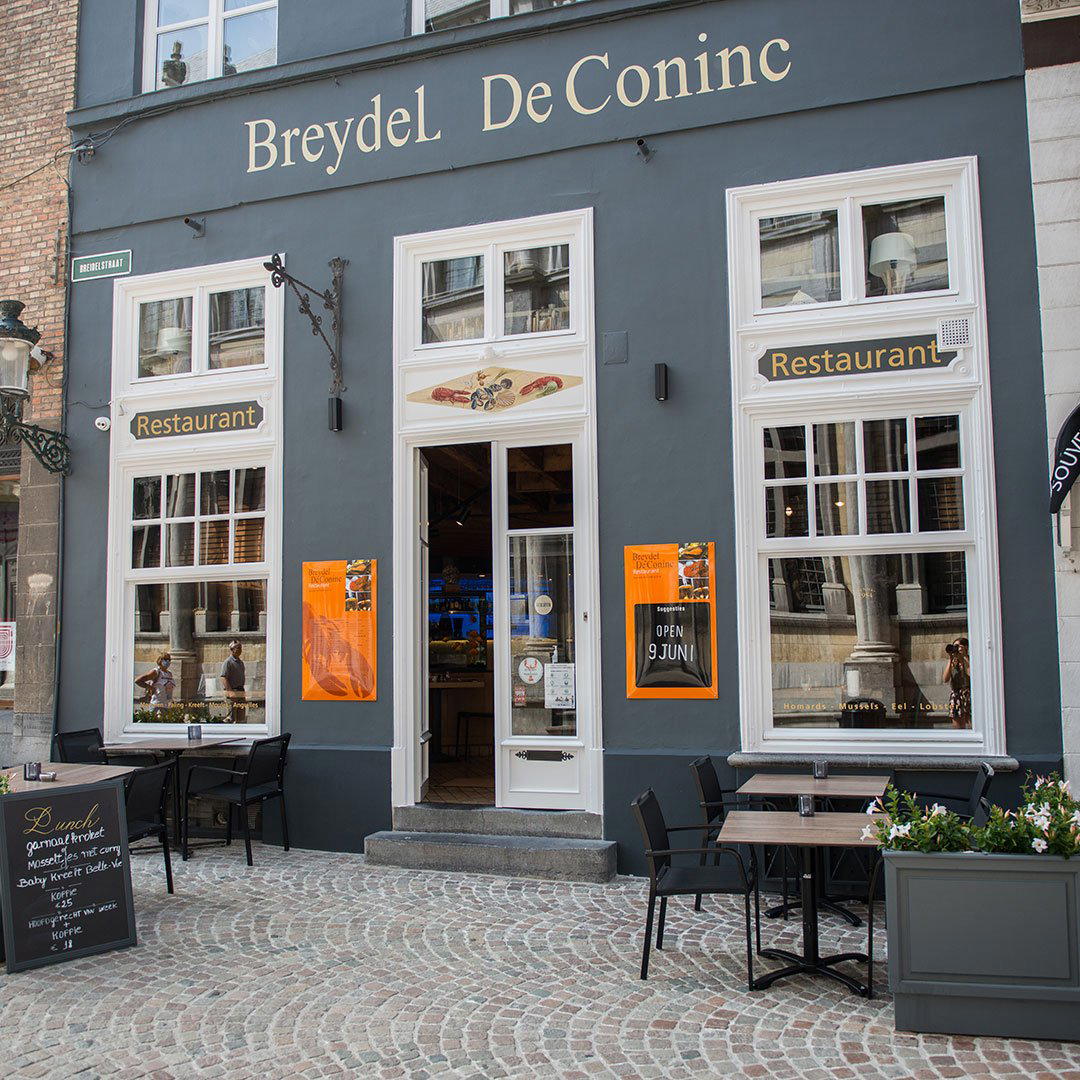
Stone, Water, and the Smell of the North Sea
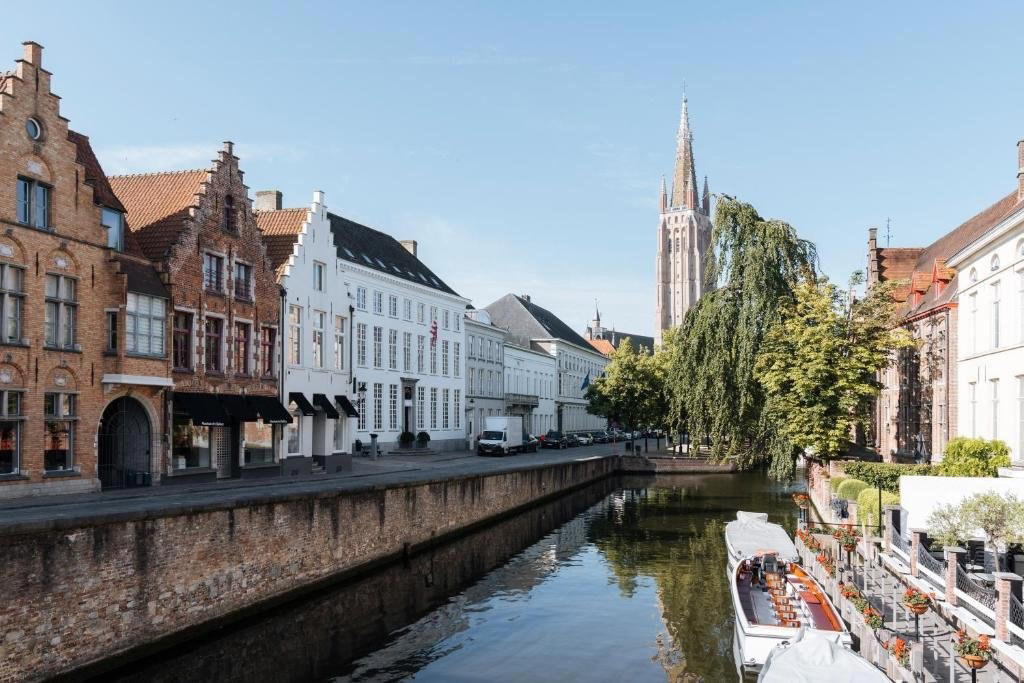
Breidelstraat cuts through the medieval heart of Bruges like a crease in old linen, connecting the Burg to the Markt along a route that has funnelled traders, pilgrims, and eventually tourists for centuries. Walking it in the late afternoon, the light catches the canal-damp stone at a low angle and the air carries something specific: salt, butter, and the faint brine of shellfish steaming somewhere nearby. That sensory signal is not accidental. This stretch of the historic centre has long oriented itself around the Flemish kitchen's most durable exports, and Breydel de Coninc, at number 24, is a traditional Belgian seafood restaurant in Bruges with.
Bruges occupies a particular position in Belgian dining. Unlike Brussels, where a restaurant like Bozar Restaurant operates at the intersection of high culture and fine cuisine, or Ghent, where Vrijmoed represents Flanders' more experimental tendencies, Bruges sustains its reputation on a different axis: heritage, setting, and a kitchen canon that is deliberately classical. The city draws visitors who want to eat moules-frites and drink Belgian beer in a room that feels like it has been doing exactly that for a long time. Breydel de Coninc speaks to that expectation directly.
What the Flemish Seafood Tradition Actually Means Here
Belgium's relationship with mussels is not merely culinary habit; it is a supply chain, a seasonal ritual, and a point of civic identity. The country consumes mussels at a rate that would seem improbable to most of its European neighbours, and Bruges, as a historic port city whose medieval wealth was built on North Sea trade, has sustained that appetite across multiple centuries of political upheaval and architectural reinvention. The mussel season runs roughly from July through April, and within that window Flemish kitchens cycle through preparations that range from the canonical marinière to versions built on white wine, cream, or celery and leek combinations that vary by household and by cook.
The prawn croquette, equally, is not a minor item in the Belgian repertoire. It is one of the country's more technically demanding brasserie dishes: the filling requires a properly set béchamel bound with enough North Sea grey shrimp to carry real salinity, the coating needs to hold a clean fry without leaking, and the result has to be eaten immediately or the contrast between crust and interior collapses. Restaurants in Bruges serving these alongside moules are operating within a format that has clear quality markers, and local knowledge tends to sort establishments quickly on those markers. Breydel de Coninc has maintained a presence on Breidelstraat long enough that its name circulates consistently in that context.
For a sense of how the wider Belgian fine-dining tier handles similar primary ingredients at a different register, Hof van Cleve in Kruishoutem and Boury in Roeselare both engage with Flemish seafood at three-Michelin-star level, while Willem Hiele in Oudenburg takes a coastal-foraging approach that sits in its own category. Breydel de Coninc operates several tiers below that ambition, and that is not a criticism; it addresses a different brief entirely.
The Room and the Experience
Historic-centre dining rooms in Bruges share certain characteristics: exposed brick or whitewashed plaster, low beamed ceilings, windows that open onto stone lanes narrow enough that the building opposite is close enough to touch. The effect in late autumn or winter, when Bruges empties of its peak-season crowds and a fog settles over the canals, is genuinely atmospheric in a way that no designed interior can fully replicate. The city's medieval fabric does the work that hospitality budgets usually struggle to achieve. Sitting inside a room like Breydel de Coninc's during the mussel season, with steam rising from pots and the sound of the street muffled by old glass and stone walls, approximates something that feels earned by geography rather than constructed by a design studio.
The energy of the room shifts by season and by hour. Bruges in July operates at near-capacity across its hospitality sector, and Breidelstraat in particular sees sustained foot traffic from visitors moving between the major landmarks. In that context, the room carries the ambient sound of a busy brasserie. Come October through February, the rhythm changes: fewer covers, longer meals, and the particular quiet of a tourist city returning briefly to itself. Both versions have their argument.
Bruges' Dining Tiers and Where This Sits
The Bruges restaurant scene stratifies fairly clearly. At the leading end, a small cohort of kitchens operates at the level of recognised fine dining: Mémoire and Sans Cravate represent the creative French pole, while Zet'Joe by Geert Van Hecke and De Karmeliet anchor the Belgian fine-dining tradition. Below that tier, a second layer of brasseries and casual Flemish kitchens serves the city's day-to-day appetite and its visitor economy in roughly equal measure. The restaurant belongs to this second tier, which in Bruges carries more weight than the equivalent tier in a city without the same density of international visitors who arrive already knowing what they want to eat.
For visitors who want to extend their eating beyond the classic mussel-and-croquette format, 't Apertje offers a different angle on Flemish cooking. Beyond Bruges, the West Flanders and East Flanders scenes are worth tracking: La Durée in Izegem, Zilte in Antwerp, Cuchara in Lommel, Ralf Berendsen in Neerharen, and d'Eugénie à Emilie in Baudour collectively illustrate how broadly Belgian cooking has developed outside its most-visited cities. For those curious how the classical seafood tradition compares at the other end of the formality spectrum globally, Le Bernardin in New York City and Lazy Bear in San Francisco both show what happens when seafood traditions meet high-investment fine-dining formats.
Planning Your Visit
The restaurant is located at Breidelstraat 24, 8000 Brugge, in the pedestrianised core of the historic centre, roughly equidistant between the Burg square and the Markt. It is recommended to reserve in advance. The address is walkable from all major hotels in the centre and is well-served by the taxi and coach drop-off points near the Markt. The mussel season, running from late summer through early spring, is the window in which the kitchen's primary material is at its most consistent; visiting outside that window means the menu's character shifts.
Nearby-ish Comparables
Comparable venues nearby, for context on price, style, and recognition.
| Venue | Cuisine | Price | Notes |
|---|---|---|---|
| Breydel de ConincThis venue — the venue you are viewing | Traditional Belgian Seafood | $$$ | Not listed |
| Rock-Fort | Modern North Sea Seafood Bistro | $$$ | St-anna |
| Gouden Karpel | Traditional Belgian Seafood | $$ | Historic Center |
| Ober | Modern Belgian-French Bistro | $$$ | Sint-Michiels |
| Rombaux | Modern French Bistro | $$$ | Sint-Kruis |
| Robusk | Modern Fusion Tasting Menu | $$$$ | Sint-Michiels |
Continue exploring
More in Bruges
Restaurants in Bruges
Browse all →
Bars in Bruges
Browse all →
Hotels in Bruges
Browse all →
Wineries in Bruges
Browse all →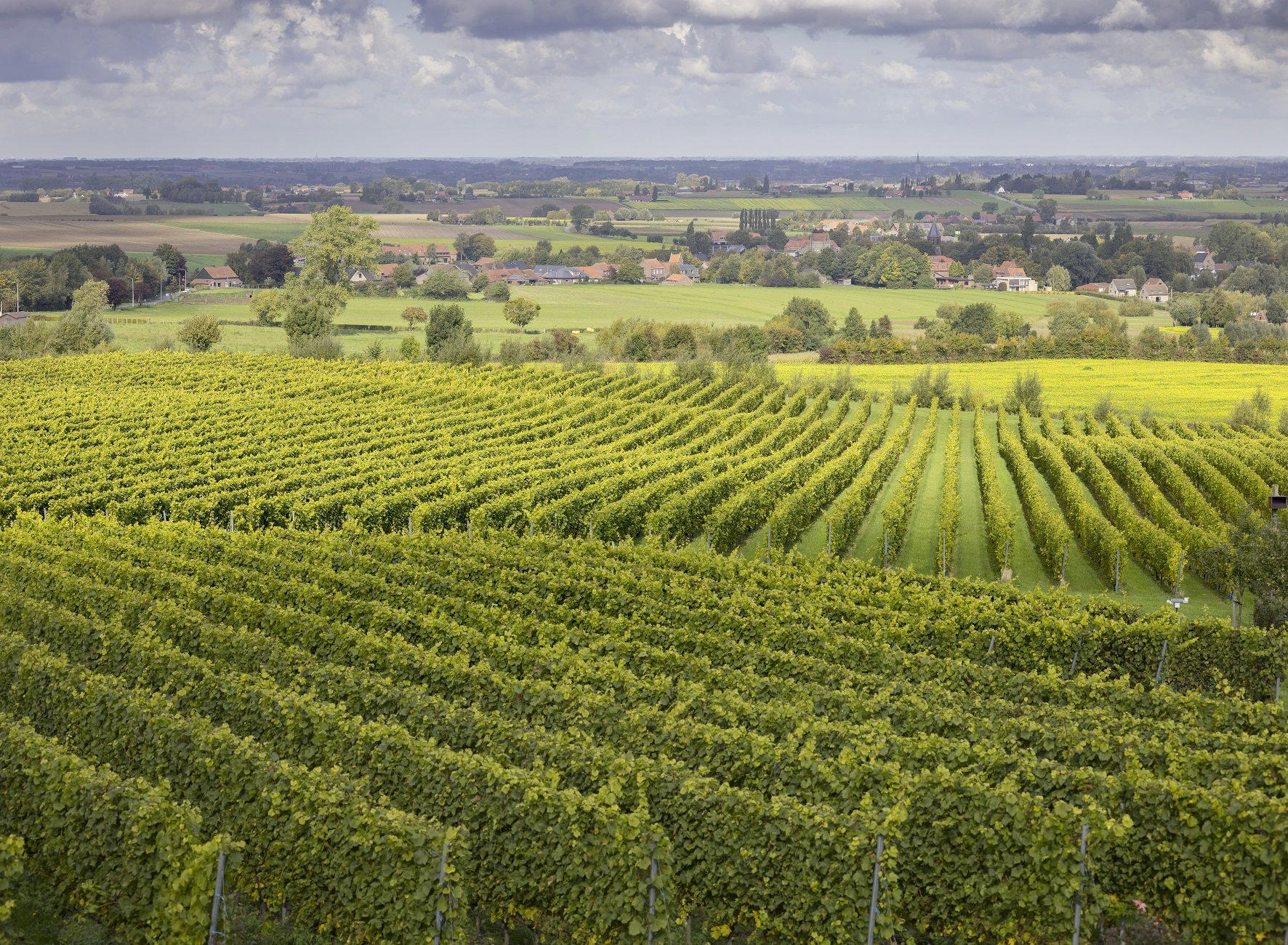
At a Glance
- Cozy
- Classic
- Intimate
- Date Night
- Special Occasion
- Historic Building
Current opening hours
- Monday
- 12–2:30 PM, 6:30–9:30 PM
- Tuesday
- 12–2:30 PM, 6:30–9:30 PM
- Wednesday
- Closed
- Thursday
- 12–2:30 PM, 6:30–9:30 PM
- Friday
- 12–2:30 PM, 6:30–9:30 PM
- Saturday
- 12–2:30 PM, 6:30–9:30 PM
- Sunday
- 12–2:30 PM, 6:30–9:30 PM
Hours can change for holidays and private events. Last verified .
Cozy and welcoming historic setting featuring a large central aquarium and fish lamps, providing an intimate and authentic atmosphere.