

Michelin Selected · Small Luxury Hotels of the World Member
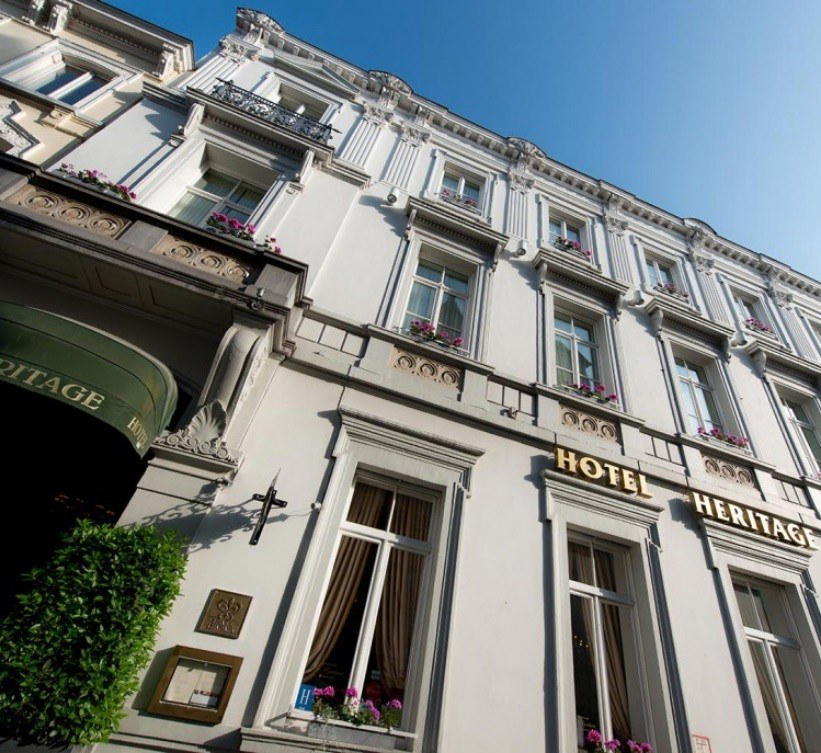
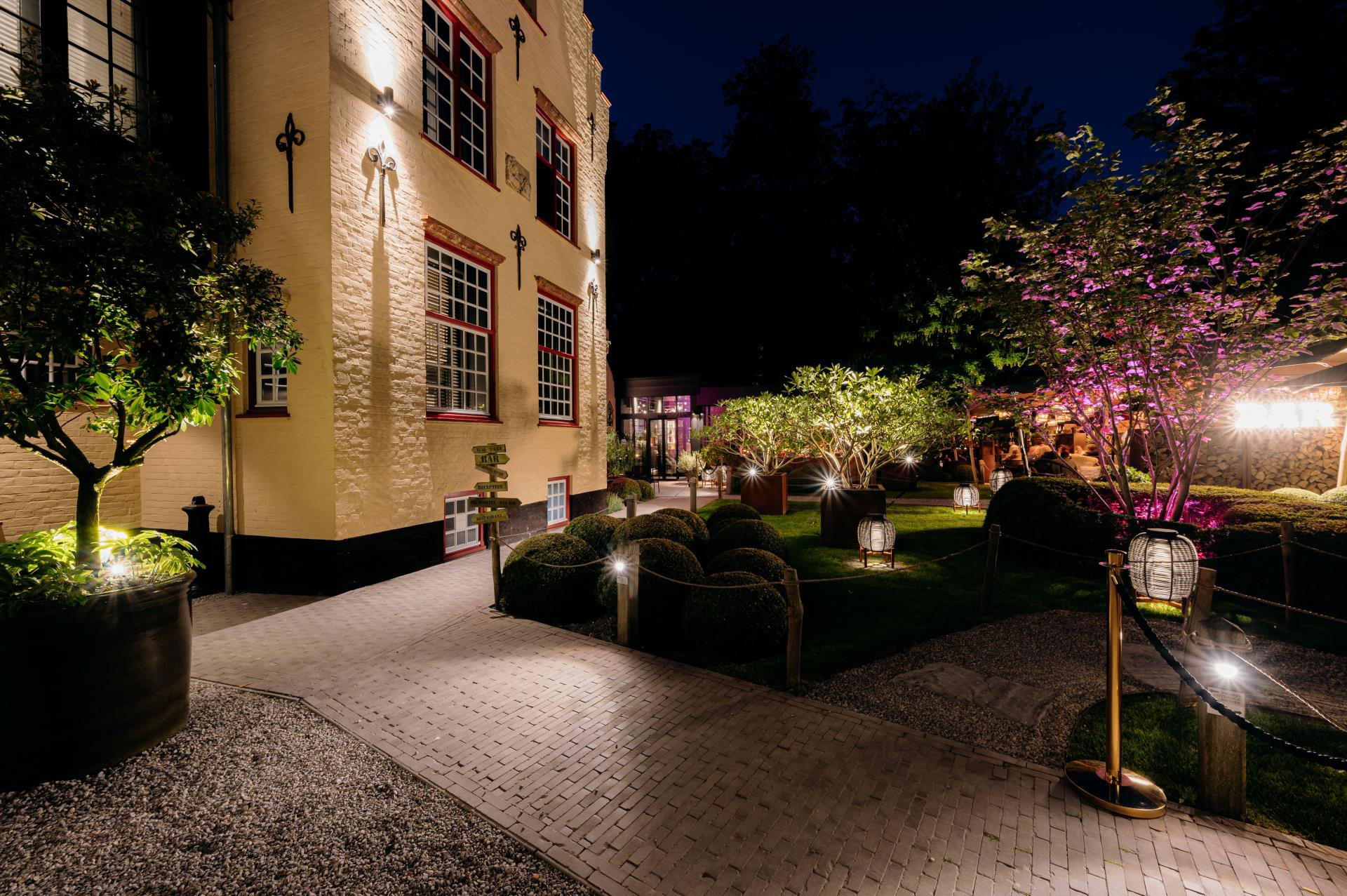
A 15th-century patrician residence on the Dijver canal, Hotel de Tuilerieën occupies one of Bruges' most historically layered addresses. Boutique in scale and canal-facing in orientation, it positions itself alongside properties like Hotel Heritage and Hotel De Orangerie in the city's small-luxury tier. The location places guests within the medieval core, with the city's principal museums and covered market a short walk in either direction.

Pearl is the En Primeur Club membership app, where members save venues, book tables and use the concierge.
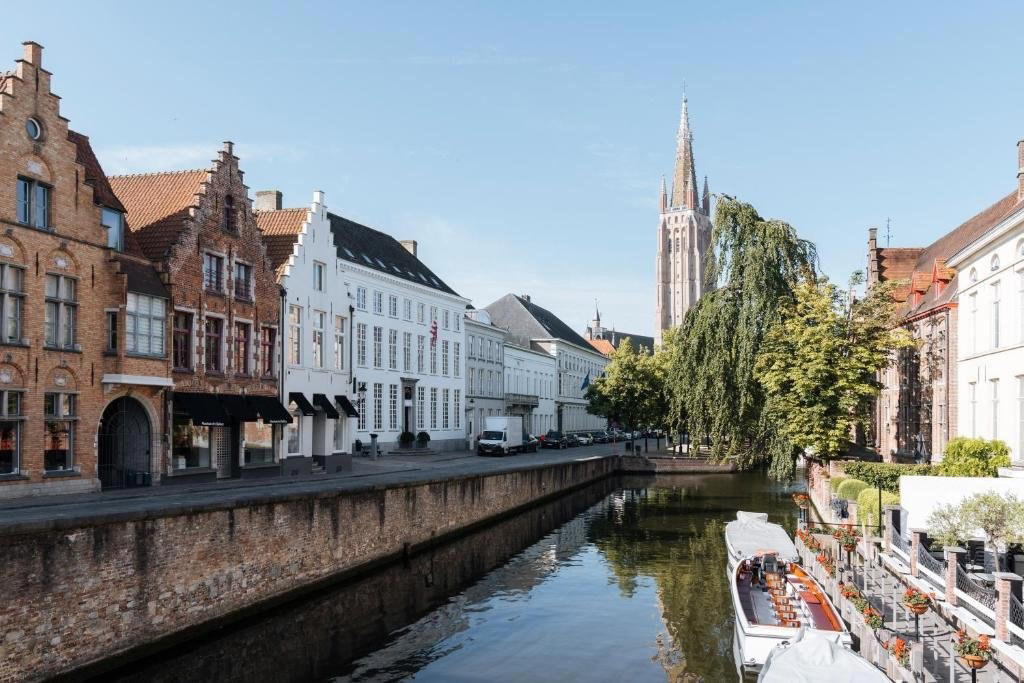
Canal-Side Position in a Medieval City
Bruges organises itself around water. The canal network that once moved Flemish cloth and Baltic grain now structures how visitors move through the city, and a hotel's relationship to that water tells you a great deal about its character. The Dijver, known historically as the 'Holy Water' canal, runs along the southern edge of the historic centre, connecting the Groeninge Museum quarter to the Bonifacius Bridge area. Hotels that front this stretch occupy a different tier of address from those set back on quieter residential lanes. Hotel De Orangerie and Hotel Heritage compete in the same general orbit; what separates them is largely a matter of canal frontage, building provenance, and how each property balances historic fabric with contemporary expectations.
Hotel de Tuilerieën sits at Dijver 7, in a building that dates to the 15th century and served originally as a noble patrician residence. That genealogy matters in Bruges more than in most European cities. The historic centre was designated a UNESCO World Heritage Site in 2000, and the conservation requirements governing it are among the strictest in Belgium. A hotel operating within a genuine medieval shell, rather than a sympathetically restored replica, carries a different kind of weight. The Dijver address means the canal is not a backdrop glimpsed from a terrace but the immediate foreground of the property.
What the Address Actually Delivers
The practical logic of a Dijver address is worth spelling out. The Groeninge Museum, which holds one of the most concentrated collections of Flemish Primitive painting in Europe, including works by Jan van Eyck and Hans Memling, is within a few minutes on foot. The Arentshof garden runs adjacent to the canal at this stretch. The Vismarkt, the old fish market, and the covered Markt square are both reachable in under ten minutes by foot. This is not peripheral Bruges connected to the centre by a taxi ride; it is the centre, measured by the density of medieval infrastructure around it.
Bruges' boutique hotel market has consolidated around a handful of canal-adjacent properties that hold historic designation and operate with relatively low key counts. The boutique tier here runs from properties with six or eight rooms up to those approaching thirty. Boutiquehotel 't Fraeyhuis operates at the intimate end; Dukes' Palace Brugge occupies the former residence of the Dukes of Burgundy and pulls toward the grander end of the local scale. Hotel de Tuilerieën sits between those poles, defined less by room count than by the specificity of its building and address.
The Hotel Within the Bruges Boutique Set
Bruges' small-luxury hotel sector is not especially large. The city draws around eight million visitors annually, but the number of boutique properties with genuine historic fabric and canal-facing rooms in the Dijver-to-Rozenhoedkaai corridor is limited. Hotel Van Cleef, The Pand Hotel, and The Notary are among the properties operating in the same general bracket. What distinguishes Hotel de Tuilerieën within that set is the combination of a 15th-century structure and a Dijver address, which together place it among the most historically grounded options in the city's boutique category.
The description attached to the hotel references 'timeless elegance meets contemporary luxury', a formulation that appears across the boutique hotel sector broadly. What it tends to signal in practice, in the Bruges context, is a property that has invested in updating infrastructure and finish levels without stripping out the original architectural character. For travellers comparing it against Belgium's wider small-luxury options, the Bruges boutique tier reads differently from what you find in Antwerp or Ghent. Hotel Julien in Antwerp and B&B The Verhaegen in Ghent operate in cities where contemporary design language sits more naturally alongside the historic shell. Bruges rewards properties that subordinate their renovation ambitions to the building itself.
Visiting Bruges: Seasonal and Practical Context
Bruges attracts visitors year-round, but the city's character shifts meaningfully by season. The shoulder months of April, May, September, and October offer the canal views without the summer footfall that can turn the Markt into a near-continuous queue. The Dijver itself hosts an antiques and book market on weekends from spring through autumn, placing the hotel's address inside a recurring local event rather than just a scenic stretch of water. Winter in Bruges is a different proposition again: the Christmas market on the Markt draws its own crowd, and the city's medieval architecture reads differently under low northern light.
Guests approaching from Brussels typically travel by train to Bruges station, roughly 55 minutes from Brussels-Midi, then move into the centre by taxi or on foot. The station is about 1.5 kilometres from the Dijver, manageable on foot with light luggage. Those travelling from further afield will route through Brussels or Ghent. The hotel's booking details are not published in at time of writing; prospective guests should confirm current availability and room rates directly through the hotel's own channels or through the EP Club Bruges guide for updated property information.
For Belgium's wider small-luxury market context, the country has produced a number of compelling boutique addresses beyond its major cities: Domaine La Butte aux Bois in Lanaken and Kasteel van Ordingen in Sint-Truiden represent the country's château and estate tier. In Brussels, the range runs from Corinthia Grand Hotel Astoria at the grand-hotel end to Le Louise Hotel Brussels in the Ixelles quarter. Hotel de Tuilerieën belongs to none of those categories. It is a Bruges-specific proposition, grounded in a specific building on a specific canal.
Compact Comparison
Comparable venues nearby, for context on price, style, and recognition.
| Venue | Price | Awards | Notes |
|---|---|---|---|
| Hotel de TuilerieënThis venue (the venue you are viewing) | $200–300 | Michelin Selected · Small Luxury Hotels of the World Member | Not listed |
| The Notary | Not listed | 1 Michelin Key · Mr & Mrs Smith Seal of Approval | Ezelstraat Quartier, Restored 19th-century city palace with luxury boutique suites |
| Hotel De Orangerie | $100–200 | Michelin Selected · Small Luxury Hotels of the World Member | Historic Center, Restored 15th-century monastery blending historic elegance with modern comforts |
| Dukes' Academie Brugge | $100–200 | Michelin Selected | Historic Centre of Brugge, Trendy boutique city hotel with modern comforts in historic Bruges setting |
| Boutiquehotel 't Fraeyhuis | $100–200 | 1 Michelin Key | Historic Centre, charming boutique in historic setting with modern comforts |
| Hotel Heritage | Not listed | Michelin Selected · Relais Chateaux Award | city center, Historic boutique hotel with classic charm and modern comforts. |
Recognition history
Dated appearances from independent guides and award organizations, with the underlying list record or original source where available.
Michelin Selected
Michelin
Small Luxury Hotels of the World Member
Small Luxury Hotels of the World
Continue exploring
More in Bruges
Hotels in Bruges
All hotels in Bruges →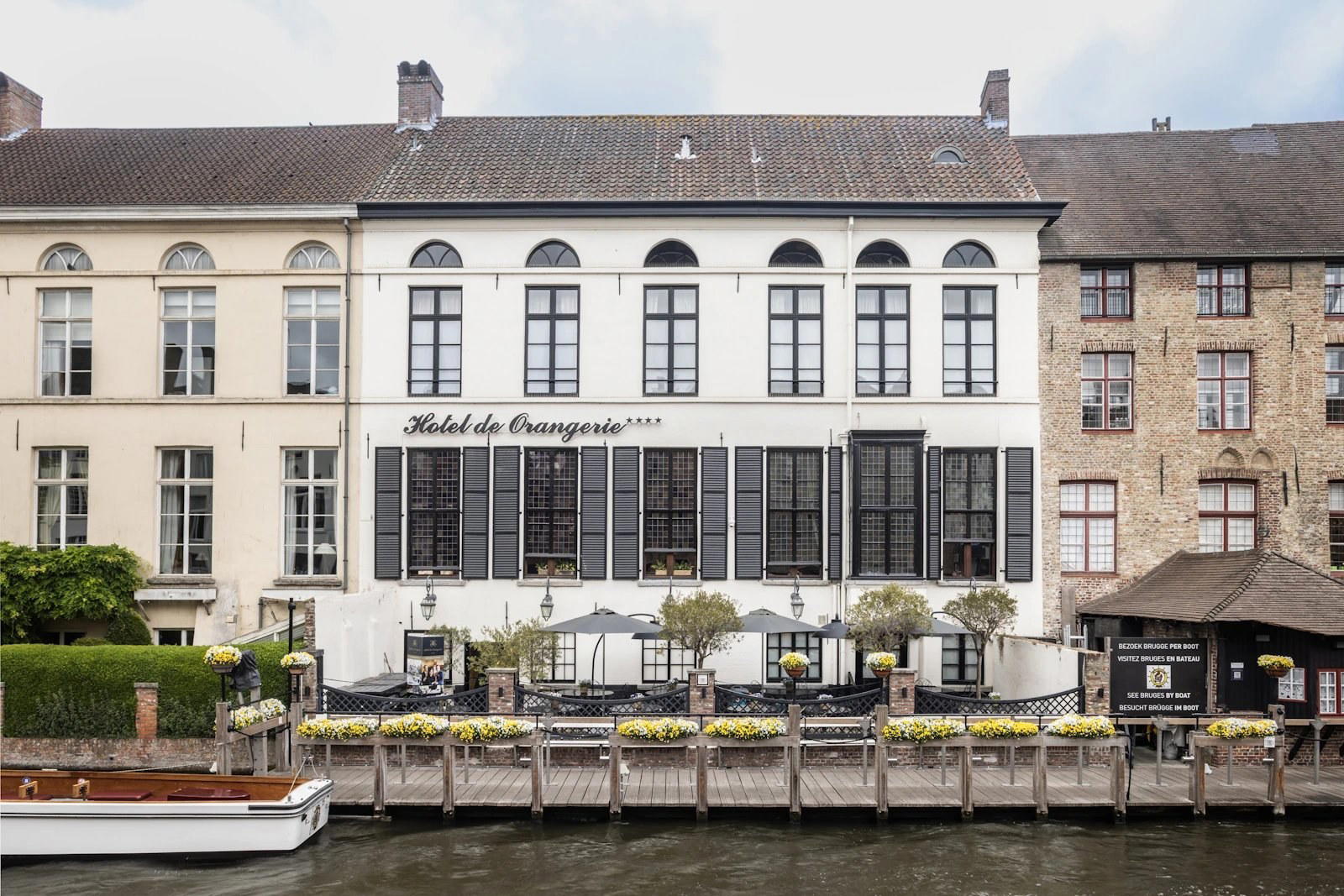
Bars in Bruges
All bars in Bruges →

Restaurants in Bruges
All restaurants in Bruges →
Wineries in Bruges
Browse all →
Details
- Romantic
- Elegant
- Cozy
- Historic
- Intimate
- Sophisticated
- Romantic Getaway
- Honeymoon
- Anniversary
- Weekend Escape
- Historic Building
- Waterfront
- Terrace
- Garden
- Wi Fi
- Room Service
- Concierge
- Restaurant
- Bar
- Garden
- Air Conditioning
- Elevator
- Waterfront
- Street Scene
- Elevator
- Step Free Entrance
- Accessible Parking
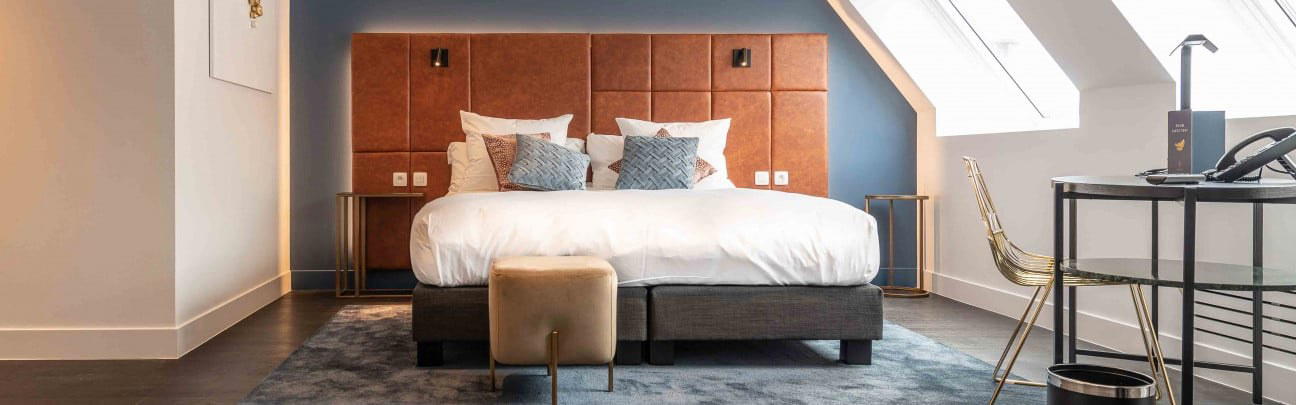
Warm, elegant lighting in sumptuous period décor with historic charm, soundproofed rooms, and a peaceful retreat atmosphere praised in guest reviews.