Bicena


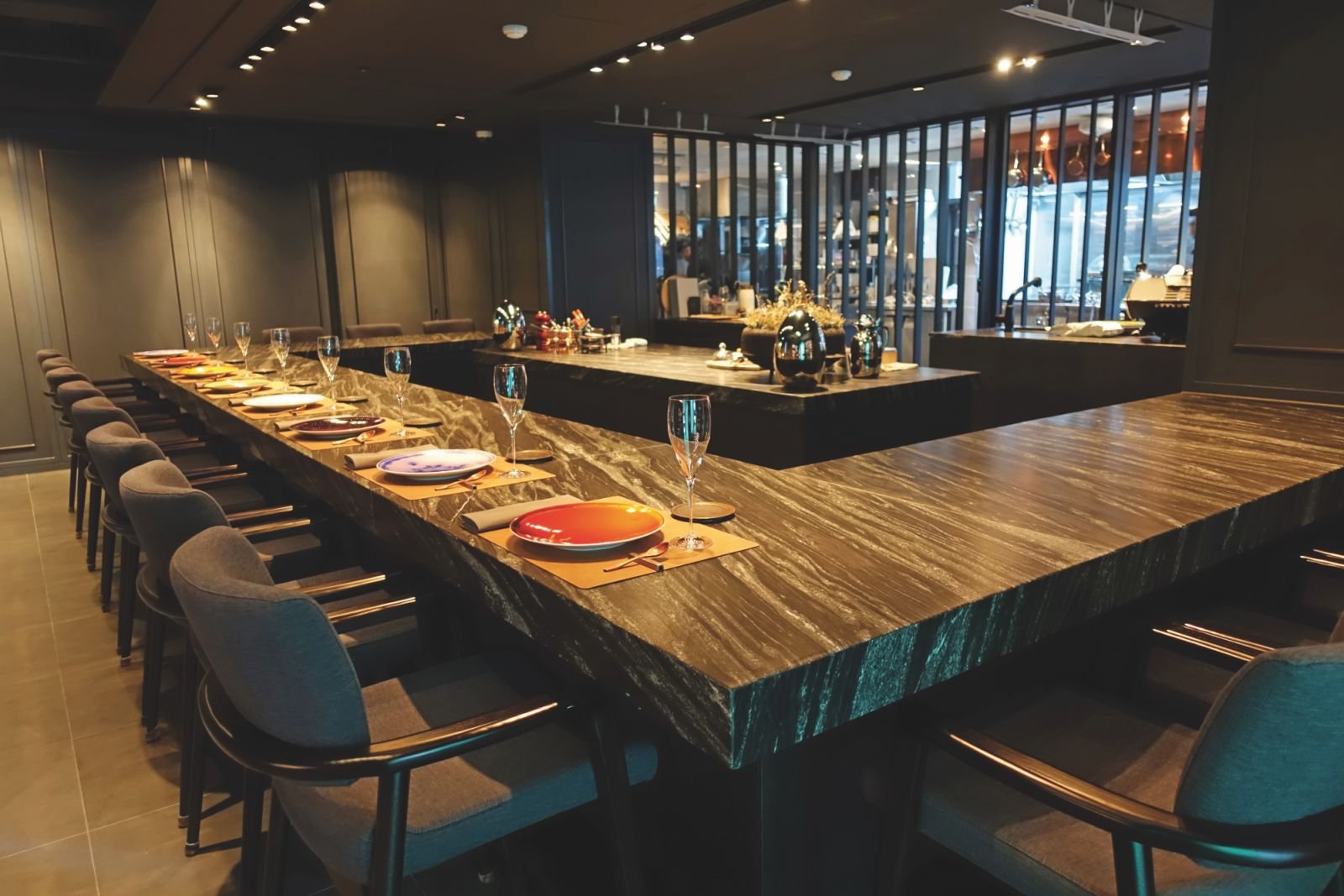
Bicena occupies the 81st floor of Lotte World Tower in Seoul's Songpa District, where Chef Jun Kwangsik applies Gyeongsang-do regional tradition to a seasonal Korean tasting menu. A Michelin one-star holder ranked 429th in the 2025 Opinionated About Dining Asia list, it places meat cookery, particularly dry-aged Hanwoo beef and pork belly, at the centre of its approach, framed by panoramic city views across the Han River basin.
 Discover on Pearl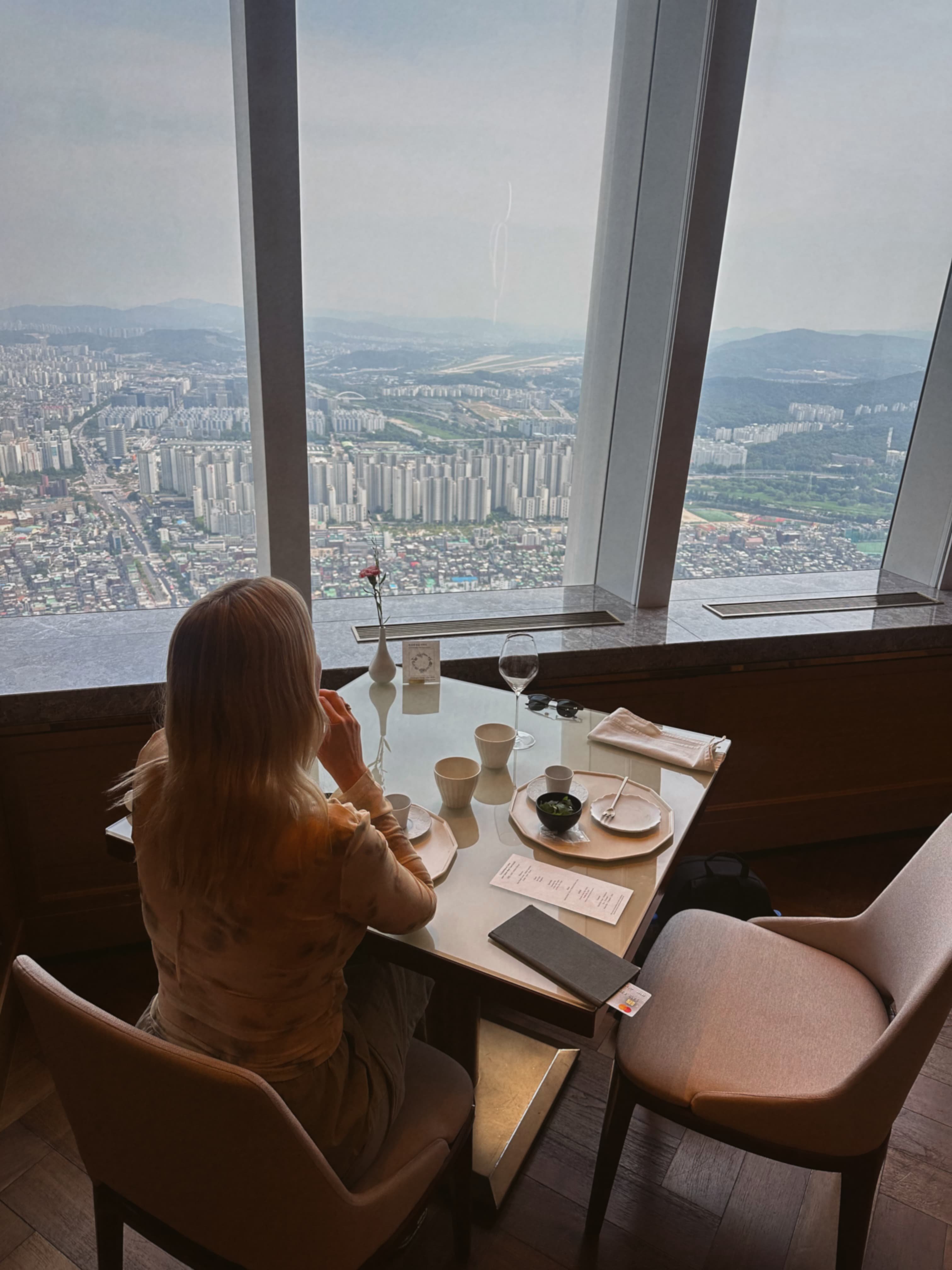
Seoul at 81 Floors
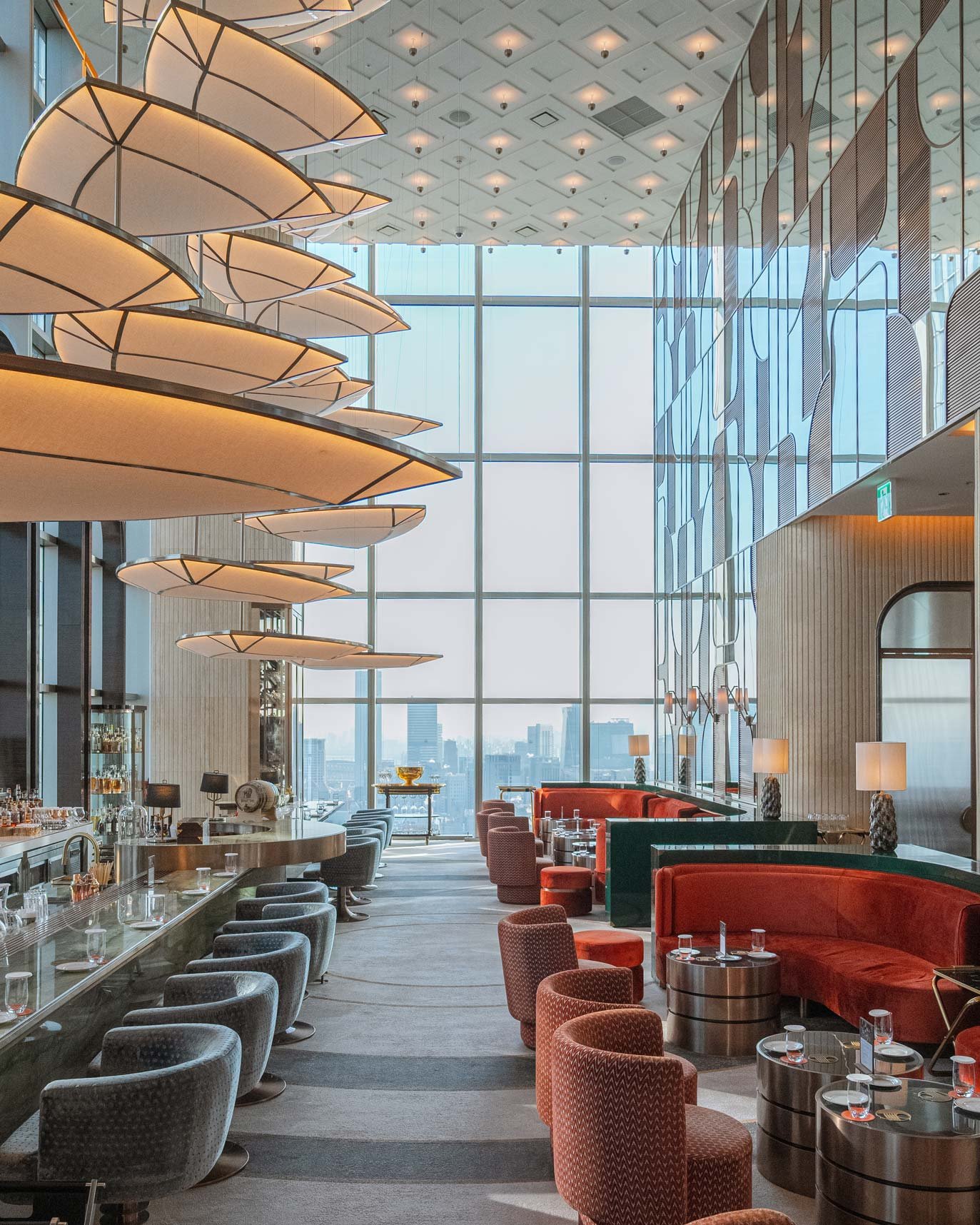
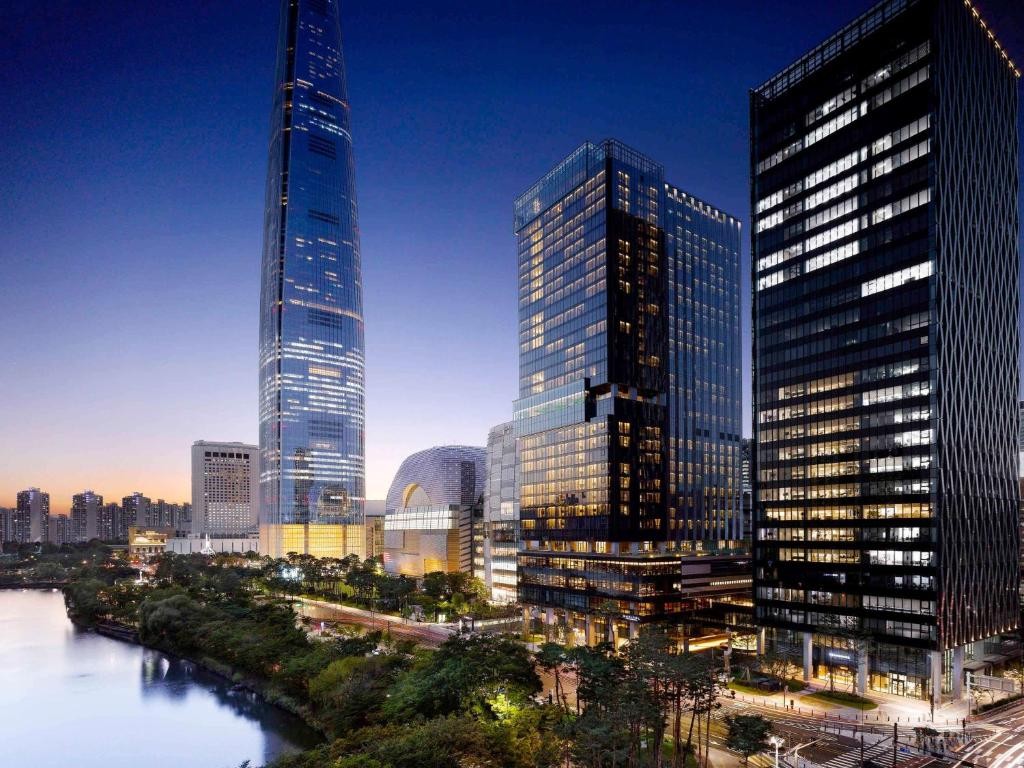
There is a version of Seoul dining that operates at ground level, in converted hanok courtyards or basement counters where proximity to the kitchen is the point. Then there is the version that asks you to ascend. Lotte World Tower, at 555 metres the tallest building in South Korea, contains within it a distinct category of restaurant where altitude is not merely an amenity but a framing device for the food below. Bicena sits on the 81st floor of that tower, in the Songpa District on the southeastern edge of the city, and the elevation changes the terms of the meal before a dish arrives.
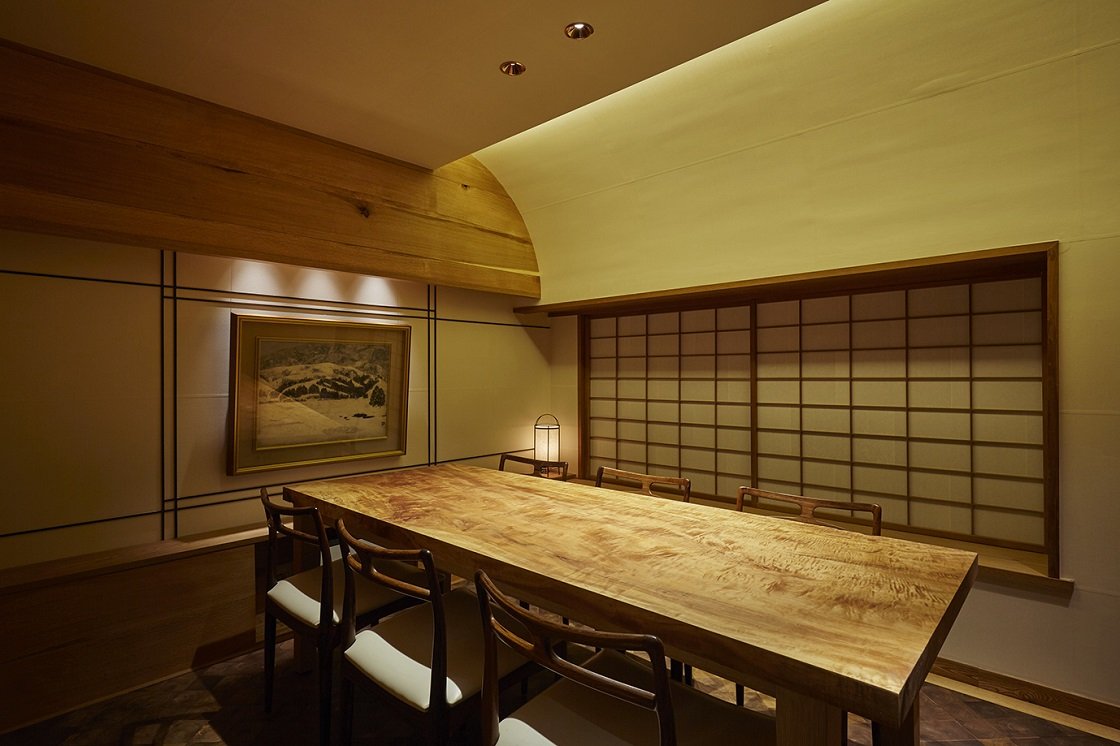
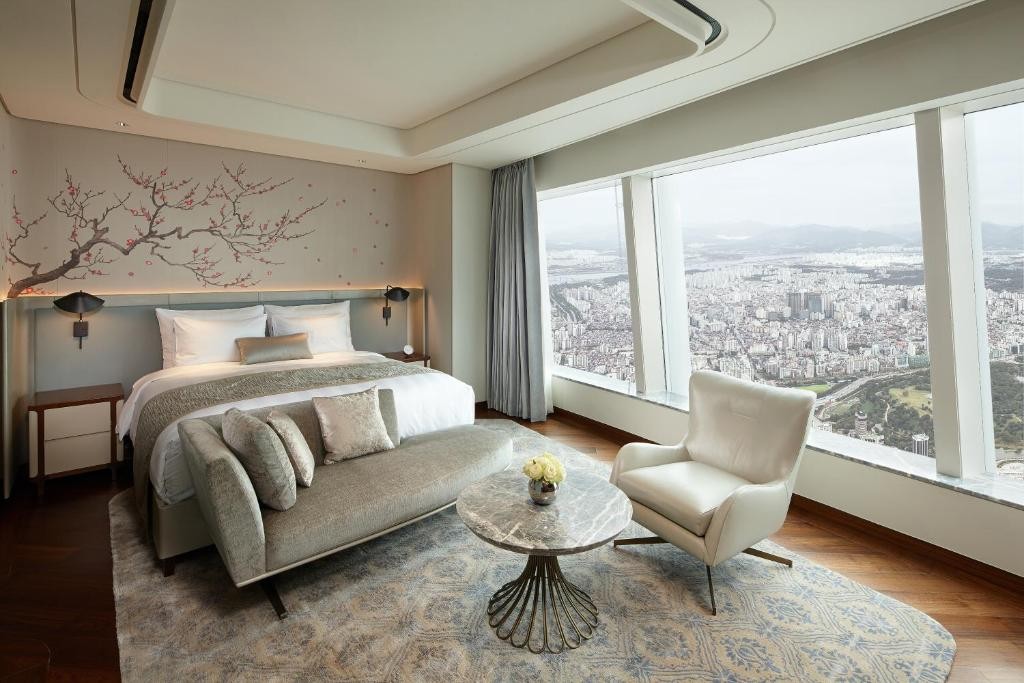
From Sincheon Station the tower is a short walk, and the lobby ascent is fast by elevator standards. By the time you are seated, the Han River corridor and the low-rise sprawl of outer Seoul extend in every direction. The window tables are the obvious request, and the private room option compounds the panorama with a degree of enclosure that suits business entertaining. The setting belongs to a tier of high-floor Korean dining that includes La Yeon at the leading of the Grand Hyatt, though the two differ sharply in culinary reference point: La Yeon draws on joseon court cuisine, while Bicena works from a more specific regional source.
Gyeongsang-do as a Culinary Argument
The regionalism at work here is worth pausing on. Korean fine dining has, for the past decade, moved through several phases: the recovery and codification of royal court recipes, the absorption of French technique into Korean ingredients, and more recently a turn toward the kind of province-specific identity that defines the leading of Japanese regional cuisine. Bicena belongs to this third movement. Chef Jun Kwangsik, whose background traces to Gyeongsang-do in the southeast of the peninsula, treats that origin as a culinary argument rather than a biographical footnote. The province carries its own flavour logic, historically bolder and more direct than the refined palate associated with Seoul or the fermentation-heavy repertoire of Jeolla-do to the southwest.
This position places Bicena in a different conversation from some of its Seoul contemporaries. Onjium, also Michelin-starred and ranked in the OAD Asia list, works from classical Korean scholarship, with a research-driven approach to historical recipes. Mingles has built its reputation on the synthesis of Korean and international techniques. Bicena is neither of these: it is specifically regional and specifically meat-forward, which narrows its peer set and sharpens what it offers the diner who knows the difference.
What the Menu Argues
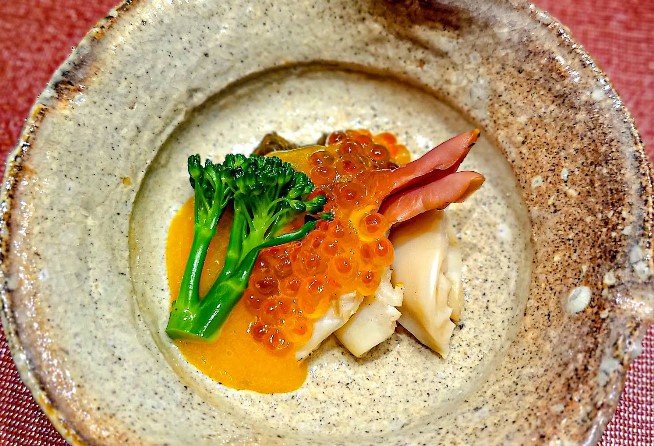
The seasonal structure of the menu reflects the tradition of Korean cuisine without attempting to be a museum of it. Ingredients shift with the calendar, and the kitchen's confidence in presenting Gyeongsang-do produce is part of the stated identity. What the awards data confirms, and what separates Bicena from the broader tier of ₩₩₩₩ Korean tasting menus in Seoul, is the centrality of meat cookery. The kitchen's handling of pork belly and the one-month house dry-aged Hanwoo beef sirloin represent the clearest expression of regional pride on the plate. Hanwoo, the native Korean cattle breed, occupies in the Korean context something analogous to Wagyu in Japan: a premium domestic product with strong cultural identity and a price point to match. The dry-ageing programme is the kitchen's specific technical contribution, and the month-long duration places it at a level of commitment that most Seoul restaurants with a similar price point do not attempt.
For broader context on where Hanwoo-focused meat cookery sits within Seoul's fine dining tier, and how it compares to Korean restaurants taking the cuisine abroad, bōm in New York City and DOSA in London both offer reference points for how Gyeongsang-influenced and broader Korean traditions are read in diaspora contexts. The distance between those interpretations and the confidence of a kitchen working in its source region is instructive.
Recognition and Where It Sits
Bicena received a Michelin one star in 2024, which places it in the middle tier of Seoul's Michelin-recognised Korean restaurants. The OAD ranking at 429th in Asia for both 2024 and 2025 reflects sustained peer-level regard in a list that weights chef and industry votes heavily. The trajectory from OAD Recommended in 2023 to a numbered ranking by 2024 is the kind of upward movement that signals a kitchen finding its register rather than simply maintaining one.
The Michelin one-star tier in Seoul includes several ₩₩₩₩ Korean concepts, among them Onjium, 7th Door, Eatanic Garden, and Zero Complex. Each of these operates with a distinct angle: Zero Complex takes a Korean-French fusion approach, Eatanic Garden works from contemporary techniques. Bicena's distinction within this cohort is the regional specificity and the primacy of meat, which makes it a less obvious choice for diners seeking either court-cuisine gravitas or fusion novelty, but a more compelling one for those interested in what provincial Korean cooking looks like when taken seriously at a high level.
For Korean fine dining outside the Michelin tier but with strong OAD recognition, the range across the peninsula is worth considering. Mori in Busan and Baegyangsa Temple in Jangseong-gun represent entirely different registers of Korean food culture, one urban and contemporary, one monastic and austere, but both rooted in a kind of place-specific authenticity that Bicena shares.
The Seoul Fine Dining Picture
Seoul's high-end Korean restaurant scene has matured to the point where regional differentiation is a credible competitive strategy. A decade ago, the dominant narrative was about technique transfer, Korean chefs returning from French kitchens and applying classical training to domestic ingredients. That generation produced restaurants like Kwonsooksoo and informed the early reputation of Gaon. The current generation is less interested in proving Korean cuisine can absorb French rigour and more interested in demonstrating that it does not need to. Bicena belongs to this later moment.
The comparison with Kwon Sook Soo in Gangnam-gu is useful: both are ₩₩₩₩ Korean tasting menus with serious recognition, but the culinary argument is different. Gangnam's dining culture tends toward polish and international legibility; Songpa, a few kilometres southeast, carries less of that pressure, and a restaurant on the 81st floor of a landmark tower can afford to be exactly what it is.
The broader Seoul dining and drinking context is covered in our full Seoul restaurants guide. For hotel options near Lotte World Tower and the Songpa District, our full Seoul hotels guide covers the range. Those building a longer itinerary might also find our full Seoul bars guide, our full Seoul wineries guide, and our full Seoul experiences guide worth consulting alongside this page.
Planning the Visit
Bicena operates a consistent schedule, open seven days a week with a lunch service running from 11:30 AM to 2:30 PM and dinner from 6:00 PM to 10:00 PM. The 81st-floor address in Lotte World Tower is served directly by Jamsil Station and Sincheon Station on the Seoul Metro, placing it within direct reach from central Seoul and Gangnam. A window table should be requested at the time of booking; the private room is available for groups wanting the panoramic setting with more separation. The restaurant has a Google rating of 4.4 across 485 reviews, which at this price point and format reflects consistent delivery rather than casual footfall. For a broader comparison of similar formats at the ₩₩₩₩ Korean tasting menu tier, Soseoul Hannam offers a useful contrast point, as does Jeju Noodle Bar in New York City for those curious about how Jeju-inflected Korean cooking compares to mainland regional styles. The ₩₩₩₩ price designation places Bicena in Seoul's premium tier, where a dinner for two typically runs into the range that warrants advance booking and a considered approach to the evening's length.
Cuisine-First Comparison
These are the closest comparables we have in our database for quick context.
| Venue | Cuisine | Awards | Notes |
|---|---|---|---|
| Bicena | Korean | Michelin 1 Star | This venue |
| 7th Door | Korean, Contemporary | Michelin 1 Star | Korean, Contemporary, ₩₩₩₩ |
| Solbam | Contemporary | Michelin 1 Star | Contemporary, ₩₩₩₩ |
| Onjium | Korean | Michelin 1 Star | Korean, ₩₩₩₩ |
| L'Amitié | French | Michelin 1 Star | French, ₩₩₩ |
| Zero Complex | Korean-French, Innovative | Michelin 1 Star | Korean-French, Innovative, ₩₩₩₩ |