Bei Oma Kleinmann on Zülpicher Strasse sits inside Cologne's student-tinged Kwartier Latäng, where the tradition of unpretentious Rhineland cooking persists amid a neighbourhood better known for bar-hopping than fine dining. The name alone signals the format: hearty, grandmother-style German food served without ceremony in surroundings that have changed little over decades. It is the kind of address regulars defend quietly and visitors discover by accident.
Pearl is the En Primeur Club membership app — saves, bookings, and concierge access live there. Same editors, same standards.
- Address
- Zülpicher Str. 9, 50674 Köln, Germany
- Phone
- +49 221 232346
- Website
- beiomakleinmann.de
- Directions
- Get directions
 Saves & bookings on Pearl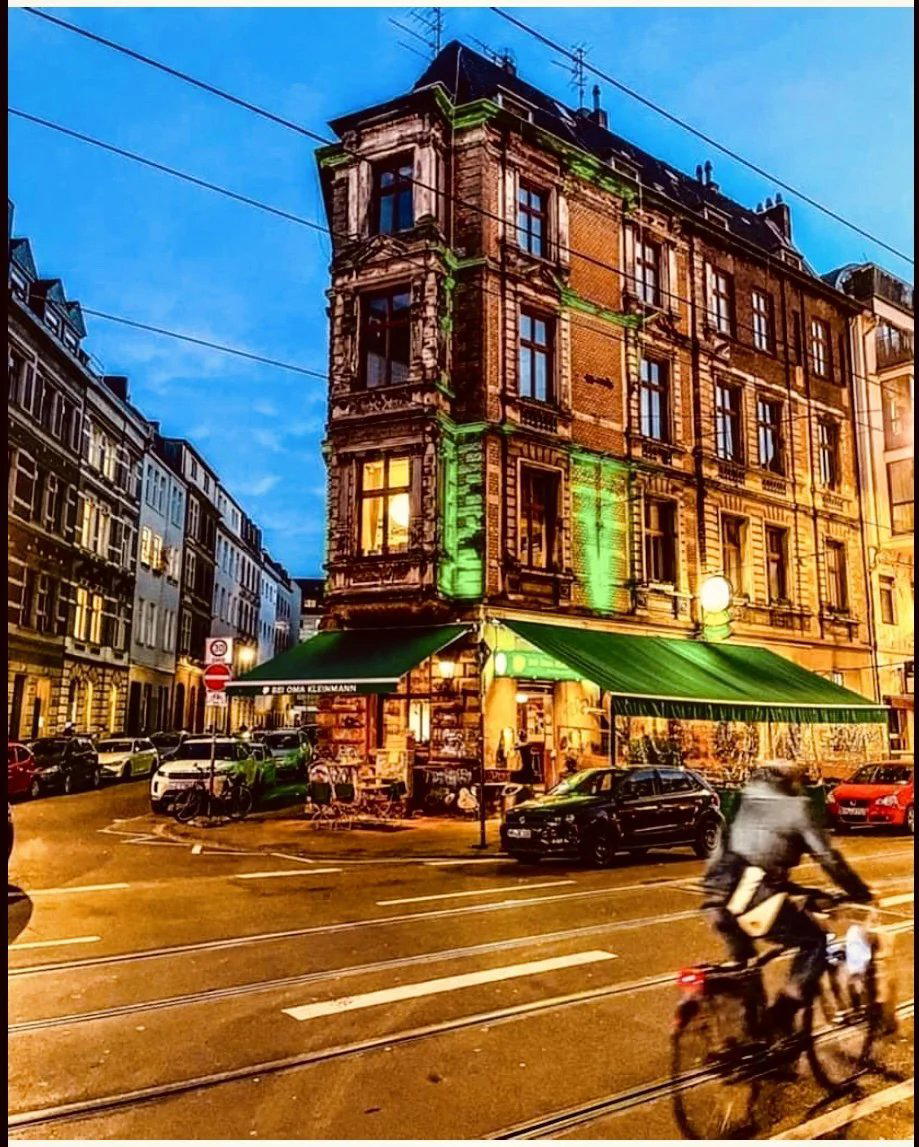
A Street Where Simplicity Still Has a Seat
Zülpicher Strasse cuts through one of Cologne's most animated quarters, the so-called Kwartier Latäng, a district whose identity is built on proximity to the university and an unbroken density of bars, cafés, and informal restaurants. In a neighbourhood where turnover is high and concept fatigue sets in quickly, the places that endure tend to do so because they commit to something narrow and do it without apology. Bei Oma Kleinmann is that kind of place. The name translates roughly as 'At Grandma Kleinmann's,' and the promise embedded in that name, domestic, familiar, rooted, shapes everything about how the restaurant presents itself to the street and to the diner who pushes through the door.
Cologne's broader dining scene has fractured in predictable ways over the past decade. On one end, technically ambitious modern kitchens like Ox & Klee and La Société compete for serious-dining attention and press recognition. Toward the middle, bistro formats drawing on French brasserie traditions, see Le Moissonnier Bistro, hold their own with wine-literate regulars. Then there is a third category, smaller and harder to categorise: the neighbourhood institution that predates trends, does not chase them, and persists because a specific community has decided it is worth preserving. Bei Oma Kleinmann belongs to that third category.
What the Menu Architecture Says
The logic of a German Hausmannskost menu, the kind associated with home cooking rather than restaurant invention, is not about showcase or discovery. It is about reliability. The dishes on offer at a place like Bei Oma Kleinmann are not designed to surprise; they are designed to deliver a recognisable result on every visit. Schnitzel, Sauerbraten, seasonal soups, simple sides: the structure of such a menu reads almost like a contract between kitchen and guest. The kitchen agrees to produce what the name of the dish promises; the guest agrees to judge it against memory rather than novelty.
This is a meaningfully different editorial category from the tasting-menu formats that dominate fine-dining coverage. At venues like Vendôme in Bergisch Gladbach or Schwarzwaldstube in Baiersbronn, the menu is itself a medium, a sequence designed to communicate a culinary argument. At a Hausmannskost address, the menu is closer to a repertoire: accumulated, not curated. The distinction matters because it changes what a critical assessment should measure. Execution against type, consistency across visits, and the degree to which the kitchen resists the temptation to modernise unnecessarily are the relevant benchmarks.
Germany has many restaurants that attempt to straddle these positions, traditional format with contemporary technique, and the results are often uneasy. The more defensible choice is to commit fully to one mode. Addresses like maiBeck in Cologne manage a version of this by anchoring modern cooking in regional produce. The restaurant, by contrast, appears to anchor in the cooking itself: in the recipes, the rhythms, and the scale of a domestic German table rather than a restaurant kitchen chasing press coverage.
Cologne's Hausmannskost Tradition in Context
Rhineland cooking does not carry the international profile of Bavarian food, which benefits from tourist infrastructure and cliché, or the refined reputation of certain Baden-Württemberg kitchens. It is quieter, more practical, and historically tied to the working-class and middle-class households of the Rhine corridor. Dishes like Himmel un Ääd (black pudding with apple sauce and mashed potato), Halve Hahn (a rye roll with Dutch cheese, despite the name suggesting chicken), and various preparations of Rhenish Sauerbraten represent a regional identity that is genuinely distinct from the generic 'German food' template that travels abroad.
What places like Bei Oma Kleinmann do, at their leading, is keep that tradition in active use rather than museum display. The risk with heritage-format restaurants anywhere is that they calcify: the dishes remain, but the kitchen's engagement with them becomes rote. The countervailing strength is that genuine demand from regulars who grew up eating this food creates a quality floor that tourist-facing imitations cannot match. The Kwartier Latäng's mix of long-term residents and university-adjacent visitors means the restaurant draws from both pools: the regulars who calibrate against memory, and the newcomers who arrive without expectations and form their own.
For a wider view of where Cologne's dining sits within Germany's fine-dining geography, the contrast with Aqua in Wolfsburg, JAN in Munich, or CODA Dessert Dining in Berlin is instructive, not because those venues are competitors, but because they represent the ambitious end of a spectrum that restaurant has no interest in occupying. The same could be said, internationally, of the gap between a place like Le Bernardin in New York City and a beloved neighbourhood bistro two blocks away. Both are valid; they answer different questions.
Planning Your Visit
The restaurant sits at Zülpicher Str. 9, 50674 Köln, a short walk from the Zülpicher Platz U-Bahn station in central Cologne. The Kwartier Latäng is busiest on weekend evenings when the bar strip comes alive, so weekday visits tend to be calmer and better suited to the pace of a proper sit-down meal. The neighbourhood itself rewards arriving slightly early to walk the street, it provides useful context for understanding why a place with the restaurant's format has retained its foothold in an area that eats through concepts quickly.
For readers building a broader Cologne itinerary, the Cologne restaurants guide maps the city's dining across registers, from the technically driven kitchens of La Cuisine Rademacher to the informal addresses that define neighbourhood eating. Those interested in how German regional cooking sits within a wider fine-dining frame might also find value in the profiles for Schanz in Piesport, Waldhotel Sonnora in Dreis, Victor's Fine Dining by Christian Bau in Perl, ES:SENZ in Grassau, and Restaurant Haerlin in Hamburg. And for a West Coast reference point on how community-rooted dining operates at a different price and ambition tier, Lazy Bear in San Francisco offers a useful counterpoint.
Recognition, Side-by-Side
Comparable venues nearby, for context on price, style, and recognition.
| Venue | Cuisine | Price | Notes |
|---|---|---|---|
| Bei Oma KleinmannThis venue — the venue you are viewing | Traditional German Schnitzel House | $$ | Not listed |
| Markthalle Körnerstraße | German Market Hall Bistro with Turkish Döner | $$ | Ehrenfeld |
| der gockel | German Gastropub - Grilled Chicken & Kölsch | $$ | Altstadt/Süd |
| De Fressbud | German Street Food | $$ | Altstadt/Nord |
| Bon Frites | German Street Food | $ | Deutz |
| Essers Gasthaus | Austrian & German Home-Style Gastronomy | $$$ | Neuehrenfeld |
Continue exploring
More in Cologne
Restaurants in Cologne
Browse all →
Bars in Cologne
Browse all →
Hotels in Cologne
Browse all →

At a Glance
- Rustic
- Cozy
- Classic
- Casual Hangout
- Group Dining
- Historic Building
- Beer Program
Current opening hours
- Monday
- 5–11 PM
- Tuesday
- 5–11 PM
- Wednesday
- 5–11 PM
- Thursday
- 5–11 PM
- Friday
- 5 PM–12 AM
- Saturday
- 5 PM–12 AM
- Sunday
- Closed
Hours can change for holidays and private events. Last verified .
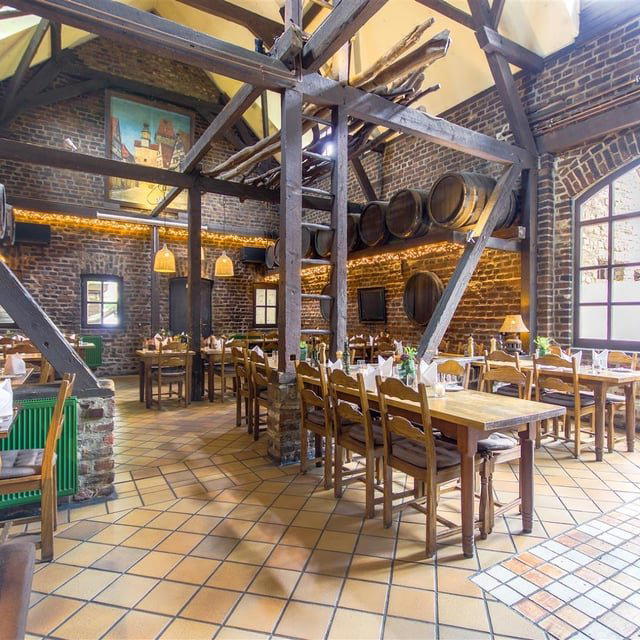
Homely interior with wood panelling, wooden tables, and walls covered in decades-old photos, creating a rustic, eclectic relic of old Cologne amid a lively student quarter.