Baohaus
Baohaus on East 14th Street brought Taiwanese street food into a Lower East Side context that few casual venues in New York had attempted at the time. The format is tight and counter-focused, built around the gua bao, a format that has since spread across American menus. A reference point for how Taiwanese-American cooking entered the broader dining conversation.
Pearl is the En Primeur Club membership app — saves, bookings, and concierge access live there. Same editors, same standards.
- Address
- 97 St Marks Pl, New York, NY 10009
- Website
- baohaus.nyc
- Directions
- Get directions
 Saves & bookings on Pearl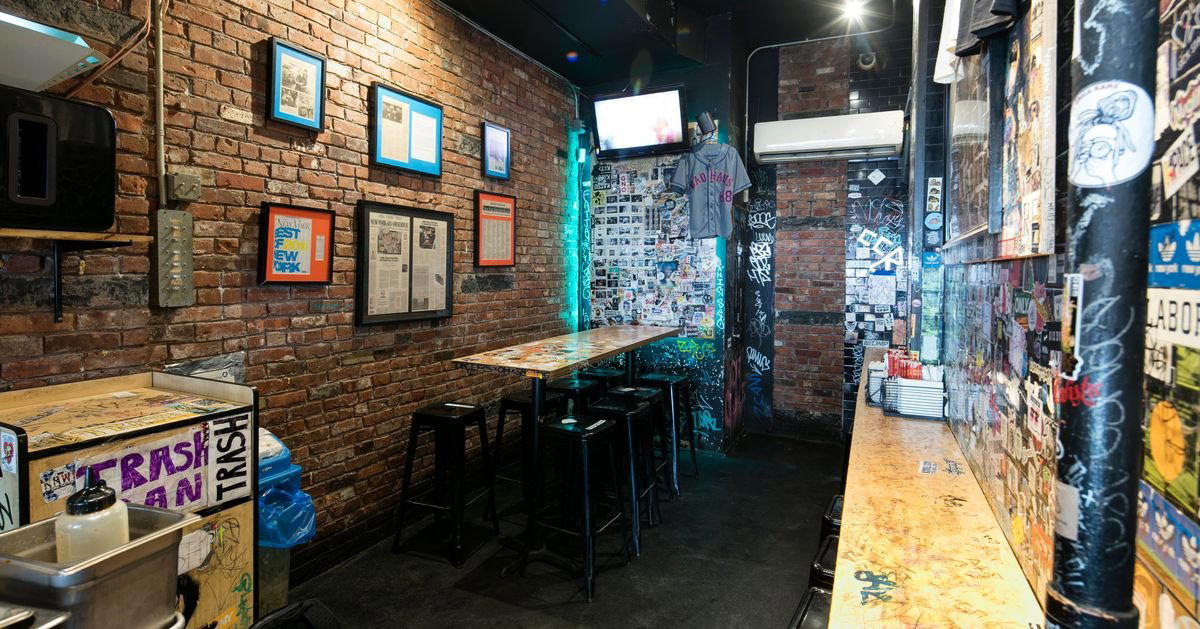
How a Taiwanese Street Format Found Its Footing in New York
Baohaus is a Taiwanese gua bao and street food restaurant at 97 St Marks Pl in New York's East Village. In the years since, that format has appeared in gastropubs, food halls, and fast-casual chains across the country. Baohaus sits near the origin point of that trajectory in the New York dining conversation, which makes it an instructive case study in how immigrant street food formats move from niche to mainstream.
The address at 97 St Marks Pl places it firmly in the East Village, where student budgets and emerging food formats have long overlapped. The neighbourhood's rent economics and foot traffic have made it a testing ground for concepts that later migrate upmarket or multiply outward, and Baohaus fits that pattern.
The Evolution of the Format
In American dining, the arc from street-food format to cultural touchstone typically takes a decade or more. The gua bao, native to Taiwan's night markets and hawker stalls, arrived in New York as part of a broader mid-2000s to early-2010s movement in which chefs and restaurateurs with Asian heritage began foregrounding that heritage rather than filtering it through European-influenced frameworks. Baohaus was positioned within that shift from the start.
That positioning has become more legible over time. Across New York, diners now have more points of reference for the flavours and textures that define Taiwanese street food: the sweetness of braised pork belly, the tang of pickled mustard greens, the textural contrast of peanut powder against soft steamed bun. What was once unfamiliar shorthand is now a documented category.
This kind of evolution, where the dining public catches up to what a venue has been doing, is common in cities with strong immigrant food cultures. New York's ability to absorb and eventually mainstream street formats from across the world is well-documented, and the East Village has been one of the primary corridors through which that absorption happens. Baohaus occupies a specific chapter in that story.
Placing Baohaus in the New York Casual Dining Map
New York's restaurant spectrum runs from counter-service street food to multi-course tasting menus priced at several hundred dollars per head. At the upper end of that range sit venues like Masa, Per Se, and Le Bernardin, where a single meal represents a significant financial commitment. At the other end, formats like the gua bao counter represent the opposite proposition: high flavour yield at low price point, with a format optimised for speed and throughput rather than occasion dining.
Baohaus belongs to the latter category, which carries its own set of editorial considerations. Casual formats are harder to sustain in New York than tasting menus, not easier. The margin structure is thinner, the competition from street carts and food halls is direct, and the cultural capital that comes with Michelin recognition, available to venues like Atomix or Jungsik New York, does not apply in the same way. Longevity at the casual end of the New York market is a different kind of credential.
Baohaus sits alongside the city's other casual ethnic-format counters that have maintained a consistent identity while the market around them shifted. That kind of staying power in a neighbourhood as commercially volatile as the East Village carries its own signal.
What the Reinvention Cycle Looks Like at This Level
Reinvention at casual venues in New York rarely involves a chef pivot or a full rebrand. It tends to happen through menu adjustments, format tightening, and response to the surrounding competitive environment. As the gua bao format spread, Baohaus faced a choice that all originating venues in a popularised category face: hold the original position or adapt to distinguish from imitators.
The wider spread of the bao format across American menus has, paradoxically, reinforced the value of the venues that were there early. Diners who encounter the format at a food hall or gastropub chain and want to trace it back to a more direct source have reason to seek out a counter like Baohaus. That dynamic is more common than often acknowledged: the mainstreaming of a format can increase interest in the source rather than cannibalise it.
The mechanics differ at the casual end of the spectrum, but the underlying question is the same: what remains constant, and what shifts in response to a changed context.
The Broader American Dining Frame
Baohaus is one node in a much larger national story about how immigrant food formats move through American dining culture. Venues like Emeril's in New Orleans, Blue Hill at Stone Barns in Tarrytown, Providence in Los Angeles, Single Thread Farm in Healdsburg, Addison in San Diego, Bacchanalia in Atlanta, and The Inn at Little Washington each represent a particular relationship between a culinary tradition and an American dining public. Baohaus represents a different register of that relationship, one grounded in accessibility and street-food fidelity rather than occasion dining.
Internationally, the conversation about how street food formats achieve critical legitimacy has parallels at venues like 8 1/2 Otto e Mezzo Bombana in Hong Kong and Alain Ducasse's Louis XV in Monte Carlo, though those examples sit at the formal end of a spectrum that Baohaus occupies at the other extreme. The distance between those poles is where most of the interesting dining happens.
Planning Your Visit
Baohaus is located at 238 East 14th Street, between Second and Third Avenues, in the East Village. The format is counter-service and casual, suited to drop-in visits rather than advance reservation.
Price Lens
Comparable venues nearby, for context on price, style, and recognition.
| Venue | Cuisine | Price | Notes |
|---|---|---|---|
| BaohausThis venue — the venue you are viewing | Not listed | $$ | Not listed |
| Lilli and Loo | Not listed | $$ | Chelsea-Hudson Yards, Gluten-Free Chinese |
| Deli Chin | Upper West Side, Chinese Deli | $$ | Not listed |
| The Braised Shop | Not listed | $$ | East Village, Taiwanese Luwei Braised Dishes |
| Land of Plenty | Not listed | $$ | East Midtown-Turtle Bay, Authentic Sichuan |
| Junzi Kitchen | Not listed | $$ | Morningside Heights, Northern Chinese Fast Casual |
Continue exploring
More in New York City
Restaurants in New York City
Browse all →
Bars in New York City
Browse all →
Hotels in New York City
Browse all →





At a Glance
- Trendy
- Lively
- Energetic
- Casual Hangout
- Late Night
- Open Kitchen
- Organic
- Local Sourcing
Current opening hours
- Monday
- 12–3:30 PM, 5:30–11 PM
- Tuesday
- 12–3:30 PM, 5:30–11 PM
- Wednesday
- 12–3:30 PM, 5:30–11 PM
- Thursday
- 12–3:30 PM, 5:30–11 PM
- Friday
- 12–3:30 PM, 5:30–11 PM
- Saturday
- 12–3:30 PM, 5:30–11 PM
- Sunday
- 12–3:30 PM, 5:30–11 PM
Hours can change for holidays and private events. Last verified .