The Braised Shop
On East 10th Street in the East Village, The Braised Shop occupies a quietly specific corner of New York's neighbourhood dining scene. The format centres on braised preparations, a technique that rewards patience and rewards diners who understand the difference between a slow-cooked dish and a fast-casual approximation of one. For East Village regulars, this is the kind of address that earns repeat visits rather than destination pilgrimages.
Pearl is the En Primeur Club membership app — saves, bookings, and concierge access live there. Same editors, same standards.
- Address
- 241 E 10th St, New York, NY 10003
- Phone
- +16468633200
- Website
- the-braised-shop.square.site
- Directions
- Get directions
 Saves & bookings on Pearl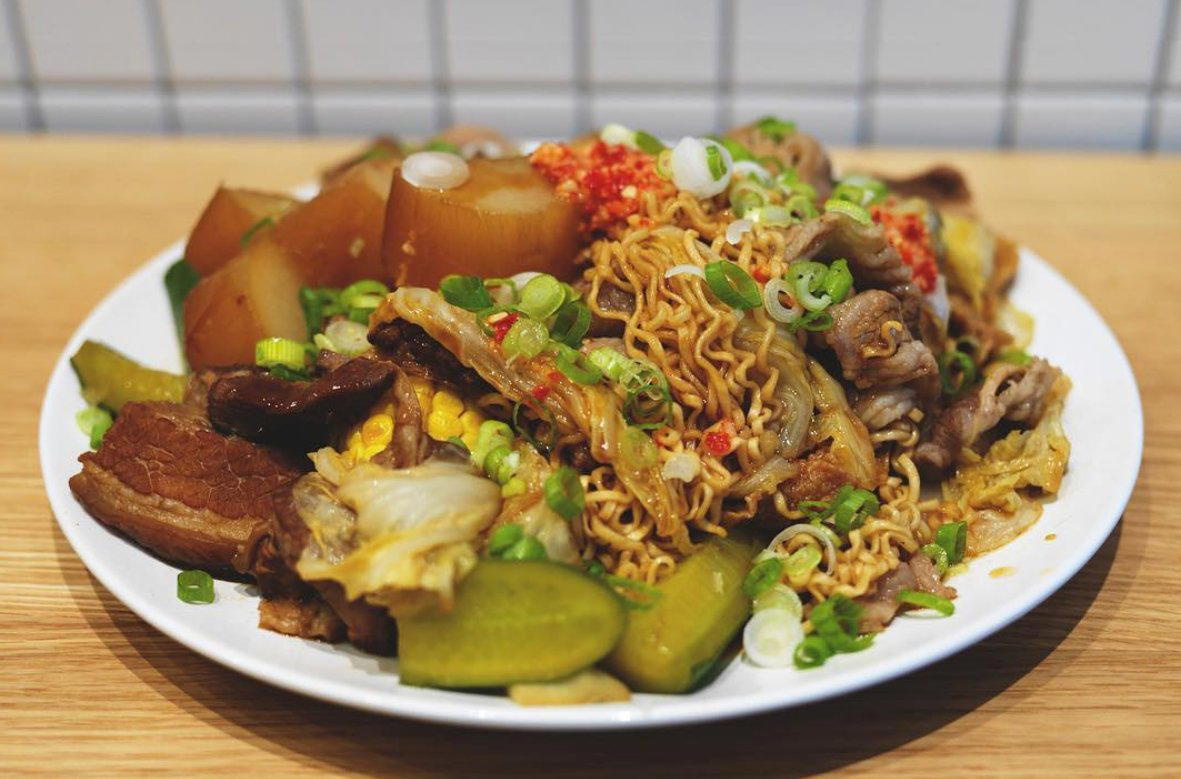
Slow Heat on East 10th Street
Braising as a technique has never been photogenic. There is no tableside theatre, no dramatic plating moment, no charred crust to photograph. What it produces instead is flavour built through time: collagen converting to gelatin, aromatics softening into the braising liquid, proteins reaching a tenderness that no other method reliably achieves. The Braised Shop at 241 E 10th St is a Taiwanese Luwei Braised Dishes restaurant in New York City's East Village, with an estimated price of about $20 per person. The subject here is the technique itself, and the East Village address is a reasonable fit for that posture, a neighbourhood that has historically supported operators more interested in a specific culinary idea than in maximising covers or press coverage.
The East Village as Context
The East Village has cycled through several identities since it emerged as a serious dining neighbourhood in the 1990s. Early waves brought inexpensive Japanese and Eastern European spots built around low overhead and high loyalty. Later came a generation of chef-driven small plates restaurants that used the neighbourhood's cheaper rents to take creative risks that Midtown or the West Village could not financially absorb. What has remained consistent is a tolerance for specificity: the East Village has always had room for the restaurant with a single strong idea executed with discipline. That pattern is the relevant framework for The Braised Shop, a name that announces its method rather than concealing it behind a lifestyle brand.
Contrast this with the upper end of New York's dining spectrum, where tasting menu formats and imported culinary lineages define the competitive conversation. Atomix and Jungsik New York have positioned Korean fine dining inside that upper bracket, while Le Bernardin, Per Se, and Masa anchor French and Japanese formats at the city's highest price points. The Braised Shop operates in a different register entirely: neighbourhood-scale, technique-forward, and built around a single culinary logic rather than a multi-course progression. These are not competing categories; they are different decisions about what a restaurant is for.
What Braising Demands
The sensory experience of a well-executed braise arrives in sequence. First, the smell: aromatic foundations of allium, fat, and wine or stock that have been cooking long enough to lose their sharp edges and merge into something lower and more complex. Then the visual register, the dark, reduced liquid coating whatever has been cooked through it, the surface texture that signals moisture without wetness. Finally, the structural fact of the food itself, which at the correct internal temperature offers no resistance. Braised collagen-rich cuts fall apart under the lightest pressure; braised legumes have a creaminess that their dried state gives no indication of. The technique, done correctly, is less about making ingredients taste like something else and more about making them fully express what they already are.
In New York, this approach has precedent across several culinary traditions. Jewish deli kitchens built brisket programs around low-and-slow braising that predated modern slow-cooker culture by generations. Chinese red-braising (hong shao) uses soy, sugar, and Shaoxing wine to lacquer pork belly or tofu into something that reads as deeply savoury and faintly sweet simultaneously. Italian osso buco relies on the same principle: time, liquid, and gentle heat turning a cross-cut veal shank into a dish where the marrow inside the bone becomes as much a point of interest as the meat itself. The Braised Shop, by foregrounding this technique in its name and presumably in its menu, positions itself within a global tradition rather than a single national one.
The Neighbourhood Walk-In Culture
East 10th Street sits in the quieter residential interior of the East Village, removed from the higher-traffic corridors of St. Marks Place and Avenue A. This location pattern is consistent with restaurants that rely on neighbourhood loyalty over tourist traffic, the kind of address where regulars arrive without consulting a booking platform and where the room fills through reputation spread by word of mouth over months rather than press coverage in the opening week. The atmosphere of such spaces tends toward the informal: tightly spaced tables, modest service formats, the ambient sound of a room where most people know what they want before they sit down. Braised preparations are also well-suited to this format because they do not require the last-minute precision that à la minute cooking demands; the kitchen's heavy lifting is done before service begins.
Placing The Braised Shop in the Wider Scene
Across the United States, restaurants organised around a single technique or a narrow culinary identity have found durable audiences by being the clearest possible version of one thing. Blue Hill at Stone Barns in Tarrytown has built its identity around sourcing and agricultural connection; Lazy Bear in San Francisco around a communal supper club format; Single Thread Farm in Healdsburg around the convergence of inn, restaurant, and farm in a single property. Further afield, Alinea in Chicago and The French Laundry in Napa have built sustained reputations around tasting menu discipline. Providence in Los Angeles, Addison in San Diego, Emeril's in New Orleans, Bacchanalia in Atlanta, and The Inn at Little Washington in Washington have each found their position through clarity of vision rather than breadth of menu. At the international level, 8½ Otto e Mezzo Bombana in Hong Kong and Alain Ducasse at Louis XV in Monte Carlo represent how classical French and Italian frameworks can hold their ground in entirely different markets. The restaurant operates at a smaller scale and in a neighbourhood register, but the underlying logic connects: restaurants that know precisely what they are doing and do only that tend to be the ones that last.
Planning Your Visit
The restaurant is located at 241 East 10th Street in the East Village, Manhattan. Reservations: Walk-ins are welcome, and calling ahead is advisable for groups. Dress: East Village neighbourhood standard, no formal requirement expected. Budget: About $20 per person. Getting there: The L train stop at First Avenue and the 6 train stop at Astor Place are the nearest subway options for East 10th Street.
Comparison Snapshot
Comparable venues nearby, for context on price, style, and recognition.
| Venue | Cuisine | Price | Notes |
|---|---|---|---|
| The Braised ShopThis venue — the venue you are viewing | Taiwanese Luwei Braised Dishes | $$ | Not listed |
| Dimsum Garden | Hong Kong-Style Dim Sum | $$ | Murray Hill-Kips Bay |
| Tri Dim Shanghai | Shanghainese Dim Sum & Szechuan | $$ | Upper East Side-Carnegie Hill |
| Chun Vegetarian | Chinese Vegetarian | $$ | Bedford-Stuyvesant (West) |
| Yum Cha | Cantonese Dim Sum & Chinese | $$ | Greenwich Village |
| Antidote | Modern Sichuan Chinese | $$$ | Williamsburg |
Continue exploring
More in New York City
Restaurants in New York City
Browse all →
Bars in New York City
Browse all →
Hotels in New York City
Browse all →




At a Glance
- Cozy
- Intimate
- Casual Hangout
Cozy and casual atmosphere in a small intimate space focused on the open kitchen.