Land of Plenty
Land of Plenty occupies a quietly assertive position on East 58th Street, where Midtown's dining density is high but its serious Chinese restaurant count remains thin. The address places it within reach of the upper-tier corridor that runs through the Fifties, yet the cooking operates on a different register than the French-inflected rooms that define that stretch. Booking ahead is advisable for dinner.
Pearl is the En Primeur Club membership app — saves, bookings, and concierge access live there. Same editors, same standards.
- Address
- 204 E 58th St, New York, NY 10022
- Phone
- +1 212 308 8788
- Website
- landofplenty58.com
- Directions
- Get directions
 Saves & bookings on Pearl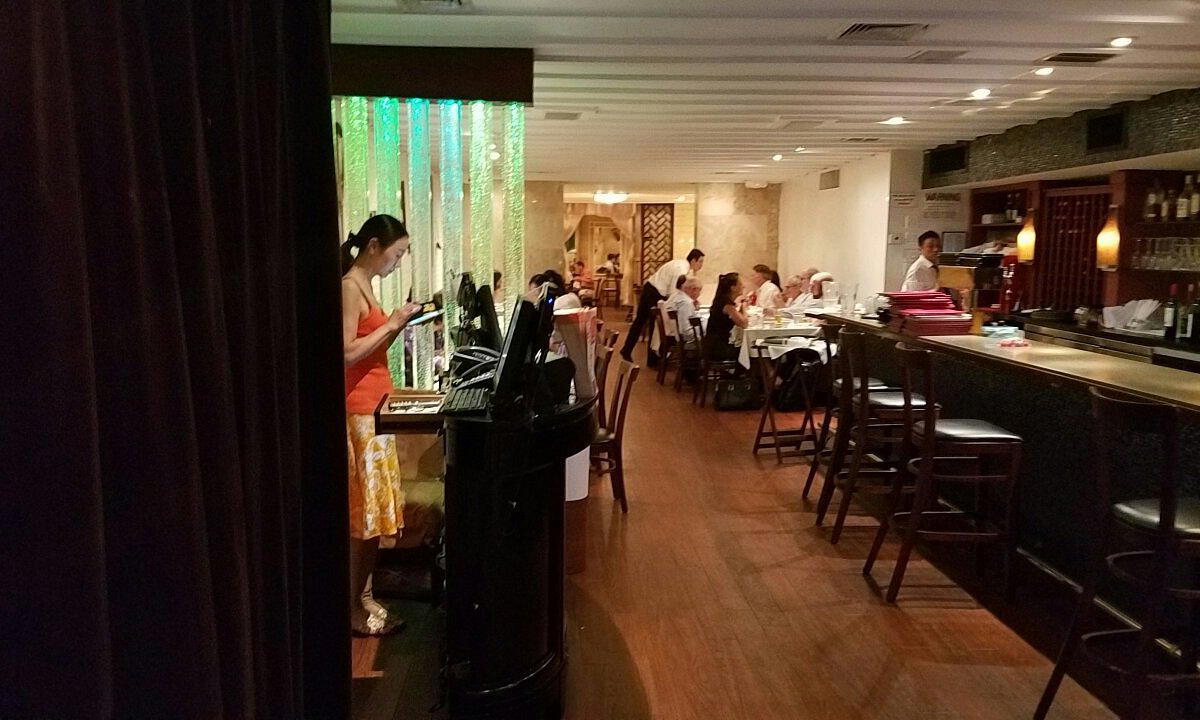
Midtown's Chinese Dining Gap and Where Land of Plenty Fits
Midtown Manhattan has spent the last two decades accumulating serious tasting-menu restaurants at a pace few cities can match. The corridor running through the Fifties includes rooms like Le Bernardin, Per Se, and Masa, each of which has helped define what premium dining in that zip code looks like. What the corridor has not produced with anything close to the same density is serious, regionally specific Chinese cooking. That gap is not accidental. The economics of high-rent Midtown have historically pushed ambitious Chinese restaurants toward Flushing or the Financial District, where lease structures allow kitchens to run at the margins that complex, labor-intensive cooking requires. Land of Plenty, at 204 East 58th Street, sits inside that gap.
The address alone signals something about the restaurant's position. East 58th is close enough to the Park Avenue corridor to draw a lunch crowd from nearby offices and hotels, but it does not carry the same gravitational pull as the flag-planting west-side blocks. That relative quietude has historically been an asset for restaurants that rely on repeat local custom rather than destination foot traffic, which is a different commercial logic than what drives Eleven Madison Park or Atomix further downtown.
The Sichuan Tradition in a New York Frame
Sichuan cooking entered the broader New York consciousness in waves. The first wave, concentrated in the 1990s and early 2000s, established a handful of Flushing and Manhattan rooms that introduced the mala flavor profile to diners accustomed to Cantonese-inflected Americanized menus. The second wave, arriving roughly a decade later, produced a generation of restaurants willing to commit to regional specificity at a level that required sourcing Sichuan peppercorns from named growing regions and building cold-dish programs that could anchor a meal on their own. Land of Plenty arrived in that second context, when the expectations placed on regional Chinese restaurants in New York had shifted considerably.
What distinguishes the more serious end of Sichuan cooking from the category's more diluted expressions is a willingness to treat the cold-dish section as the technical heart of the meal rather than its appetizer prelude. The numbing heat of properly applied mala is a specific sensory effect, not a general spiciness, and rooms that understand the distinction price and source accordingly. In New York's current Chinese dining scene, that distinction separates a small number of restaurants from a much larger field operating with less precision. Smyth in Chicago and Lazy Bear in San Francisco show how regionally inflected cooking can occupy an upper-tier position when the kitchen commits to a defined point of view.
Evolution and the Midtown Chinese Dining Question
The editorial angle on the restaurant that holds up over time is not one of arrival but of consistency. The restaurant has operated through a period in which the broader New York dining market rewarded novelty over continuity, in which the critical attention paid to Chinese cooking in America shifted from dismissiveness to genuine engagement, and in which the economic pressures on Midtown's restaurant blocks intensified considerably. Restaurants that have remained in place through those shifts have generally done so by clarifying rather than chasing. The rooms on this corridor that have sustained serious reputations share a quality of knowing exactly what they are and refusing to drift from it.
Whether the restaurant belongs in that category of unshifting commitment is a question the room's current direction invites. Midtown's Chinese dining options remain structurally underrepresented relative to the neighborhood's overall dining density and the size of New York's Chinese-American population. That structural gap has not closed significantly in the past decade, even as the critical and commercial prestige attached to Chinese cooking nationally has grown. Providence in Los Angeles
Placing Land of Plenty in the Broader New York Scene
New York's upper tier of dining is increasingly defined by rooms that have moved away from category-spanning ambition toward deep commitment to a single tradition. The French rooms, the Japanese rooms, the Korean rooms at the level of Atomix have each staked a claim on technical specificity that makes their position in the market legible. The city still lacks an equivalent Chinese room at the same tier of recognition, and that absence shapes how a restaurant like Land of Plenty is read by the market. It is not competing directly against Per Se or Eleven Madison Park; it is operating in a sub-category with few direct peers in its immediate geography.
Comparable exercises in regional culinary commitment at premium American addresses can be found at Blue Hill at Stone Barns in Tarrytown, The Inn at Little Washington, Addison in San Diego, Frasca Food and Wine in Boulder, and Emeril's in New Orleans. Internationally, the model of deep regional specificity operating at a recognized fine-dining tier appears in rooms like Atelier Moessmer Norbert Niederkofler in Brunico and Dal Pescatore in Runate, each of which demonstrates what sustained commitment to a culinary tradition looks like across decades, and what that longevity signals to the market.
Planning Your Visit
Address: 204 East 58th Street, New York, NY 10022. Reservations: Booking in advance is advisable, particularly for evening seatings on weekends, as midtown Sichuan rooms at this address draw from both the local residential and corporate-entertainment circuits. Getting there: Timing:
Cost and Credentials
Comparable venues nearby, for context on price, style, and recognition.
| Venue | Cuisine | Price | Notes |
|---|---|---|---|
| Land of PlentyThis venue — the venue you are viewing | Not listed | $$ | Not listed |
| Pig Heaven | Not listed | $$ | Upper East Side-Carnegie Hill, Taiwanese-Style Chinese with Pork Specialties |
| Nom Wah Tea Parlor | Not listed | $$ | Chinatown-Two Bridges, Hong Kong-Style Dim Sum |
| Mission Chinese Food | Not listed | $$ | Chinatown-Two Bridges, Sichuan Fusion Chinese |
| Tim Ho Wan East Village | East Village, Hong Kong Style Dim Sum | $$ | Not listed |
| Junzi Kitchen | Not listed | $$ | Morningside Heights, Northern Chinese Fast Casual |
Continue exploring
More in New York City
Restaurants in New York City
Browse all →
Bars in New York City
Browse all →

Hotels in New York City
Browse all →





At a Glance
- Classic
- Lively
- Casual Hangout
- Group Dining
- Late Night
- Standalone
- Beer Program
Current opening hours
- Monday
- 11 AM–9:30 PM
- Tuesday
- 11 AM–9:30 PM
- Wednesday
- 11 AM–9:30 PM
- Thursday
- 11 AM–9:30 PM
- Friday
- 11 AM–10 PM
- Saturday
- 12–9:30 PM
- Sunday
- 11 AM–9:30 PM
Hours can change for holidays and private events. Last verified .
Casual dining atmosphere with lively energy, focused on bold and fiery Sichuan flavors in a direct setting.