Our verdict
In the residential calm of Ashiya, シェ・モリ occupies a quietly specific position in the Kansai dining circuit, a French-leaning address in a city better known for understated wealth than culinary fanfare. Ashiya sits between the more trafficked restaurant corridors of Osaka and Kobe, which makes finding a kitchen of this seriousness here a matter of knowing where to look.

Pearl is the En Primeur Club membership app, where members save venues, book tables and use the concierge.
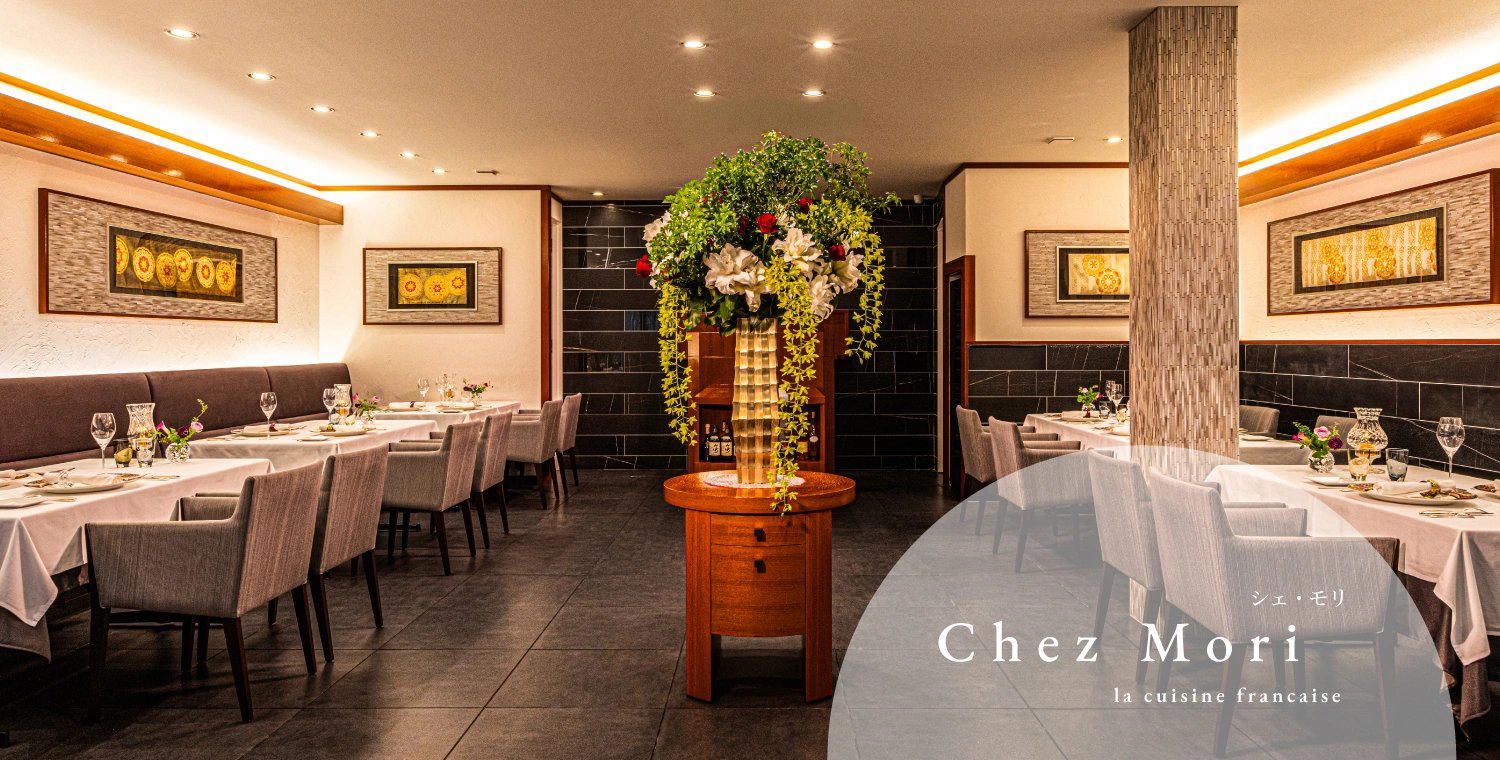
A French Table in Ashiya's Quieter Register
Ashiya does not announce itself the way Osaka or Kyoto does. The city runs along the Hanshin line between Kobe and Osaka, and its residential character, wide streets, old money, a general absence of tourist infrastructure, means its restaurants tend to serve a local clientele rather than one arriving by destination itinerary. That context shapes what dining here actually feels like: rooms are quieter, service rhythms are calibrated for regulars, and the cooking tends toward considered restraint rather than spectacle. シェ・モリ, addressed at 7-16 Kusunokicho, sits inside that register.
French cuisine in this part of Hyogo has a particular character. Kansai chefs who trained in France or under French-trained mentors often apply a different set of priorities than their Tokyo counterparts, Osaka's produce culture and proximity to Kyoto's ingredient traditions pull the sourcing conversation in directions that classic French regionalism doesn't entirely anticipate. The result, at the better addresses in this corridor, is cooking that draws on local fish markets, Kyoto-adjacent vegetable suppliers, and the agricultural pockets of rural Hyogo prefecture.
What the Address Tells You
Kusunokicho is not a restaurant street. There are no clusters of izakayas, no queue management systems, no signs competing for attention on the pavement. An address here signals something deliberately apart from the commercial dining strips of central Ashiya or the Hanshin Expressway-adjacent corridors further north. In practical terms, reaching シェ・モリ means either driving or working out transit from Ashiya Station on the Hanshin line, a short distance, but one that reinforces the sense of a room designed for those who already know to come.
That geography connects to a wider pattern in the Kansai premium dining scene. The most serious French and French-adjacent kitchens in the region are rarely on the obvious streets. HAJIME in Osaka operates from a similarly understated address, and Gion Sasaki in Kyoto uses its off-the-main-drag location as part of the experience. The distance from foot traffic is itself an editorial statement about who the kitchen is cooking for.
Ingredient Logic in the Kansai French Tradition
The ingredient question is where Kansai French cooking most clearly diverges from its Parisian reference points. Hyogo prefecture produces some of Japan's most carefully attributed beef, and the coastal waters between Osaka Bay and the Seto Inland Sea supply fish that arrives at market in significantly better condition than what reaches Tokyo's Tsukiji-successor at Toyosu. A French kitchen in Ashiya that takes sourcing seriously has access to a supply chain most European restaurants cannot replicate: short distances from farm or boat to kitchen, combined with the organizational discipline of Japanese market culture.
This sourcing logic is not unique to シェ・モリ, it describes the structural advantage any Kansai French kitchen has over comparable addresses in Paris or New York. What separates kitchens within the category is what they do with that advantage: whether the menu reflects seasonal availability rather than a fixed structure, whether the vegetable sourcing reaches into the rural Kinki region rather than stopping at wholesale, and whether the cooking acknowledges its Japanese context or treats France as the only reference point.
For comparison across this French-leaning register in the region, akordu in Nara has developed a similar sourcing-forward approach to European cuisine in a smaller Japanese city, a useful peer reference when calibrating expectations for what Kansai's French dining tier actually looks like in practice.
Ashiya's Position in the Kansai Dining Circuit
Ashiya's restaurant scene is smaller than its wealth would suggest. The city's dining culture tilts toward a handful of serious rooms rather than a broad dining-out infrastructure, which means the addresses that do operate here tend to be deliberately chosen rather than opportunistically placed. Alongside シェ・モリ, the Ashiya circuit includes Imai, Abon, Tempura Sakurabito in the JPY 20,000-29,999 range, イタリア料理 今井, and 壱(にのまえ), a range that confirms this is a city with genuine culinary depth despite its low profile in travel media. The full picture is in our Ashiya restaurants guide.
That broader circuit matters when building an itinerary. Ashiya is a day or evening within a larger Kansai trip rather than a standalone destination for most visitors. Pairing it with Osaka (HAJIME being the obvious high-watermark reference) or building a Hyogo-focused route that includes Kobe gives the visit a fuller logic. The Hanshin line makes transit between these points direct.
Planning a Visit
For Japanese restaurants operating at this level of seriousness, the standard approach is a combination of the restaurant's own contact channels and, where available, concierge intermediaries at Osaka or Kobe hotels with strong dining relationships. Arriving without a reservation at a kitchen of this type and in this neighbourhood carries real risk of a closed door. The address at 7-16 Kusunokicho, Ashiya, Hyogo 659-0015 is confirmed; everything else should be verified directly before travel.
Those building a wider Kansai circuit around serious cooking can cross-reference against Goh in Fukuoka or Harutaka in Tokyo for a sense of how Kansai French sits within Japan's broader premium dining tiers. The comparison is instructive: Tokyo's premium restaurants operate in a different media environment, with English-language coverage and international booking infrastructure, while Kansai rooms like those in Ashiya function almost entirely within Japanese referral networks.
Frequently asked questions
Is シェ・モリ child-friendly?
Ashiya sits at the quieter, more considered end of the Kansai dining register, and a French room on a residential street in Kusunokicho points toward adult-oriented dining rather than family casual. Parents with young children should check the venue's official channels before booking.
What's the vibe at シェ・モリ?
The address on Kusunokicho, a residential street with no restaurant cluster, sets the tone: quiet, local, and deliberately removed from the theatrics of Osaka's central dining corridors. Ashiya's dining rooms generally run toward formal restraint, and a French kitchen in this part of Hyogo typically follows that lead. Expect a room calibrated for conversation rather than spectacle.
How does シェ・モリ compare to French restaurants in nearby Kobe?
Kobe has long carried a French dining tradition rooted in its port history and early Western influence, giving it a denser concentration of French rooms than Ashiya. シェ・モリ's position in Ashiya, between Kobe and Osaka on the Hanshin line, places it outside that well-documented Kobe circuit, making it a quieter alternative for those already traveling the corridor. The residential Kusunokicho address reinforces a neighbourhood-first orientation rather than a destination-restaurant model.
What's the best thing to order at シェ・モリ?
That said, Kansai French kitchens in Hyogo have consistent access to Akashi seafood and Kyoto produce, and those ingredients tend to anchor the most confident courses. Ask the kitchen what is in season on the day of your visit.
Where is シェ・モリ located?
シェ・モリ is located at 7-16 Kusunokicho, Ashiya, Hyogo 659-0015, Japan, Ashiya.
Do they take walk-ins at シェ・モリ?
A residential address in Ashiya with no listed phone or online booking system suggests this is a small, structured operation rather than a drop-in venue. Walk-ins are a risk not worth taking here. Reaching out through a hotel concierge or via a Japanese-language inquiry is the more reliable approach.
Quick Comparison
Comparable venues nearby, for context on price, style, and recognition.
| Venue | Cuisine | Price | Awards | Notes |
|---|---|---|---|---|
| シェ・モリThis venue (the venue you are viewing) | Modern French with Japanese Seasonal Ingredients | $150–200 | Not listed | Not listed |
| Imai | Modern Italian Fine Dining | $200–300 | Tabelog Bronze #131 | Kōmitsu-cho |
| Ristorante Bellini | Riverside Italian fine dining | $50–100 | Tabelog 100 #17 | Ashiya |
| イタリア料理 今井 | Japanese-Infused Italian Fine Dining | $200–300 | Not listed | Ashiya |
| raffinato | Elegant seasonal Italian fine dining | $100–150 | Tabelog 100 #61 | Ashiya |
| 壱(にのまえ) | Traditional Japanese Omakase Kaiseki | $200–300 | Not listed | Ashiya |
Continue exploring
More in Ashiya
Restaurants in Ashiya
All restaurants in Ashiya →


Bars in Ashiya
Browse all →



Hotels in Ashiya
Browse all →



Wineries in Ashiya
Browse all →
Details
- Elegant
- Sophisticated
- Intimate
- Date Night
- Special Occasion
- Business Dinner
- Open Kitchen
- Extensive Wine List
- Organic
- Local Sourcing
- A La Carte
- French Wine
- Vegetarian Friendly
Current opening hours
- Monday
- 12–3 PM, 6–10 PM
- Tuesday
- Closed
- Wednesday
- Closed
- Thursday
- 12–3 PM, 6–10 PM
- Friday
- 12–3 PM, 6–10 PM
- Saturday
- 12–3 PM, 6–10 PM
- Sunday
- 12–3 PM, 6–10 PM
Hours can change for holidays and private events. Hours as of .
Cozy and homey exterior leading to an elegant atmosphere focused on memorable seasonal dishes.