
Tabelog Bronze #383
Our verdict
Ashiya’s small-counter tempura culture rewards patience, seasonality, and attention to sequence rather than spectacle. Tempura Sakurabito sits in that serious dinner tier, with an eight-seat counter, a single-course format, Tabelog Award 2026 Bronze recognition, and selection for Tabelog 100 Tempura 2025.

Pearl is the En Primeur Club membership app, where members save venues, book tables and use the concierge.
The menu
What to order
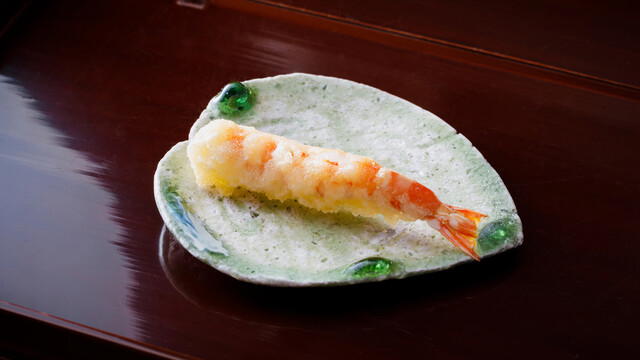
- King snow crab tempura
- Shirako tempura
- Kuruma ebi
The approach is quiet: Chayanocho, not a neon dining district; a second-floor address, not street-level performance; and a counter format that keeps fryer, timing, and guest attention in one narrow field of view. In Japanese tempura at this level, the room is part of the mechanism. Eight counter seats create a rhythm closer to kappo and kaiseki than casual fried food: courses arrive by sequence, heat, and season, with batter as technique rather than weight.
That matters in Ashiya, whose dining culture is shaped by proximity to Kobe and Osaka but reads quieter than either. Serious tables here trade on restraint, residential discretion, and repeat local confidence. Tempura Sakurabito fits that mode. Its public signals are unusually clear for a compact restaurant: Tabelog Award 2026 Bronze, Tabelog score 4.07 in the 2026 award listing, and selection for Tabelog 100 Tempura 2025. Those markers place it in the national tempura conversation, not just the neighbourhood rotation.
Tempura treated as seasonal progression, not fried-course repetition
High-level tempura shares more with kaiseki than outsiders often assume. The point is ordering, not abundance: vegetables, seafood, and seasonal ingredients appear in a cadence where temperature, oil control, and batter thickness carry the argument. The restaurant’s description emphasizes thinness and texture of batter, plus lingering flavour, the right vocabulary for this category. Frying is not camouflage; it sharpens aroma and moisture while keeping the meal light enough to continue across multiple courses.
The single-course format reinforces that reading. A fixed sequence avoids the à la carte problem of diners assembling a meal out of context; the kitchen controls pacing and contrast. During sekko-gani season, the course price rises from JPY 25,000 including tax to JPY 28,000 including tax, a seasonal adjustment that shows where the restaurant places value: the ingredient calendar, not optional upgrades. A separate 5 percent service charge applies, so the final bill sits above the headline course price.
This is why the counter matters. Tempura loses authority when it waits. A compact counter lets the kitchen serve each piece within a narrow window and gives diners a direct view of sequence and technique without turning dinner into theatre. With eight seats, or a maximum of nine, capacity disciplines the format. That small scale is structural, supporting a cuisine built around timing.
Ashiya's serious-dining register is quieter than the big-city template
Tokyo and Osaka often frame luxury Japanese dining through scarcity, celebrity chefs, and booking systems. Ashiya is more subdued. Its affluent residential character supports restaurants that can be precise without urban glamour. Here, a second-floor tempura counter feels less like a traveller-engineered destination and more like a local dining room operating at national-award level.
Tempura Sakurabito opened on 13 August 2022, so recognition arrived quickly by Japanese restaurant standards. That timeline gives the awards extra weight: Tabelog 100 Tempura 2025 and Bronze status in 2026 suggest momentum, not inherited reputation. The dinner price band, JPY 20,000 to JPY 29,999, places it above everyday tempura and below Japan’s rarest counters. For diners comfortable with sushi omakase or kaiseki pricing, the question is not whether tempura can justify the spend, but whether the format offers enough precision and seasonality to compete. Here, the evidence says yes.
The rules also speak to serious dining. Non-smoking status is standard at this level, while the request to avoid perfume is especially relevant for tempura, where aroma drives progression and oil temperature changes how subtle ingredients read course by course. Private rooms are unavailable, clarifying the experience as counter dining, not a closed-door business meal. Private use is available, and families are accommodated only if children order the same course as adults, a practical boundary for a fixed-format restaurant.
How to place it in an Ashiya itinerary
For travellers building a food-focused Ashiya day, this is the evening anchor, not the casual stop. The basic start time is 6:00 PM, Wednesdays are closed, and the restaurant is reservation-only. Credit cards are accepted, but electronic money and QR code payments are not. Parking is not provided, though coin parking is nearby; more useful is that the address is within walking distance of Hanshin Ashiya Station and JR Ashiya, workable from Kobe or Osaka without making dinner a rural detour.
Ashiya rewards pacing. Bread culture, hotel dining, and small specialist restaurants sit closer together than in larger Japanese cities, where transfers consume the day. Readers comparing local options can use Our full Ashiya restaurants guide for the wider dining map, with nearby editorial references including Abon, Baan thai ASHIYA, BACKEREI BIOBROT, and Bigo no Mise Honten. For overnight planning, Choyuro Ashiya beiko-to kurabu hoteru&supa rizo-to connects the city’s dining and stay patterns, while Our full Ashiya hotels guide, Our full Ashiya bars guide, Our full Ashiya wineries guide, and Our full Ashiya experiences guide frame the city beyond dinner.
For broader Japan and Japanese-food context, the category expands in several directions: beef-led set meals at -Grilled beef Sukiyaki- KAMAKURA TANUKIAN 鎌倉 たぬき庵 in Kamakura, casual seafood-and-charcoal dining at. 鮪と炭火焼き うお炭 秋葉原店 in Tokyo, café culture at.cafe in Osaka, and regional contemporary dining at.know in Kumamoto. The wider directory also tracks Vietnamese cooking in Japan at (Shoku) Vietnam in Kawasaki, curry specialization at [Curry Senmon Ten] Maruyama Kyoju. in Sapporo, and Japanese drinking or rice traditions abroad through Jōdo Saké Bar in Los Angeles and Onigiri Time in Pasadena.
The editorial case is clear: this is a compact Ashiya counter for diners who understand tempura as a seasonal, sequential discipline. The awards matter, but the stronger signal is format alignment: few seats, one course, counter service, perfume restraint, and seasonal pricing. That combination suits a traveller who wants Japanese cuisine at a controlled tempo, not a broad menu built for compromise.
Frequently asked questions
Does Tempura Sakurabito work for a family meal?
Yes, but only in a narrow format: the restaurant allows exclusive use, and family dining is limited to parties ordering the same course as adults. The room is an 8-seat counter in Ashiya, so it suits smaller groups rather than a loose family gathering.
What's the vibe at Tempura Sakurabito?
It is a reservation-only tempura counter with one course and a 6:00 PM start time, so the pace is fixed and deliberate. The 8-seat counter, non-smoking policy, and 5% service charge point to a formal, focused dinner in Ashiya rather than a casual drop-in spot.
What's the cuisine at Tempura Sakurabito?
Tempura Sakurabito serves Tempura, Japanese Cuisine cuisine.
What does dinner at Tempura Sakurabito typically cost?
Pricing at Tempura Sakurabito is listed as JPY 20,000 - JPY 29,999.
Cuisine and Awards Snapshot
Comparable venues nearby, for context on price, style, and recognition.
| Venue | Cuisine | Price | Awards | Notes |
|---|---|---|---|---|
| Tempura SakurabitoThis venue (the venue you are viewing) | Modern Tempura Omakase | $150–200 | Tabelog Bronze #383 | Not listed |
| 壱(にのまえ) | Traditional Japanese Omakase Kaiseki | $200–300 | Not listed | Ashiya |
| イタリア料理 今井 | Japanese-Infused Italian Fine Dining | $200–300 | Not listed | Ashiya |
| Shokudo Kifune | Cozy Ashiya izakaya with deep-fried dishes and ramen | $30–50 | Tabelog 100 #22 | Ashiya |
| Kiichi | Traditional Sushi Omakase Counter | $100–150 | Tabelog 100 #83 | Omasucho, Ashiya |
| raffinato | Elegant seasonal Italian fine dining | $100–150 | Tabelog 100 #61 | Ashiya |
Recognition history
Dated appearances from independent guides and award organizations, with the underlying list record or original source where available.
Tabelog Bronze #383
Tabelog
Full recognition history (2 entries)
Tabelog 100 #21 · No. 21
Tabelog · Tabelog 100 - Tempura - 2025
Continue exploring
More in Ashiya
Restaurants in Ashiya
All restaurants in Ashiya →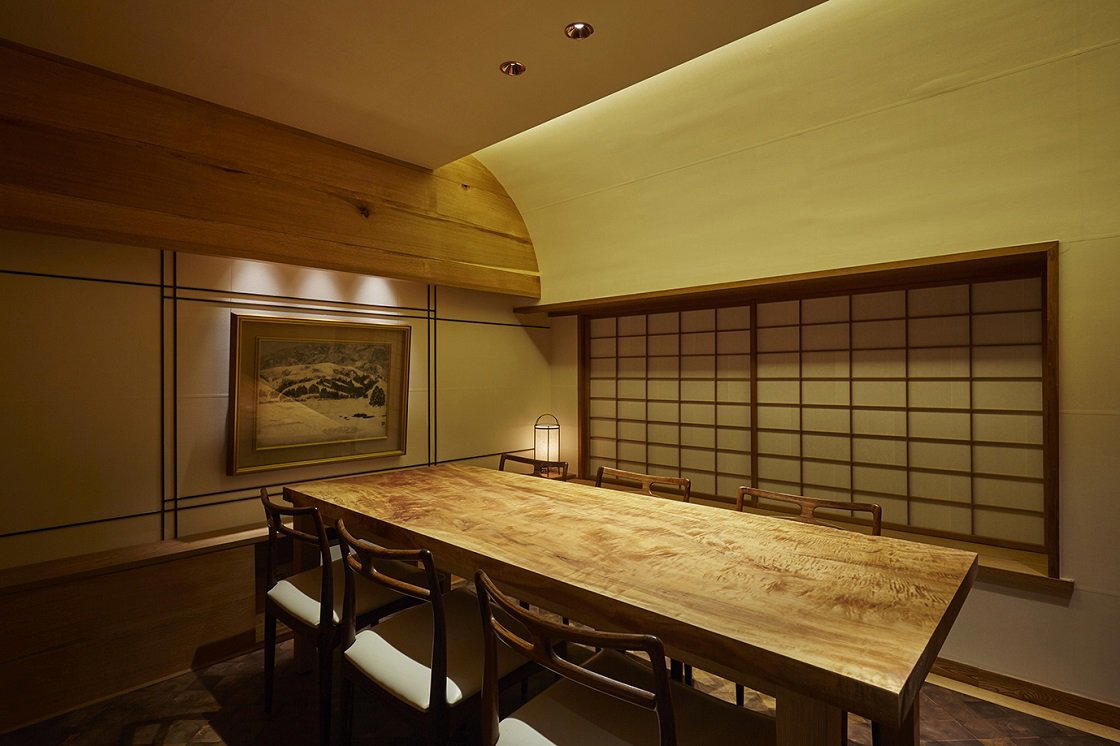

Bars in Ashiya
Browse all →



Hotels in Ashiya
Browse all →


Wineries in Ashiya
Browse all →

Details
- Elegant
- Intimate
- Sophisticated
- Special Occasion
- Date Night
- Chefs Counter
- Sake Program
- Omakase
- Counter Dining
Current opening hours
- Monday
- 5–11 PM
- Tuesday
- 5–11 PM
- Wednesday
- Closed
- Thursday
- 5–11 PM
- Friday
- 5–11 PM
- Saturday
- 5–11 PM
- Sunday
- 5–11 PM
Hours can change for holidays and private events. Last verified .
Intimate counter seating for 8 with a refined, focused atmosphere emphasizing the chef's craft and hospitality.