Google: 4.4 · 1,438 reviews
Asador Gonzaba
.png)
A Michelin Bib Gourmand holder for consecutive years, Asador Gonzaba on Rúa Nova de Abaixo is Santiago de Compostela's clearest address for serious Galician beef. The maturing cabinet at the entrance signals intent before you sit down. The à la carte centres on veal, Galician beef, and churra lamb, with a wine list weighted toward regional Galician producers at a price range that sits in the mid-tier for the city.
 Discover on Pearl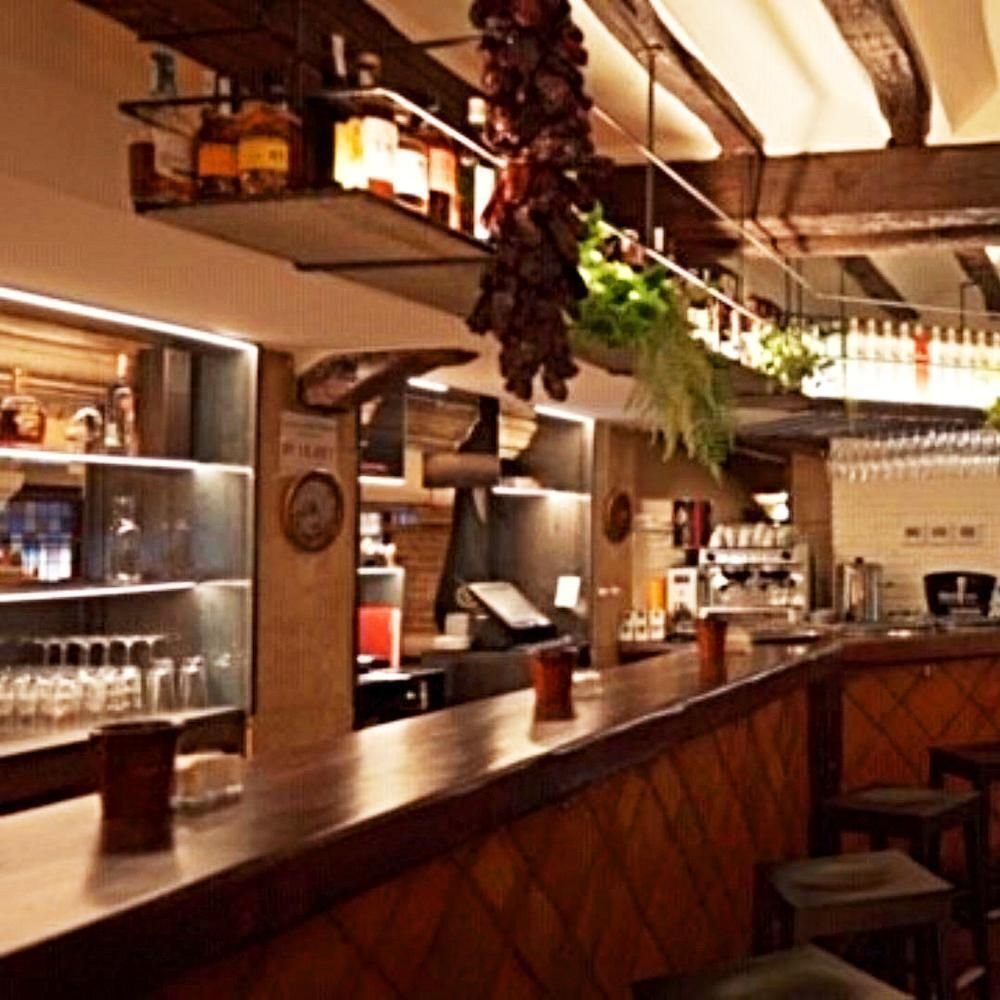
Where the Meat Speaks Before the Menu Does
Walk into Asador Gonzaba on Rúa Nova de Abaixo and the first thing you register is not a host or a menu board but a maturing cabinet, positioned in plain view as you enter. In the grammar of serious meat restaurants, that placement is a statement. It says the kitchen is not hiding its process, and it sets a standard the dining room has to meet. In a city better known internationally for its cathedral and its pilgrimage routes than for its steakhouses, that kind of confidence is notable.
The asador format itself has deep roots in northern Spain. The word translates simply as grill or roasting house, but its cultural weight is heavier: an asador is where you go when the meat is the point, not the sauce, not the theatre, not the tasting menu architecture. Spain's most celebrated asadors operate on this logic from the Basque Country down through Castile, and Santiago's version holds the same principle. The grill is the technique; the provenance is the argument.
Galician Beef in Its European Context
The global conversation around premium beef has been shaped largely by Japanese wagyu grading systems and, to a lesser extent, Australian wagyu programs that distribute A5-equivalent marbling across export markets. But the most compelling counter-argument to that Japan-centric narrative has been building quietly in northwest Spain for decades. Galician beef, particularly from older dairy cows retired after long working lives on Atlantic-facing pasture, produces fat with a yellow-gold colour and a depth of flavour that has drawn direct comparisons to the leading Japanese product from chefs who have worked with both.
Distinction is structural. Where wagyu fat is white and melts at close to body temperature due to its oleic acid composition, Galician beef fat carries more carotene from the grass-heavy diet, lending it that characteristic amber tint. The flavour profile is correspondingly more mineral, more expressive of terroir in a way that the standardised wagyu grading system does not particularly reward. European steakhouses that have moved toward Galician sourcing, from Carcasse in Sint-Idesbald to Damini Macelleria in Arzignano, are responding to the same logic: this is beef with a specific identity, not a commodity grade.
Asador Gonzaba operates at the source of that argument. The à la carte focuses on veal and Galician beef, the latter being the primary draw and the category in which the maturing cabinet does its most visible work. Alongside the beef program, churra lamb, a Spanish breed suited to slow grilling, extends the menu into a different register of red meat, and grilled fish drawn from market availability adds a concession to the coastal geography of Galicia without diluting the meat-forward identity of the room.
The Room and Its Logic
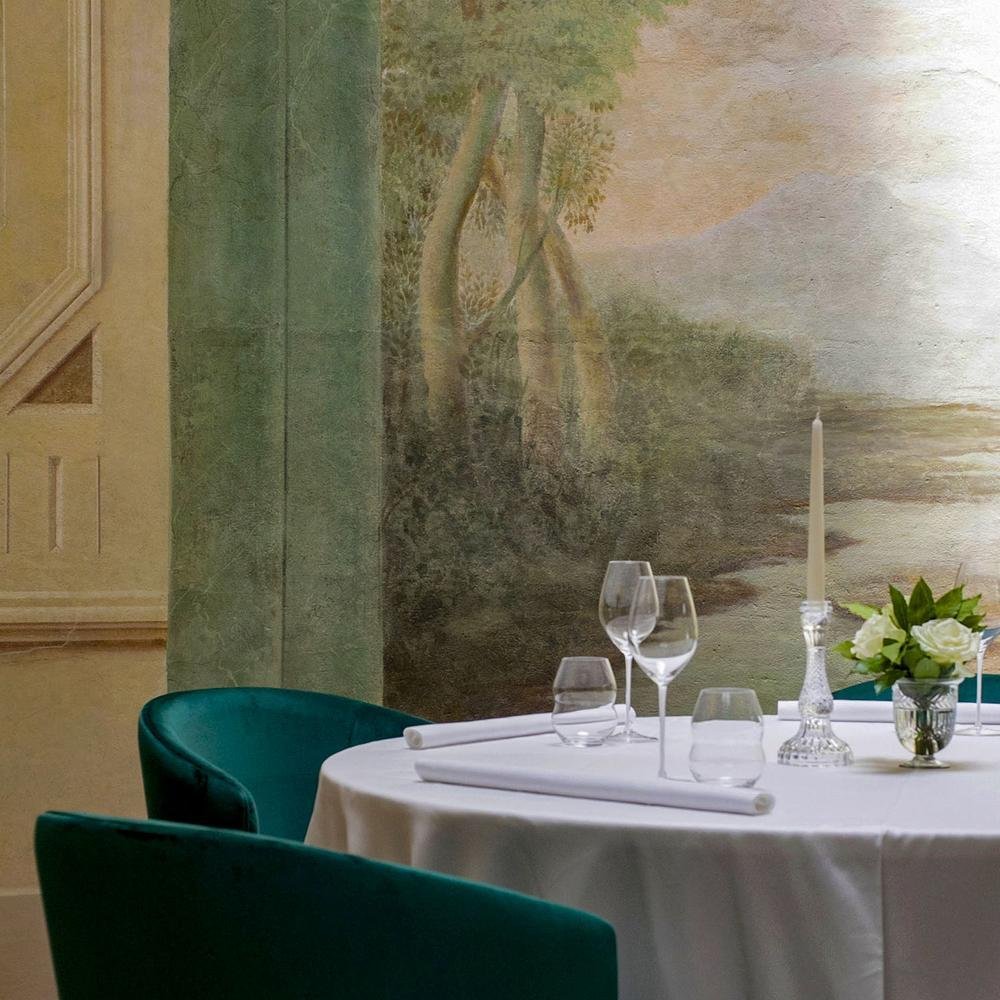
The format is classically furnished dining rooms that read as traditional without being frozen in time, a bar at the entrance that serves as both arrival space and standalone destination, and a private room that functions well for group bookings. The atmosphere sits closer to the serious Spanish lunch tradition than to the high-drama steakhouse model common in northern European capitals. This is a room where the conversation is expected to last as long as the meal, and the pacing of service reflects that assumption.
That approach places Asador Gonzaba in a different tier from the contemporary-leaning restaurants drawing attention in Santiago right now. A Tafona holds a Michelin star and operates in the higher price bracket of contemporary cuisine. A Horta d'Obradoiro works the regional cuisine angle. Fusion operators like A Maceta and A Viaxe pull in a different direction entirely, as does the farm-to-table tapas format at Abastos 2.0 Barra. Asador Gonzaba does not compete with any of them. It answers a different question: where do you eat when you want Galician beef treated with the discipline the ingredient deserves, at a price range marked €€ on the mid-tier scale, with a Michelin Bib Gourmand to signal the value case has been independently validated.
The Wine List as Regional Argument
Galicia's wine identity has been building international credibility for years, driven primarily by Albariño from the Rías Baixas denominación and, more recently, by the structured reds of Ribeira Sacra and Monterrei. An asador with a serious beef program and a wine list that leans into Galician producers is making a coherent regional argument: the grass, the Atlantic climate, and the vine are part of the same landscape, and they belong on the same table. The wine selection at Asador Gonzaba is described as reasonably extensive with a good selection of Galician wines, which, at this price tier, represents genuine curatorial commitment rather than token regionalism.
For the full picture of where to drink and stay in the city, the Santiago de Compostela bars guide, hotels guide, wineries guide, and experiences guide cover the broader city program. For the restaurant tier, the Santiago de Compostela restaurants guide places Asador Gonzaba within the full competitive set.
Spain's Larger Dining Picture
Santiago sits within a country that runs the full spectrum of ambitious dining, from El Celler de Can Roca in Girona and Arzak in San Sebastián at the three-star tier, to the avant-garde ambition of DiverXO in Madrid and the technical depth of Azurmendi in Larrabetzu and Cocina Hermanos Torres in Barcelona. At the other end of the ambition scale, the seafood-driven creativity of Aponiente in El Puerto de Santa María shows how Spain keeps finding new arguments for its ingredient depth. Asador Gonzaba is not competing in any of those categories. It is making a simpler and in some ways harder case: that the cattle of Galicia, matured correctly and grilled without distraction, are among the most compelling arguments for Spanish beef culture in a European dining scene increasingly aware of what northwest Spain produces.
Planning Your Visit
Asador Gonzaba is located at Rúa Nova de Abaixo, 2, within walking distance of the historic centre of Santiago de Compostela. The restaurant holds a Michelin Bib Gourmand for both 2024 and 2025, confirmation that the quality-to-price ratio has held across consecutive inspection cycles. The price range at €€ places it in the accessible mid-tier for the city. The Google rating sits at 4.4 from over 1,300 reviews, a sample size large enough to carry meaningful signal. Given the combination of Michelin recognition and that review volume, reservations are advisable, particularly at peak pilgrimage season when footfall in Santiago is at its highest and good tables across the city fill earlier than the calendar might suggest.
What to Order at Asador Gonzaba
The Michelin recognition and the maturing cabinet both point in the same direction: the Galician beef is the reason to be here. The à la carte focuses on veal and Galician beef as the primary categories, with churra lamb as a secondary red meat option suited to those who want to sample a Spanish breed handled with the same grill discipline. Grilled fish varies with market availability and represents the kitchen's acknowledgement of Galicia's coastal geography. The wine list's lean toward Galician producers means the pairing logic is built in: the reds of Ribeira Sacra, with their granite minerality, are a natural match for the aged beef, while the private room and bar area give the visit a structure that works equally well for extended group lunches and more focused dinners.
Budget Reality Check
A small peer set for context; details vary by what’s recorded in our database.
| Venue | Price | Awards | Notes |
|---|---|---|---|
| Asador Gonzaba | €€ | Bib Gourmand | This venue |
| Abastos 2.0 - Mesas | €€ | Farm to Table-Tapas, Galician, €€ | |
| Casa Marcelo | €€€ | Asian Small Plates, Fusion, €€€ | |
| A Tafona | €€€€ | Michelin 1 Star | Contemporary, €€€€ |
| A Maceta | €€ | Fusion, €€ | |
| Abastos 2.0 - Barra | € | Farm to Table-Tapas, € |
Continue exploring
More in Santiago de Compostela
Restaurants in Santiago de Compostela
Browse all →
Hotels in Santiago de Compostela
Browse all →
Wineries in Santiago de Compostela
Browse all →
At a Glance
- Classic
- Cozy
- Rustic
- Business Dinner
- Group Dining
- Family
- Celebration
- Special Occasion
- Private Dining
- Open Kitchen
- Extensive Wine List
- Local Sourcing
- Farm To Table
Classically furnished dining rooms with a pleasant bar at the entrance, warm and welcoming atmosphere balancing tradition and modernity, with an attractive private dining space.