Abastos 2.0 - Mesas

Michelin Bib Gourmand
Our verdict
Abastos 2.0 - Mesas sits inside Santiago de Compostela's Mercado de Abastos, turning the city's central market into a dining philosophy. Chef Iago Pazos runs a daily à la carte and two set menus shaped entirely by what the market yields that morning, with Galician fish and seafood at the core. A Michelin Bib Gourmand for 2024 and 2025 confirms the value-to-quality ratio that draws both pilgrims and regulars back repeatedly.

Pearl is the En Primeur Club membership app — saves, bookings, and concierge access live there. Same editors, same standards.
- Address
- Praza de Abastos, Rúa das Ameas, 13 -18, 15703 Santiago de Compostela, A Coruña, Spain
- Phone
- +34 981 57 61 45
- Hours
- Mon–Sat 12–3:30 PM, 8–11 PMSun Closed
- Website
- abastosdouspuntocero.com
- Directions
- Get directions
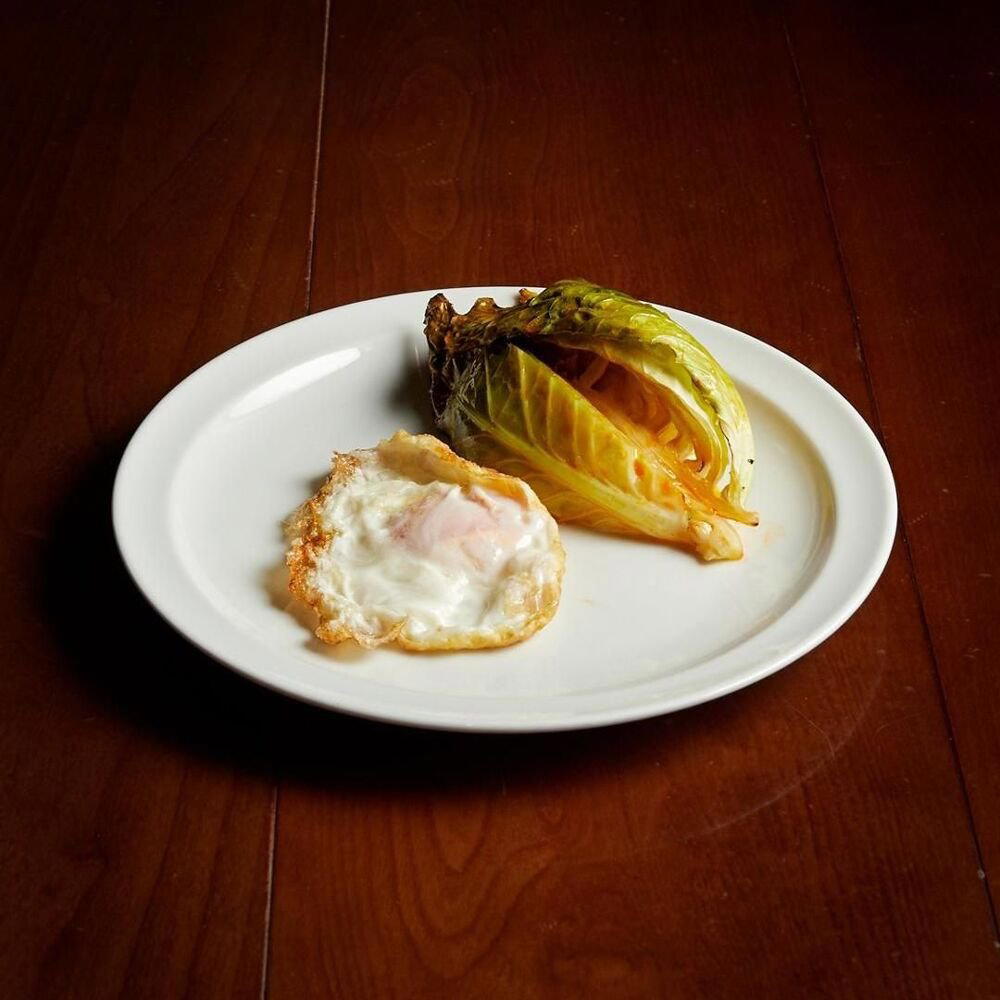
The menu
What to order
- Razor_clams
- Scallops
- Hake_pil_pil
Where the Market Is the Menu
Europe's great market-hall restaurants share a structural logic: the kitchen does not decide what to cook until the market has spoken. La Boqueria in Barcelona, Mercado de San Miguel in Madrid, and the covered markets of Bilbao and Braga have all produced versions of this format, where the sourcing is the spectacle and the produce sets the agenda. Santiago de Compostela's equivalent anchor is the Mercado de Abastos, one of Galicia's oldest and most active food markets, and Abastos 2.0 - Mesas operates with direct, transparent access to it. The restaurant sits at Praza de Abastos, Rúa das Ameas, 13-18, physically adjacent to the market stalls, making its supply chain visible by geography rather than by press release.
This proximity is not incidental. Chef Iago Pazos has built a daily-changing à la carte around what the Mercado yields each morning, which in practice means Galician fish and seafood dominate when the Atlantic haul is strong, and the menu reconfigures around whatever is available at peak quality. The kitchen also offers two standing menus — Do Mercado and Da Casa — which apply the same market-driven logic to a more structured format.
What Michelin's Bib Gourmand Signals Here
Spain's Michelin tier runs from the Bib Gourmand through to three-star territory represented by restaurants like DiverXO in Madrid, El Celler de Can Roca in Girona, and Azurmendi in Larrabetzu. The Bib Gourmand is awarded specifically for quality at a price point that Michelin judges as exceptional relative to what you pay, it is a value-weighted recognition, not a consolation prize. Abastos 2.0 - Mesas held the Bib Gourmand in both 2024 and 2025, a consecutive endorsement that reflects sustained consistency rather than a single strong season. Its price range sits at the €€ tier, putting it in the same bracket as A Maceta in the city, and considerably below the one-Michelin-star A Tafona or the higher-end A Horta d'Obradoiro.
Within Santiago de Compostela's dining structure, this positions Abastos 2.0 - Mesas as an accessible entry point into serious Galician cooking without the tasting-menu commitment or the cover-charge architecture of the city's higher-rated tables. For context on what Galician seafood-focused cooking looks like at the upper end of Spanish fine dining, Aponiente in El Puerto de Santa María offers a useful counterpoint, and Arzak in San Sebastián illustrates how a northern Spanish culinary identity can develop into multi-decade institutional status. Abastos 2.0 - Mesas is not competing in that tier, it is making a different argument about where great cooking can happen and what it needs to cost.
The Mercado de Abastos as Context
The Mercado de Abastos in Santiago de Compostela operates across a series of stone-vaulted halls and dates back to the nineteenth century, though its current covered structure reflects later development. It remains a working food market rather than a tourist attraction retrofitted around restaurant activity, which distinguishes it from the more curated market-dining formats in Madrid or Barcelona. The vendors selling Padrón peppers, percebes, and the local fish catch are operating commercially, not performatively, which gives restaurants drawing directly from those stalls a different kind of sourcing relationship than purpose-built food halls afford.
Galician cuisine is built on this kind of market logic. The region's Atlantic coast produces shellfish and fish that travel poorly, which historically meant Galician cooking was highly localized and market-dependent by necessity. Percebes, navajas, and the region's characteristic pulpo preparation are dishes that degrade quickly away from their source. Restaurants located inside or directly beside working markets gain an advantage in quality that no supply chain engineering fully replicates. This is the structural argument Abastos 2.0 - Mesas makes through its location, not just its marketing language.
The Format and What to Expect
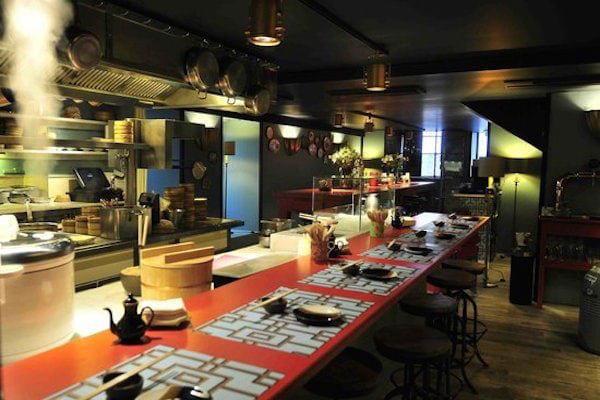
The dining room is described as modern, casual, and informal, with a partially open kitchen. The format runs two distinct service periods: lunch from noon to 3:30 pm and dinner from 8 to 11 pm, Monday through Saturday. The restaurant is closed on Sundays.
The à la carte changes daily in response to market availability, which means any given visit will present a different selection from the last. The two menus, Do Mercado and Da Casa, offer a more fixed structure for those who prefer to eat without navigating an evolving card. The cuisine type is listed as Farm to Table and Tapas within a Galician framework, which in practice means portion sizing and format likely allow for grazing and sharing rather than a rigid sequence of courses. Those wanting a bar-focused or lighter version of the same sourcing philosophy should note the related Abastos 2.0 - Barra, which operates at the € price tier, a tier lower and oriented around the counter format. For those exploring Santiago more broadly, A Viaxe represents the city's fusion direction, and our full Santiago de Compostela restaurants guide maps the full range.
Logistics for the city's wider visit can be found in our Santiago de Compostela hotels guide, bars guide, wineries guide, and experiences guide. For international reference points on how market-proximity and transparency in sourcing translate at different price tiers, Cocina Hermanos Torres in Barcelona and Le Bernardin in New York show how seafood-focused kitchens can scale that ethos into different formats. Atomix in New York demonstrates the tasting-menu counterpart of the same ingredient-first discipline at the highest price point.
Planning Your Visit
Abastos 2.0 - Mesas is open Monday through Saturday, noon to 3:30 pm for lunch and 8 to 11 pm for dinner. Given its Michelin Bib Gourmand status, demand is high enough that booking ahead is the practical approach, particularly for dinner service and weekend lunches. The restaurant is located at Praza de Abastos, Rúa das Ameas, 13-18, 15703 Santiago de Compostela, directly beside the Mercado de Abastos, which makes combining a market visit with lunch a natural sequence. Arriving at the market before service opens allows you to see exactly what the kitchen will be working with that day, which is as close to a tasting note preview as this format permits. The €€ price tier places this among the city's accessible but serious options, not the cheapest eating in Santiago but well below the tasting-menu tier.
Frequently asked questions
Is Abastos 2.0 - Mesas a family-friendly restaurant?
The format works well for families. The room is modern, casual, and informal, with a partially open kitchen and no dress code pressure — a different register entirely from Santiago's more formal dining rooms. The €€ price point also removes the tension that comes with bringing children to higher-stakes tables.
What is the atmosphere like at Abastos 2.0 - Mesas?
The room is modern and informal, positioned directly beside the Mercado de Abastos at Rúa das Ameas. The kitchen is partially visible from the dining area, and the provenance of ingredients — including supplier distances — is displayed openly, which sets the tone: this is a kitchen with nothing to hide about where its produce comes from.
What awards or recognition does Abastos 2.0 - Mesas have?
Abastos 2.0 - Mesas has received recognition including: Situated next to the busy Mercado de Abastos, this restaurant is highly recommended for anyone looking for a memorable gastronomic experience. The ambience is modern, casual and informal, with a kitchen partially visible from the dining roo….
What do regulars order at Abastos 2.0 - Mesas?
The à la carte changes daily according to market availability, so no dish is guaranteed on any given visit. The culinary focus on Galician fish and seafood means Atlantic catches from the Mercado de Abastos stalls next door are the backbone of most meals. The two fixed menus — Do Mercado and Da Casa — offer the most structured way to sample the kitchen's range.
Is Abastos 2.0 - Mesas focused on a specific cuisine style?
Abastos 2.
Is Abastos 2.0 - Mesas expensive?
Pricing at Abastos 2.0 - Mesas is listed as €€.
Peers You’d Cross-Shop
| Venue | Cuisine | Price | Awards | Notes |
|---|---|---|---|---|
| Abastos 2.0 - MesasThis venue — the venue you are viewing | Modern Galician Market Cuisine | $50–100 | Michelin Bib Gourmand | Not listed |
| Casa Marcelo | Modern Galician-Japanese Fusion Tasting Menu | $100–150 | 1 Michelin Star · Macarfi 8.8 Food Rating | Asian Small Plates, Fusion |
| A Tafona | Modern Galician Fine Dining | $50–100 | 1 Michelin Star · Guía Repsol 3 Soles | Contemporary |
| A Maceta | Galician Fusion with Asian Touches | $30–50 | Michelin Plate · Macarfi 7.8 Food Rating | Fusion |
| Abastos 2.0 - Barra | Modern Galician Seafood Tapas | $30–50 | Michelin Plate · Macarfi 8 Food Rating | Farm to Table-Tapas |
| Asador Gonzaba | Galician Grilled Meats & Seafood | $50–100 | Michelin Bib Gourmand | Meats and Grills |
Recognition history
Dated appearances from independent guides and award organizations, with the underlying list record or original source where available.
Michelin Bib Gourmand
Michelin
Full recognition history (3 entries)
Michelin Bib Gourmand
Michelin
Michelin Bib Gourmand
Michelin
Continue exploring
More in Santiago de Compostela
More from Chef Iago Pazos
Browse all →
Restaurants in Santiago de Compostela
Browse all →
Bars in Santiago de Compostela
Browse all →
Hotels in Santiago de Compostela
Browse all →
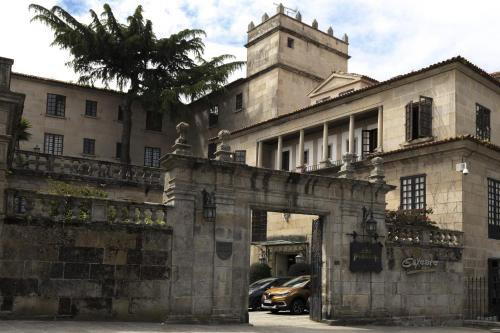

Abastos 2.0 - Mesas
The wine
- Wine program
- Curated wine list
- Extensive wine list
Details
- Intimate
- Sophisticated
- Modern
- Cozy
- Date Night
- Special Occasion
- Open Kitchen
- Chefs Counter
- Extensive Wine List
- Local Sourcing
- Tasting Menu
- A La Carte
- Wine
Current opening hours
- Monday
- 12–3:30 PM, 8–11 PM
- Tuesday
- 12–3:30 PM, 8–11 PM
- Wednesday
- 12–3:30 PM, 8–11 PM
- Thursday
- 12–3:30 PM, 8–11 PM
- Friday
- 12–3:30 PM, 8–11 PM
- Saturday
- 12–3:30 PM, 8–11 PM
- Sunday
- Closed
Hours can change for holidays and private events. Last verified .
Natural light-filled room with an atelier-like intimacy, unhurried pace, and warm hospitality.