Parador of Santiago de Compostela

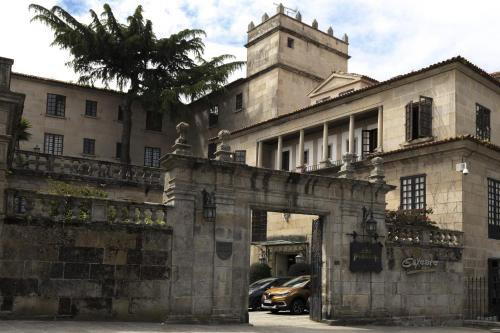
The Hostal dos Reis Católicos, operating as a Parador since its founding as a Royal Hospital in 1499, occupies the northwest corner of Santiago de Compostela's Plaza do Obradoiro alongside the cathedral. Recognised as one of the oldest hotels in continuous operation in the world, it houses 138 rooms across four Renaissance cloisters and two distinct dining spaces anchored in Galician produce.
Pearl is the En Primeur Club membership app — saves, bookings, and concierge access live there. Same editors, same standards.
- Address
- Plaza Do Obradoiro, 1
- Directions
- Get directions
 Saves & bookings on Pearl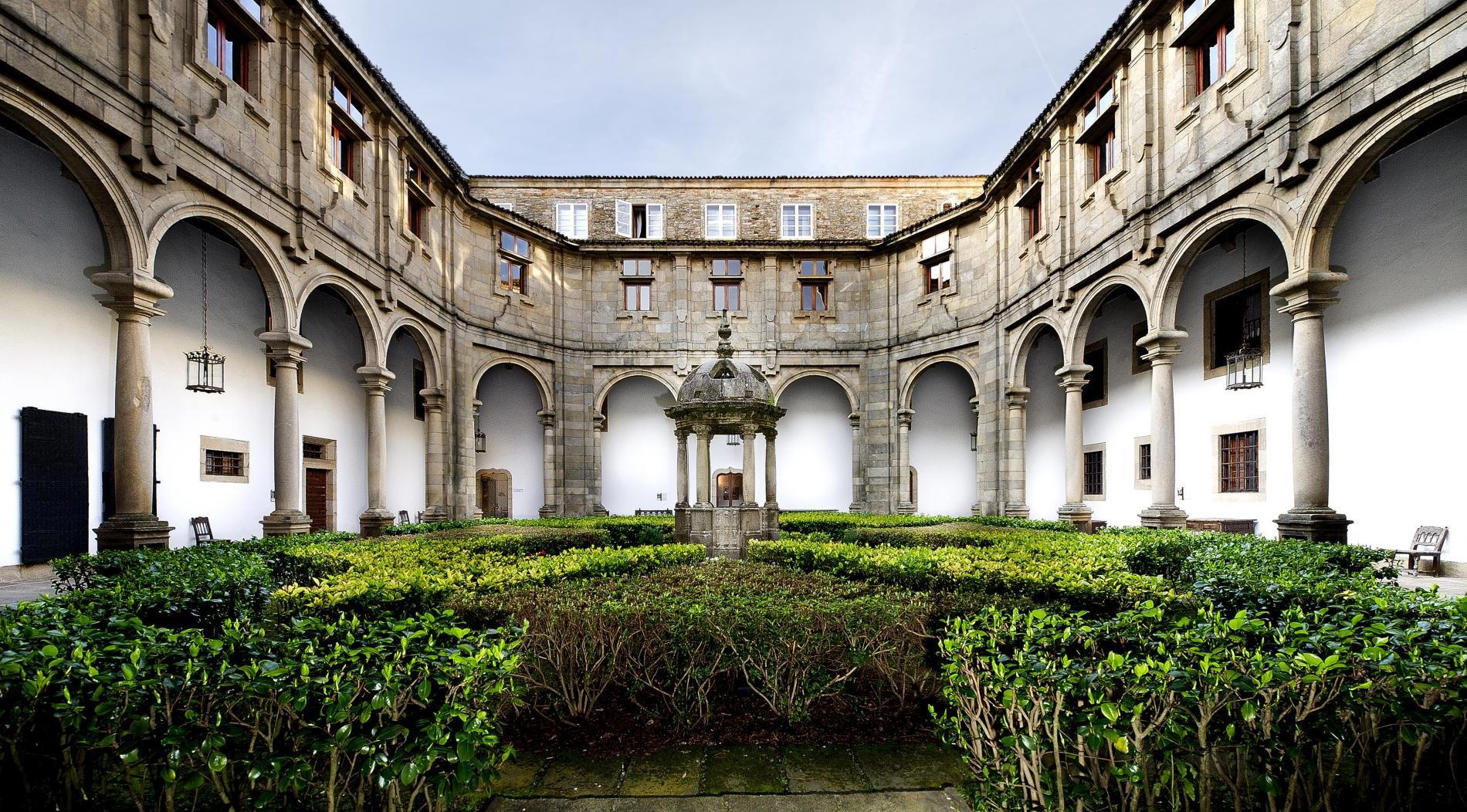
Five Centuries on the Obradoiro
There is no neutral approach to the Plaza do Obradoiro. You arrive on foot, through the narrow streets of the old city, and the square opens without warning: cathedral to the east, city hall to the south, and the long Plateresque façade of the Hostal dos Reis Católicos stretching across the northern flank. The building was commissioned by Ferdinand and Isabella in 1499 as a royal hospital for pilgrims completing the Camino de Santiago — a function it served for nearly four centuries before becoming a hotel. That institutional scale, the breadth of the façade and the height of the interior volumes, is not decorative. It is structural, and it defines everything about how the property feels from the moment you walk through the main portal.
Few hotels in Europe carry that combination of documented age and continuous operation. The property is widely cited as one of the oldest hotels in the world, and its position on one of Spain's most architecturally coherent public squares places it in a category that has no obvious Spanish parallel. The Mandarin Oriental Ritz, Madrid offers comparable prestige within its own city context, and the Mandarin Oriental Barcelona provides a high-end urban anchor in a different register entirely, but neither carries the weight of a building that was already receiving exhausted pilgrims when Columbus was completing his first Atlantic crossing.
The Dining Programme: Galicia on the Plate
The Hostal runs two dining spaces that serve different functions without contradicting each other. The restaurant Dos Reis is the formal room: sedate, select, proportioned to match the grandeur of the public areas. The restaurant Enxebre operates at a lighter register, with a more informal atmosphere and a focus on traditional Galician cooking presented without ceremony. The split reflects a broader pattern across Galicia's better hotel kitchens, where the same regional ingredients appear in two different frames depending on the occasion and the appetite of the guest.
Both rooms draw from the same geographic logic. Galicia's Atlantic coastline produces some of the most highly regarded seafood in Spain, and the kitchen here works with fish and shellfish caught in those waters — the kind of recently landed product that underpins the region's reputation as one of the most ingredient-driven corners of Iberian cooking. Local meats and cheeses appear alongside the fish, reflecting a tradition in which the interior and the coast are treated as a single larder. The dessert programme leans into Galician pastry: apple filloa pies and crème brûlée represent the classic end of the repertoire, dishes that appear across the region's restaurants and carry genuine local identity rather than generic confection.
The wine and spirits list extends the same regional logic. Galicia's wine production, dominated by Albariño in the Rías Baixas appellation, provides a natural partner for the kitchen's seafood emphasis. Liquors include regional spirits that reflect the area's broader food culture. For guests interested in following Galicia's wine tradition further afield, the Pepe Vieira Restaurant and Hotel in Poio offers a tighter, chef-driven format that places that same produce in a more contemporary context.
The overall dining offer here is not structured around a celebrity chef or a single gastronomic concept. It is structured around place. That is a deliberate position, one that aligns the Hostal with a Galician tradition in which the quality of the ingredient is treated as the primary argument, and the kitchen's role is to respect rather than transform. In a Spanish hotel market where properties like the Akelarre in San Sebastián or the Atrio Restaurante Hotel in Cáceres have built their identities around signature culinary programmes, the Hostal takes the opposite approach: the architecture and the location carry the argument, and the kitchen serves Galician cooking that is honest about its own tradition.
Architecture as Experience
Four cloisters that organise the building's interior are among the most photographed architectural spaces in Galicia, and they function as the property's central spatial experience. Each has a distinct character, moving through different periods of construction and renovation while maintaining the coherence of the original Renaissance commission. The public rooms are proportioned at institutional scale, which some guests find imposing and others find clarifying: this is a building that was built for mass use and only later adapted for individual luxury.
Room count, 105 twin rooms, 15 double rooms, 12 singles, and 6 suites, reflects that scale. The suites occupy the most architecturally significant positions within the building. Guestrooms are equipped with telephone, satellite television, minibar, heating, and air-conditioned living areas, a standard that places the property within the Parador group's consistently reliable mid-to-upper tier of amenity delivery.
Guests looking for a smaller-scale Galician alternative might consider the A Quinta da Auga Hotel and Spa, also in Santiago, which offers a more intimate format. Nearby in A Coruña, the Casa Beatnik Hotel represents a design-led alternative at a different scale. But neither occupies a position on the Obradoiro, and that address is not a substitutable variable, it is the central fact of the experience.
The Plaza and the City
Santiago de Compostela's old city is compact and walkable, and the Hostal's position on the Obradoiro places guests at its geographic and symbolic centre. The cathedral, the city hall, and the Colegio de San Xerome are immediate neighbours. The medieval street network radiates outward from the square, and the concentration of the city's most significant monuments within a short walk makes the location operationally direct for guests who want to use the city on foot.
The broader Spanish hotel market offers comparable historical weight in different configurations: the Abadía Retuerta LeDomaine occupies a twelfth-century abbey in Castile and pairs that heritage with a wine programme rooted in its own estate. The Hostal operates differently: it is a city hotel, embedded in an active urban setting, surrounded by pilgrims, tourists, and residents in roughly equal measure at most times of year. That energy is part of the experience rather than a distraction from it.
Planning Your Stay
The Hostal is accessible from A Coruña via the N-550 through Ordes or the A-9 motorway, a journey of approximately 65 kilometres. Parking is available on site. The property includes a bar, bureau de change, wireless internet, and a conference suite. Both restaurants are available to hotel guests as well as visitors from outside the property. The Enxebre, with its more informal character, tends to suit midday meals and guests who want the Galician cooking without the formality of the Dos Reis room. Given the property's position as one of the most visited urban settings in the world, advance booking is advisable, particularly during peak pilgrimage periods in summer and around the feast of Santiago on 25 July.
For guests building a wider itinerary across Spain's hotel spectrum, the EP Club guide to Santiago de Compostela restaurants and hotels provides additional context. Properties across Spain that operate at comparable levels of historical and architectural significance include the Marbella Club Hotel, the La Residencia, A Belmond Hotel, Mallorca, and, for those drawn to wine-estate hotels, Terra Dominicata in Escaladei and the Torre del Marqués Hotel Spa and Winery in Sardoncillo.
How Parador of Santiago de Compostela compares with similar nearby venues.
| Venue | Awards |
|---|---|
| Parador of Santiago de Compostela | Virtuoso Luxury Hotel Partner (2026) |
Recognition history
Dated appearances from independent guides and award organizations, with the underlying list record or original source where available.
Virtuoso Luxury Hotel Partner
Virtuoso
Continue exploring
More in Santiago de Compostela
Hotels in Santiago de Compostela
Browse all →
Bars in Santiago de Compostela
Browse all →
Restaurants in Santiago de Compostela
Browse all →


At a Glance
- Classic
- Elegant
- Historic
- Well Known
- Sophisticated
- Romantic Getaway
- Anniversary
- Celebration
- Historic Building
- Terrace
- Garden
- Wi Fi
- Room Service
- Concierge
- Business Center
- Restaurant
- Bar
- Elevator
- EV Charging
- Street Scene
- Garden
- Wi Fi
- Room Service
- Concierge
- Business Center
- Restaurant
- Bar
- Elevator
- EV Charging
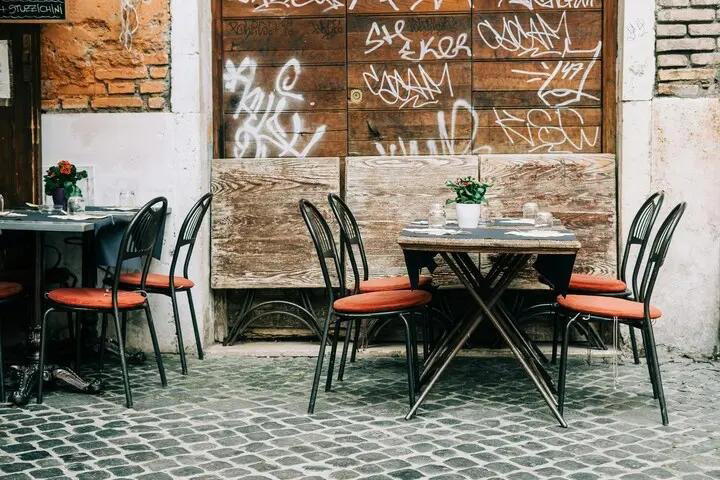
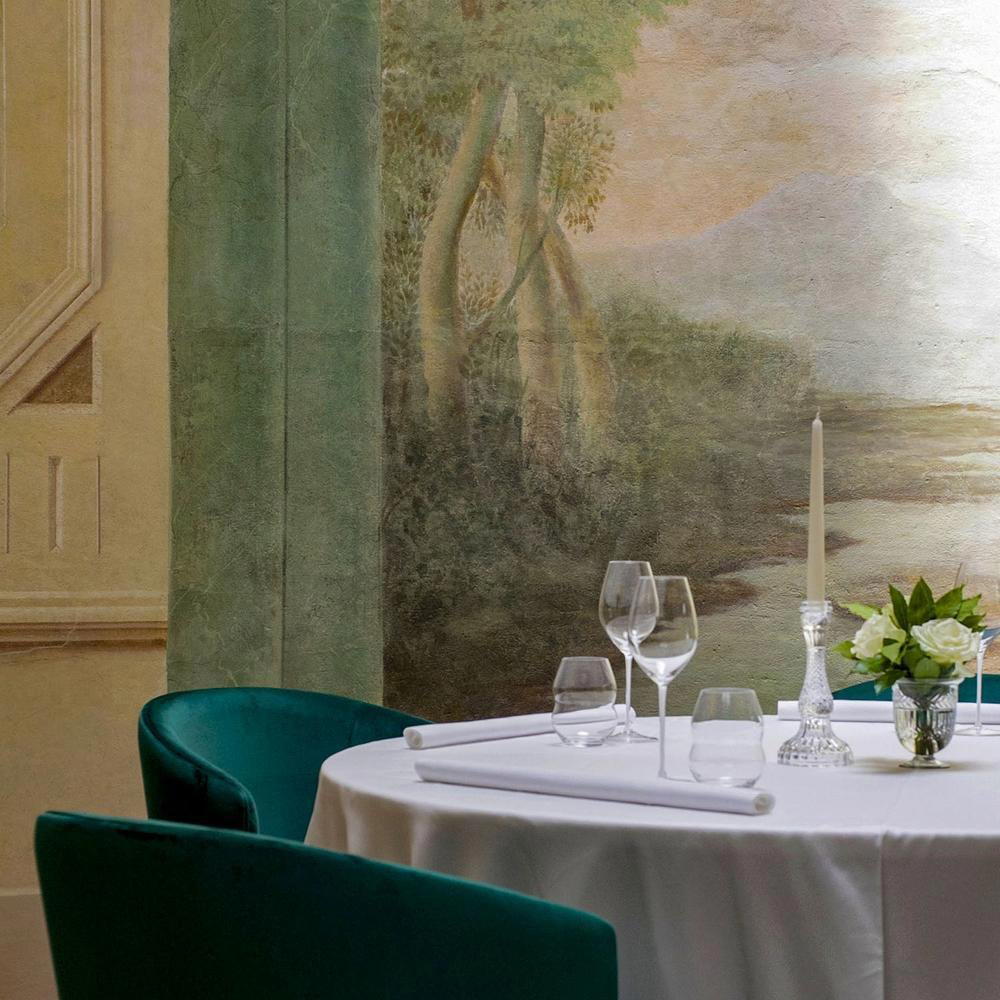
Elegant historic atmosphere with cloistered courtyards, stone arches, and sophisticated lighting in luxurious public rooms.
Know Before You Go
- Getting there
- Plaza Do Obradoiro, 1