Bodegas Granbazán


World's 50 Best #86 · Falstaff Winery - 2 Stars
Bodegas Granbazán operates from the Salnés Valley in Galicia's Rías Baixas, where Atlantic proximity and granite-heavy soils shape some of Spain's most distinctive white wines. For those tracing Albariño from vineyard to bottle, Granbazán is a considered stop.
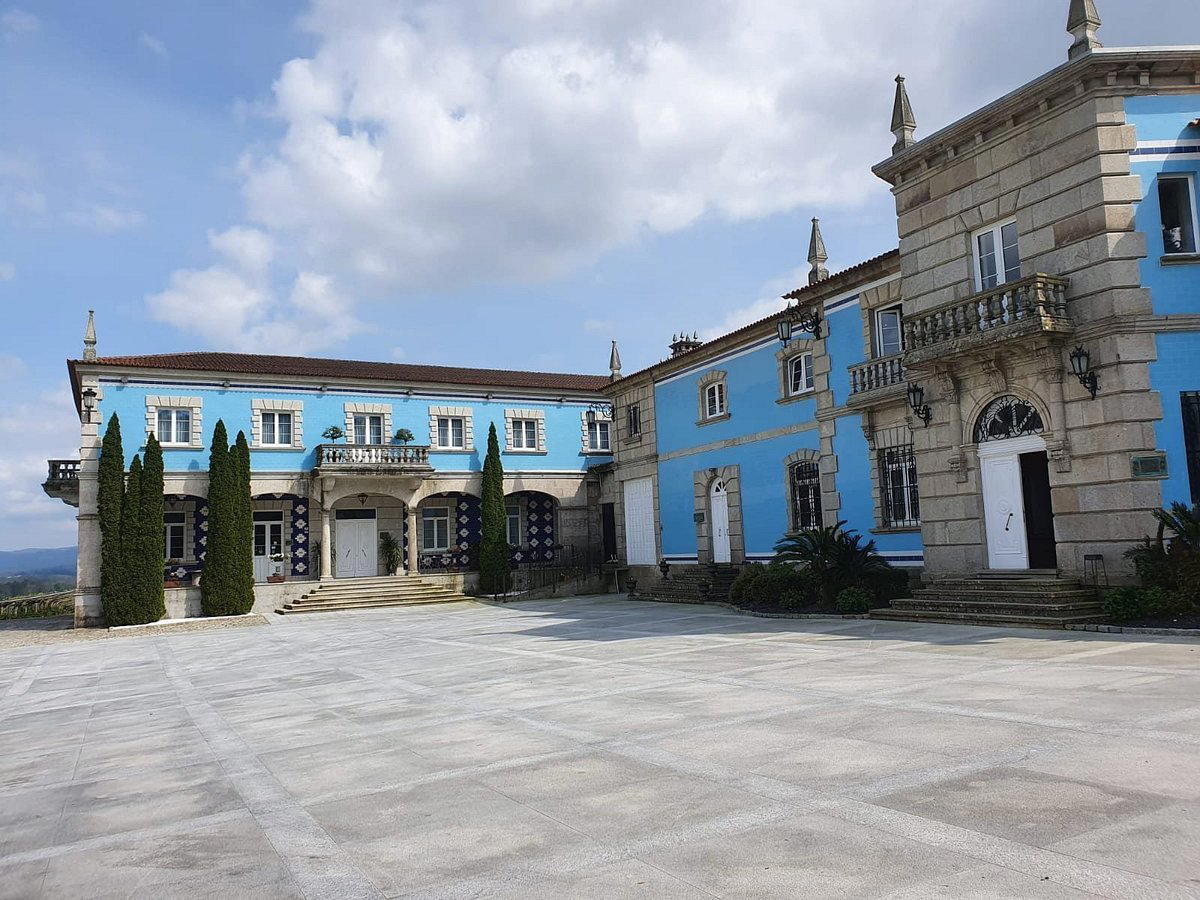
Where the Atlantic Writes the Wine
The Salnés Valley sits in the westernmost reach of Galicia, close enough to the Atlantic that its influence is less a backdrop than a co-author. Moisture-laden winds push through vine rows planted on decomposed granite, and the resulting tension, between ripeness and acidity, between warmth and cool, is what gives the denomination its character. Bodegas Granbazán occupies a plot within this system, at Lugar de Tremoedo in Vilanova de Arousa, and the address itself is a statement of terroir intent. This is Rías Baixas at its most geographically specific, where the hyphen between land and wine is short and auditable.
Rías Baixas has spent the last two decades moving from a regional curiosity into one of Spain's most closely watched white-wine zones. The denomination is almost synonymous with Albariño, and within that narrow varietal focus, the conversation has shifted toward where, exactly, the grapes are grown and how minimally the winemaker intervenes between soil and glass. Granbazán sits within that conversation.
The Terroir Architecture of Salnés
Understanding what Granbazán produces requires first understanding what the Salnés Valley asks of its vines. Granite-derived soils drain efficiently and retain heat without holding it, which keeps the vines' root systems working for minerals rather than coasting on moisture. The Atlantic proximity introduces a diurnal rhythm, warm afternoons cooling sharply as evening moisture rolls in, that extends the growing season and preserves the aromatic compounds that make Albariño so legible in the glass. These are not abstract conditions. They produce wines with a structural signature: brisk acidity, saline lift, stone-fruit aromatics that read as taut rather than broad.
That structural profile is what separates serious Salnés producers from the denomination's more generic tier. At volume, Rías Baixas Albariño can flatten into a reliable but undifferentiated category. At the level where terroir expression becomes the product rather than a marketing point, the wines carry specific topographic information, the lean minerality of granite, the edge that Atlantic humidity gives to a finish.
For context on how other Spanish producers approach similarly high-stakes terroir expression, the approaches at Clos Mogador in Gratallops and Marqués de Griñón in Malpica de Tajo offer useful comparisons, both work with specific appellations and frame their wines explicitly around site character rather than house style alone.
Granbazán Among Its Salnés Peers
The Salnés Valley hosts a range of producers operating at different scales and with different ambitions. Some are built primarily for volume export, where consistency and price-point matter more than vineyard specificity. Others have positioned themselves as address-specific estates, where the plot identity informs everything from harvest decisions to label design.
Across Spain more broadly, the producers who draw the most sustained critical attention tend to share a few characteristics: a defined geographic footprint, minimal intervention between vineyard and cellar, and a willingness to let the vintage's character show rather than correct it toward a house profile. Comparisons are instructive: producers like Emilio Moro in Pesquera de Duero and Abadía Retuerta in Sardón de Duero have built similar reputations for place-specific production in their respective denominations.
For those building a broader map of Spanish wine production, the range of approaches across estates, from Bodegas Protos in Peñafiel to CVNE in Haro to Codorníu in Sant Sadurní d'Anoia, illustrates how differently Spanish producers have interpreted the relationship between origin and output. Granbazán's answer, rooted in the Atlantic-influenced granite of Salnés, is among the more climatically specific on that spectrum.
Visiting Vilanova de Arousa
Vilanova de Arousa is a coastal town in the province of Pontevedra, set within the larger Rías Baixas system where estuaries cut into the Galician coastline and the wine zones follow the water's logic. The town sits between Cambados, the denomination's informal capital, home to the annual Albariño festival each August, and the estuary of the Arousa river. Travelling from Santiago de Compostela, the drive south through the Rías Baixas takes roughly an hour and passes through a range of eucalyptus, low-trained vines, and fishing villages that have sustained the same Atlantic economy for centuries.
The density of serious producers in this stretch of Pontevedra makes it worth approaching as a day or multi-day circuit rather than a single-stop visit. Granbazán's address at Lugar de Tremoedo, 46 places it in agricultural land outside the town centre, the kind of location that confirms its identity as a working estate rather than a visitor-facing attraction designed around throughput. Timing a visit around the Cambados Albariño festival in early August adds a broader denominational context to what might otherwise be a purely cellar-focused experience. Our full Vilanova de Arousa restaurants guide covers where to eat and drink around the visit.
For those integrating Granbazán into a wider Spanish wine circuit, the contrast with producers in other regions sharpens the education. Lustau in Jerez, Marqués de Cáceres in Cenicero, Bodegas Ysios in Laguardia, and Bodegas Vivanco in Valle de Mena each work from radically different climatic and geological starting points. Setting Granbazán's Atlantic granite wines against Rioja's continental Tempranillo or Jerez's oxidative Palomino is one of the more efficient ways to understand how decisively Spanish wine resists category reduction. For completeness, producers outside Spain like Aberlour and Accendo Cellars in St. Helena and Arzuaga Navarro in Quintanilla de Onésimo round out a useful international frame of reference for how terroir-driven production expresses itself across very different conditions.
Planning Your Visit
The Salnés Valley is most accessible between late spring and early autumn, when both the vineyard and the broader Galician coast are at their most navigable. August visits gain from the Cambados festival context; September and October align with harvest activity, which typically adds a layer of animation to any cellar visit in the denomination.
Frequently asked questions
Is Bodegas Granbazán more low-key or high-energy?
Granbazán operates as a working estate in Lugar de Tremoedo, Vilanova de Arousa, rather than as a high-volume visitor attraction. Expect a producer-first environment where wine takes precedence over spectacle.
What wines is Bodegas Granbazán known for?
Granbazán works within the Rías Baixas denomination using Albariño, the defining variety of the Salnés Valley sub-zone. The Salnés Valley receives the highest Atlantic rainfall of Rías Baixas's five sub-zones, and its granite-derived soils produce Albariño with pronounced mineral character and natural acidity. That combination is the regional signature Granbazán works within.
Where do I go for Bodegas Granbazán?
Bodegas Granbazán is located at Lugar de Tremoedo, 46, 36628, Pontevedra, Vilanova de Arousa.
What is Bodegas Granbazán known for?
Granbazán is a recognised Albariño producer in the Salnés Valley sub-zone of Rías Baixas, based in Vilanova de Arousa in the province of Pontevedra. Its location in Lugar de Tremoedo keeps it squarely within the Atlantic-influenced terroir that defines Salnés production.
Comparable Venues
Comparable venues nearby, for context on price, style, and recognition.
| Venue | Cuisine | Price | Awards | Notes |
|---|---|---|---|---|
| Bodegas GranbazánThis venue (the venue you are viewing) | Albariño | Not listed | World's 50 Best #86 · Falstaff Winery - 2 Stars | Not listed |
| Arzuaga Navarro | Tempranillo, Cabernet Sauvignon | $30–50 | World's 50 Best #64 · Falstaff Winery - 3 Stars | Quintanilla de Onésimo |
| Terras Gauda | Albariño, Caíño Blanco | $20–30 | Not listed | O Rosal |
| Pazo de Señorans | Albariño | $20–30 | Falstaff Winery - 3 Stars | Meis |
| Brook Brothers Distillery | Winery | Not listed | Not listed | Córdoba |
| Destilería Ánima | Winery | Not listed | Not listed | Córdoba |
Recognition history
Dated appearances from independent guides and award organizations, with the underlying list record or original source where available.
World's 50 Best Vineyards #86
World's 50 Best
Falstaff Winery - 2 Stars
Falstaff
Request a visit to Bodegas Granbazán
Tell us when you would like to go and how many people, and we put the request to the estate and reply to you by email.
Continue exploring
More in Vilanova de Arousa
Wineries in Vilanova de Arousa
All wineries in Vilanova de Arousa →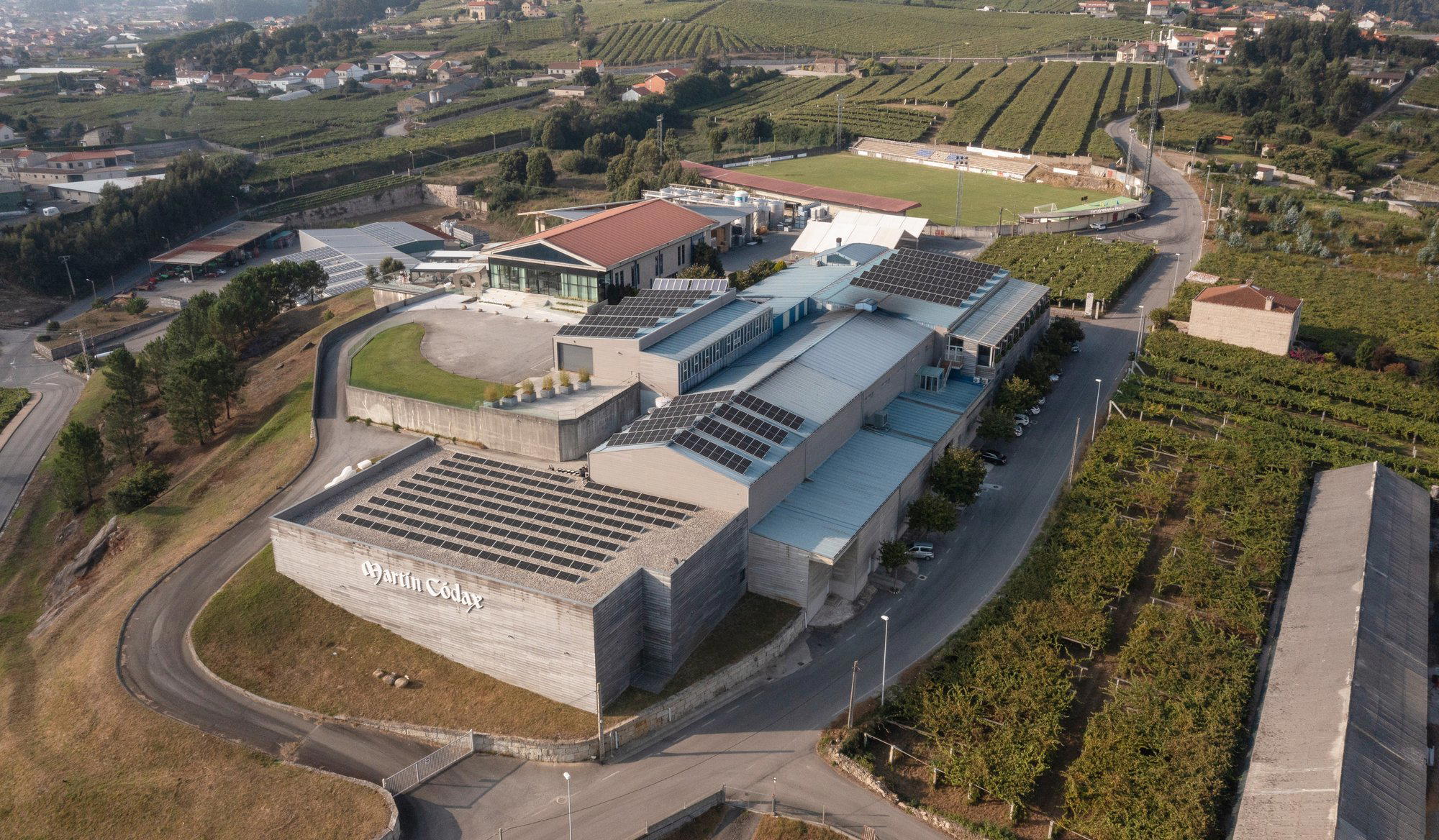
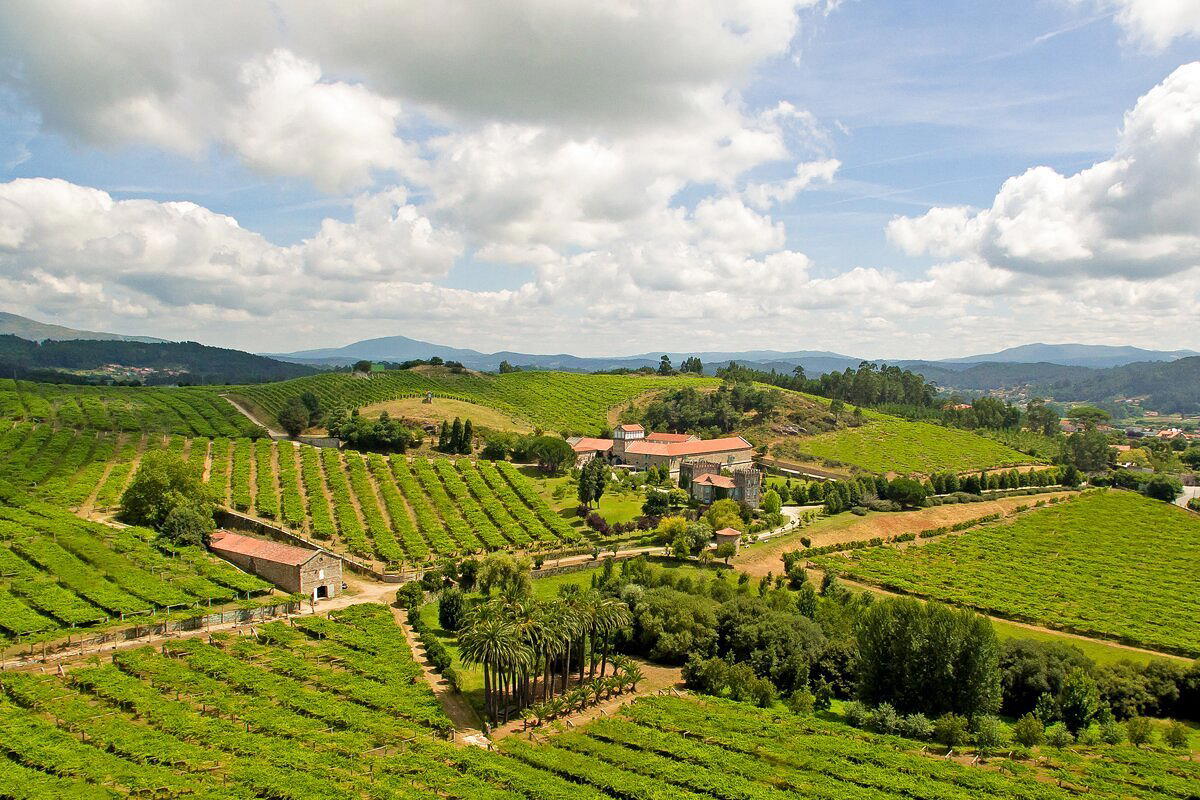
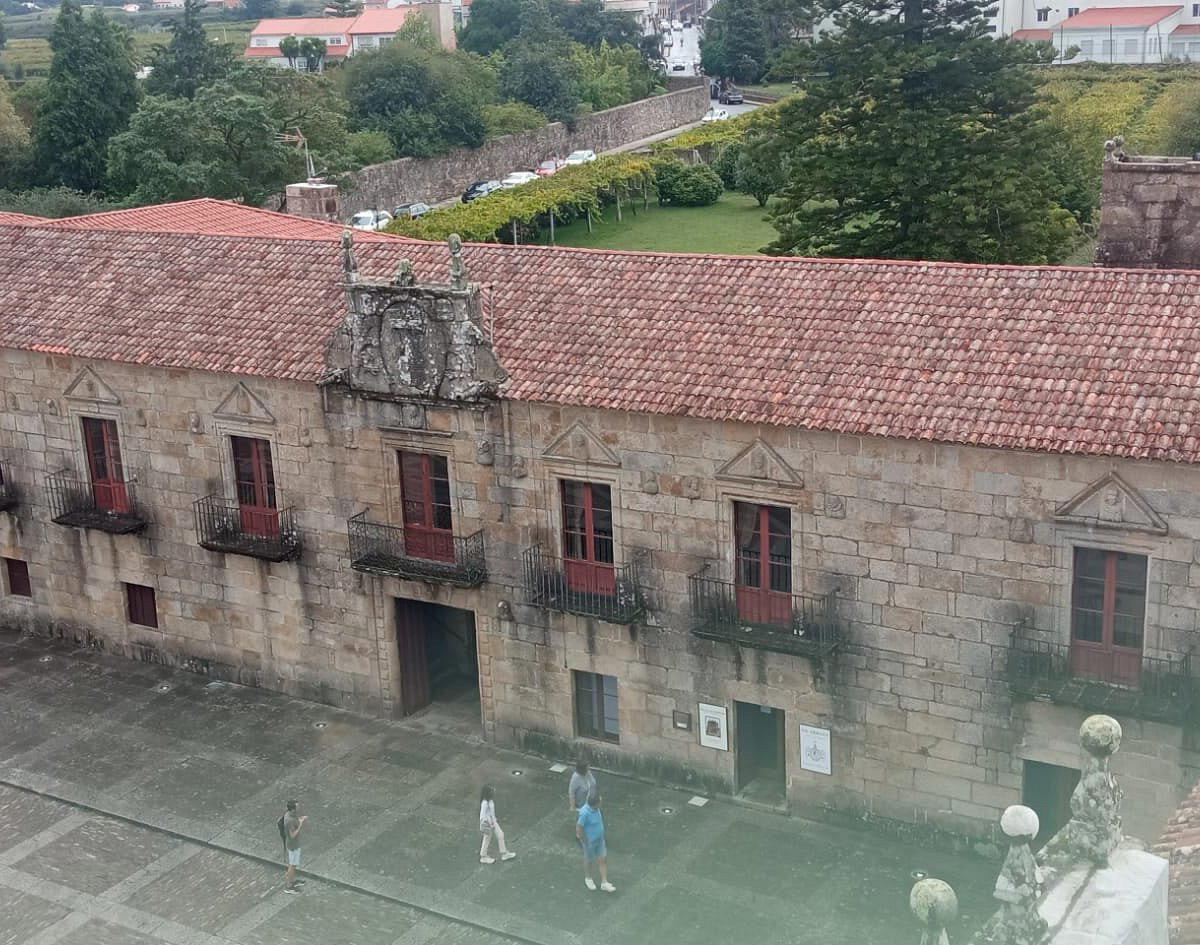

Restaurants in Vilanova de Arousa
Browse all →

Details
- Classic
- Elegant
- Rustic
- Scenic
- Wine Education
- Solo Exploration
- Special Occasion
- Vineyard Tour
- Estate Grounds
- Historic Building
- Sustainable
- Vineyard
- Albariño
- Still White
- Sparkling
- Cave Tasting
- Barrel Room
- Spanish
- English
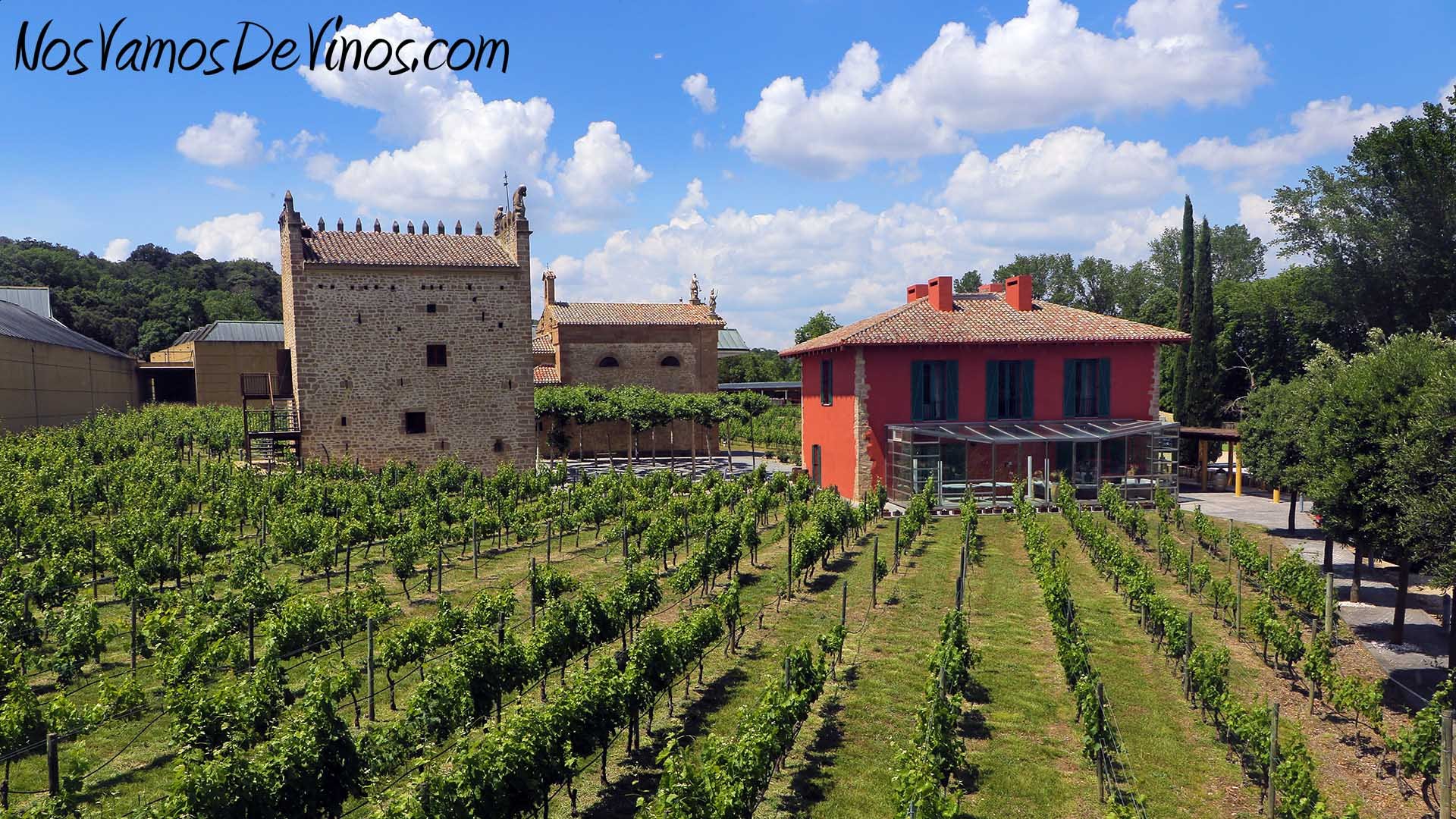
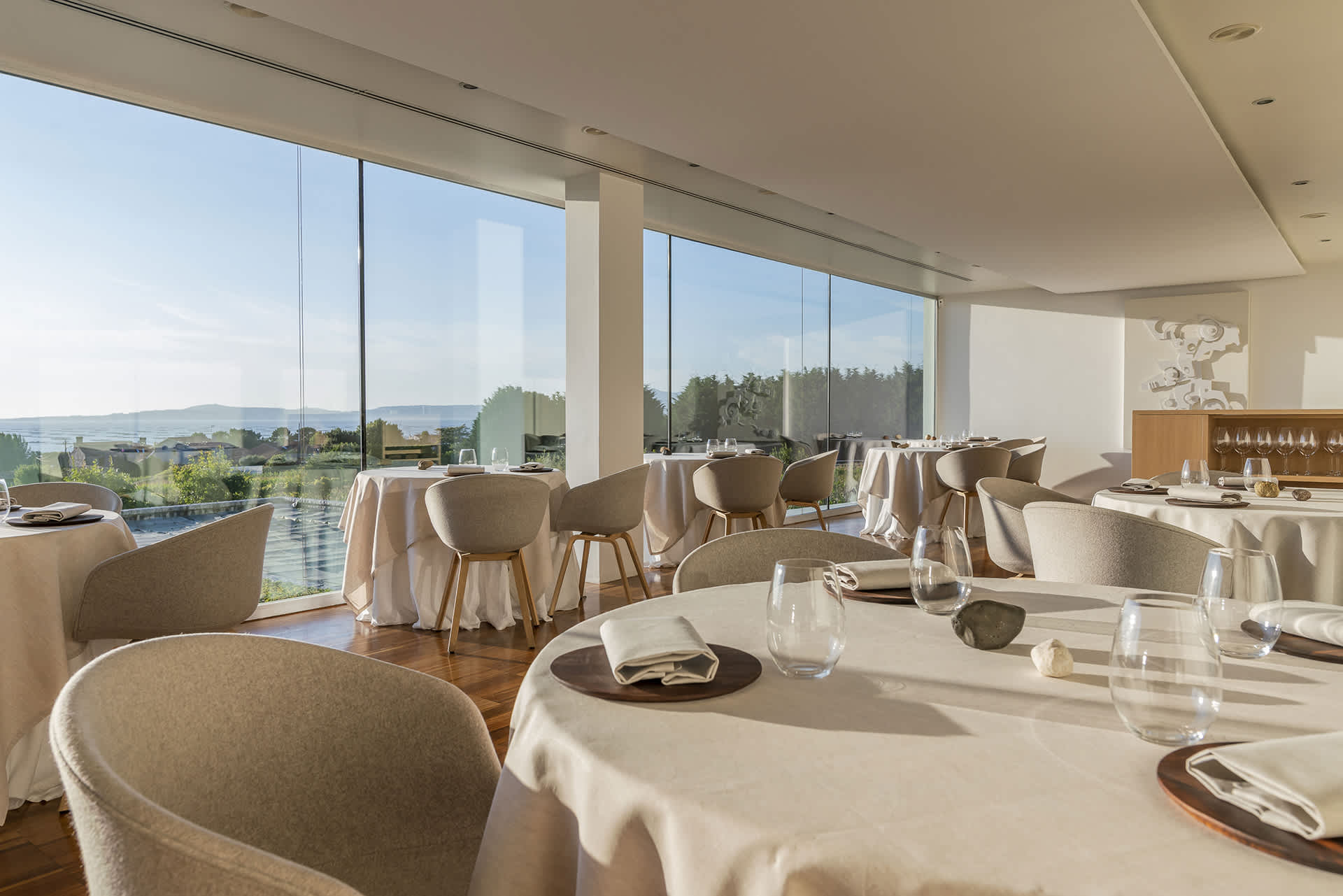
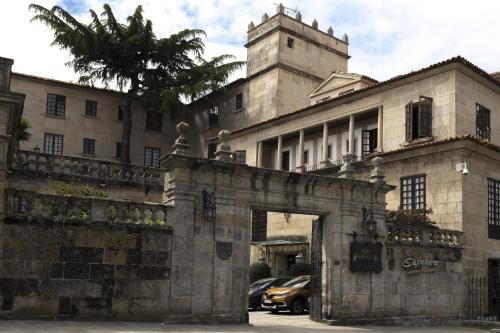
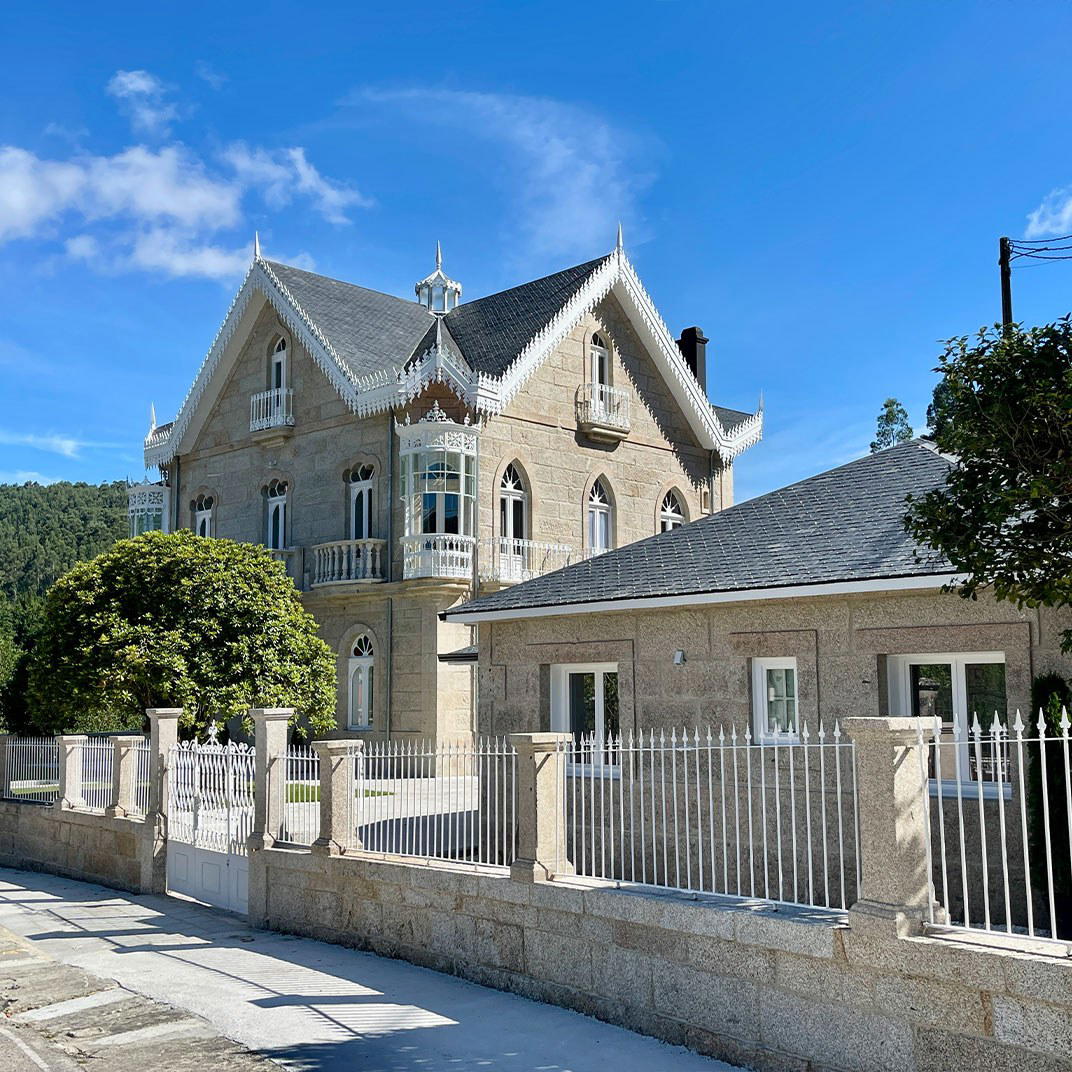
Elegant neo-classical manor house amidst pergola-trained vineyards, with clean modern facilities evoking traditional Bordeaux château style and Atlantic freshness.