AC Palacio del Carmen

Michelin Selected
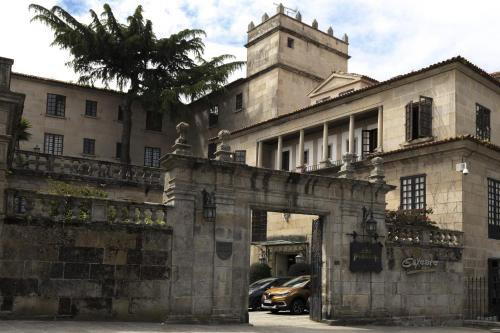
A former convent on the Oblatas street in Santiago de Compostela's historic core, AC Palacio del Carmen carries Michelin Selected status for 2025 and positions itself within a small cohort of heritage-conversion hotels where medieval stonework and contemporary hospitality coexist. For pilgrims and cultural travellers arriving via the Camino or the cathedral, it offers a structurally significant address at the centre of Galicia's most visited city.

Pearl is the En Primeur Club membership app — saves, bookings, and concierge access live there. Same editors, same standards.
- Address
- Rúa das Oblatas, S/N, 15703 Santiago de Compostela, A Coruña, Spain
- Phone
- +34 981 55 24 44
- Website
- marriott.com
- Directions
- Get directions
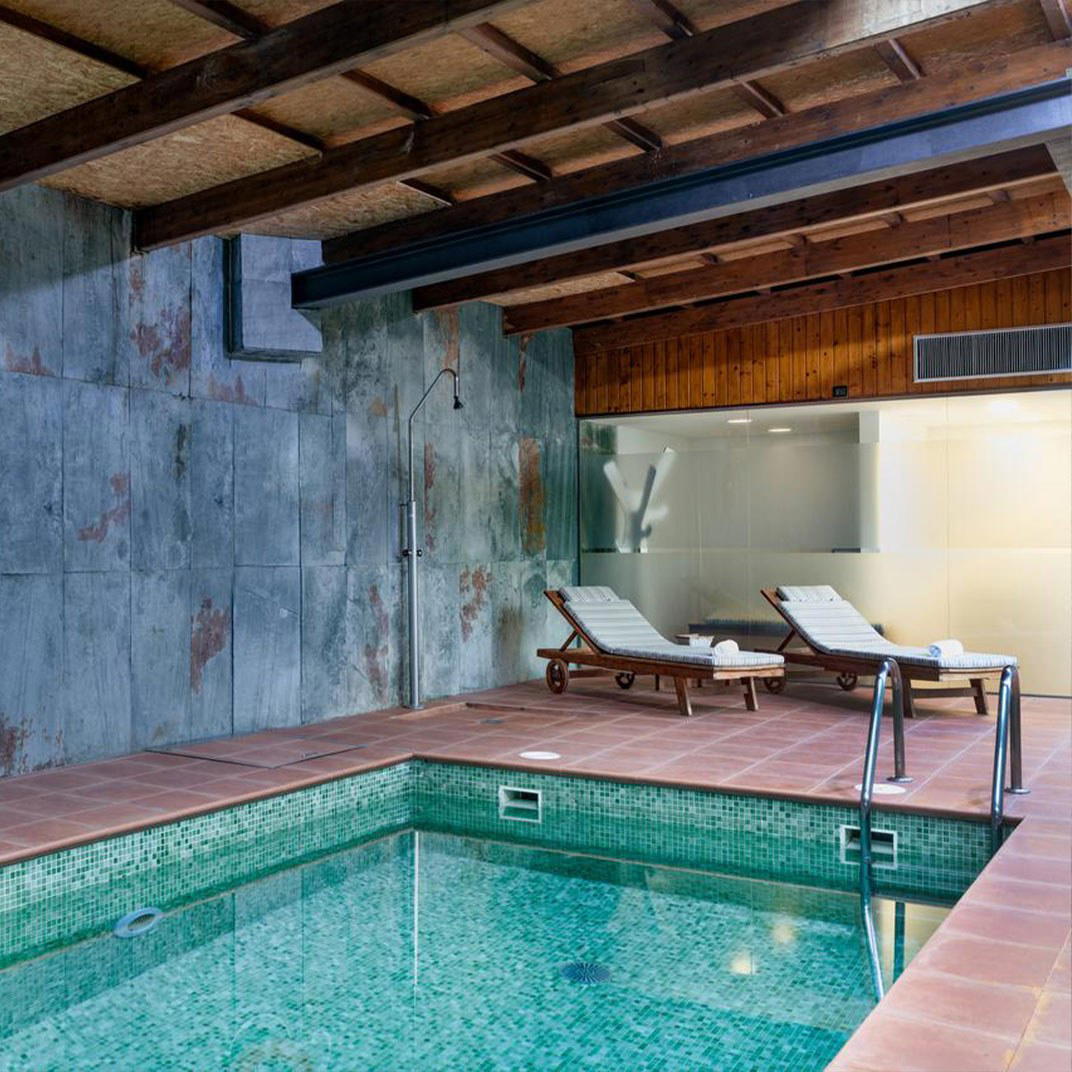
Stone Walls and Contemporary Stays: How Santiago's Heritage Hotels Work
Santiago de Compostela has a particular problem that most historic European cities share: its finest buildings were never built to sleep guests. The cathedral, the arcaded Rúa do Franco, the seminary facades along the Praza das Praterías — all of them are civic or religious infrastructure repurposed, over centuries, into one of Iberia's most concentrated architectural ensembles. The hotels that earn serious attention here are, almost without exception, conversions. The question is always how faithfully the conversion handles the original fabric.
AC Palacio del Carmen sits on Calle Oblatas, within the boundary of the old city, in a building whose religious origins are legible from the street. The Oblatas address places it close to the cathedral quarter without being directly on the pilgrim-traffic routes that make the most central positions both convenient and relentless. That position is meaningful: close enough to the Praza do Obradoiro to reach on foot in minutes, but on a quieter alignment that gives the property a degree of separation from the high-season crowds that move through Santiago from May through October.
What a Michelin Selection Signals in This Category
The 2025 Michelin Selected designation for hotels is not a star rating for food — it is the Guide's recognition of quality and character across the stay experience, applied to properties the editors consider worth recommending to a well-travelled reader. In Santiago de Compostela, where the volume of annual visitors is substantial (the city receives hundreds of thousands of pilgrims and cultural tourists each year, with 2021 and 2022 Año Santo years driving particular surges), that selection functions as a filter in a crowded accommodation market.
For context on how heritage-conversion hotels are assessed across Spain, properties such as Caro Hotel in València and Hotel Mercer Sevilla in Seville demonstrate what the category looks like when archaeological layers are made visible and the architecture becomes part of the offer. In Galicia specifically, the benchmark is set partly by the Parador of Santiago de Compostela, which occupies the Hostal dos Reis Católicos directly facing the cathedral and operates at a different scale and historical weight. AC Palacio del Carmen is a different proposition: a branded hotel (AC Hotels by Marriott) with a historic shell, pitched at a tier that balances accessibility with architectural character.
The Architecture as the Argument
Heritage conversion hotels in Galicia face specific material conditions. The region's granite, grey-gold, lichen-patched, dense, doesn't absorb light the way Andalusian limestone does. Interiors in converted Galician religious buildings tend toward a cooler palette, with thick walls that moderate temperature and cloistered courtyard geometries that govern natural light more than open-plan spaces can. The challenge for any hotel operating in this fabric is knowing which elements to leave alone.
The Oblatas building's convent origins give the property a structural logic that a purpose-built hotel would not have: corridor sequences, proportioned rooms, and communal spaces shaped by the functional needs of a religious community rather than hospitality efficiency. Where this conversion works, it works because the original spatial discipline is still readable. Where branded hotel chains sometimes struggle in heritage conversions, it is when the renovation vocabulary overwrites the original logic rather than working with it.
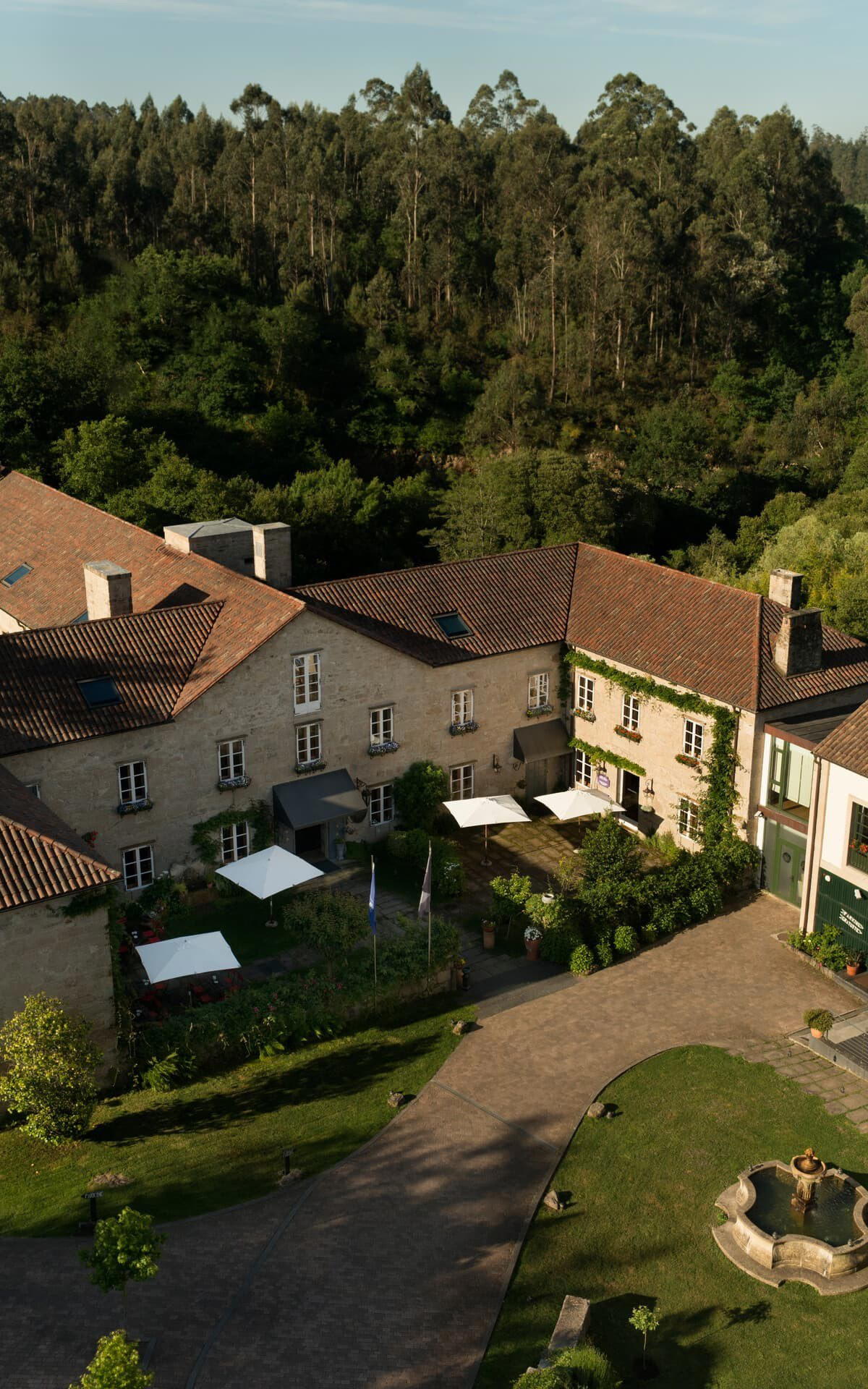
This is a known tension in the Spanish luxury market. Compare the approach at Atrio Restaurante Hotel in Cáceres, where a contemporary interior is inserted with deliberate contrast into a historic structure, or at A Quinta da Auga Hotel & Spa, the other Michelin-recognised address in Santiago, which occupies an eighteenth-century paper mill on the edge of the old city with a smaller footprint and a more spa-focused offer. Each of these properties represents a different answer to the same conversion question.
Santiago's Hotel Tier and Where This Property Fits
The Santiago de Compostela accommodation market divides roughly into three tiers: the Parador at the top of the heritage prestige bracket; a mid-upper layer of independent and branded four-star properties including AC Palacio del Carmen; and a long tail of pensiones, pilgrim hostels, and budget options that serve the Camino's walking traffic. The branded mid-upper tier tends to attract guests who want architectural character alongside the predictability of a recognised hotel network, loyalty points, consistent service standards, direct booking infrastructure, without the premium commanded by the city's most refined address.
For travellers arriving by air, Santiago de Compostela Airport (SCQ) operates connections to Madrid, Barcelona, and several European cities, with journey time to the old city centre typically under thirty minutes by taxi. The cathedral quarter is a UNESCO World Heritage Site, which means vehicular access within the historic zone has restrictions; guests arriving by car should confirm drop-off logistics with the property in advance.
Across Spain more broadly, the heritage-conversion hotel category has produced some of the country's most architecturally coherent stays: Terra Dominicata in Escaladei, Abadía Retuerta LeDomaine, and Mas de Torrent Hotel & Spa in Torrent all occupy historic rural structures with varying levels of intervention. In the urban context, Hotel Can Cera in Palma and Akelarre in San Sebastián show how different coastal and urban conditions shape what a heritage stay can mean. AC Palacio del Carmen belongs to a tradition that is well-established in Spain, and its Michelin Selected status confirms it clears the baseline quality threshold within that tradition.
Planning a Stay
Santiago's peak season runs from June through August, with the feast of Saint James on 25 July drawing the largest single-day crowds of the year. Holy Years (when the feast falls on a Sunday) generate a marked increase in visitor volume city-wide; the next Año Santo after 2022 falls in 2027, which will likely affect accommodation availability and pricing significantly across all tiers. Booking well in advance for any July stay is standard practice for the mid-upper tier. Shoulder season, April, May, September, and October, offers more manageable conditions and the green Galician light that makes the granite city most atmospheric. For further context on what Santiago offers beyond the hotel, see our full Santiago de Compostela restaurants guide.
Fast Comparison
Comparable venues nearby, for context on price, style, and recognition.
| Venue | Cuisine | Price | Awards | Notes |
|---|---|---|---|---|
| AC Palacio del CarmenThis venue — the venue you are viewing | luxury historic convent hotel | Not listed | Michelin Selected | Not listed |
| Parador of Santiago de Compostela | Historic luxury parador in former royal pilgrims' hospital | $200–300 | Virtuoso Luxury Hotel Partner | Downtown |
| A Quinta da Auga Hotel & Spa | Eco-luxury boutique in restored 18th-century paper mill | $200–300 | 1 Michelin Key · Relais Chateaux Award | Not listed |
| Gran Hotel Nagari Boutique & Spa | Sophisticated urban boutique hotel blending classic, oriental, and modern avant-garde design. | $100–200 | Michelin Selected | city center |
| UMusic Hotel Madrid | Music and culture-infused luxury in a historic landmark. | $100–200 | Michelin Selected | Centro |
| Royal Hideaway Corales Villas | Grand luxury resort combining minimalist elegance with quiet luxury positioning, designed as a contemporary architectural statement inspired by coral reef formations. | $300–500 | Michelin Selected | Costa Adeje |
Recognition history
Dated appearances from independent guides and award organizations, with the underlying list record or original source where available.
Michelin Selected
Michelin
Continue exploring
More in Santiago de Compostela
Hotels in Santiago de Compostela
Browse all →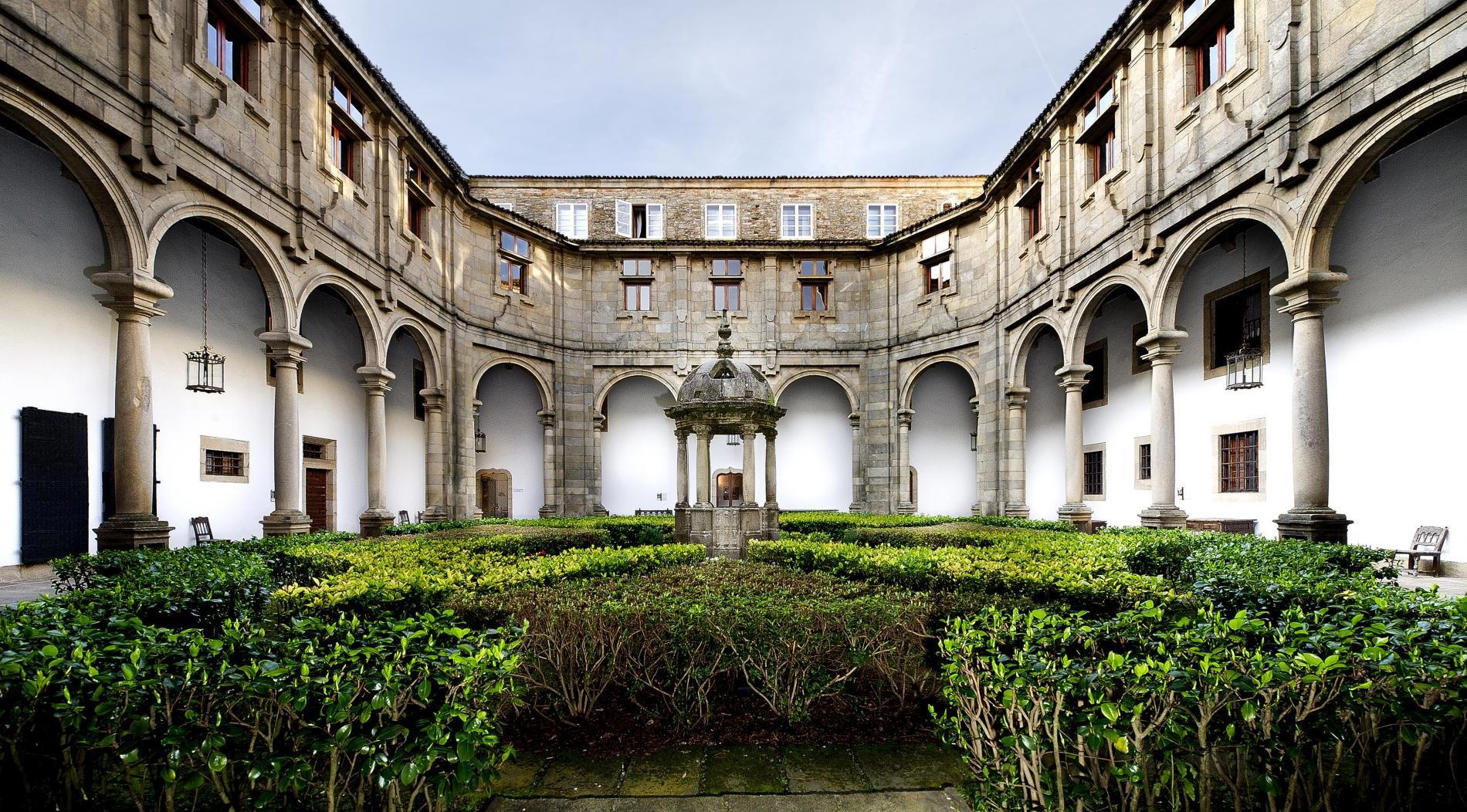
Bars in Santiago de Compostela
Browse all →
Restaurants in Santiago de Compostela
Browse all →


Details
- Quiet
- Elegant
- Classic
- Sophisticated
- Romantic Getaway
- Business Trip
- Weekend Escape
- Historic Building
- Terrace
- Garden
- Wi Fi
- Pool
- Fitness Center
- Room Service
- Concierge
- Restaurant
- Business Center
- Garden
- Garden
- Elevator
- Step Free Entrance
Tranquil and relaxed atmosphere with harmony, balance, and quality materials in a quiet historic setting.