A Viaxe

Michelin Bib Gourmand
Our verdict
A Michelin Bib Gourmand-recognised bistro on a quiet square near Santiago de Compostela's centre, A Viaxe constructs its menus around a chef rooted in Peruvian technique who draws from Latin American and Iberian sourcing traditions. Two tasting formats — 7 Destinos and 9 Destinos — map each dish back to a named geographic origin, making provenance the organising logic of the meal rather than an afterthought.

Pearl is the En Primeur Club membership app — saves, bookings, and concierge access live there. Same editors, same standards.
- Address
- Praza do Matadoiro, 3, baixo, 15704 Santiago de Compostela, A Coruña, Spain
- Phone
- +34 662 61 88 62
- Hours
- Mon ClosedTue–Sat 1:30–3 PM, 8:30–10 PMSun Closed
- Website
- aviaxe.es
- Directions
- Get directions
- Booking
- Book on TheFork
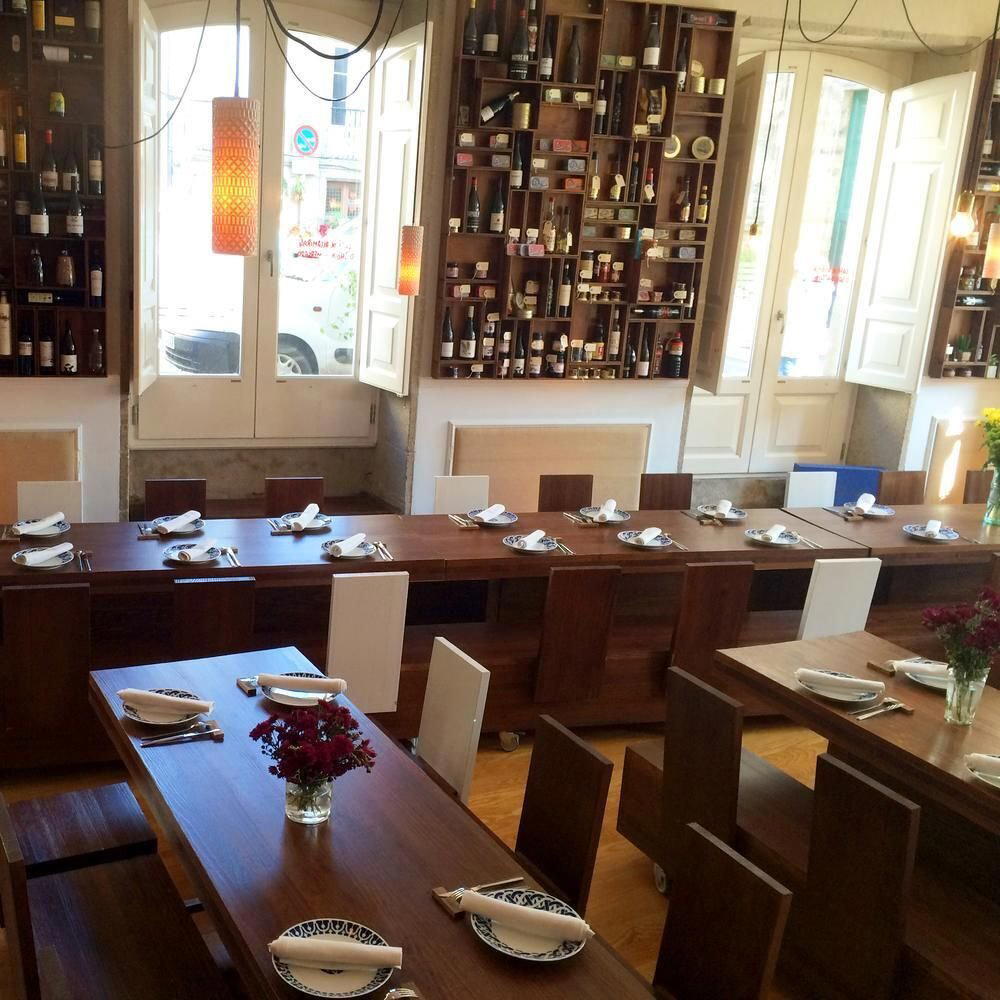
A Square Apart: The Setting and What It Signals
Praza do Matadoiro is the kind of small square that Santiago de Compostela keeps tucked just far enough from the pilgrim traffic to feel like a neighbourhood rather than a monument. The city's historic core draws millions of walkers annually to the cathedral, and most eating decisions get made within a short radius of that façade. The restaurants that earn sustained recognition slightly off that axis tend to do so on the strength of the food alone, without the captive audience that proximity to the Praza do Obradoiro provides. A Viaxe operates from that position: a low-key street-level address in a small square, holding a Michelin Bib Gourmand for consecutive years (2024 and 2025), which in Galicia's increasingly scrutinised dining scene is a precise signal of where a bistro sits in its peer bracket.
In practical terms, the Bib Gourmand designation indicates food meeting Michelin's quality threshold at a price point that keeps the bill accessible — here within the €€ range. That combination of recognised quality and moderate pricing places A Viaxe in a different competitive set from, say, A Tafona (Contemporary), which operates at the €€€€ tier with a Michelin star, or Gaio at a higher price bracket. Among fusion-focused tables at the €€ level in the city, the closer peers are A Maceta and the tapas formats at Abastos 2.0 - Barra (Farm to Table-Tapas), though neither shares the same geographic-provenance framing that defines A Viaxe's menu structure.
The Logic of Destinos: Provenance as Ritual
Across Spain's serious dining circuit — from El Celler de Can Roca in Girona to Arzak in San Sebastián, the provenance of ingredients has become structural rather than decorative. Menus increasingly treat sourcing as argument, not garnish. A Viaxe applies that logic at a bistro scale and extends it across hemispheres. Each dish carries a named origin: Peru, Colombia, Ecuador, Galicia, Basque Country. The menu isn't organised by protein or season in the conventional sense but by geography, and the act of reading it becomes the first stage of the meal's ritual.
The restaurant offers two tasting formats: 7 Destinos and 9 Destinos. The difference in destination count represents not just more dishes but a more extended geographic arc, a longer argument about where flavour comes from and how far ingredients can travel conceptually before arriving on a plate in northwest Spain. This framing borrows from a tradition common in higher-end Latin American restaurants, where the chef's biography of movement becomes embedded in the structure of what's served. At A Viaxe, the chef's Peruvian background and subsequent travels around the globe are the engine behind that structure, though the restaurant's identity isn't anchored to personal mythology, it's anchored to the menu's geographic logic.
One ingredient category worth noting in that framework: the chef sources from the fish auction, selecting less commercially popular species. In Galicia, where the Atlantic catch is both economic backbone and culinary identity, that sourcing approach connects directly to regional fishing tradition while pushing against the standardised species that fill most menus. Restaurants working with auction-sourced, underutilised fish, a practice more common in high-end Galician cooking, as seen at venues inspired by Aponiente in El Puerto de Santa María, bring a different rhythm to menu planning, since availability shifts with the catch. The crossover between that Galician fishing culture and Peruvian ceviche and coastal cooking traditions creates a coherent internal logic that the 7 Destinos and 9 Destinos formats are built to express.
Pacing, Format, and the Customs of the Meal
Tasting menus in the bistro register operate differently from their counterparts at formal restaurants. The pacing at A Viaxe, set within a small room in a neighbourhood square, is likely to feel closer to a convivial long lunch or dinner than to the ceremonial progression of a multi-starred room. In Spain, even structured tasting formats tend to breathe more informally than in northern European fine dining, courses arrive with explanation but without the stiff choreography that can distance a diner from the food itself.
The provenance labelling on the menu means that explanations are built into the format rather than offered as an optional narrative add-on. When a dish is presented as belonging to Galicia or Ecuador, the server is giving the diner a geographic anchor, not just a description. That approach shifts the pacing slightly: each course arrives with a small amount of context that asks the diner to do a little cognitive work, to locate the dish somewhere in the world before eating it. It's a ritual borrowed partly from the chef's table tradition and from how ambitious Nikkei and Novo-Andino restaurants in Lima structure their menus, applied here at a scale that keeps the format accessible rather than didactic.
Given the small size of the restaurant, that ritual depends on the room not being overwhelmed. A Viaxe's intimate footprint is the condition that makes the format work: the same provenance-led dialogue would be harder to sustain at scale. Booking ahead is advisable, the combination of recognised quality, accessible pricing, and limited capacity means tables turn over on reservation rather than walk-in, particularly during the city's high pilgrimage season. For context on where this fits within Santiago's wider eating picture, see our full Santiago de Compostela restaurants guide.
A Viaxe in the Broader Spanish Fusion Context
Spain's most ambitious fusion cooking tends to operate at a different scale and price point: DiverXO in Madrid and Azurmendi in Larrabetzu represent the high end of that spectrum, while Cocina Hermanos Torres in Barcelona anchors a different kind of contemporary Spanish ambition. A Viaxe isn't operating in that tier, nor is it trying to. The relevant comparison set for what it's doing sits closer to bistro-scale Latin-Galician crossover cooking, a niche that has no strong precedent in Santiago and very few clear analogues even across Spain. Among fusion restaurants at similar price points, Ajonegro in Logroño and Arkestra in Istanbul share the multicultural sourcing instinct, though the specific Latin American-Galician axis is particular to this address.
For visitors building a broader Santiago itinerary around food, the city's dining scene also spans farm-to-table Galician formats at A Horta d'Obradoiro (Regional Cuisine) and the more rooted contemporary cooking at A Tafona. A Viaxe occupies a distinct position within that spread: not the place to eat canonical Galician seafood, but the place to see what happens when a chef from Peru uses Galician auction fish as the raw material for a menu that speaks multiple geographic languages at once. Explore the city further through our Santiago de Compostela hotels guide, bars guide, wineries guide, and experiences guide.
Frequently asked questions
Is A Viaxe suitable for children?
What should I expect atmosphere-wise at A Viaxe?
What do people recommend at A Viaxe?
A small set of peers for context, based on recorded venue fields.
| Venue | Cuisine | Price | Awards | Notes |
|---|---|---|---|---|
| A ViaxeThis venue — the venue you are viewing | Peruvian-Galician Fusion Tasting | $30–50 | Michelin Bib Gourmand | Not listed |
| Abastos 2.0 - Mesas | Modern Galician Market Cuisine | $50–100 | Michelin Bib Gourmand | Farm to Table-Tapas, Galician |
| Casa Marcelo | Modern Galician-Japanese Fusion Tasting Menu | $100–150 | 1 Michelin Star · Macarfi 8.8 Food Rating | Asian Small Plates, Fusion |
| A Tafona | Modern Galician Fine Dining | $50–100 | 1 Michelin Star · Guía Repsol 3 Soles | Contemporary |
| A Maceta | Galician Fusion with Asian Touches | $30–50 | Michelin Plate · Macarfi 7.8 Food Rating | Fusion |
| Abastos 2.0 - Barra | Modern Galician Seafood Tapas | $30–50 | Michelin Plate · Macarfi 8 Food Rating | Farm to Table-Tapas |
Recognition history
Dated appearances from independent guides and award organizations, with the underlying list record or original source where available.
Michelin Bib Gourmand
Michelin
Full recognition history (3 entries)
Michelin Bib Gourmand
Michelin
Michelin Bib Gourmand
Michelin
Continue exploring
More in Santiago de Compostela
Restaurants in Santiago de Compostela
Browse all →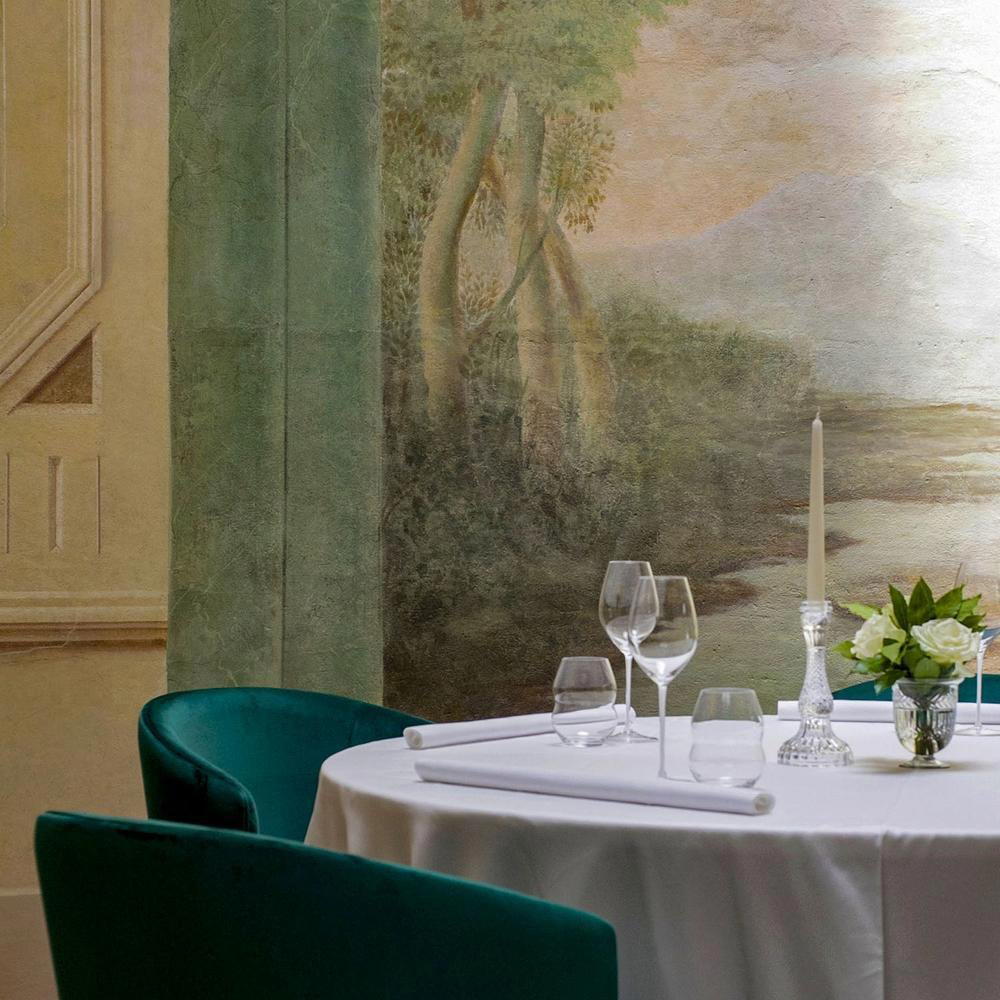
Bars in Santiago de Compostela
Browse all →
Hotels in Santiago de Compostela
Browse all →

Details
- Cozy
- Intimate
- Relaxed
- Special Occasion
- Date Night
- Celebration
- Open Kitchen
- Sommelier Led
- Local Sourcing
- Tasting Menu
- Gluten Free Options
Current opening hours
- Monday
- Closed
- Tuesday
- 1:30–3 PM, 8:30–10 PM
- Wednesday
- 1:30–3 PM, 8:30–10 PM
- Thursday
- 1:30–3 PM, 8:30–10 PM
- Friday
- 1:30–3 PM, 8:30–10 PM
- Saturday
- 1:30–3 PM, 8:30–10 PM
- Sunday
- Closed
Hours can change for holidays and private events. Last verified .
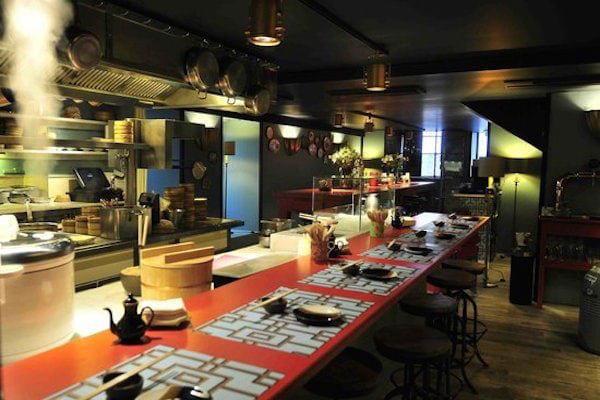
Relaxed yet refined bistro atmosphere with cozy, intimate seating including kitchen bar, soft lighting, and welcoming team energy.