A Maceta


Michelin Plate · Macarfi 7.8 Food Rating
Our verdict
A Maceta sits on the Rúa de San Pedro, the arrival road for pilgrims completing the Camino Francés, Camino del Norte, and Camino Primitivo. Jorge Gago's Michelin Plate kitchen pairs Galician produce with Asian technique — mackerel sashimi alongside leeks and stracciatella, hazelnut millefeuille for dessert — at mid-range prices (€€) with a terrace and a sparkling-wine-heavy list.

Pearl is the En Primeur Club membership app — saves, bookings, and concierge access live there. Same editors, same standards.
- Address
- 120, Rúa de San Pedro, 15703 Santiago de Compostela, A Coruña, Spain
- Phone
- +34 981 58 96 00
- Hours
- Mon–Tue ClosedWed–Sat 12:30–5 PM, 8:15–10:15 PMSun 12:30–5 PM
- Website
- amaceta.com
- Directions
- Get directions
- Booking
- Book on CoverManager
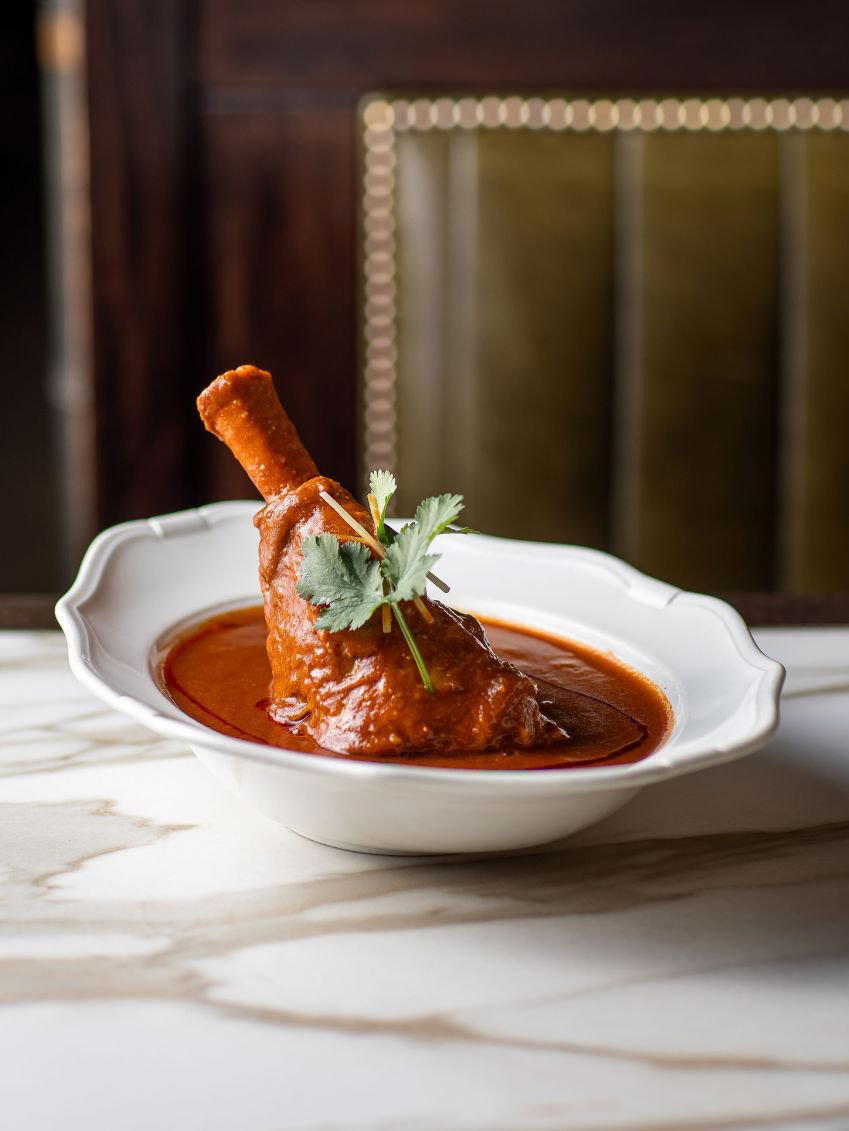
The menu
What to order
- Mackerel sashimi
- Hazelnut millefeuille
- Basil and citrus dessert
Where the Camino Ends and the Table Begins
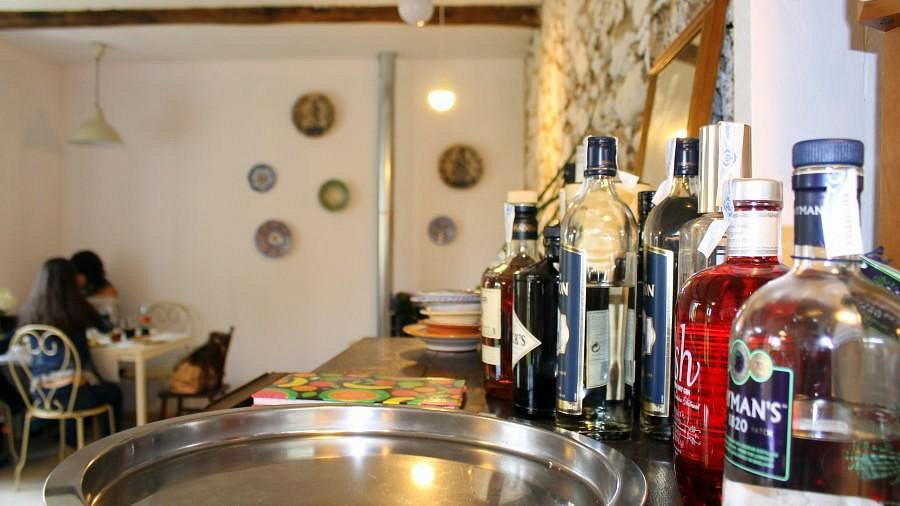
The Rúa de San Pedro is, by design, one of the last things a pilgrim sees before entering Santiago de Compostela through the old city gate. It is a working street, stone-fronted and unhurried, where guesthouses and small restaurants serve people who have walked for days or weeks rather than flown in for a long weekend. That context matters when reading A Maceta's address: 120, Rúa de San Pedro is not a calculated location play; it is a street that connects three of the Camino's major routes — the Francés, the Norte, and the Primitivo — to the cathedral square, and the restaurant occupies the ground floor of one of those plain granite buildings that characterises the neighbourhood. The interior reads as rustic-contemporary: exposed stone, relaxed proportions, none of the self-conscious design signalling that has become common in Spain's mid-tier dining scene over the past decade. A patio terrace extends the dining room outdoors when the Galician weather allows, which in summer months is often enough to matter.
Galician Ingredients, Asian Logic
Spain's fusion conversation has largely been conducted in the Basque Country and Madrid, where restaurants like Arzak in San Sebastián and DiverXO in Madrid built international reputations on the collision of Spanish tradition with global technique. Santiago de Compostela operates at a different register, smaller market, stronger regional identity, cooking that tends to reference the sea and the interior of Galicia rather than abstract avant-garde moves. Within that context, A Maceta's editorial angle is specific: Jorge Gago's kitchen draws from traditional Galician recipes and Asian methods simultaneously, treating them as parallel sources rather than letting one dominate the other.
The sourcing logic here is worth reading carefully. Galicia has one of Spain's most coherent regional ingredient cultures. The coast produces octopus, mackerel, bivalves, and shellfish that supply some of the country's most decorated tables, including Aponiente in El Puerto de Santa María, which has built a three-Michelin-star programme around Atlantic seafood. Inland, Galicia grows vegetables, leeks, turnip tops, peppers, that appear in traditional recipes and, increasingly, in more ambitious kitchens. At A Maceta, mackerel, a fish with deep roots in both Galician coastal cooking and Japanese sashimi tradition, arrives in a form that leans toward the latter. The leek appears alongside stracciatella di bufala and almonds, a combination that uses the dairy ingredient as a textural counterpoint rather than a regional one, stracciatella is Puglian, not Galician, but the pairing works as an ingredient-logic argument rather than a geography one. The hazelnut millefeuille at dessert stage keeps the French pastry structure while anchoring the flavour in something the northern Spanish interior grows in abundance.
This is the kind of fusion cooking that operates from the pantry outward, starting with what grows or swims nearby, then asking what technique leading serves the ingredient, rather than the concept-first approach that often produces cooking that is more legible as theory than as food.
A Maceta in Santiago's Dining Structure
Santiago de Compostela's restaurant scene splits more sharply by price tier than most comparable Spanish cities. At the leading, A Tafona operates at €€€€ with a Michelin star, representing the city's highest formal dining bracket. One tier below, a cluster of €€€ operations, including Casa Marcelo, which works an Asian small-plates and fusion register, occupies the mid-high ground. A Maceta sits at €€, which in Santiago's pricing context means it competes with A Viaxe and the mesas format of Abastos 2.0 rather than with the city's starred tables. The Michelin Plate recognition it received in 2025 signals quality acknowledgement without the formal star designation, a distinction that tends to mark kitchens where the cooking is consistently good and the ambition is real, even if the overall package doesn't yet meet starred criteria.
For readers mapping Santiago's options against each other, the practical read is this: if the occasion calls for Galician regional identity rooted in farm and sea sourcing, A Horta d'Obradoiro and Abastos 2.0 make that argument most directly. If the interest is in how Santiago's kitchens are absorbing external influences, A Maceta and Gaio are the more productive places to look. A Maceta's Asian-Galician synthesis sits in a global conversation about how coastal European cuisines are being reread through East Asian technique, a conversation you can track at Ajonegro in Logroño and, at the more theatrical end, at Arkestra in Istanbul.
The Wine List and the Terrace
The wine programme at A Maceta is broader than the room's relaxed tone might suggest. The list carries an extensive selection of sparkling wines, a choice that reads as deliberate editorial positioning in a region where the default pour is Albariño or local Ribeiro, and where sparkling wine tends to be treated as an afterthought outside of Cava-producing zones. In Galicia, sparkling production is not the primary identity, which makes a restaurant committed to the format something of a specialist within the local scene. The category pairs logically with the kitchen's lighter, fresher preparations, sashimi, vegetable and dairy combinations, where a wine with acidity and bubble does more structural work than a full-bodied white.
The terrace functions as a secondary dining environment rather than an overflow space. In a city where outdoor dining is contingent on Galicia's frequently unpredictable Atlantic weather, a covered or sheltered patio adds operational value, and the stone-walled setting on the Rúa de San Pedro carries the ambient character of the neighbourhood without requiring any scenographic enhancement.
Planning a Visit
A Maceta's address on the Rúa de San Pedro places it on the primary approach road from the east and north, making it convenient for pilgrims arriving on foot and for visitors staying in the older residential neighbourhoods before the old city walls. The restaurant sits at the €€ price point, positioning it as an accessible option for travellers managing a multi-day budget around Santiago's wider dining offer. For visitors building a broader itinerary, EP Club's full guides to Santiago de Compostela restaurants, hotels, bars, wineries, and experiences provide a structured overview of the city's full offer across categories.
Frequently asked questions
at A Maceta?
The kitchen at A Maceta operates around a Michelin Plate-recognised fusion programme that draws on both Galician coastal produce and Asian technique. The mackerel sashimi is the clearest expression of that logic: mackerel is a fish with genuine regional roots in Galicia, and the sashimi treatment brings an East Asian preparation discipline to an ingredient the local coast produces well. Among the savoury dishes, the leek, stracciatella di bufala, and almond combination demonstrates how the kitchen sources across European traditions, Galician vegetable, Italian dairy, Spanish nut, and assembles them through flavour and texture reasoning. The hazelnut millefeuille is documented as the dessert reference and fits the same pattern: classical French pastry structure, flavour rooted in northern Spain's harvest. If you're ordering around the wine list rather than the food, note that the sparkling wine selection is extensive by local standards, and the lighter preparations, sashimi, vegetable plates, sit well against a high-acid sparkling pour.
Budget and Context
A short peer table to compare basics side-by-side.
| Venue | Cuisine | Price | Awards | Notes |
|---|---|---|---|---|
| A MacetaThis venue — the venue you are viewing | Galician Fusion with Asian Touches | $30–50 | Michelin Plate · Macarfi 7.8 Food Rating | Not listed |
| Abastos 2.0 - Mesas | Modern Galician Market Cuisine | $50–100 | Michelin Bib Gourmand | Farm to Table-Tapas, Galician |
| Casa Marcelo | Modern Galician-Japanese Fusion Tasting Menu | $100–150 | 1 Michelin Star · Macarfi 8.8 Food Rating | Asian Small Plates, Fusion |
| A Tafona | Modern Galician Fine Dining | $50–100 | 1 Michelin Star · Guía Repsol 3 Soles | Contemporary |
| A Viaxe | Peruvian-Galician Fusion Tasting | $30–50 | Michelin Bib Gourmand | Fusion |
| Abastos 2.0 - Barra | Modern Galician Seafood Tapas | $30–50 | Michelin Plate · Macarfi 8 Food Rating | Farm to Table-Tapas |
Recognition history
Dated appearances from independent guides and award organizations, with the underlying list record or original source where available.
Michelin Plate
Michelin
Macarfi 7.8 Food Rating
Macarfi
Full recognition history (4 entries)
Michelin Plate
Michelin
Michelin Plate
Michelin
Continue exploring
More in Santiago de Compostela
Restaurants in Santiago de Compostela
Browse all →
Bars in Santiago de Compostela
Browse all →
Hotels in Santiago de Compostela
Browse all →

Details
- Cozy
- Rustic
- Modern
- Intimate
- Date Night
- Special Occasion
- Group Dining
- Garden
- Open Kitchen
- Terrace
- Extensive Wine List
- Local Sourcing
- Garden
- Small Plates
- A La Carte
- Wine
- Gluten Free Options
- Vegan Options
Current opening hours
- Monday
- Closed
- Tuesday
- Closed
- Wednesday
- 12:30–5 PM, 8:15–10:15 PM
- Thursday
- 12:30–5 PM, 8:15–10:15 PM
- Friday
- 12:30–5 PM, 8:15–10:15 PM
- Saturday
- 12:30–5 PM, 8:15–10:15 PM
- Sunday
- 12:30–5 PM
Hours can change for holidays and private events. Last verified .
Relaxed rustic-contemporary atmosphere with cozy lighting, pleasant patio-terrace, and calm professional vibe.