Simpar



1 Michelin Star · Guía Repsol 1 Sol · Macarfi 8.6 Food Rating
Our verdict
On Rúa do Vilar, one of Santiago de Compostela's stone-paved approaches to the cathedral, Simpar has developed into one of the old city's more considered contemporary Galician addresses. Chefs Áxel Smyth and Claudi Merchán build their menus daily around same-day sourced ingredients, and the tripe has been recognised as Best Tripe in the World 2024.

Pearl is the En Primeur Club membership app — saves, bookings, and concierge access live there. Same editors, same standards.
- Address
- Rúa do Vilar, 47, 15705 Santiago de Compostela, A Coruña, Spain
- Phone
- +34 881 97 76 01
- Hours
- Mon–Tue ClosedWed 1:30–3:15 PMThu–Fri 1:30–3:15 PM, 8:45–10 PMSat 1:30–3 PM, 8:45–10 PMSun 1:30–3 PM
- Website
- restaurantesimpar.com
- Directions
- Get directions
- Booking
- Book on TheFork
The menu
What to order
- Iberian Ham Croquette
- Tripe stew “Los callos”
- Leis bread with AOVE Cento x Cento Figueiredo
Where the Pilgrim Route Meets the Contemporary Table
Rúa do Vilar is not a quiet backstreet. It is one of Santiago de Compostela's principal cobbled corridors, running from the old town's southern edge toward Praza das Praterías and the cathedral's lateral facade. Pilgrims finishing the Camino walk it. Day-trippers follow it. The footfall is constant, the architectural pressure enormous. A restaurant that opens onto this street is operating inside a monument, competing less with the venue two doors down and more with a thousand years of accumulated symbolism. The default move for a kitchen in this position is to default to tradition: empanada, pulpo a feira, caldo gallego. The safer the menu, the more invisible the restaurant becomes against the stone backdrop.
Simpar has, over its development, moved in the opposite direction. The contemporary interior, designed around a spacious bar at the entrance that creates a clear threshold between the street's historic weight and the kitchen's intentions, signals a deliberate break from the pilgrimage-town formula. The name itself — meaning, loosely, without equal in Galician — sets an expectation the kitchen has had to grow into.
The Reinvention of Galician Technique
Galician cuisine at its foundation is about product rather than process: the Atlantic determines what goes on the plate, and the cook's role has historically been to get out of the way. The broader shift in contemporary Spanish cooking over the past two decades, accelerated by the generation that trained under or alongside figures associated with Arzak in San Sebastián, El Celler de Can Roca in Girona, and DiverXO in Madrid, has been to reintroduce technique as a way of deepening rather than obscuring product quality. Simpar belongs to the local expression of that shift.
Chefs Áxel Smyth and Claudi Merchán represent a younger cohort working through what contemporary Galician cooking can mean when the starting point is still radical freshness. Their daily menus are built around same-day sourced ingredients from named suppliers whose identities the kitchen shares openly with guests, a transparency practice that positions Simpar closer to the farm-to-table discipline visible in Santiago addresses like Abastos 2.0 than to the more insular fine-dining codes of, say, A Tafona at the €€€€ tier above it. The difference is that Simpar applies contemporary technique to that raw material rather than presenting it with minimal intervention.
The signature Galician-style fish of the day, changing with the seasons, arriving with crushed potatoes and a three-textured ajada garlic sauce, illustrates how that approach works in practice. The ajada is a traditional Galician preparation, emulsified garlic and oil with paprika. Rendering it in three textures is not showmanship; it is a way of distributing the sauce's flavour across the dish differently at each bite, giving the fish multiple contexts within a single plate. Strong technique, as the restaurant's own framing notes, is what separates this from a well-sourced but conventionally executed kitchen.
The Tripe Question and What It Tells You About the Kitchen
The detail that most clearly marks Simpar's current direction is the tripe. A dish that carries the designation Leading Tripe in the World 2024 is an unusual trust signal for a contemporary restaurant, and the tension between that recognition and the kitchen's contemporary positioning is worth examining. Tripe has a deep place in Galician and broader Iberian offal traditions, but it has rarely been the dish a technically ambitious restaurant chooses to anchor its reputation on. That Simpar has done so, incorporating an updated version of traditional tripe with chickpea stew as an add-on option across all menus, suggests the kitchen's reinvention is not a departure from Galician culinary memory but a renegotiation with it.
Spain's most awarded kitchens, from Aponiente in El Puerto de Santa María to Azurmendi in Larrabetzu and Quique Dacosta in Dénia, have all found that contemporary technique earns more lasting credibility when it is applied to local culinary inheritance rather than imposed over it. The tripe at Simpar is evidence that the kitchen understands this. Globally, contemporary restaurants working in a similar register, Jungsik in Seoul or César in New York City, have built reputations partly on exactly this: finding the vernacular dish that the contemporary format can treat with new depth rather than irony.
How Simpar Sits in Santiago's Dining Tier
Santiago de Compostela's contemporary restaurant tier has clarified considerably. At the leading, A Tafona operates at €€€€ with a fine-dining formality that places it in a different conversation. Simpar occupies the €€€ tier alongside Casa Marcelo, though the two kitchens take opposing approaches to what contemporary means in this city: Casa Marcelo draws on Asian influence and fusion structure, while Simpar holds its roots in Galician product and technique. Indómito and Anaco round out the mid-to-upper contemporary addresses worth knowing. Below that, A Maceta at €€ offers a fusion entry point for the same audience at lower spend.
The two menu formats (Conocer and Simpar) plus a limited à la carte give the table options without the rigidity of a fixed-price-only format, which matters in a city where dining intentions range from a quick meal between cathedral visits to a deliberate evening out.
Planning a Visit
Simpar sits at Rúa do Vilar, 47, directly on the cobbled route toward Praza das Praterías. The address is walkable from every hotel in the historic centre; for accommodation options nearby, the [EP Club Santiago de Compostela hotels guide]() covers the available range. Booking in advance is advisable given the limited capacity implied by the kitchen's daily-sourcing model and the address's visibility. The restaurant's price range of €€€ positions the meal above the city's casual pilgrim-market options but below the full fine-dining outlay of A Tafona. The tripe with chickpea stew is available as a supplement across all menus and is worth ordering as a structural decision rather than an afterthought, given the 2024 recognition it carries.
For context on Santiago's wider eating and drinking scene, the [EP Club Santiago de Compostela restaurants guide]() covers the full range, with companion guides for [bars](), [wineries](), and experiences across the city.
What Dish Is Simpar Famous For?
Simpar holds a Leading Tripe in the World 2024 designation for its updated take on traditional Galician tripe with chickpea stew, available as a supplement on all menus. The kitchen's other signature is the seasonal Galician fish of the day, served with crushed potatoes and a three-textured ajada garlic sauce, a preparation that has defined the culinary direction of chefs Áxel Smyth and Claudi Merchán and distinguishes Simpar from both the tourist-facing seafood restaurants and the more formal fine-dining addresses in the city.
Fast Comparison
A quick peer check to anchor this venue’s price and recognition.
| Venue | Cuisine | Price | Awards | Notes |
|---|---|---|---|---|
| SimparThis venue — the venue you are viewing | Modern Galician Fine Dining | $100–150 | 1 Michelin Star · Guía Repsol 1 Sol | Not listed |
| Abastos 2.0 - Mesas | Modern Galician Market Cuisine | $50–100 | Michelin Bib Gourmand | Farm to Table-Tapas, Galician |
| Casa Marcelo | Modern Galician-Japanese Fusion Tasting Menu | $100–150 | 1 Michelin Star · Macarfi 8.8 Food Rating | Asian Small Plates, Fusion |
| A Tafona | Modern Galician Fine Dining | $50–100 | 1 Michelin Star · Guía Repsol 3 Soles | Contemporary |
| A Maceta | Galician Fusion with Asian Touches | $30–50 | Michelin Plate · Macarfi 7.8 Food Rating | Fusion |
| Abastos 2.0 - Barra | Modern Galician Seafood Tapas | $30–50 | Michelin Plate · Macarfi 8 Food Rating | Farm to Table-Tapas |
Recognition history
Dated appearances from independent guides and award organizations, with the underlying list record or original source where available.
Michelin 1 Star
Michelin
Guía Repsol 1 Sol
Guía Repsol
Macarfi 8.6 Food Rating
Macarfi
Full recognition history (5 entries)
Michelin 1 Star
Michelin
Michelin 1 Star
Michelin
Continue exploring
More in Santiago de Compostela
Restaurants in Santiago de Compostela
Browse all →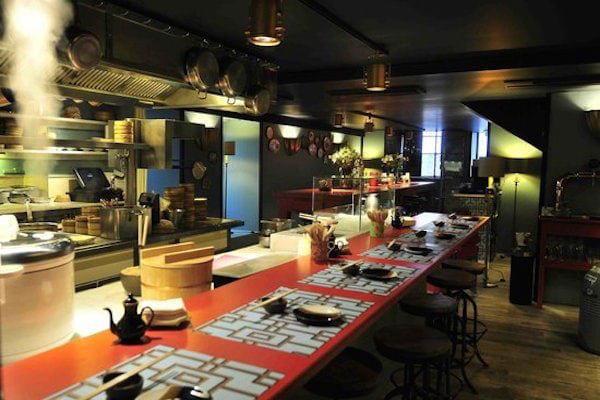
Bars in Santiago de Compostela
Browse all →
Hotels in Santiago de Compostela
Browse all →

Details
- Modern
- Elegant
- Sophisticated
- Intimate
- Special Occasion
- Date Night
- Celebration
- Business Dinner
- Standalone
- Design Destination
- Extensive Wine List
- Local Sourcing
- Tasting Menu
- A La Carte
- Wine
- Wine Pairing
- Sherry
Current opening hours
- Monday
- Closed
- Tuesday
- Closed
- Wednesday
- 1:30–3:15 PM
- Thursday
- 1:30–3:15 PM, 8:45–10 PM
- Friday
- 1:30–3:15 PM, 8:45–10 PM
- Saturday
- 1:30–3 PM, 8:45–10 PM
- Sunday
- 1:30–3 PM
Hours can change for holidays and private events. Last verified .
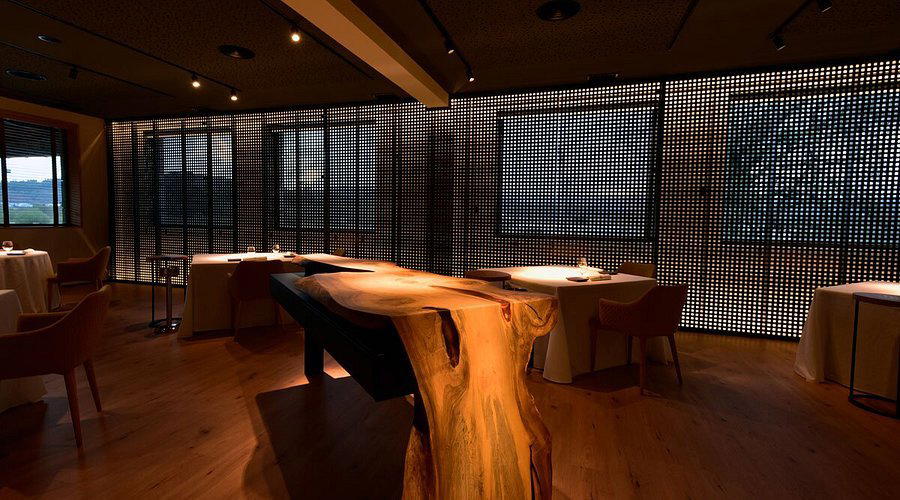
A contemporary restaurant in Santiago’s historic centre with a more formal dining room for a la carte dining and a more casual bar area.