Arai Shoten

Tabelog 100 #20
Our verdict
Arai Shoten brings Peruvian cooking into Yugawara’s small but varied dining circuit, where hot-spring travel, station-area sweets, bakeries, and specialist restaurants sit close together. Its selection for Tabelog’s Asian cuisine and Ethnic cuisine EAST “Tabelog 100” 2024 gives the restaurant a clear critical marker within a category that remains narrower in Kanagawa than Japanese, ramen, or seafood formats.

Pearl is the En Primeur Club membership app — saves, bookings, and concierge access live there. Same editors, same standards.
- Address
- 18-2 Shirohori, Yugawara, Ashigarashimo District, Kanagawa 259-0305, Japan
- Phone
- +81 465-20-8360
- Hours
- Mon 12–3 PM, 6–10 PMTue–Wed ClosedThu–Sun 12–3 PM, 6–10 PM
- Website
- araishouten.wixsite.com
- Directions
- Get directions
The menu
What to order
- Ceviche
- Sazonado-style local fish dishes
- Potato salad with sea snail
Yugawara is not a city of grand dining entrances. Its appeal sits lower to the ground: station streets, onsen-bound travelers, small confectioners, bread counters, and restaurants moving to hot-spring-town rhythms rather than capital-city dining patterns. In that setting, Peruvian cooking changes the register. A meal here is not another chapter in the expected sequence of soba, seafood, wagashi, and ryokan kaiseki; it adds a Latin American kitchen language to a town known for rest and repetition.
That is the useful way to read Arai Shoten. Its significance is not simply that Peruvian food appears in Yugawara, but that it has been recognized inside Tabelog’s Asian cuisine and Ethnic cuisine EAST “Tabelog 100” 2024, a list that puts regional specialist cooking under stronger scrutiny than casual category labels imply. In Japan, where non-Japanese cuisines often sit in compact, city-centered clusters, a Peruvian address in Ashigarashimo-Gun carries different weight. It asks diners to treat the town as more than a weekend onsen stop.
Peruvian cooking in a hot-spring town changes the local dining map
Peruvian cuisine is built on exchange: Andean ingredients, Spanish colonial influence, Japanese migration, Chinese-Peruvian chifa culture, coastal fish traditions, and the bright acidity of citrus and chile. In Japan, those references can be flattened into novelty unless a restaurant has enough discipline to hold the category together. Arai Shoten’s Tabelog 100 selection matters because it places the kitchen among recognized Asian and ethnic-cuisine addresses in eastern Japan, not as an outlier curiosity.
Yugawara’s restaurant culture follows travel patterns. Diners often arrive with a narrow plan: tea, sweets, a bath, a ryokan dinner, a bakery stop before the train. That makes a specialist Peruvian restaurant more interesting, because it sits against the itinerary. The same visitor might compare it with the old-road atmosphere around Amazake Chaya, the local confectionery pull of Cha no Chimoto, or the station-facing sweet-shop convenience of Chimoto Ekimae doori ten. Those addresses speak to Japanese travel ritual; Peruvian cooking speaks to a newer appetite for range.
The contrast also helps day planning. Bread culture has its own following here, with Bread & Circus drawing food travelers focused on morning provisioning rather than composed dinner. Chinese Suiyo marks another strand of non-Japanese dining in the district. Together, these places show Ashigarashimo-Gun’s food scene is not only ryokan cuisine and seafood, even if those remain the default images for visitors.
The critical signal is category discipline, not spectacle
Tabelog’s category recognition is a useful trust signal because Japanese diners judge specialist cuisines for consistency, value, and repeatability. Arai Shoten’s score of 3.67 gives another marker, but the more telling fact is the 2024 Tabelog 100 selection for Asian cuisine and Ethnic cuisine EAST. That category is broad, yet not forgiving: Thai, Vietnamese, Indian, Chinese regional, Korean, and Latin American formats can all compete for attention in the same mental space. Peruvian cooking must be legible enough to draw diners, but serious enough not to collapse into theme-restaurant shorthand.
In a larger city, a Peruvian restaurant can lean on comparable venues and an audience already fluent in ceviche, anticuchos, causa, ají, or Nikkei references. In Yugawara, it has to do more explanatory work. That does not mean simplifying the cuisine; it means anchoring it clearly for travelers who may have booked hot springs rather than Latin American food. Recognition in a specialist list suggests the restaurant is evaluated within ethnic-cuisine dining, not merely applauded for being different in a smaller town.
The Ashigarashimo-Gun comparison set reinforces the point. Ramen pilgrims may look toward Iida Shoten, Ramenya Iida Shouten, or IIDASHOUTEN for a tightly defined Japanese format. Bakery travelers may prioritize Bread & Circus. Arai Shoten belongs to another decision path: the diner who wants Yugawara to behave less predictably, without leaving the town’s compact dining radius.
How to place it within an Ashigarashimo-Gun itinerary
The strongest case for dining here is cultural contrast. Ashigarashimo-Gun rewards travelers who build a day from several small, specific stops rather than one marquee booking. The district can take in old-route tea culture, sweets, bread, casual Chinese cooking, and a Peruvian dinner, each showing a different layer of local food habits. For wider planning, Our full Ashigarashimo-Gun restaurants guide is the cleanest starting point; travelers extending the trip can also map stays through Our full Ashigarashimo-Gun hotels guide, drinks through Our full Ashigarashimo-Gun bars guide, wine-focused stops through Our full Ashigarashimo-Gun wineries guide, and activities through Our full Ashigarashimo-Gun experiences guide.
For travelers comparing the restaurant with other Japan dining formats, the useful distinction is not luxury versus casual; it is specificity. Beef-focused regional dining such as -Grilled beef Sukiyaki- KAMAKURA TANUKIAN 鎌倉 たぬき庵 in Kamakura, charcoal-and-tuna izakaya formats such as. 鮪と炭火焼き うお炭 秋葉原店 in Tokyo, and compact café culture such as.cafe in Osaka all serve different traveler needs. Ethnic-cuisine specialists such as (Shoku) Vietnam in Kawasaki or curry-focused addresses such as [Curry Senmon Ten] Maruyama Kyoju. in Sapporo are closer in spirit, because the appeal lies in a kitchen committing to a defined culinary vocabulary.
The same logic travels beyond Japan. Jōdo Saké Bar in Los Angeles and Onigiri Time in Pasadena show how Japanese formats gain sharper meaning abroad when they keep their structure intact. Arai Shoten works in the inverse direction: a Peruvian format gaining force in a Japanese onsen town because it does not merely fill a gap. It changes what a Yugawara meal can be.
For a broader Kyushu comparison in compact specialist dining.know in Kumamoto sits in a separate regional context, but underlines the same lesson: smaller Japanese cities and towns often reward diners who look past default cuisines. In Yugawara, that means reading Arai Shoten as part of a more diverse local circuit, not as an isolated curiosity.
Frequently asked questions
Where exactly is Arai Shoten?
Arai Shoten is located in Ashigarashimo-GunGun.
What price level is Arai Shoten?
Pricing at Arai Shoten is listed as JPY 8,000 - JPY 9,999 JPY 1,000 - JPY 1,999.
Is Arai Shoten open every day?
Hours at Arai Shoten: Mon: 12–3 PM, 6–10 PM; Tue: Closed; Wed: Closed; Thu: 12–3 PM, 6–10 PM; Fri: 12–3 PM, 6–10 PM; Sat: 12–3 PM, 6–10 PM; Sun: 12–3 PM, 6–10 PM.
What do critics highlight about Arai Shoten?
Critics point first to its category discipline: Arai Shoten is a Peruvian restaurant in Yugawara, and Tabelog included it in the 2024 Tabelog 100 for Asian cuisine / Ethnic cuisine EAST. The 18-seat room and fixed lunch and dinner hours reinforce the sense of a compact, specialist operation rather than a broad all-day dining room.
Can Arai Shoten handle vegetarian requests?
Arai Shoten asks guests to mention disliked ingredients, allergies, or specific dish requests when reserving, which suggests the kitchen will work with dietary adjustments. It also offers dinner by advance phone reservation and a lunch set in Yugawara, so vegetarian requests are best raised before arrival.
Is Arai Shoten good for families?
Arai Shoten can work for families that are comfortable with a small 18-seat restaurant and a quieter meal format in Ashigarashimo-Gun. The price range, JPY 8,000–JPY 9,999 for dinner and JPY 1,000–JPY 1,999 for lunch, makes it a practical choice for a structured outing rather than a casual drop-in.
Budget Reality Check
Nearby venues at a similar price tier for orientation.
| Venue | Cuisine | Price | Awards | Notes |
|---|---|---|---|---|
| Arai ShotenThis venue — the venue you are viewing | Peruvian Fine Dining | Not listed | Tabelog 100 #20 | Not listed |
| Ito Ke no Tsubo | Japanese Sushi Omakase | Not listed | Tabelog 100 #24 | Manazuru, Japanese Sushi Omakase |
| Takeyabu Hakone ten | Traditional Soba & Japanese Cuisine | $20–30 | Tabelog 100 #34 | Motohakone, Traditional Soba & Japanese Cuisine |
| Chinese Suiyo | Refined Chinese restaurant in a luxury resort | $50–100 | Tabelog 100 #29 | /, Refined Chinese restaurant in a luxury resort |
| HERLEQUIN BIS | French Fine Dining | $100–150 | Tabelog 100 #65 | Hakone-machi, French Fine Dining |
| PICOT | Hotel bakery & sweets shop | $10–20 | Tabelog 100 #77 | Miyanoshita, Hotel bakery & sweets shop |
Recognition history
Dated appearances from independent guides and award organizations, with the underlying list record or original source where available.
Tabelog 100 #20 · No. 20
Tabelog · Tabelog 100 - Asian cuisine / Ethnic cuisine - EAST - 2024
Continue exploring
More in Ashigarashimo-Gun
Restaurants in Ashigarashimo-Gun
Browse all →
Bars in Ashigarashimo-Gun
Browse all →
Details
- Cozy
- Intimate
- Classic
- Group Dining
- Special Occasion
- Private Event
- Celebration
- Private Dining
- Standalone
- Local Sourcing
- Mountain
- Set Menu
- Prix Fixe
- Other
- Allergy Accommodating
Current opening hours
- Monday
- 12–3 PM, 6–10 PM
- Tuesday
- Closed
- Wednesday
- Closed
- Thursday
- 12–3 PM, 6–10 PM
- Friday
- 12–3 PM, 6–10 PM
- Saturday
- 12–3 PM, 6–10 PM
- Sunday
- 12–3 PM, 6–10 PM
Hours can change for holidays and private events. Last verified .
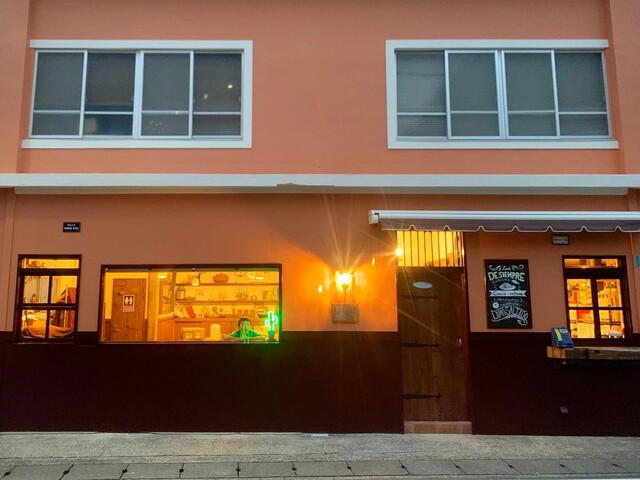
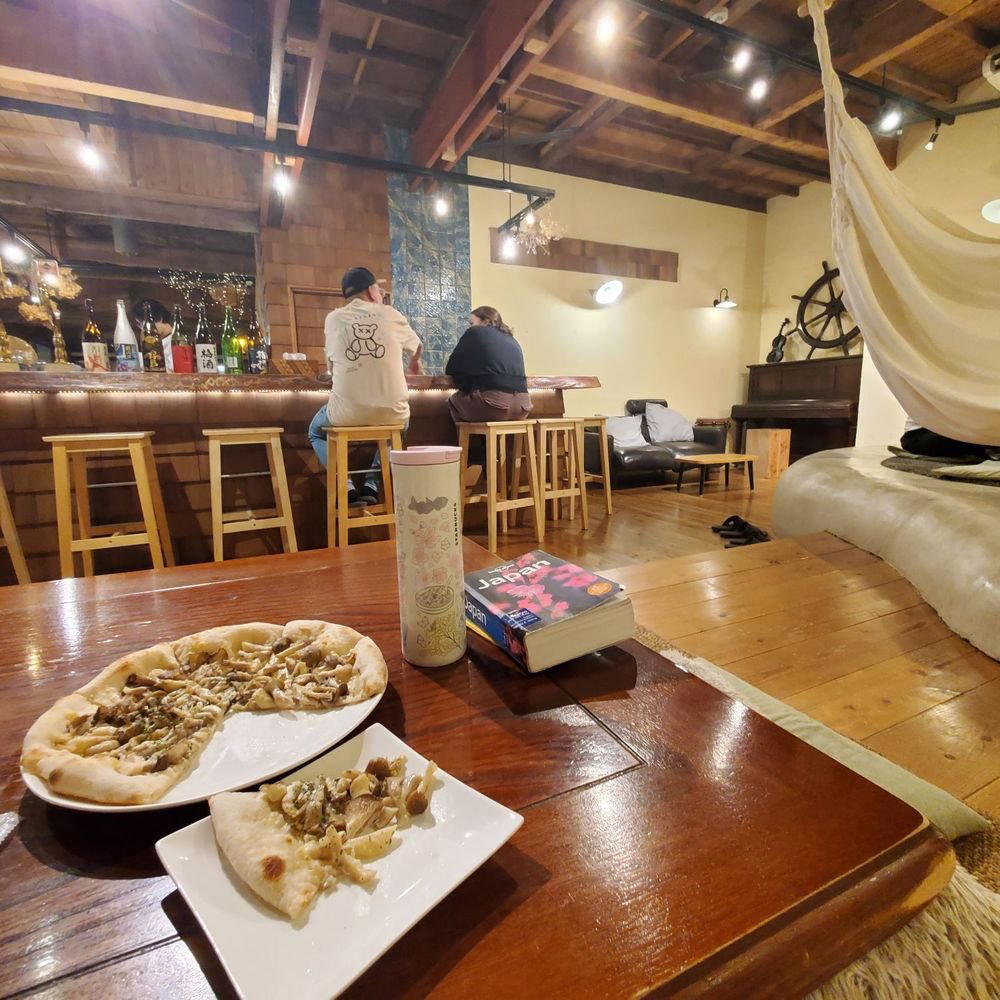
A small, intimate restaurant with a home-cooked, chef-driven feel; it is described as having the look of a Japanese izakaya from the outside while serving Peruvian food inside.