
Tabelog 100 #65
Our verdict
Anjuna places Indian curry in Tokyo’s suburban dining conversation rather than the central-city tasting-menu circuit. Its repeated Tabelog 100 selections for curry and Asian/Ethnic cuisine, tandoori pot using binchotan charcoal, English menu, and family-friendly setup make it a serious Hino address for diners willing to look beyond the usual inner wards.

Pearl is the En Primeur Club membership app — saves, bookings, and concierge access live there. Same editors, same standards.
- Address
- Japan, 〒191-0031 Tokyo, Hino, Takahata, 3-7 ユニバーサルビル 1F
- Phone
- +81 42-593-3590
- Hours
- Mon ClosedTue–Sun 11:30 AM–2:20 PM, 5–8:20 PM
- Website
- anjunacurry.blog.fc2.com
- Directions
- Get directions
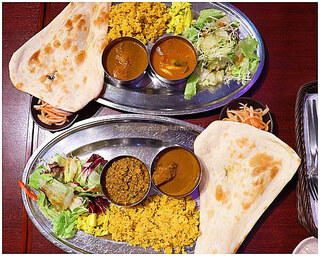
The menu
What to order
- A‑Set dinner course with keema and chicken curry
- Seasonal fish curries such as Spanish mackerel curry set
- Tandoori dishes
- Monthly special curries like autumn sanma curry
Approaching Takahatafudo, Tokyo feels less like Ginza or Shinjuku’s restaurant-dense theatre than a working commuter district: station traffic, errands, families moving at ordinary speed. That matters. Indian curry in Tokyo has long lived in two registers, quick lunch fuel and specialist destination cooking, and the strongest suburban rooms rely on rhythm, not spectacle. Anjuna belongs to the latter, where consistency, heat control, and handling regulars, families, takeout, and destination diners matter more than performance.
The public signals are unusually clear outside the central glamour zones. The room appeared in Tabelog’s Curry 100 selections for 2017 and 2018, then in the Asian and Ethnic Cuisine Tokyo 100 selections for 2022, 2023, and 2024. That shift says as much about Tokyo’s taxonomy as one address: curry is no longer only a standalone comfort category, while Indian and broader Asian cooking now sit in a more competitive, closely parsed field. A Tabelog score of 3.58 places it where local repeat approval and specialist attention overlap, not in flashier territory driven by international press cycles.
Indian curry in Tokyo, measured by control rather than theatre
Tokyo’s serious curry culture is not one lane. There are Japanese-style counters built around roux and rice, South Asian kitchens using regional spice structures, hybrid cafés, and compact specialist shops built on disciplined preparations. Anjuna is listed as Indian and Indian curry, closer to the spice-and-tandoor conversation than nostalgic yoshoku curry. The tandoori pot made with binchotan charcoal is the key technical clue: this is not just a curry house with a broad menu, but a kitchen where high-heat cooking and charcoal management sit beside sauce work.
That explains its movement across award categories. Curry recognition in 2017 and 2018 made the bowl the initial public hook; later Asian and Ethnic Cuisine Tokyo selections imply a broader reading. In Tokyo, ethnic-cuisine lists mix casual noodle shops, family-run curry rooms, regional Chinese specialists, Thai counters, and restaurants with broader evening service. The useful question is not whether a venue resembles a luxury dining room, but whether the cooking has enough identity and repeatability to hold attention in a city ruthless with mid-priced specialists.
The better comparison is Tokyo’s affordable-specialist circuit, not formal Indian dining. Patisserie du Chef FUJIU and Da Luciano work in different genres but share the outer-ward logic: a focused reason to travel, accessible pricing, and a local base that keeps the room alive beyond guide-driven visitors. Medika Soba Kingyo belongs to the low-to-mid-priced noodle conversation, where craft is compressed into a short meal. Anjuna’s competitive set is built on the same discipline: category clarity, repeat custom, and a reason to leave the central restaurant map.
The room works because the handoffs matter
The drama is not a named chef narrative; none is needed. Restaurants of this size depend on team mechanics. A 42-seat, two-floor setup is large enough for uneven pacing to show and small enough for kitchen and floor to feel exposed when timing slips. The service signals point to a practical operation: takeout is offered, an English menu is available, children are welcome, and the setting accommodates strollers and a kids’ menu. Those details do not make the cooking less serious. In Tokyo, they often mark the opposite: a neighbourhood restaurant must perform for different diners across lunch and dinner, not only reservation hunters with one purpose.
Front-of-house intelligence becomes part of the food story. Indian curry punishes poor sequencing: bread, rice, grilled items, sauces, and takeout flow all demand different timing. Add families and multilingual diners, and the restaurant must translate heat, portioning, and pacing without turning the room into a lecture. A mature local operation absorbs those pressures quietly. The service format suggests coordination over ceremony, often what separates a respected suburban curry room from a merely busy one.
It also corrects a visitor’s Tokyo dining itinerary. The city’s mythology still leans toward counters, omakase, and elaborate reservation rituals. Curry asks for different attention: how spice is layered, starch and sauce balanced, grilled cooking broadens the meal, and the room delivers the same clarity when half the tables eat at different speeds. That is a team sport, not a soloist’s showcase.
How to place it in a Tokyo itinerary
Anjuna is strongest for diners who understand that Tokyo’s food culture does not end at the Yamanote Line. Takahatafudo sits in Hino, west of the central wards, so coming here is not convenience for a first-night hotel dinner. It is a deliberate choice to see serious everyday cooking in a residential rail-node setting. For travellers comparing Tokyo’s dining layers, this belongs beside specialist curry and noodle addresses rather than celebratory counters. Readers mapping that spread can start with Our full Tokyo restaurants guide, then contrast central and outer-ward eating with places such as 3 Chome no Curry Ya San, 12/10 Shinjuku ten, 124. KAGURAZAKA (Yakitori), . 鮪と炭火焼き うお炭 秋葉原店, and 2D Cafe.
The broader Japanese and international context helps. Curry specialization in Japan has regional expressions, from Sapporo’s dedicated shops such as [Curry Senmon Ten] Maruyama Kyoju. in Sapporo to urban cafés and hybrid rooms elsewhere, including.cafe in Osaka.know in Kumamoto, and [ki:] in Kyoto. For a wider Japan file, compare it with (Shoku) Vietnam in Kawasaki or -Grilled beef Sukiyaki- KAMAKURA TANUKIAN 鎌倉 たぬき庵 in Kamakura, which show how specialist formats read outside central Tokyo. For a cross-Pacific contrast in casual Japanese formats, see Jōdo Saké Bar in Los Angeles and Onigiri Time in Pasadena.
The verdict is simple: this is a Tokyo curry address for diners who value category depth over room glamour. The awards history gives credibility, the tandoori equipment gives the kitchen a technical point of difference, and the family-friendly service details suggest a restaurant designed for repeat use rather than special-occasion signalling. For the rest of the city plan, pair the meal with Our full Tokyo hotels guide, Our full Tokyo bars guide, Our full Tokyo wineries guide, and Our full Tokyo experiences guide.
Nearby-ish Comparables
Side-by-side context: comparable cuisine and price.
| Venue | Cuisine | Price | Awards | Notes |
|---|---|---|---|---|
| AnjunaThis venue — the venue you are viewing | Traditional Indian curry house | Not listed | Tabelog 100 #65 | Not listed |
| Patisserie du Chef FUJIU | Not listed | $10–20 | Tabelog 100 #76 | JPY 999 - JPY 999 |
| Medika Soba Kingyo | Japanese Ramen | $10–20 | Tabelog 100 #60 | JPY 1,000 - JPY 1,999 |
| Senju | Modern Edomae Sushi | Not listed | Star Wine List | Not listed |
| Da Luciano | Traditional Italian gelato & casual café | $1–10 | Tabelog 100 #13 | JPY 999 - JPY 999 View spending breakdown |
Recognition history
Dated appearances from independent guides and award organizations, with the underlying list record or original source where available.
Tabelog 100 #65 · No. 65
Tabelog · Tabelog 100 - Asian cuisine / Ethnic cuisine - TOKYO - 2024
Continue exploring
More in Tokyo
Restaurants in Tokyo
Browse all →



Bars in Tokyo
Browse all →



Hotels in Tokyo
Browse all →



Wineries in Tokyo
Browse all →
Details
- Cozy
- Classic
- Solo
- Family
- Casual Hangout
- Group Dining
- Standalone
- A La Carte
- Set Menu
- Vegetarian Friendly
Current opening hours
- Monday
- Closed
- Tuesday
- 11:30 AM–2:20 PM, 5–8:20 PM
- Wednesday
- 11:30 AM–2:20 PM, 5–8:20 PM
- Thursday
- 11:30 AM–2:20 PM, 5–8:20 PM
- Friday
- 11:30 AM–2:20 PM, 5–8:20 PM
- Saturday
- 11:30 AM–2:20 PM, 5–8:20 PM
- Sunday
- 11:30 AM–2:20 PM, 5–8:20 PM
Hours can change for holidays and private events. Last verified .